PTFE membranes provide a transformative advantage in cleanroom filtration by offering significantly lower pressure drops and superior contamination control compared to traditional glass-fiber media. In semiconductor manufacturing, these membranes deliver high nanoparticle retention and stable airflow while drastically reducing energy consumption. Their unique chemical properties ensure that they do not shed particles or leach contaminants into the sensitive production environment.
PTFE membranes represent a paradigm shift in HEPA/ULPA filtration by combining extreme energy efficiency with unmatched structural integrity. This transition from glass fiber to synthetic membranes minimizes operational costs while providing the ultra-high-purity air necessary for modern sub-nanometer wafer fabrication.
Optimizing Energy Efficiency and Operational Longevity
Reduced Initial Pressure Drop
PTFE membranes often exhibit an initial pressure drop that is 50% lower than that of traditional glass-fiber equivalents. This reduction allows HVAC systems to operate at lower fan speeds, leading to substantial energy savings in high-demand cleanroom environments.
Enhanced Dust-Holding Capacity
When utilized in composite designs, PTFE membranes can increase the dust-holding capacity by up to threefold. This extended capacity directly translates to a longer filter lifespan and significantly fewer maintenance interventions over the life of the cleanroom.
Stable and Consistent Airflow
Because the membrane is less restrictive, it facilitates a more stable airflow across the filter face. This consistency is vital for maintaining laminar flow patterns, which prevent turbulence and keep contaminants away from critical process zones.
Ensuring High-Purity Contamination Control
Minimizing Particle Shedding
Unlike glass fiber, which is brittle and can shed fragments due to mechanical stress or vibration, PTFE has high flexural strength. This durability minimizes the risk of particle shedding, which is essential for protecting sensitive photolithography and wafer processing stages.
Low Extractables and Leachables
PTFE is chemically inert with extremely low extractables, meaning it does not release metallic ions or organic contaminants. This chemical "cleanliness" ensures that the filtration media itself does not become a source of contamination for the manufacturing process fluids or the air.
Superior Nanoparticle Retention
Despite their lower resistance to airflow, PTFE membranes maintain exceptionally high nanoparticle retention. They provide a reliable barrier against the microscopic contaminants that can cause catastrophic yield losses in semiconductor fabrication.
Stability and Precision in Extreme Conditions
Uniform Pore Size Distribution
PTFE membranes offer high accuracy in pore size distribution, ensuring consistent filtration performance across the entire surface. This level of reproducibility is a critical factor in scientific tasks and semiconductor lab work where precision is non-negotiable.
Thermal and Chemical Resilience
The material remains stable across a massive temperature range, capable of withstanding temperatures from -275°C up to +325°C. This allows PTFE filters to maintain their structural integrity during rapid thermal cycling and exposure to harsh process chemicals.
Non-Adhesive and Hydrophobic Properties
The non-adhesive, water-resistant nature of PTFE prevents moisture buildup and makes the filters easier to maintain. Its low coefficient of friction also contributes to the material's ability to resist "clogging" from sticky or oily aerosols.
Understanding the Trade-offs
Initial Investment vs. Total Cost of Ownership
The primary trade-off with PTFE membranes is a higher initial acquisition cost compared to standard glass-fiber filters. However, a technical analysis usually reveals that the energy savings and extended service life provide a superior return on investment over time.
Handling and Mechanical Sensitivity
While PTFE is more resistant to shedding than glass fiber, the membranes are often very thin and require precise manufacturing and handling. It is critical to ensure that filters are installed by trained professionals to avoid puncturing the membrane, which could compromise the entire cleanroom's integrity.
How to Apply This to Your Facility
The transition to PTFE should be guided by your specific environmental requirements and purity standards.
- If your primary focus is energy reduction: Prioritize PTFE filters with the lowest rated initial pressure drop to immediately decrease the load on your HVAC fan units.
- If your primary focus is process purity: Select virgin PTFE membranes to eliminate the risk of metallic ion contamination and chemical outgassing in the plenum.
- If your primary focus is maintenance longevity: Opt for composite PTFE designs that maximize dust-holding capacity to extend the intervals between filter change-outs.
By integrating PTFE membrane technology, you secure a cleaner, more stable, and more cost-effective manufacturing environment.
Summary Table:
| Feature | PTFE Membrane Benefit | Operational Impact |
|---|---|---|
| Pressure Drop | ~50% lower initial resistance | Significant HVAC energy savings |
| Durability | High flexural strength; no shedding | Eliminates media-born contamination |
| Purity | Chemically inert; low extractables | Essential for sub-nanometer fabrication |
| Service Life | Up to 3x dust-holding capacity | Reduced maintenance and downtime |
| Stability | Resilient from -275°C to +325°C | Reliable performance in extreme heat |
Elevate Your Lab Precision with KINTEK Fluoropolymer Solutions
Maximize your cleanroom efficiency and contamination control with high-performance materials designed for the most demanding environments. From everyday basic labware (beakers, measuring cylinders, crucibles, dishes, reagent/wash bottles, centrifuge and digestion tubes) and high-purity trace analysis instruments to comprehensive fluid transfer components (tubing, fittings, valves), KINTEK provides the reliability your research deserves.
Our expertise extends to sample prep tools, general consumables, and advanced reaction apparatus like standard or custom electrochemical cells, battery testing fixtures, and microwave digestion vessels. KINTEK manufactures virtually all imaginable laboratory supplies crafted from PTFE and PFA.
Backed by end-to-end custom CNC fabrication, we deliver everything from complex non-standard machined parts to high-volume orders with an absolute focus on high-performance fluoropolymers.
Ready to optimize your facility? Contact KINTEK today to discuss your bespoke laboratory requirements!
Related Products
- PTFE Membrane Filter Holder for Aerosol Environmental Monitoring and Low Concentration Particulate Matter Sampling Chemical Resistant Air Quality Analysis Component
- PTFE Filter Membrane Holder 47mm Leak Proof Corrosion Resistant Environmental Sampling Unit Customizable
- PTFE Filter Membrane Holder for Hydrogen Chloride and Water Filtration 90mm Environmental Sampling Clamp Customizable
- Custom PTFE Water Quality Filter 202mm Diameter 142mm Membrane Corrosion Resistant Holder
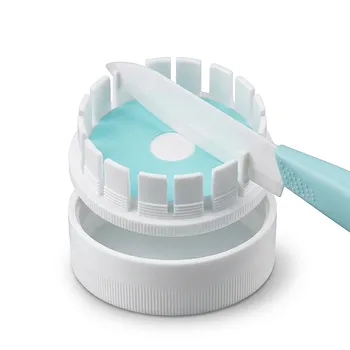
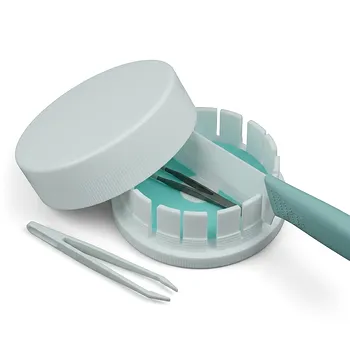
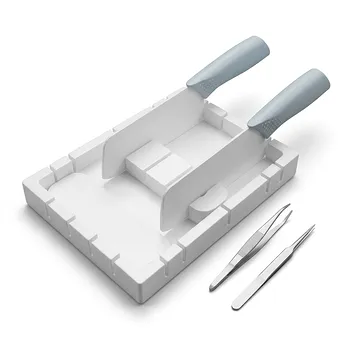
- High Purity PTFE Filter Membrane Cutter with Ceramic Blade for PM2.5 Analysis and Customizable Laboratory Filter Paper Splitter
People Also Ask
- How does the inherent hydrophobicity of PTFE filter membranes affect liquid and gas separation? Optimize Performance
- What are the structural characteristics and manufacturing principles of Polytetrafluoroethylene (PTFE) filter membranes?
- What is the thermal stability range for PTFE filter membranes? Master Extremes from -200°C to +260°C
- What is the chemical composition and temperature resistance of PTFE filter membranes? Essential Specs for Labs
- What are the performance advantages of PTFE filter membranes vs depth filters? Boosting Lab Purity and Efficiency