PTFE filter membranes are defined by a unique microporous fibrillar structure and extreme chemical inertness. These membranes are engineered through a precise process of extrusion, stretching, and sintering that creates a controlled network of pores within a fluorocarbon matrix. Unlike standard cellulose or glass fiber media, PTFE membranes provide a hydrophobic, thermally stable barrier capable of surviving environments that would destroy conventional materials.
PTFE membranes utilize an expanded fibrillar structure to combine high porosity with mechanical strength. Their manufacturing relies on a specialized stretching process followed by thermal sintering, resulting in a filter medium that is chemically inert, hydrophobic, and exceptionally consistent in pore size.
The Unique Structural Profile of PTFE Membranes
The Fibrillar Microstructure
The structure of expanded PTFE (ePTFE) is characterized by a complex network of nodes and fibrils. These microscopic "threads" create a multi-directional path that traps contaminants while allowing high gas or liquid flow rates. This architecture is far more durable than the random fiber orientation found in traditional depth filters.
Inherent Hydrophobicity and Low Surface Energy
PTFE is naturally hydrophobic, meaning it inherently repels water and cannot be easily wetted. This characteristic, combined with an extremely low surface energy, prevents filtered "cakes" from sticking to the membrane surface. This allows for the easy peeling of samples and ensures the structural integrity of the filtered material remains intact.
Precision Pore Architecture
These membranes offer enhanced accuracy in pore size distribution, ensuring high quality and reproducibility in scientific tasks. Because the pores are created through mechanical stretching rather than chemical etching, the resulting structure is highly uniform. This consistency is vital for applications requiring the efficient capture of nanocomposite particles.
The Principles of ePTFE Membrane Fabrication
Paste Extrusion and Lubricant Removal
The process begins by blending fine PTFE powder with a lubricant to form a paste, which is then extruded into a thin sheet. This is necessary because PTFE’s high melt temperature and "cold flow" properties prevent it from being processed by standard injection molding. Once the sheet is formed, the lubricant is evaporated to prepare the material for structural expansion.
Controlled Thermal Stretching
The solid PTFE sheet is rapidly stretched at elevated temperatures, typically near 300 °C. This mechanical expansion pulls the polymer chains apart, creating the desired microporous structure and determining the final porosity. The speed and ratio of this stretching are the primary factors that control the membrane's specific pore size.
Thermal Sintering and Structural Locking
After stretching, the membrane undergoes sintering briefly above its crystalline melting point, approximately 340 °C. This critical step "locks" the fibrillar structure in place and significantly increases the material’s tensile strength. Without sintering, the membrane would be dimensionally unstable and prone to deformation under pressure.
Understanding Technical Trade-offs
Processing Complexity and Cost
Because PTFE does not melt into a flowable liquid, it cannot be molded into complex shapes and must often be machined or stamped. This lack of traditional processability makes PTFE components and membranes more expensive to produce than standard polymers.
Structural "Creep" and Support Needs
While PTFE is exceptionally durable, it is susceptible to "creep" or cold flow under sustained mechanical load. To combat this, thin PTFE membranes are frequently laminated to a support fabric. This reinforcement provides the necessary mechanical strength for high-pressure vacuum filtration or industrial applications.
Limited Wettability
The same hydrophobicity that makes PTFE excellent for air filtration can be a challenge for liquid filtration involving aqueous solutions. Unless the membrane is pre-treated or chemically modified to be hydrophilic, it will resist the passage of water-based fluids, requiring higher entry pressures or specialized solvents.
Making the Right Choice for Your Goal
How to Apply This to Your Project
- If your primary focus is Chemical Compatibility: Utilize PTFE membranes for applications involving aggressive organic solvents like acetone or methanol, as they will not swell or degrade.
- If your primary focus is High-Temperature Filtration: Ensure your system operates within the -70°C to 260°C range, where PTFE maintains its physical properties and chemical resistance.
- If your primary focus is Sample Recovery: Leverage the non-stick surface of PTFE to ensure that wet cakes or filtered solids can be removed without losing material to the filter matrix.
- If your primary focus is Gas Venting: Choose ePTFE for its high porosity and water-repellent nature, which allows air to pass freely while blocking moisture and contaminants.
By matching the specific fibrillar density of the membrane to your particle size requirements, you can achieve a level of separation precision that conventional filters simply cannot match.
Summary Table:
| Feature | Technical Detail | Key Benefit |
|---|---|---|
| Microstructure | Expanded fibrillar nodes & fibrils | High porosity with superior mechanical strength |
| Surface Property | Inherent hydrophobicity | Low surface energy; non-stick sample recovery |
| Fabrication | Paste extrusion & thermal stretching | Precise, uniform pore size and distribution |
| Durability | Thermal sintering at ~340°C | Extreme chemical inertness and structural stability |
Elevate Your Lab Precision with KINTEK’s Fluoropolymer Expertise
Maximize your filtration efficiency and chemical resistance with KINTEK’s industry-leading PTFE and PFA solutions. From high-performance ePTFE membranes and everyday basic labware—including beakers, crucibles, and reagent bottles—to advanced custom electrochemical cells and microwave digestion vessels, we offer an unparalleled range of fluoropolymer supplies.
Whether you require high-purity trace analysis instruments or complex non-standard machined parts via our end-to-end custom CNC fabrication, KINTEK delivers the durability and precision your research demands. From high-volume orders to bespoke laboratory setups, we are your exclusive partner for high-performance materials.
Ready to optimize your workflow? Contact KINTEK today for expert guidance and custom fabrication services!
Related Products
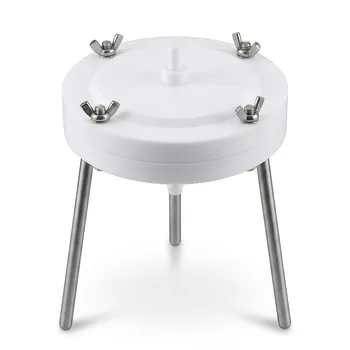
- PTFE Membrane Filter Holder for Aerosol Environmental Monitoring and Low Concentration Particulate Matter Sampling Chemical Resistant Air Quality Analysis Component
- PTFE Filter Membrane Holder 47mm Leak Proof Corrosion Resistant Environmental Sampling Unit Customizable
- PTFE Filter Membrane Holder for Hydrogen Chloride and Water Filtration 90mm Environmental Sampling Clamp Customizable
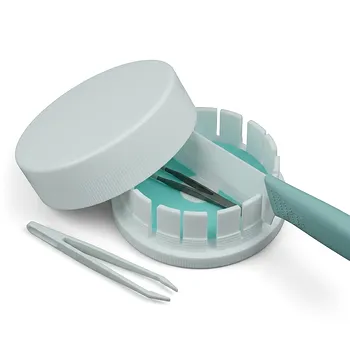
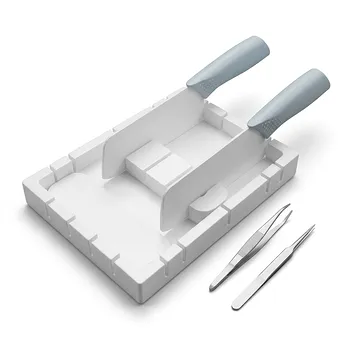
- High Purity PTFE Filter Membrane Cutter with Ceramic Blade for PM2.5 Analysis and Customizable Laboratory Filter Paper Splitter
- High Purity PTFE Circular Filter Membrane Cutter with Ceramic Blade for Trace Analysis and CDC Laboratory Sample Preparation
People Also Ask
- How does the inherent hydrophobicity of PTFE filter membranes affect liquid and gas separation? Optimize Performance
- What is the thermal stability range for PTFE filter membranes? Master Extremes from -200°C to +260°C
- What is the chemical composition and temperature resistance of PTFE filter membranes? Essential Specs for Labs
- What are the performance advantages of PTFE filter membranes vs depth filters? Boosting Lab Purity and Efficiency
- Why are PTFE filter membranes preferred for applications involving aggressive chemicals or high-temperature gases? Expert Guide