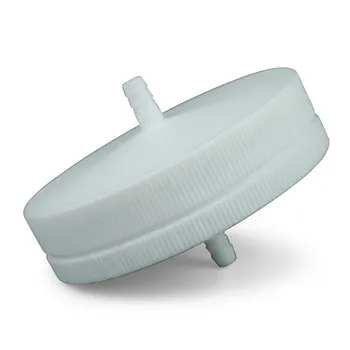
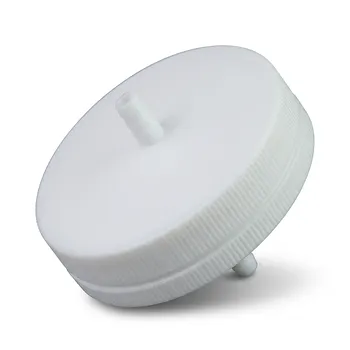
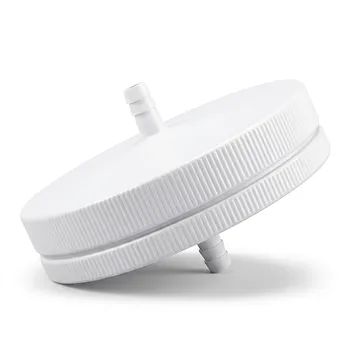
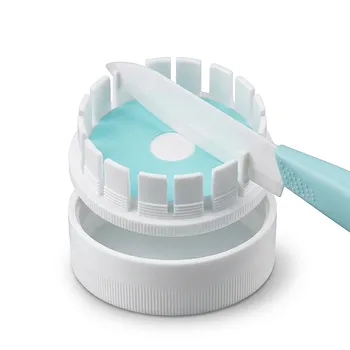
PTFE filter membranes are the industry standard for extreme environments due to their near-total chemical inertness and exceptional thermal stability. They resist degradation from almost all acids, bases, and organic solvents while maintaining structural integrity at temperatures up to 260°C. This unique combination prevents the leaching of contaminants and ensures reliable filtration where other polymers, such as PES or PVDF, would physically or chemically fail.
PTFE membranes provide a "universal" filtration solution that safeguards process purity by eliminating chemical reactions and thermal breakdown in the most demanding industrial applications. Their ability to remain stable under extreme stress makes them the definitive choice for high-stakes manufacturing and laboratory analysis.
The Foundation of Chemical Inertness
Resistance to Corrosive Agents
PTFE is virtually non-reactive with the vast majority of aggressive chemicals, including hydrofluoric acid and strong oxidizers. This "universal" compatibility allows it to withstand environments that would dissolve or swell other plastic membranes.
Prevention of Extractables and Leaching
Because the polymer does not react with the fluid passing through it, there is no release of extractables or "leachables." This is critical in semiconductor manufacturing and pharmaceutical production, where even microscopic contamination can ruin a batch.
Reliability in Organic Solvents
Unlike many polymers that degrade when exposed to harsh organic solvents, PTFE maintains its pore structure and mechanical strength. This ensures that the filtration efficiency remains constant throughout the entire processing cycle.
Performance Under Thermal and Physical Stress
High-Temperature Structural Integrity
PTFE membranes can operate continuously at temperatures reaching 260°C (500°F). This makes them the primary choice for hot gas filtration and high-temperature chemical processing where standard filters would melt or lose their shape.
Non-Flammability and Safety
PTFE carries a high flammability rating, such as UL94 V0, meaning it is inherently flame-retardant. This adds a critical layer of safety in high-heat industrial applications where volatile gases or chemicals are present.
Hydrophobicity and Adhesion Resistance
The naturally hydrophobic nature of PTFE prevents water from easily entering the pores, which is ideal for venting and gas filtration. Additionally, its smooth, "non-stick" surface resists material adhesion, preventing particulate buildup and making the membranes easier to clean.
Understanding the Trade-offs
The Challenge of Aqueous Filtration
Because PTFE is naturally hydrophobic, it resists the flow of water-based liquids. To use PTFE for aqueous filtration, the membrane must often be pre-wet with an alcohol or treated with a hydrophilic coating, which can add complexity to the process.
Cost and Complexity
PTFE is generally more expensive to manufacture and procure than common polymers like Polyethersulfone (PES). Furthermore, while it is easily machined into complex geometries, its specialized nature means it is typically reserved for applications where its unique properties are strictly necessary.
How to Apply This to Your Project
Choosing the Right Membrane
- If your primary focus is Semiconductor or Pharma Purity: Use PTFE to ensure zero leaching and to maintain the highest levels of fluid cleanliness in the presence of aggressive solvents.
- If your primary focus is High-Temperature Gas Filtration: Prioritize PTFE for its 260°C thermal ceiling and its non-flammable properties to ensure long-term structural survival.
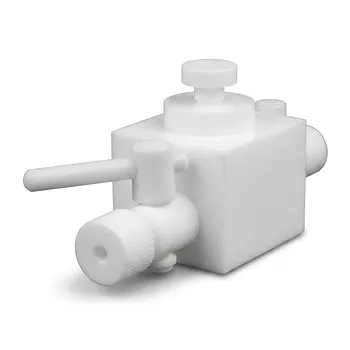
- If your primary focus is Corrosive Chemical Transport: Utilize PTFE gaskets, valves, and filters to prevent material degradation and leaks in systems handling concentrated acids or bases.
By selecting PTFE, you are investing in a material that offers the highest level of protection against chemical attack and thermal failure.
Summary Table:
| Feature | Performance Specification | Key Application Benefit |
|---|---|---|
| Chemical Inertness | Resists nearly all acids, bases, and solvents | Prevents leaching and ensures process purity |
| Thermal Stability | Maintains integrity up to 260°C (500°F) | Ideal for high-temperature hot gas filtration |
| Surface Property | Naturally Hydrophobic & Non-stick | Resists moisture and material adhesion |
| Safety Rating | UL94 V0 Flame-Retardant | Critical for volatile industrial environments |
Elevate Your Lab with Precision-Engineered PTFE & PFA Solutions
When your processes demand absolute chemical resistance and thermal stability, KINTEK delivers the performance you need. From everyday basic labware like beakers, crucibles, and reagent bottles to high-purity trace analysis instruments and comprehensive fluid transfer components (tubing, fittings, and valves), we specialize in high-performance fluoropolymer materials.
Our expertise extends to advanced reaction apparatus, including custom electrochemical cells, microwave digestion vessels, and microchannel reactors. Backed by end-to-end custom CNC fabrication, KINTEK can provide everything from complex non-standard machined parts to high-volume orders of general consumables like gaskets, seal tapes, and O-rings.
Ensure zero contamination and maximum durability in your extreme environments—Contact KINTEK today for bespoke laboratory setups and high-volume fluoropolymer supplies!
Related Products
- PTFE Membrane Filter Holder for Aerosol Environmental Monitoring and Low Concentration Particulate Matter Sampling Chemical Resistant Air Quality Analysis Component
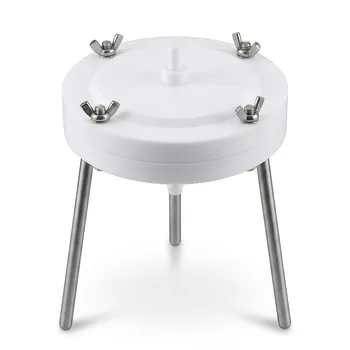
- PTFE Filter Membrane Holder 47mm Leak Proof Corrosion Resistant Environmental Sampling Unit Customizable
- PTFE Filter Membrane Holder for Hydrogen Chloride and Water Filtration 90mm Environmental Sampling Clamp Customizable
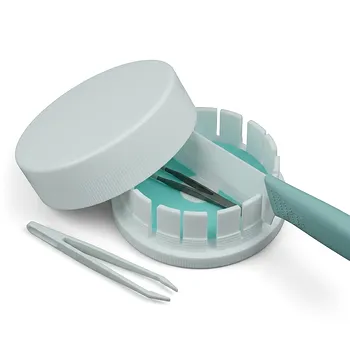
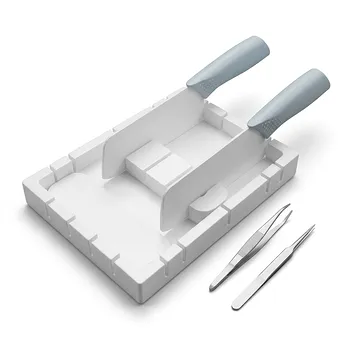
- High Purity PTFE Filter Membrane Cutter with Ceramic Blade for PM2.5 Analysis and Customizable Laboratory Filter Paper Splitter
- High Purity PTFE Circular Filter Membrane Cutter with Ceramic Blade for Trace Analysis and CDC Laboratory Sample Preparation
People Also Ask
- How does the inherent hydrophobicity of PTFE filter membranes affect liquid and gas separation? Optimize Performance
- What are the structural characteristics and manufacturing principles of Polytetrafluoroethylene (PTFE) filter membranes?
- What is the thermal stability range for PTFE filter membranes? Master Extremes from -200°C to +260°C
- What is the chemical composition and temperature resistance of PTFE filter membranes? Essential Specs for Labs
- What are the performance advantages of PTFE filter membranes vs depth filters? Boosting Lab Purity and Efficiency