PTFE filter membranes offer one of the most expansive thermal operating windows in polymer science. In industrial processes, these membranes support continuous service at temperatures ranging from -200°C to +260°C (-328°F to 500°F).
Core Takeaway: Polytetrafluoroethylene (PTFE) membranes provide a "best-in-class" thermal range, maintaining mechanical integrity and pore structure from cryogenic levels up to 260°C. This resilience makes them the definitive choice for extreme environments where standard organic filter media would degrade or fail.
The Mechanics of PTFE Thermal Stability
The Strength of Carbon-Fluorine Bonds
The exceptional heat resistance of PTFE is a direct result of its molecular structure. The bond between carbon and fluorine is one of the strongest in organic chemistry, requiring significant energy to rupture.
This chemical stability prevents the polymer chains from breaking down or reorganizing when exposed to high thermal energy. Consequently, the membrane retains its pore geometry and filtration efficiency even under intense heat.
Performance in Cryogenic Conditions
Unlike many plastics that become brittle and shatter at sub-zero temperatures, PTFE remains functional down to -200°C. Some industrial variations can even withstand temperatures as low as -270°C.
This low-temperature ductility allows PTFE membranes to be used in liquid nitrogen applications and aerospace environments. The material maintains enough flexibility to avoid cracking during thermal cycling.
Handling High-Temperature Extremes
Continuous vs. Short-Term Exposure
While 260°C (500°F) is the limit for continuous industrial service, PTFE can tolerate brief excursions to higher temperatures. Most membranes can withstand spikes up to 290°C for short periods without immediate structural failure.
If these limits are exceeded for long durations, the material may begin to soften, potentially altering the micron rating of the filter. However, the membrane will typically return to its original state once temperatures normalize, provided the excursion was brief.
The Threshold of Thermal Degradation
Actual thermal degradation of the PTFE polymer does not begin until it reaches approximately 400°C. At this point, the material begins to release gaseous byproducts and loses its mechanical utility.
In practical industrial filtration, the operational limit is kept much lower (260°C) to ensure the dimensional stability of the filter housing and support structures. This safety margin ensures the membrane does not "creep" or deform under pressure.
Understanding the Trade-offs
Mechanical Stress at Temperature Extremes
While the material is thermally stable, its mechanical strength can vary at the edges of its temperature range. At the high end (above 200°C), PTFE becomes softer and more susceptible to deformation under high differential pressures.
Thermal Expansion Considerations
PTFE has a relatively high coefficient of thermal expansion compared to the metal housings that often contain it. In systems with frequent temperature swings, engineers must account for the way the membrane and its seals expand and contract.
Failure to manage these dimensional changes can lead to bypass leakage or physical damage to the membrane edges. It is critical to ensure that the entire filter assembly, not just the PTFE media, is rated for the target temperature.
How to Apply This to Your Process
Making the Right Choice for Your Goal
- If your primary focus is steam sterilization (SIP): PTFE is the ideal choice as it easily withstands repeated cycles at 121°C to 135°C without loss of integrity.
- If your primary focus is hot-gas filtration: Utilize PTFE for continuous streams up to 260°C, ensuring that the filter cage or support is also made of a heat-resistant alloy.
- If your primary focus is cryogenic chemical processing: Leverage PTFE's ability to remain ductile at -200°C to prevent membrane cracking and system contamination.
By understanding these thermal boundaries, you can safely deploy PTFE membranes in the most demanding industrial environments with total confidence in their structural performance.
Summary Table:
| Operational Parameter | Temperature Range (°C) | Industrial Application / Note |
|---|---|---|
| Continuous Service | -200°C to +260°C | Standard industrial filtration and processing |
| Cryogenic Limits | Down to -270°C | Liquid nitrogen and aerospace environments |
| Short-term Spikes | Up to +290°C | Brief excursions without immediate failure |
| Steam Sterilization (SIP) | 121°C to 135°C | Repeated medical and food-grade cycles |
| Thermal Degradation | ~400°C | Polymer breakdown and release of gaseous byproducts |
Elevate Your Lab Performance with High-Performance Fluoropolymers
At KINTEK, we specialize in the absolute focus of high-performance fluoropolymer materials, ensuring your processes remain stable under the most extreme thermal conditions. Whether you are managing cryogenic chemical processing or high-heat industrial filtration, our comprehensive range of PTFE and PFA supplies is designed to exceed your expectations.
From everyday essentials like beakers, crucibles, and reagent bottles to advanced standard and custom electrochemical cells, battery testing fixtures, and microwave digestion vessels, KINTEK provides everything you need. Our end-to-end custom CNC fabrication allows us to deliver complex non-standard machined parts and bespoke laboratory setups tailored exactly to your specifications.
Why choose KINTEK?
- Precision Labware: High-purity trace analysis instruments and cleaning tanks.
- Fluid Control: Durable tubing, fittings, and comprehensive fluid transfer components.
- Sample Prep: Superior filters, separatory funnels, and filtration tools.
- Custom Engineering: Bespoke solutions for microchannel reactors and reaction apparatus.
Don't let thermal instability compromise your results. Contact KINTEK today to discuss your custom project or high-volume order and experience the resilience of premium fluoropolymer engineering!
Related Products
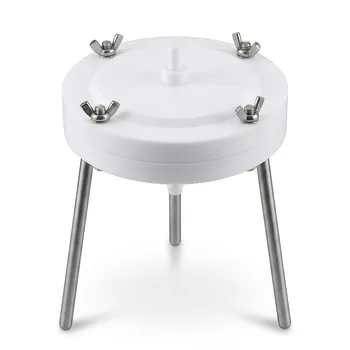
- PTFE Membrane Filter Holder for Aerosol Environmental Monitoring and Low Concentration Particulate Matter Sampling Chemical Resistant Air Quality Analysis Component
- PTFE Filter Membrane Holder 47mm Leak Proof Corrosion Resistant Environmental Sampling Unit Customizable
- PTFE Filter Membrane Holder for Hydrogen Chloride and Water Filtration 90mm Environmental Sampling Clamp Customizable
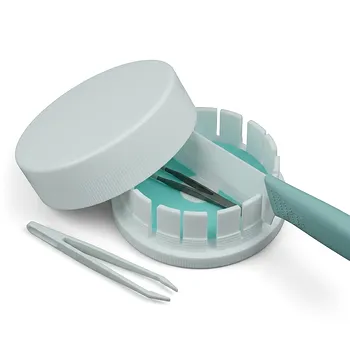
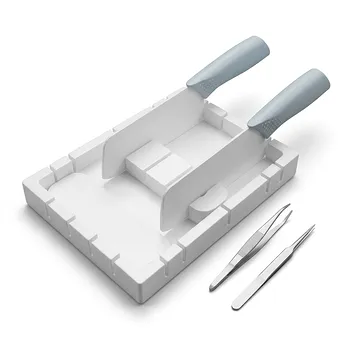
- High Purity PTFE Filter Membrane Cutter with Ceramic Blade for PM2.5 Analysis and Customizable Laboratory Filter Paper Splitter
- High Purity PTFE Circular Filter Membrane Cutter with Ceramic Blade for Trace Analysis and CDC Laboratory Sample Preparation
People Also Ask
- How does the inherent hydrophobicity of PTFE filter membranes affect liquid and gas separation? Optimize Performance
- What are the structural characteristics and manufacturing principles of Polytetrafluoroethylene (PTFE) filter membranes?
- What is the chemical composition and temperature resistance of PTFE filter membranes? Essential Specs for Labs
- What are the performance advantages of PTFE filter membranes vs depth filters? Boosting Lab Purity and Efficiency
- Why are PTFE filter membranes preferred for applications involving aggressive chemicals or high-temperature gases? Expert Guide