The chemical resistance of Polytetrafluoroethylene (PTFE) membranes provides an unparalleled barrier against degradation, ensuring that filtration systems remain functional in environments that would destroy most other polymers. Because PTFE is inert to nearly all acids, bases, and organic solvents, it prevents the leaching of contaminants into the filtrate, maintaining the high levels of purity required in critical industrial processes.
Core Takeaway: PTFE filter membranes serve as the industry standard for aggressive filtration because their molecular structure provides near-universal chemical inertness. This allows for the safe processing of corrosive fluids while guaranteeing that the filter itself does not become a source of contamination.
The Molecular Foundation of Chemical Inertness
The Strength of the Carbon-Fluorine Bond
The exceptional resistance of PTFE stems from its linear fluoropolymer structure, composed of repeating –CF2–CF2– units. The carbon-fluorine (C-F) bond is one of the strongest in organic chemistry, requiring immense energy to break.
The Shielding Effect of Fluorine Atoms
In a PTFE molecule, large fluorine atoms form a protective sheath around the carbon backbone. This shielding effect physically prevents reactive molecules from reaching the carbon chain, effectively neutralizing the threat of chemical attack.
Low Surface Energy and Non-Reactivity
Beyond its internal bonds, PTFE possesses low surface energy, which contributes to its non-stick properties. This characteristic ensures that corrosive substances do not easily adhere to or penetrate the membrane structure, further enhancing its longevity.
Industrial Performance Benefits
Preservation of Fluid Purity
In industries like pharmaceutical production and semiconductor manufacturing, even microscopic levels of contamination are catastrophic. PTFE’s inertness ensures there is no leaching or outgassing of chemicals from the membrane into the fluid being filtered.
Resistance to Highly Aggressive Media
PTFE is one of the few materials capable of handling hydrofluoric acid and strong oxidizers without degrading. This allows industrial plants to use a single membrane type across various harsh chemical streams, simplifying inventory and process design.
Stability Across Extreme Temperatures
Chemical resistance is often compromised by heat, but PTFE remains stable from –200 °C to +260 °C. This thermal range allows for the filtration of boiling acids or cryogenic fluids without the risk of the membrane melting or becoming brittle.
Understanding the Trade-offs
Vulnerability to Specific Reactive Agents
While nearly universal in its resistance, PTFE is not invincible. It can be damaged by molten alkali metals and highly specific fluorinating agents such as chlorine trifluoride or xenon difluoride, especially at elevated pressures.
Mechanical Considerations
Because PTFE is a soft plastic, it can be prone to "creep" or mechanical deformation under extreme pressure. In filtration applications, this is usually mitigated by laminating the PTFE membrane to a more rigid support material, such as polypropylene or polyester.
Cost vs. Performance
PTFE is generally more expensive than standard polymers like nylon or polyethersulfone (PES). Users must weigh the higher initial investment against the significantly longer service life and the reduced risk of process failure in corrosive environments.
How to Apply This to Your Project
Selecting the Right Membrane for Your Goal
Choosing the correct filtration media depends on the specific chemical and thermal demands of your industrial environment.
- If your primary focus is Pharmaceutical Purity: Utilize PTFE to eliminate the risk of extractables and leachables, ensuring your final product meets stringent regulatory safety standards.
- If your primary focus is Semiconductor Manufacturing: Leverage PTFE’s resistance to hydrofluoric acid and aggressive solvents to maintain the ultra-high purity levels required for wafer processing.
- If your primary focus is Chemical Processing Longevity: Opt for PTFE in high-temperature, corrosive streams to reduce the frequency of filter replacements and minimize system downtime.
By aligning the unique chemical properties of PTFE with your specific process requirements, you ensure a filtration system that is both reliable and exceptionally durable.
Summary Table:
| Feature | Performance Benefit | Industrial Application |
|---|---|---|
| Chemical Inertness | Resists nearly all acids, bases, and solvents | Semiconductor & Chemical Processing |
| Thermal Stability | Operates from –200 °C to +260 °C | Cryogenic & High-Heat Filtration |
| Low Surface Energy | Prevents adhesion and membrane fouling | High-Efficiency Fluid Recovery |
| Zero Leaching | Ensures no contaminants enter the filtrate | Pharmaceutical & Trace Analysis |
Elevate Your Lab Performance with KINTEK’s High-Performance Fluoropolymers
Facing challenges with corrosive chemicals or extreme temperatures? KINTEK is your premier partner for high-performance PTFE and PFA laboratory solutions. From everyday basic labware like beakers, crucibles, and reagent bottles to specialized high-purity trace analysis tools and fluid transfer components (tubing, fittings, valves), we provide the durability your processes demand.
Our expertise extends to advanced reaction apparatus, including custom electrochemical cells, battery testing fixtures, and microwave digestion vessels. Whether you need standard consumables like stirring bars and O-rings or complex, bespoke components delivered via our end-to-end custom CNC fabrication, KINTEK ensures absolute material purity and precision.
Ready to optimize your industrial filtration or lab setup? Contact our experts today to discuss your custom requirements and discover the KINTEK advantage.
Related Products
- PTFE Membrane Filter Holder for Aerosol Environmental Monitoring and Low Concentration Particulate Matter Sampling Chemical Resistant Air Quality Analysis Component
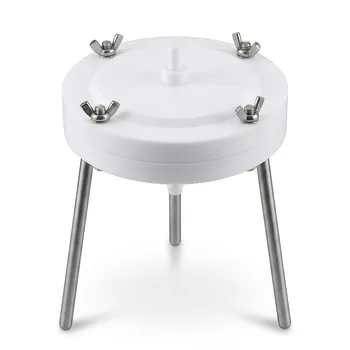
- PTFE Filter Membrane Holder 47mm Leak Proof Corrosion Resistant Environmental Sampling Unit Customizable
- PTFE Filter Membrane Holder for Hydrogen Chloride and Water Filtration 90mm Environmental Sampling Clamp Customizable
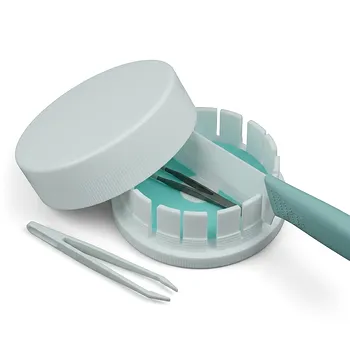
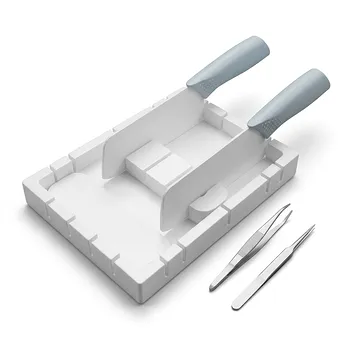
- High Purity PTFE Filter Membrane Cutter with Ceramic Blade for PM2.5 Analysis and Customizable Laboratory Filter Paper Splitter
- High Purity PTFE Circular Filter Membrane Cutter with Ceramic Blade for Trace Analysis and CDC Laboratory Sample Preparation
People Also Ask
- How does the inherent hydrophobicity of PTFE filter membranes affect liquid and gas separation? Optimize Performance
- What are the structural characteristics and manufacturing principles of Polytetrafluoroethylene (PTFE) filter membranes?
- What is the thermal stability range for PTFE filter membranes? Master Extremes from -200°C to +260°C
- What is the chemical composition and temperature resistance of PTFE filter membranes? Essential Specs for Labs
- What are the performance advantages of PTFE filter membranes vs depth filters? Boosting Lab Purity and Efficiency