The production of expanded PTFE (ePTFE) filter membranes is a specialized thermo-mechanical process that transforms solid PTFE resin into a microporous structure through four primary stages: paste extrusion, lubricant evaporation, rapid stretching (expansion), and sintering. By precisely controlling the rate and temperature of stretching, manufacturers can dictate the membrane's final porosity, pore size, and permeability.
Core Takeaway: ePTFE membranes are created by expanding a lubricated PTFE "paste" under high heat, which creates a unique node-and-fibril microstructure that provides exceptional filtration efficiency and chemical resistance.
The Preparation and Extrusion Phase
Resin Blending and Paste Formation
The process begins with fine-powder PTFE resin mixed with a liquid hydrocarbon lubricant to create a uniform paste. This lubricant acts as a processing aid, reducing the friction and shear stress on the polymer chains during the initial shaping phases.
Preforming and Air Removal
The resulting paste is compressed into a cylindrical preform. This step is critical because it removes entrapped air, which would otherwise create voids or defects in the final membrane.
Ram Extrusion
The preform is forced through an extrusion die using a hydraulic ram to create a continuous sheet or tube. This "paste extrusion" aligns the PTFE molecules, a phenomenon known as fibrillation, which provides the foundational lattice for the upcoming expansion.
Transforming the Sheet into a Membrane
Calendering and Thickness Control
The extruded profile is often passed through a two-roll calender to achieve the desired initial thickness. This stage transforms the thick extrusion into a consistent foil, preparing it for uniform heating and stretching.
Lubricant Evaporation (Drying)
Before the membrane can be expanded, the lubricant must be completely removed to prevent structural failure at high temperatures. The foil is passed through a drying oven, typically maintained between 150°C and 200°C, ensuring the volatile hydrocarbons are fully evaporated.
Longitudinal and Transverse Expansion
The dry PTFE is rapidly stretched at elevated temperatures, usually near 300°C. During this "expansion," the solid material breaks into a complex web of nodes and fibrils, creating the micropores required for filtration.
Finalizing the Structural Integrity
Sintering and Amorphous Locking
To prevent the membrane from shrinking back to its original size, it undergoes sintering at temperatures above its crystalline melting point (approximately 340°C). This "heat setting" locks the fibrillar structure in place and significantly increases the material's tensile strength.
Mechanical Reinforcement (Lamination)
Because ePTFE membranes are exceptionally thin and delicate, they are often laminated to a support fabric, such as polyester or polypropylene. This provides the mechanical durability needed for industrial filter housing and high-pressure applications.
Understanding the Trade-offs
Porosity vs. Mechanical Strength
Increasing the expansion ratio creates higher porosity and better airflow, but it simultaneously thins the fibrils. This results in a membrane that is more efficient at filtering but more susceptible to mechanical tearing or abrasion.
Temperature Resistance vs. Support Compatibility
While the ePTFE membrane itself can withstand temperatures up to 260°C, the overall filter is often limited by the support substrate. Choosing a low-cost laminate like polypropylene can undermine the inherent thermal advantages of the PTFE core.
Selecting the Right Membrane for Your Project
How to Apply This to Your Goal
When integrating ePTFE membranes into a filtration system, the manufacturing variables must align with your specific environmental demands.
- If your primary focus is High-Efficiency Particulate Air (HEPA) filtration: Select a membrane with a high expansion ratio to ensure maximum pore density and minimal pressure drop.
- If your primary focus is aggressive chemical processing: Ensure the membrane is unsintered or laminated with fluoropolymer supports (like PFA) to maintain total chemical inertness.
- If your primary focus is high-pressure liquid filtration: Prioritize membranes that have undergone secondary sintering and heavy-duty lamination to prevent pore deformation under load.
By mastering the balance of heat and tension during expansion, manufacturers create the most versatile filtration media available in modern industry.
Summary Table:
| Manufacturing Stage | Key Process Action | Resulting Material Property |
|---|---|---|
| 1. Preparation | Paste extrusion & Fibrillation | Aligns PTFE molecules into a foundational lattice. |
| 2. Drying | Lubricant evaporation (150-200°C) | Removes volatile hydrocarbons to prevent structural defects. |
| 3. Expansion | Rapid stretching near 300°C | Creates the microporous node-and-fibril microstructure. |
| 4. Sintering | Heat setting above 340°C | Locks the porous structure and increases tensile strength. |
Optimize Your Filtration with KINTEK Fluoropolymer Expertise
Elevate your laboratory and industrial processes with high-performance solutions from KINTEK. Specializing exclusively in high-performance fluoropolymers, we provide everything from everyday labware (beakers, crucibles, and reagent bottles) to specialized fluid transfer components and advanced reaction apparatus like electrochemical cells and microwave digestion vessels.
Whether you require high-purity trace analysis instruments or complex, custom-machined ePTFE components, our end-to-end CNC fabrication ensures your exact specifications are met. From bespoke laboratory setups to high-volume orders, KINTEK delivers the durability and chemical resistance your project demands.
Ready to upgrade your equipment? Contact our technical team today for custom solutions and high-performance PTFE/PFA supplies!
Related Products
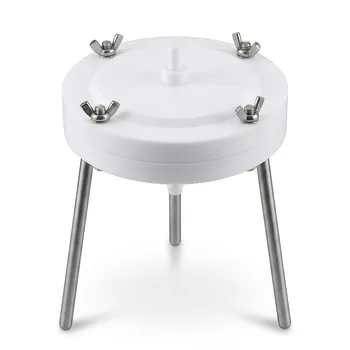
- PTFE Filter Membrane Holder for Hydrogen Chloride and Water Filtration 90mm Environmental Sampling Clamp Customizable
- PTFE Membrane Filter Holder for Aerosol Environmental Monitoring and Low Concentration Particulate Matter Sampling Chemical Resistant Air Quality Analysis Component
- PTFE Filter Membrane Holder 47mm Leak Proof Corrosion Resistant Environmental Sampling Unit Customizable
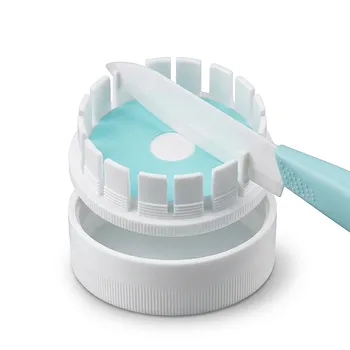
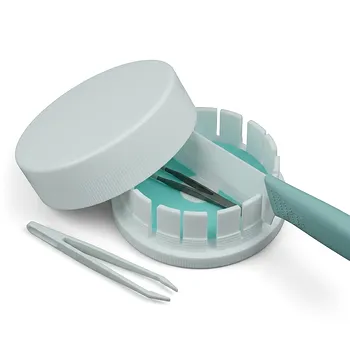
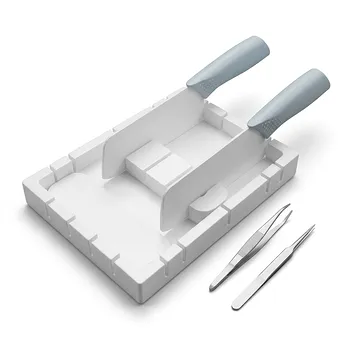
- High Purity PTFE Filter Membrane Cutter with Ceramic Blade for PM2.5 Analysis and Customizable Laboratory Filter Paper Splitter
- Custom PTFE Water Quality Filter 202mm Diameter 142mm Membrane Corrosion Resistant Holder
People Also Ask
- What are the structural characteristics and manufacturing principles of Polytetrafluoroethylene (PTFE) filter membranes?
- What is the thermal stability range for PTFE filter membranes? Master Extremes from -200°C to +260°C
- What is the chemical composition and temperature resistance of PTFE filter membranes? Essential Specs for Labs
- What are the performance advantages of PTFE filter membranes vs depth filters? Boosting Lab Purity and Efficiency
- How does the inherent hydrophobicity of PTFE filter membranes affect liquid and gas separation? Optimize Performance