Fluoropolymer composite membranes enhance adsorption by combining high-capacity functional additives with a chemically robust support. Incorporating structures such as metal-organic frameworks (MOFs) can increase pollutant adsorption to nearly 50 times that of pristine polymer membranes. The fluoropolymer matrix preserves membrane shape, resists aggressive solvents and temperatures, and helps keep the active particles immobilized rather than releasing them into the filtrate.
The core advantage is a division of roles: the functional additive captures pollutants, while the fluoropolymer provides the mechanical, chemical, and thermal stability needed for reliable laboratory filtration.
How the Composite Increases Pollutant Adsorption
Functional additives provide additional binding sites
Pristine fluoropolymers are durable but generally have limited pollutant-binding capacity. Adding MOFs or other functional structures introduces porous networks and chemically active sites that can interact with target contaminants.
These interactions may include pore confinement, surface attraction, and affinity between the additive’s functional groups and the pollutant. The result is substantially greater uptake without requiring the entire membrane to be replaced by a fragile adsorbent.
Porosity increases accessible surface area
MOFs are highly porous structures, so they expose much more internal surface area than a flat polymer surface. When the composite is fabricated correctly, pollutants can diffuse into these pores and contact a larger number of adsorption sites.
This improves removal during filtration, provided the additive remains accessible and the membrane’s transport pathways are not blocked by excessive polymer coverage or additive loading.
The membrane combines separation and adsorption
A composite membrane can perform two functions in one laboratory step. Its pores physically regulate fluid and particle passage, while the embedded functional additive captures dissolved pollutants that would otherwise pass through a conventional filter.
This is particularly useful in sample preparation and purification, where the objective is not only to remove particulates but also to reduce dissolved contaminants without compromising the sample matrix.
How Structural Stability Is Preserved
The fluoropolymer acts as a durable scaffold
Fluoropolymer backbones provide strong resistance to aggressive organic solvents, corrosive media, and elevated temperatures. They also offer mechanical strength and dimensional stability, helping the membrane retain its pore structure during filtration.
This is important because adsorption capacity is useful only if the membrane remains intact and its flow characteristics remain predictable throughout the experiment.
Chemical inertness protects the support
The fluoropolymer is less likely to degrade or chemically react with the sample than many conventional membrane materials. This reduces the risk that the support will swell, dissolve, or release degradation products into the filtrate.
Its low-reactivity surface also helps preserve sample integrity when filtration involves complex mixtures or harsh cleaning and conditioning solvents.
Immobilization limits nanoparticle leaching
Embedding the active additive within the fluoropolymer matrix helps anchor it in place. This is a central stability benefit: the MOF or other functional particles can adsorb pollutants without becoming a secondary contaminant in the sample stream.
The degree of protection depends on composite design. Poor interfacial adhesion, oversized pores, or an inadequately secured additive phase can still permit particle loss, so immobilization must be verified experimentally.
Stable morphology supports reproducible performance
Fluoropolymers can be processed into nanoporous structures, multilayered films, and blended or crosslinked morphologies. These options allow researchers to balance additive loading, pore size, permeability, and mechanical strength.
A stable and uniform pore structure helps maintain consistent flux and residence time, which are essential for reproducible adsorption and separation results.
What Matters in a Laboratory Filtration Setup
Additive loading must be optimized
Increasing the amount of MOF does not automatically produce proportionally higher performance. More additive may create more adsorption sites, but it can also obstruct pores, reduce permeability, or weaken the composite if the polymer cannot adequately support the added phase.
The practical target is the highest accessible adsorption capacity that still maintains acceptable flow, mechanical strength, and particle retention.
Surface chemistry should match the pollutant
Fluoropolymer surfaces can be tailored from relatively lipophilic to highly water-repellent, while the additive can provide more specific chemical affinity. The composite should therefore be selected according to the pollutant, solvent, pH, and competing substances in the sample.
For oil-water systems, for example, fluorinated surface structures can contribute selective wetting behavior, while the active additive addresses dissolved or interfacial contaminants.
Operating conditions affect adsorption
Flow rate, contact time, solvent composition, temperature, and pollutant concentration all influence how effectively contaminants reach and occupy the additive’s active sites. High flow can reduce residence time, while aggressive solvents may alter adsorption affinity even when the fluoropolymer itself remains stable.
Laboratory validation should therefore measure both adsorption performance and filtration behavior under the actual intended conditions.
Understanding the Trade-offs
Higher capacity can reduce permeability
Adding porous particles and increasing functional content may narrow transport channels or increase tortuosity. The membrane can then remove more pollutant per unit mass while allowing less liquid to pass through per unit time.
A high-capacity design is not automatically the best design if it causes excessive pressure drop or impractically slow sample preparation.
Strong immobilization may limit accessibility
The polymer must hold the additive securely, but excessive encapsulation can cover or obstruct its pores. This creates a trade-off between particle retention and access to adsorption sites.
Composite fabrication should expose enough of the active structure for pollutant diffusion while maintaining sufficient polymer contact to prevent leaching.
Adsorption capacity does not guarantee selectivity
A membrane may adsorb target pollutants and other sample components simultaneously. Fouling, competitive adsorption, or irreversible binding can reduce capacity and affect recovery of analytes.
For analytical workflows, removal efficiency should be evaluated alongside analyte recovery, background contribution, regeneration behavior, and potential extractables.
Durability still requires testing
Fluoropolymers are highly resistant materials, but the composite interface can be more vulnerable than the polymer alone. Repeated solvent exposure, thermal cycling, pressure changes, and cleaning can alter additive retention or pore structure.
Performance should be checked over the complete number of filtration and regeneration cycles required by the laboratory method.
How to Apply This to Your Project
The most reliable design treats adsorption, flow, and stability as linked requirements rather than optimizing capacity in isolation.
- If your primary focus is maximum pollutant removal: Use a high-surface-area additive such as an MOF and optimize its loading so that its adsorption sites remain accessible.
- If your primary focus is structural stability: Prioritize strong additive immobilization, uniform morphology, and a fluoropolymer grade compatible with the solvent, temperature, and pressure conditions.
- If your primary focus is sample integrity: Select chemically inert materials and test for nanoparticle leaching, polymer extractables, and unintended analyte adsorption.
- If your primary focus is fast laboratory processing: Balance additive loading against permeability, pressure drop, and residence time rather than selecting the highest theoretical adsorption capacity.
- If your primary focus is repeatable analytical performance: Characterize flux, adsorption capacity, recovery, and performance after repeated use under realistic operating conditions.
A well-designed fluoropolymer composite membrane delivers high pollutant capture because its active additive provides adsorption capacity while its fluoropolymer framework keeps the filtration system stable, clean, and reproducible.
Summary Table:
| Component | Role in Adsorption | Contribution to Stability |
|---|---|---|
| Functional Additive (e.g., MOF) | Provides high surface area and active sites for pollutant capture | Can be immobilized within the matrix to prevent leaching |
| Fluoropolymer Matrix | Offers limited adsorption but provides structural support | Resists chemicals, solvents, and high temperatures; maintains mechanical integrity |
| Composite Structure | Combines adsorption and filtration in one step | Ensures membrane shape and pore structure remain stable under operating conditions |
Optimize your lab filtration with advanced PTFE/PFA composite membranes. Our high-performance fluoropolymer solutions offer exceptional durability and customizable designs. Contact KINTEK today to discuss your specific requirements and enhance your filtration efficiency.
Related Products
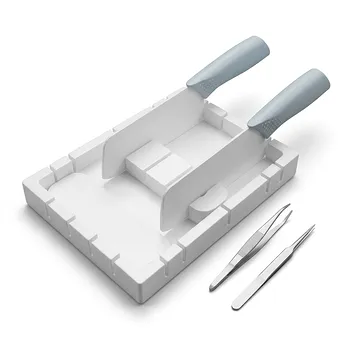
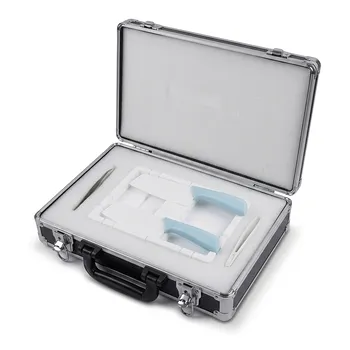
- High Purity PTFE Square Membrane Cutter and Filter Aliquot Device for Trace Analysis and Cleanroom Laboratory Applications
- High Purity 4L PFA Reaction Tank for Proton Exchange Membrane Electrolysis Water Oxygen Separation Systems
- PTFE Membrane Filter Holder for Aerosol Environmental Monitoring and Low Concentration Particulate Matter Sampling Chemical Resistant Air Quality Analysis Component
- High Temperature Resistant PTFE Thermal Insulation Board Corrosion Resistant Metal Free Fluoropolymer Stand for Ultra Clean Laboratories
- High Purity PFA Chromatography Column with Collection Bottle Corrosion Resistant Fluoropolymer Filtration System for Trace Analysis
People Also Ask
- What are the structural characteristics and manufacturing principles of Polytetrafluoroethylene (PTFE) filter membranes?
- What is the chemical composition and temperature resistance of PTFE filter membranes? Essential Specs for Labs
- How does the inherent hydrophobicity of PTFE filter membranes affect liquid and gas separation? Optimize Performance
- What are the performance advantages of PTFE filter membranes vs depth filters? Boosting Lab Purity and Efficiency
- What is the thermal stability range for PTFE filter membranes? Master Extremes from -200°C to +260°C