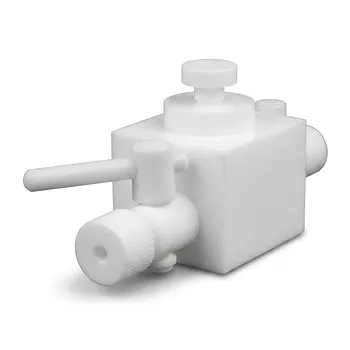
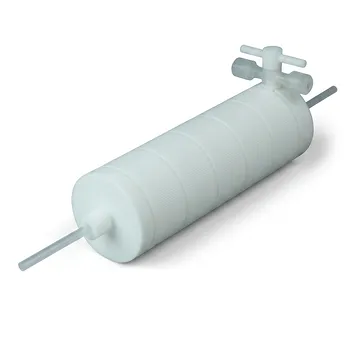
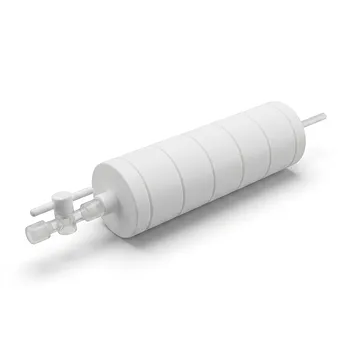
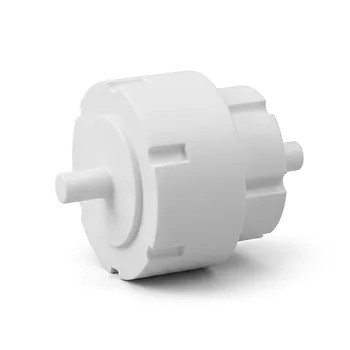
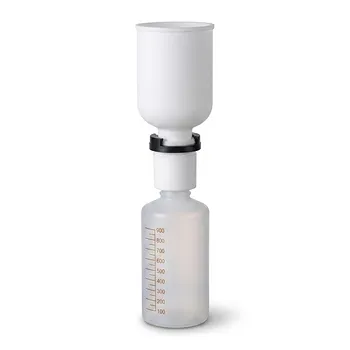
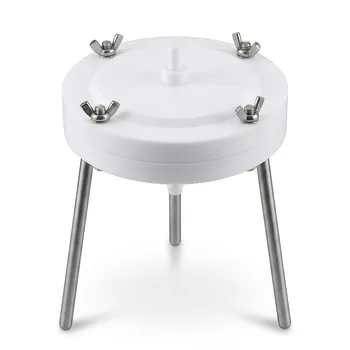
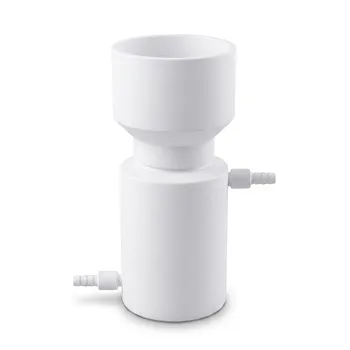
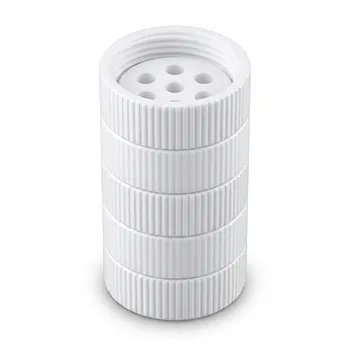
Precision filtration is the final safeguard in nanocomposite photoresist preparation. Utilizing a 0.2 μm PTFE filter immediately after mixing removes trace impurities and undispersed nanoparticle aggregates. This process ensures the photoresist can form the smooth, defect-free, ultra-thin films required for high-resolution sub-micron lithography.
The core purpose of 0.2 μm PTFE filtration is to eliminate microscopic physical inconsistencies that would otherwise compromise film uniformity during spin-coating. By removing aggregates and contaminants, the filter enables the repeatable production of sub-micron patterns essential for advanced microelectronics.
Ensuring Structural Integrity in Lithography
Removal of Large-Scale Aggregates
During the mixing of nanocomposites, nanoparticles frequently form aggregates that are not fully dispersed. If these clusters remain, they create physical "bumps" or "voids" in the photoresist layer, leading to catastrophic failure in the final lithographic pattern.
Achieving Ultra-Thin Film Uniformity
The spin-coating process relies on the fluid dynamics of a perfectly homogeneous solution to achieve a uniform thickness. A 0.2 μm filter ensures that no micro-particles disrupt the radial flow of the resist, allowing for the creation of an ultra-thin, defect-free film.
Enabling Sub-Micron Precision
For lithography to reach sub-micron levels, the surface must be nanoscopically smooth. Even a single 1-micron impurity can act as a mask or a lens, distorting the light path and ruining the precision of the etched features.
The Technical Superiority of PTFE
Universal Chemical Compatibility
PTFE (Polytetrafluoroethylene) is chosen for its exceptional chemical stability and resistance to the aggressive organic solvents used in photoresist formulations. Unlike other materials, PTFE will not degrade or leach "extractables" into the resist, which could alter its chemical sensitivity.
Low Surface Energy and High Recovery
The low surface energy of PTFE prevents the nanocomposite materials, such as carbon nanotubes or metal oxides, from sticking to the filter membrane. This ensures a high recovery rate of the active nanomaterials while only stripping away the oversized clusters.
Prevention of Equipment Clogging
In addition to film quality, filtration protects high-precision dispensing systems. By removing suspended solids and cross-linked microparticles, the filter prevents the clogging of nozzles and needles, extending the operational life of the coating equipment.
Understanding the Trade-offs and Pitfalls
Potential Loss of Active Nanomaterials
If the nanoparticles are not properly functionalized or dispersed before filtration, a 0.2 μm filter may inadvertently remove the active nanocomposite components themselves. This results in a photoresist that is "clean" but lacks the intended physical or electrical properties.
Pressure-Induced Membrane Failure
Exceeding the recommended flow rate or pressure during filtration can lead to membrane rupture or "particle breakthrough." When this occurs, the filter fails to capture contaminants, but the user may remain unaware of the film defects until the final inspection of the lithographic wafer.
Solvent-Specific Selection
While PTFE is highly resistant, users must ensure the filter housing and O-rings are also compatible with the specific solvent system of the photoresist. Failure to do so can introduce plasticizers or degraded polymer fragments into the "clean" resist.
How to Apply This to Your Project
Recommendations for Implementation
- If your primary focus is maximum pattern resolution: Always use a 0.2 μm or smaller filter to ensure no aggregate exceeds the size of your smallest lithographic feature.
- If your primary focus is material consistency: Use PTFE membranes specifically to avoid the leaching of impurities, ensuring the chemical purity of your nanocomposite remains intact.
- If your primary focus is high-throughput production: Implement a multi-stage filtration process (e.g., a 1.0 μm pre-filter followed by a 0.2 μm final filter) to prevent the precision membrane from clogging prematurely.
Rigorous 0.2 μm PTFE filtration is not merely a cleaning step, but a fundamental requirement for the reliable fabrication of next-generation micro-devices.
Summary Table:
| Feature | Benefit to Photoresist | Technical Consideration |
|---|---|---|
| 0.2 μm Pore Size | Removes aggregates & impurities | Prevents defects in sub-micron patterns |
| PTFE Material | Universal chemical compatibility | Resists aggressive organic solvents |
| Low Surface Energy | High recovery of active nanomaterials | Minimizes sticking of functional particles |
| Precision Filtration | Uniform spin-coated thin films | Protects high-precision dispensing nozzles |
Elevate Your Lab’s Precision with KINTEK’s High-Performance Fluoropolymer Solutions
Achieving sub-micron lithography requires the highest material purity. At KINTEK, we specialize in manufacturing an exhaustive range of high-performance laboratory supplies crafted exclusively from premium PTFE and PFA.
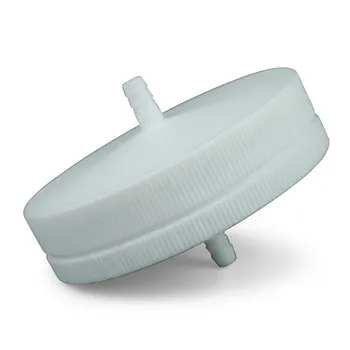
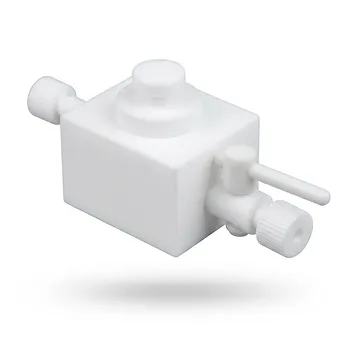
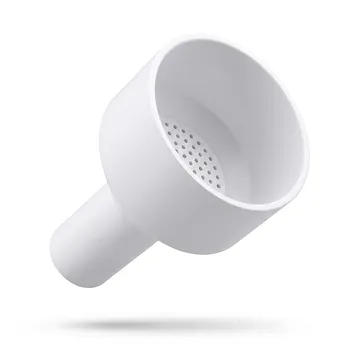
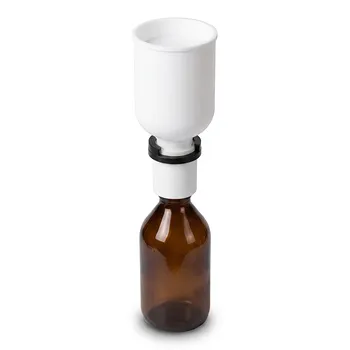
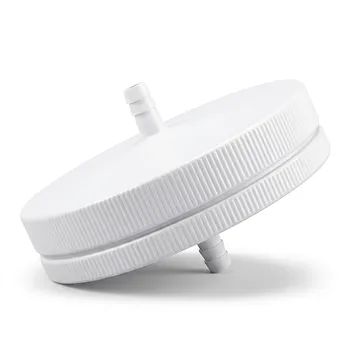
From critical filtration tools (filters, separatory funnels, burettes) and high-purity trace analysis instruments to everyday essentials like beakers, reagent bottles, and centrifuge tubes, we ensure your sensitive photoresist preparations remain uncontaminated. Our capabilities extend to comprehensive fluid transfer components (tubing, valves, fittings) and advanced reaction apparatus such as microchannel reactors and microwave digestion vessels.
Backed by end-to-end custom CNC fabrication, KINTEK can deliver everything from high-volume standard consumables to complex, bespoke laboratory setups tailored to your specific research needs. Don’t let microscopic impurities compromise your results.
References
- Margarita Chatzichristidi, Eleni Makarona. Facile and Rapid Microwave Synthesis of Nickel Oxide Nanoparticles towards Cost‐Efficient Functional Nanocomposite Photoresists. DOI: 10.1002/slct.202405657
This article is also based on technical information from Kintek Knowledge Base .
Related Products
- Custom PTFE Filtration System Acid Resistant High Purity Semiconductor Grade Chemical Processing Filter
- High Purity PTFE Filter with PFA Valve Connections and Integrated Sieve Plate for Corrosive Fluid Processing
- PTFE Corrosion Resistant Filter with PFA Valve Connections and Integrated Sieve Plate
- Custom PTFE Vacuum Filter with Integrated Sieve Plate and Corrosion Resistant Particle Free Design for High Purity Water Quality Analysis
- PTFE PFA Vacuum Filtration System Corrosion Resistant Customizable Shatterproof Laboratory Device
People Also Ask
- What makes PTFE filtration systems advantageous for industrial and scientific use? Unmatched Chemical & Thermal Stability
- What sizes and pore options are available for PTFE filters? Choose the Right Filter for Your Application
- What steps are involved in selecting the proper PTFE filter? A 4-Step Guide to Optimal Filtration
- How does the hydrophobicity of PTFE filters benefit their use? Ensure Uninterrupted Gas Flow and Solvent Filtration
- What temperature resistance do PTFE filters offer? Unmatched Thermal Stability from -200°C to +260°C