Porous fluoropolymer membranes are used as selective barriers for particles, microorganisms, liquids, and gases. In liquid clarification, their submicron pore network retains suspended solids while chemically resistant fluoropolymer media tolerate acids, bases, solvents, and elevated temperatures. In sterile filtration, the membrane removes microorganisms from compatible process streams, while in gas de-aeration it permits dissolved or trapped gases to cross the membrane without allowing liquid breakthrough.
The workflow determines the membrane function: retain particles for clarification, establish a validated microbial barrier for sterile filtration, or provide a hydrophobic gas–liquid interface for de-aeration and venting.
How the Membrane Structure Enables Separation
The role of porous fluoropolymer materials
Materials such as ePTFE, PTFE, PVDF, ETFE, FEP, and ECTFE combine a porous structure with chemical inertness, thermal stability, and low surface energy.
Expanded PTFE is particularly useful where the membrane must remain stable in aggressive solvents, concentrated acids, strong bases, corrosive gases, or hot fluids.
The function of the pore network
A controlled, interconnected pore network provides the separation mechanism. Particles larger than the effective pore openings are retained, while the liquid or gas phase passes through under an applied pressure differential.
The pore structure must be matched to the required retention, flow rate, pressure, and fluid properties. “Submicron” describes a broad range, so the actual pore rating and validated performance remain important.
Why hydrophobicity matters
The hydrophobic surface of ePTFE strongly resists liquid penetration. This allows gas to pass through the membrane while the liquid remains on the opposite side, provided the applied pressure stays below the membrane’s liquid-entry or breakthrough pressure.
That property is central to venting and de-aeration, but it can complicate liquid filtration because a hydrophobic membrane may require pre-wetting with a compatible liquid before aqueous filtration.
Applying Membranes to Liquid Clarification
Removing suspended microscopic solids
In clarification, the membrane is placed in the liquid flow path to capture suspended particles, precipitates, and other microscopic solids.
The filtrate passes through the porous fluoropolymer medium, while retained material accumulates on or within the membrane. This produces a cleaner liquid for downstream analysis, processing, or equipment protection.
Handling aggressive liquid chemistries
Fluoropolymer media are selected when conventional polymeric or fibrous filters could swell, degrade, shed material, or release extractables.
Their chemical resistance supports clarification of organic solvents, corrosive reagents, concentrated acids, strong bases, and high-temperature process liquids, subject to the specific membrane construction and operating limits.
Protecting sample integrity
Low surface energy and non-stick behavior can reduce unwanted adsorption and make retained solids easier to release during cleaning or disposal.
This is valuable in laboratory sample preparation and analytical workflows where contamination, analyte loss, or trace-metal contribution could affect results.
Typical clarification configuration
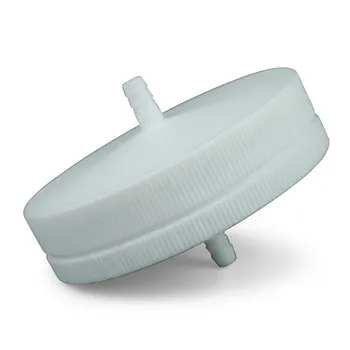
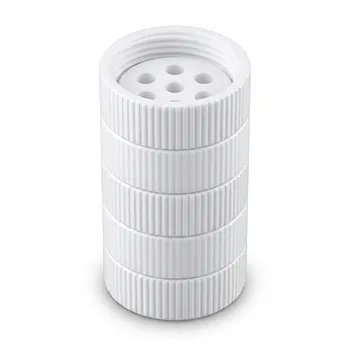
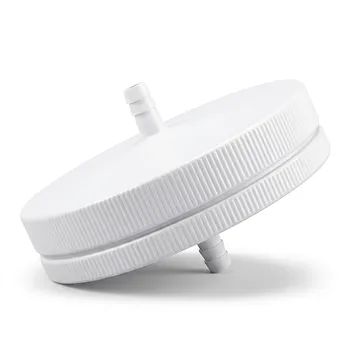
A membrane may be installed as a disc, capsule, cartridge, inline filter, or integrated component in tubing and fluid-handling hardware.
The design should provide adequate membrane area so that the required flow is achieved without excessive pressure drop or rapid solids loading.
Applying Membranes to Sterile Filtration
Creating a microbial barrier
Sterile filtration uses a membrane with a sufficiently small and controlled pore structure to remove bacteria and other microorganisms from a compatible liquid or gas stream.
The membrane is used when the product or process cannot be sterilized by heat, or when filtration provides a practical final barrier before filling, dispensing, or use.
Liquid sterile filtration
For liquid service, the membrane must be compatible with the liquid and properly wetted. A hydrophobic fluoropolymer membrane may need pre-wetting with water, alcohol, or another validated wetting fluid before an aqueous stream can pass consistently.
Sterile performance depends on more than nominal pore size. The complete filter assembly, operating conditions, integrity testing, and process validation must demonstrate the required microbial retention.
Sterile gas filtration and venting
Hydrophobic ePTFE is especially well suited to sterile gas filtration because it allows air or process gas to pass while resisting liquid intrusion.
Installed on vessels, reactors, gas sensor housings, reagent containers, or transfer lines, it can support sterile gas exchange, prevent pressure buildup, and reduce moisture or liquid ingress into sensitive equipment.
Maintaining sterility in the workflow
The membrane must be integrated so that seals, housings, connections, and downstream components do not create bypass paths.
Sterilization compatibility, pressure limits, integrity testing, and the risk of condensate wetting should be considered as part of the entire assembly rather than treating the membrane as an isolated component.
Applying Membranes to Gas De-Aeration
Establishing a gas–liquid interface
In de-aeration, the membrane separates a liquid channel from a vacuum, sweep gas, or low-partial-pressure gas channel.
Dissolved gases migrate from the liquid toward the gas side across the membrane interface. The liquid remains contained because the hydrophobic pores resist liquid breakthrough.
Removing trapped and dissolved gases
This approach can remove air bubbles and reduce dissolved gases from reagent streams, process liquids, and analytical samples.
It is useful where bubbles could disrupt pumping, optical measurements, metering, chromatography, reaction control, or other precision operations.
Using membrane modules and inline assemblies
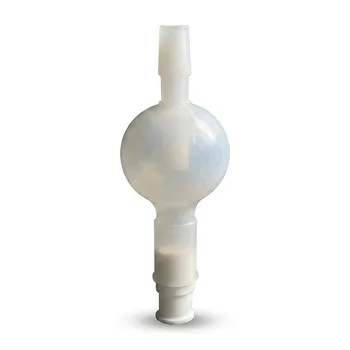
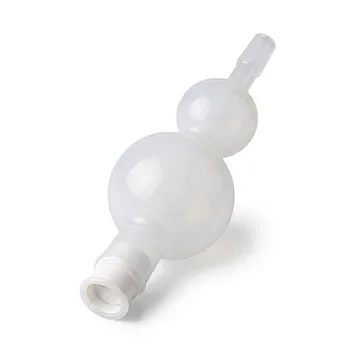
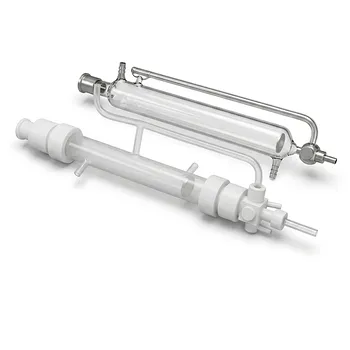
De-aeration membranes may be incorporated into inline filter holders, tubing assemblies, manifolds, or dedicated contactors.
The system must provide sufficient membrane area and residence time for gas transfer while controlling liquid pressure below the breakthrough threshold.
Preventing atmospheric contamination
The gas side can be connected to a controlled vent, vacuum source, or sterile gas path. A hydrophobic membrane can therefore remove gas without opening the liquid system directly to the atmosphere.
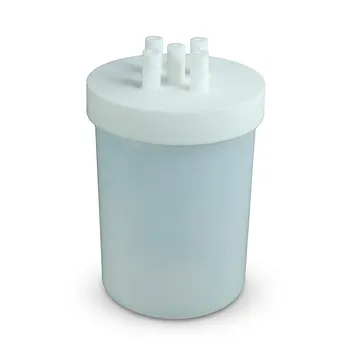
This is also useful for sealed digestion vessels, reagent containers, and laboratory reactors where pressure must be relieved without allowing liquid leakage or environmental contamination.
Designing One Workflow for the Correct Separation Function
Clarification requires solids capacity
The key design variables are particle loading, particle-size distribution, flow rate, pressure drop, and acceptable filter replacement frequency.
A membrane with very fine pores may improve retention but can clog quickly when the feed contains substantial solids. Prefiltration or staged filtration may extend service life.
Sterile filtration requires validation
Sterile service requires a defined retention claim, compatible wetting and sterilization method, controlled operating conditions, and an integrity-test strategy.
The membrane should not be selected solely because it is fluoropolymer or has a nominal submicron rating.
De-aeration requires gas transfer and liquid retention
De-aeration performance depends on membrane area, liquid-side pressure, gas-side pressure or sweep conditions, temperature, and the concentration of dissolved gas.
The operating pressure must remain below the liquid breakthrough limit, with suitable controls for pressure excursions and condensate accumulation.
Understanding the Trade-offs
Chemical resistance does not remove all compatibility limits
Fluoropolymers tolerate many aggressive environments, but the complete assembly may include adhesives, support layers, seals, housings, or coatings with lower chemical or thermal resistance.
Compatibility must therefore be checked for the entire wetted and exposed construction, not only the membrane polymer.
Hydrophobicity can hinder aqueous filtration
The same water repellency that enables gas venting can make direct water filtration difficult.
Pre-wetting, surface treatment, or a different membrane configuration may be required. Any treatment should be evaluated for extractables, chemical compatibility, and impact on pore performance.
Fine pores increase fouling risk
Smaller pores generally improve particle retention but also increase susceptibility to blockage and pressure rise.
For clarification, the best membrane is not necessarily the finest membrane; it is the one that achieves the required cleanliness with acceptable throughput and service life.
Pressure control is essential
Exceeding the liquid-entry pressure can force liquid through a hydrophobic membrane and defeat the intended gas-only barrier.
Pressure relief, differential-pressure monitoring, and appropriate housing design are especially important in sealed vessels and de-aeration systems.
Sterility is a system property
A membrane can provide strong microbial retention while the overall process still fails because of poor seals, incorrect installation, inadequate sterilization, or downstream contamination.
Sterile filtration therefore requires process controls and verification around the membrane assembly.
Choosing the Right Manufacturing and Surface Structure
Selecting the pore-forming method
Porous fluoropolymers can be produced through phase inversion, electrospinning, sintering, or track-etching.
These methods create different pore geometries, thicknesses, mechanical properties, and flow characteristics. Track-etched membranes, for example, provide highly defined straight-through pores, while electrospun structures create fibrous networks.
Using supports and coatings
A porous fluoropolymer layer may be supported by a stronger substrate or applied as a conformal coating.
Conformal fluoropolymer coatings can add water repellency and chemical resistance while preserving the underlying pore structure, provided the coating does not obstruct the pores or reduce required permeability.
Matching the membrane to the equipment
The membrane must be designed into the correct form factor, such as a disc, capsule, cartridge, tubing insert, vent, or inline module.
Mechanical support is important when the membrane faces pressure cycling, vacuum, elevated temperature, flow pulsation, or repeated sterilization.
Applying This to Your Workflow
The most reliable selection begins with the required separation function, then verifies chemistry, pressure, temperature, sterility, and flow requirements.
- If your primary focus is liquid clarification: Select a chemically compatible porous fluoropolymer with the required particle-retention rating and enough surface area to limit fouling and pressure buildup.
- If your primary focus is sterile filtration: Use a validated membrane and complete assembly with appropriate pore performance, wetting behavior, sterilization compatibility, integrity testing, and contamination control.
- If your primary focus is gas de-aeration or sterile venting: Use a hydrophobic ePTFE-style membrane, maintain liquid pressure below breakthrough pressure, and provide a controlled vacuum, sweep-gas, or sterile-vent path.
- If your primary focus is aggressive chemical processing: Evaluate the entire membrane assembly—including supports, seals, coatings, and housing—for chemical exposure, temperature, extractables, and mechanical stability.
The right porous fluoropolymer membrane is the one whose pore structure, surface chemistry, and complete assembly are matched to the separation objective and operating conditions.
Summary Table:
| Application | Membrane Function | Key Considerations |
|---|---|---|
| Liquid Clarification | Retain suspended solids | Pore size, solids loading, chemical compatibility |
| Sterile Filtration | Remove microorganisms | Validated retention, wetting, integrity testing |
| Gas De-aeration | Remove dissolved/trapped gases | Hydrophobicity, pressure control, gas-side management |
Need a custom porous fluoropolymer membrane for your lab? At KINTEK, we specialize in high-performance PTFE and PFA lab supplies, including membranes for filtration and degassing. Our experts can help you select or design the perfect solution for your workflow. Contact us today to discuss your requirements and get a quote.
Related Products
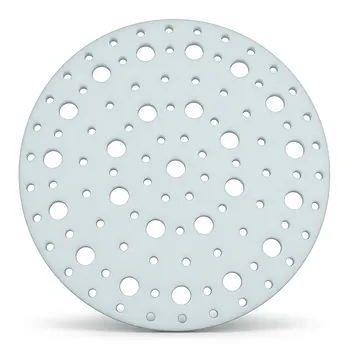
- High Temperature Resistant Insulating TFM Separator and Ultra Clean Laboratory PTFE Baffle Plate with Customizable Pore Size and Hole Configuration
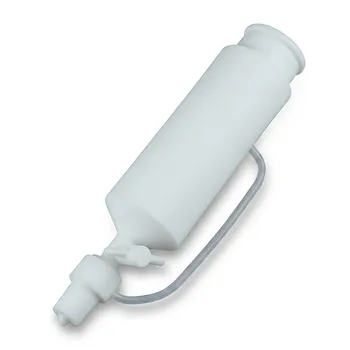
- Custom PTFE Constant Pressure Separatory Funnel 100ml Fluoropolymer Labware for Corrosive Chemical Transfer
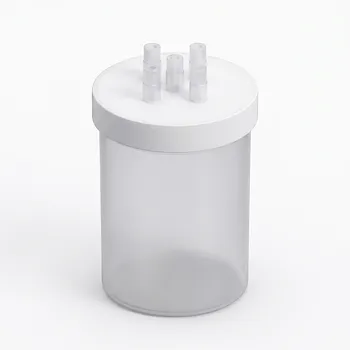
- High Purity 4L PFA Reaction Tank for Proton Exchange Membrane Electrolysis Water Oxygen Separation Systems
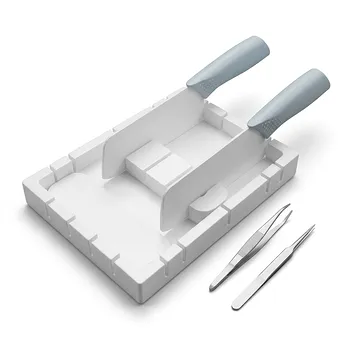
- High Purity PTFE Square Membrane Cutter and Filter Aliquot Device for Trace Analysis and Cleanroom Laboratory Applications
- PTFE Membrane Filter Holder for Aerosol Environmental Monitoring and Low Concentration Particulate Matter Sampling Chemical Resistant Air Quality Analysis Component
People Also Ask
- What are the limitations of pure PTFE in high temperature applications? Understanding the 200°C Ceiling
- Are Teflon parts capable of withstanding high temperatures? Understanding the 260°C Limit for Performance
- What future advancements are expected in temperature-resistant PTFE seals? Discover Smarter, Tougher Sealing Solutions
- What is porous PTFE used for? Advanced Filtration for Harsh Chemical & High-Temp Environments
- What are the benefits of porous PTFE? Unlock Superior Filtration and Chemical Resistance