Knowledge PTFE filter membrane What role does high-temperature sintering play during the orientation process of expanded PTFE (ePTFE) filtration membranes and seals? Stabilize Pore Structure & Dimensions
Author avatar

Tech Team · Kintek

Updated 3 months ago

What role does high-temperature sintering play during the orientation process of expanded PTFE (ePTFE) filtration membranes and seals? Stabilize Pore Structure & Dimensions


High-temperature sintering is the stabilization step that makes ePTFE’s oriented structure permanent. After PTFE is expanded under controlled heat and tension to create its node-and-fibril network, the material is heated near or above PTFE’s melting range—typically around 340–380°C, depending on the process—while tension is maintained. This allows the structure to set so it resists shrinkage, preserves its pore geometry, and remains dimensionally stable in filtration and sealing applications.

Sintering does not create the ePTFE orientation; stretching creates the node-and-fibril structure, while sintering locks it in place. The essential control is heating enough to stabilize the material without overheating it and degrading the oriented mechanical properties or porous architecture.

How Orientation and Sintering Work Together

Stretching creates the porous structure

During orientation, a PTFE extrudate is stretched at elevated temperature, commonly below approximately 320°C. This controlled expansion separates the material into interconnected nodes joined by fibrils.

The stretching step establishes the membrane’s key characteristics, including:

  • Porosity
  • Average pore size
  • Pore-size distribution
  • Directional tensile properties
  • Gas and liquid transport behavior

Sintering cannot substitute for this orientation step. It acts on the structure that stretching has already created.

Sintering stabilizes the node-and-fibril network

The expanded material is heated near or above PTFE’s melting temperature while held under mechanical tension. At this stage, polymer chains and particle interfaces gain sufficient mobility to consolidate and establish a stable crystalline structure.

This thermal treatment is often described as locking in the oriented structure. Once the material cools, the nodes and fibrils are much less likely to relax toward their original, unexpanded dimensions.

Tension prevents relaxation during cooling

The material’s tension during sintering is critical. Without it, the polymer can undergo longitudinal or lateral shrinkage as thermal energy allows the oriented structure to relax.

Maintaining tension through the sintering and cooling stages preserves the intended dimensions. This is especially important for thin membranes, tubing, vents, and precision gaskets whose performance depends on consistent geometry.

Why Sintering Matters for ePTFE Filtration Membranes

It preserves pore geometry

A filtration membrane works according to its pore structure. If the membrane shrinks or the fibrils rearrange, its effective pore size, flow resistance, and retention behavior can change.

Properly controlled sintering helps retain the designed microporous geometry after manufacturing and during subsequent thermal exposure.

It improves dimensional stability

Dimensional stability allows the membrane to maintain its specified area, thickness, and shape during use. This supports predictable filtration performance and prevents mechanical distortion in assemblies.

For high-purity laboratory filters and protective vents, this stability is important because even small dimensional changes can affect fit, flow, or contaminant protection.

It supports thermal and chemical endurance

A stabilized ePTFE structure can better withstand aggressive chemicals and high-temperature sterilization cycles without substantial post-processing shrinkage.

Sintering does not make PTFE chemically inert—that property is inherent to the fluoropolymer—but it helps the component retain its physical form while exposed to demanding conditions.

Why Sintering Matters for ePTFE Seals

It preserves sealing dimensions

Seals depend on controlled dimensions and consistent contact pressure. If an expanded PTFE seal shrinks after installation or thermal exposure, it may lose contact with the mating surface.

Sintering under tension reduces this risk by fixing the material’s manufactured dimensions before the seal is put into service.

It improves resistance to thermal cycling

Seals may experience repeated heating and cooling, particularly in laboratory sterilization, steam, petroleum, chemical-processing, and aerospace environments. A properly sintered structure is less likely to undergo uncontrolled dimensional relaxation during those cycles.

The result is more reliable sealing performance over the component’s service life.

It maintains mechanical integrity

The heat treatment consolidates the polymer structure sufficiently to support handling, compression, and service stresses. This is necessary because porosity alone does not guarantee that a membrane or seal will retain its shape under load.

The process must balance consolidation with preservation of the fibrillar architecture that gives ePTFE its useful combination of low permeability, flexibility, and strength.

Understanding the Trade-offs

Too little sintering leaves residual shrinkage

If the temperature, dwell time, or tension is insufficient, the oriented structure may not be adequately stabilized. The material can then shrink after tension is released or during later exposure to heat.

This can alter pore size, reduce dimensional accuracy, and cause a filter or seal to perform differently from its design specification.

Excessive sintering can weaken orientation

Heating too far or for too long allows greater molecular movement. The highly oriented crystalline structure can become more isotropic, reducing the directional strength produced during expansion.

Over-sintering may therefore increase the risk of mechanical weakening, creep, or loss of the desired ePTFE morphology.

Sintering must not be confused with fully densifying PTFE

In conventional PTFE processing, sintering can fuse particles into a dense continuous material. In ePTFE processing, however, the objective is more specific: stabilize the expanded node-and-fibril network while retaining its controlled porosity.

The process therefore requires precise thermal and mechanical control rather than simply maximizing fusion or density.

Temperature values are process-dependent

Published process descriptions may cite different sintering ranges, such as approximately 340–360°C or 360–380°C. These differences can reflect equipment, heating rate, residence time, material form, and the desired final properties.

The relevant principle is that ePTFE is sintered near or above its melting range under controlled tension—not that one temperature applies universally to every membrane or seal.

Making the Right Choice for Your Goal

The practical question is whether the manufacturing process has stabilized the oriented structure without sacrificing its intended porosity or strength.

  • If your primary focus is filtration performance: Confirm that sintering preserves the specified pore size, pore distribution, porosity, and flow behavior after thermal exposure.
  • If your primary focus is dimensional stability: Prioritize sintering under continuous tension through cooling to minimize longitudinal and lateral shrinkage.
  • If your primary focus is high-temperature service: Require tightly controlled sintering conditions that provide thermal stability without over-relaxing the oriented structure.
  • If your primary focus is sealing reliability: Evaluate post-sintering dimensions, compression behavior, creep resistance, and stability through the expected temperature cycles.

In short, stretching creates ePTFE’s functional orientation, while high-temperature sintering fixes that orientation so the membrane or seal can retain its designed structure in service.

Summary Table:

Aspect Role of Sintering Key Considerations
Pore Geometry Preserves designed microporous structure Avoid overheating to prevent collapse or over-fusion
Dimensional Stability Locks in dimensions, prevents shrinkage Maintain tension during cooling
Thermal & Chemical Endurance Stabilizes against thermal cycling and chemicals Balance temperature/time to avoid over-sintering
Sealing Performance Ensures consistent contact pressure and shape Verify post-sintering dimensions and creep resistance
Mechanical Integrity Consolidates polymer enough to retain form under load Preserve fibrillar architecture; avoid brittleness

Achieve precise ePTFE membranes and seals that maintain dimensional stability and performance. At KINTEK, we specialize in high-performance PTFE/PFA lab supplies and custom CNC-machined components. Whether you need standard labware or bespoke filtration and sealing solutions, our expertise ensures your processes stay reliable. Contact us today to discuss your requirements and get a tailored solution for your lab.

Related Products

People Also Ask

Related Products

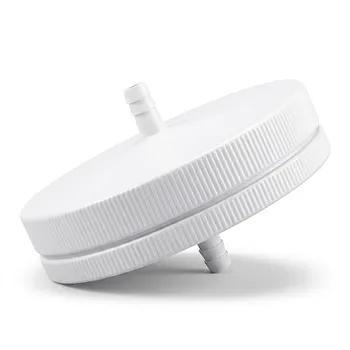
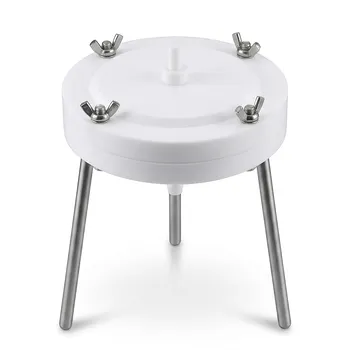
PTFE Filter Membrane Holder for Hydrogen Chloride and Water Filtration 90mm Environmental Sampling Clamp Customizable

PTFE Filter Membrane Holder for Hydrogen Chloride and Water Filtration 90mm Environmental Sampling Clamp Customizable

Optimize your environmental monitoring with our high-purity PTFE filter holder. Designed for 90mm membranes, this customizable unit ensures chemical inertness for hydrogen chloride and water filtration applications. Reliable, durable, and precision-engineered for professional lab results.

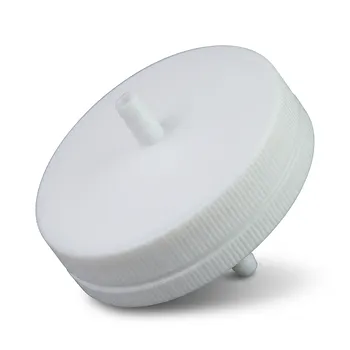
PTFE Filter Membrane Holder 47mm Leak Proof Corrosion Resistant Environmental Sampling Unit Customizable

PTFE Filter Membrane Holder 47mm Leak Proof Corrosion Resistant Environmental Sampling Unit Customizable

Engineered for precision environmental monitoring this customizable 47mm PTFE filter membrane holder provides absolute leak-proof sealing and unmatched corrosion resistance Its high-purity construction ensures zero sample contamination during aggressive chemical filtration and gas sampling across demanding laboratory applications

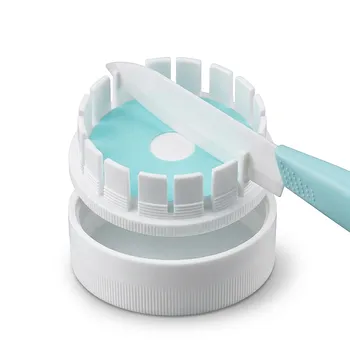
High Purity PTFE Filter Membrane Cutter with Ceramic Blade for PM2.5 Analysis and Customizable Laboratory Filter Paper Splitter

High Purity PTFE Filter Membrane Cutter with Ceramic Blade for PM2.5 Analysis and Customizable Laboratory Filter Paper Splitter

Precision engineered PTFE filter membrane cutter featuring ceramic blades for contamination-free PM2.5 analysis. Designed for 90mm membranes, this customizable unit ensures clean edges and repeatable results for high-purity trace element environmental monitoring and laboratory filtration workflows.

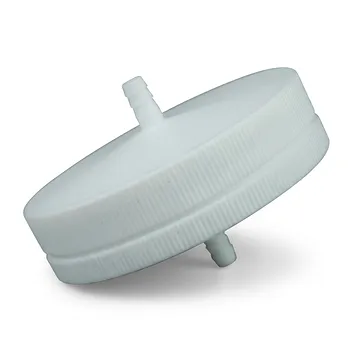
PTFE Membrane Filter Holder for Aerosol Environmental Monitoring and Low Concentration Particulate Matter Sampling Chemical Resistant Air Quality Analysis Component

PTFE Membrane Filter Holder for Aerosol Environmental Monitoring and Low Concentration Particulate Matter Sampling Chemical Resistant Air Quality Analysis Component

Engineered for high-purity aerosol collection this PTFE membrane filter holder ensures chemical inertness during low-concentration particulate matter sampling. Compatible with vacuum pumps it provides a corrosion-resistant solution for demanding environmental monitoring and industrial air quality analysis protocols and research.

Custom PTFE Water Quality Filter 202mm Diameter 142mm Membrane Corrosion Resistant Holder

Custom PTFE Water Quality Filter 202mm Diameter 142mm Membrane Corrosion Resistant Holder

High-purity PTFE water quality filter with 202mm diameter designed for 142mm membranes. This corrosion-resistant system ensures leak-proof performance and chemical inertness for demanding industrial filtration applications in semiconductor pharmaceutical and environmental monitoring laboratory environments.

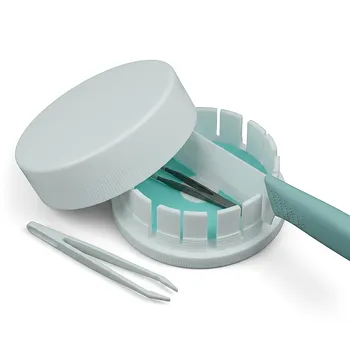
High Purity PTFE Circular Filter Membrane Cutter with Ceramic Blade for Trace Analysis and CDC Laboratory Sample Preparation

High Purity PTFE Circular Filter Membrane Cutter with Ceramic Blade for Trace Analysis and CDC Laboratory Sample Preparation

Ensure sample integrity with this high-purity PTFE circular filter membrane cutter featuring a precision ceramic blade. Designed for trace analysis and CDC laboratories, it eliminates metal contamination and leaching, providing a customizable, durable solution for critical filtration prep workflows.

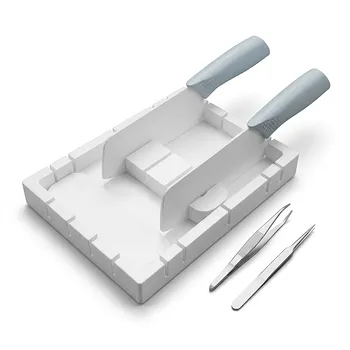
High Purity PTFE Square Membrane Cutter and Filter Aliquot Device for Trace Analysis and Cleanroom Laboratory Applications

High Purity PTFE Square Membrane Cutter and Filter Aliquot Device for Trace Analysis and Cleanroom Laboratory Applications

Professional high-purity PTFE square membrane cutter and filter aliquot device engineered for contamination-free sample preparation. This cleanroom-compatible system offers non-stick surfaces and zero leaching, ideal for CDC, environmental testing, and trace analysis laboratories requiring precision customized fluoropolymer labware.

Custom PTFE Multi Layer Filtration Plates Corrosion Resistant Low Background Lab Grade Filter Assemblies

Custom PTFE Multi Layer Filtration Plates Corrosion Resistant Low Background Lab Grade Filter Assemblies

Enhance trace analysis with these custom PTFE multi-layer filtration plates. Featuring exceptional chemical resistance and low background interference, this set of six provides reliable performance for high-purity laboratory applications and demanding industrial filtration processes.

Custom PTFE Filtration System Acid Resistant High Purity Semiconductor Grade Chemical Processing Filter

Custom PTFE Filtration System Acid Resistant High Purity Semiconductor Grade Chemical Processing Filter

Optimized for semiconductor and chemical processing, this customizable PTFE filtration system offers unparalleled acid resistance and high-purity performance. Engineered for demanding industrial environments, our bespoke solutions ensure zero contamination and exceptional long-term durability in highly corrosive media.

Custom Corrosion Resistant PTFE Vacuum Filtration System with Teflon Buchner Funnel for Research Laboratories

Custom Corrosion Resistant PTFE Vacuum Filtration System with Teflon Buchner Funnel for Research Laboratories

High-purity PTFE vacuum filtration system designed for extreme chemical resistance and contamination-free processing. Features customizable Teflon Buchner funnels and components for demanding research and university lab applications requiring absolute chemical inertness and precision performance.

Custom PTFE Filtration System Acid Resistant Chemical Semiconductor Fluoropolymer Filter Assembly

Custom PTFE Filtration System Acid Resistant Chemical Semiconductor Fluoropolymer Filter Assembly

Custom-engineered PTFE filtration systems designed for extreme chemical resistance in semiconductor and heavy chemical industries. These bespoke fluoropolymer units offer universal acid compatibility, zero-contamination performance, and exceptional durability for high-purity fluid processing and corrosive media handling at scale.

PTFE PFA Vacuum Filtration System Corrosion Resistant Customizable Shatterproof Laboratory Device

PTFE PFA Vacuum Filtration System Corrosion Resistant Customizable Shatterproof Laboratory Device

High-performance PTFE and PFA vacuum filtration systems designed for extreme chemical resistance. This customizable, shatterproof unit ensures trace-level purity and exceptional thermal stability for demanding laboratory processes and hazardous fluid transfers in industrial and research applications.

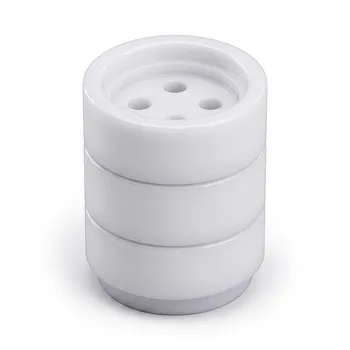
Corrosion Resistant PTFE Multi Layer Sieve with Threaded Connections for Bio Chemical Laboratory Extraction and Customizable Mesh Size

Corrosion Resistant PTFE Multi Layer Sieve with Threaded Connections for Bio Chemical Laboratory Extraction and Customizable Mesh Size

Professional grade PTFE multi layer sieve featuring threaded connections and customizable mesh sizes for aggressive chemical extraction. This corrosion resistant filtration system ensures high purity results in demanding biological and chemical laboratory environments with exceptional durability and performance.

Custom Virgin Polytetrafluoroethylene Sieve Mesh Solid Waste Analysis Round Square Customizable PTFE Screens

Custom Virgin Polytetrafluoroethylene Sieve Mesh Solid Waste Analysis Round Square Customizable PTFE Screens

Optimize your laboratory filtration with custom virgin PTFE sieve mesh designed for solid waste analysis. Available in 100 mesh or bespoke specifications, these chemically resistant round and square screens deliver unmatched durability and precision for critical industrial testing applications today.

Customizable PTFE Seals Filter Holders for Versatile Applications

Customizable PTFE Seals Filter Holders for Versatile Applications

Enhance filtration with KINTEK's PTFE-sealed filter holders for leak-proof, chemical-resistant performance in labs and industries. Explore now!

Custom PTFE Distillation Chromatography Filtration Columns for Semiconductor Chemical Analysis and Corrosion Resistant Lab Processing

Custom PTFE Distillation Chromatography Filtration Columns for Semiconductor Chemical Analysis and Corrosion Resistant Lab Processing

Discover high-performance custom PTFE distillation and chromatography filtration columns engineered for ultra-pure semiconductor lab analysis. Our corrosion-resistant laboratory solutions provide exceptional chemical stability and plasma resistance for demanding trace metal analysis and industrial-grade chemical purification applications.

Corrosion Resistant PTFE Buchner Funnel and Vacuum Filtration System Unbreakable Chemical Solvent Filter Unit

Corrosion Resistant PTFE Buchner Funnel and Vacuum Filtration System Unbreakable Chemical Solvent Filter Unit

Upgrade your lab with an unbreakable PTFE Buchner funnel and vacuum filtration system. This corrosion-resistant unit replaces fragile ceramic, offering superior chemical inertness, high thermal stability, and easy cleaning for demanding high-purity trace analysis and industrial fluid processing applications.

High Purity PTFE Square Membrane Cutter Equipartition Device for Trace Analysis and Disease Control Centers Clean Non Stick No Leaching

High Purity PTFE Square Membrane Cutter Equipartition Device for Trace Analysis and Disease Control Centers Clean Non Stick No Leaching

Optimize laboratory precision with this high-purity PTFE square membrane cutter. Engineered for disease control centers, this non-stick, zero-leaching equipartition device ensures sample integrity during critical trace analysis and filtration tasks across diverse demanding chemical environments.

Custom PTFE Multilayer Reaction Apparatus High Temperature Corrosion Resistant Threaded Modular Sieve System

Custom PTFE Multilayer Reaction Apparatus High Temperature Corrosion Resistant Threaded Modular Sieve System

Enhance chemical processing with this custom PTFE multilayer reaction apparatus featuring corrosion-resistant threaded connections and integrated sieve plates. Designed for high-temperature stability and precision filtration in demanding laboratory environments across pharmaceutical and semiconductor research and advanced industrial applications.

Custom PTFE Buchner Funnel Corrosion Resistant Low Background Teflon Filtration Laboratory Equipment

Custom PTFE Buchner Funnel Corrosion Resistant Low Background Teflon Filtration Laboratory Equipment

High-purity PTFE Buchner funnels engineered for extreme chemical resistance and low background trace analysis. These customizable filtration tools feature precision-machined construction and exceptional durability for demanding laboratory applications, ensuring consistent, reliable performance in the most highly corrosive scientific environments.


Leave Your Message