Fluorinated polymers such as PVDF are considered ideal membrane matrices because they combine durability with precise structural control. Their strong carbon–fluorine bonds provide resistance to acids, bases, oxidants, solvents, heat, UV radiation, and aggressive cleaning conditions. At the same time, PVDF and related polymers can be fabricated as porous membranes, thin films, and electrospun fibers with tailored pore size, porosity, and surface wettability.
The central advantage is reliability under difficult conditions: a fluoropolymer matrix can preserve membrane structure and filtration performance while its morphology and surface chemistry are engineered for flux, contaminant retention, selective wetting, and reduced fouling.
Why Membrane Matrices Must Survive Harsh Conditions
Resistance to Chemical Attack
Environmental remediation membranes may contact acidic or alkaline water, organic solvents, oxidants, disinfectants, oils, and dissolved contaminants. PVDF and related fluoropolymers resist chemical degradation more effectively than many conventional membrane materials, helping preserve pore structure and mechanical strength.
This stability is particularly important when membranes are exposed to chlorine, hypochlorite, bromine, or repeated chemical cleaning. A membrane that remains intact is less likely to lose selectivity, shed particles, or require frequent replacement.
Thermal and UV Stability
Treatment systems can experience elevated temperatures, outdoor exposure, and prolonged ultraviolet radiation. The strength of the C–F bond contributes to resistance against thermal degradation, weathering, and UV-induced damage.
This supports longer service life in applications such as wastewater treatment, industrial liquid filtration, and outdoor remediation equipment.
Mechanical Integrity
Filtration creates pressure differences across a membrane, while handling and cleaning impose additional mechanical stresses. PVDF provides a strong, stable matrix that can retain its form during repeated wetting, drying, pressurization, and chemical exposure.
Mechanical stability is essential because even small cracks or deformations can cause contaminant breakthrough or uncontrolled liquid transport.
How Fluoropolymers Enable Precise Filtration Design
Control of Pore Size and Porosity
PVDF can be processed into different membrane architectures, including porous films and electrospun fiber networks. Manufacturers can adjust pore size, porosity, thickness, and fiber arrangement to balance permeate flux against contaminant retention.
Large or highly connected pores generally support higher throughput, while smaller pores improve the physical retention of suspended particles and other species. The appropriate design depends on the target contaminant and the required flow rate.
Tunable Surface Wettability
Fluorinated functional groups give these polymers relatively low surface energy and commonly produce hydrophobic behavior. That property can help prevent unwanted water penetration in processes such as membrane distillation and liquid–liquid separation.
However, the surface is not limited to one function. Through chemical treatment, coatings, additives, or hierarchical micro- and nanostructures, a membrane can be engineered to be hydrophobic, hydrophilic, oleophilic, or oleophobic according to the separation objective.
Selective Oil–Water Separation
Oil–water treatment requires controlled interactions between the membrane and each liquid phase. A hydrophobic and oleophilic surface may attract oil while repelling water, whereas a hydrophilic and oleophobic surface may preferentially pass water while resisting oil.
PVDF provides a chemically stable base for engineering either behavior. The matrix therefore supports separation designs that target emulsions, suspended oil, and complex industrial wastewater streams.
Why Matrix Stability Matters for Remediation Performance
Resistance to Swelling and Wear
Some polymers swell, soften, or lose mechanical strength when exposed to aggressive liquids. Fluoropolymer matrices are comparatively resistant to chemical swelling, degradation, and mechanical wear, helping maintain consistent transport pathways over time.
Stable transport pathways make filtration performance more predictable and reduce the risk of sudden changes in flux or rejection.
Reduced Risk of Secondary Pollution
Environmental remediation materials may contain functional nanoparticles, adsorbents, catalysts, or other performance-enhancing components. A stable fluoropolymer matrix can help retain these components and reduce their detachment into the treated water.
This does not eliminate the need to test additive release. It does, however, provide a robust structural platform for immobilizing functional materials and limiting secondary contamination.
Cleaner Processing and Longer Reuse
Membranes that tolerate aggressive cleaning agents can be regenerated rather than discarded after a single operating cycle. Better resistance to acids, bases, oxidants, and solvents supports repeated use and can reduce maintenance frequency.
Longer operating life also improves process consistency because the membrane is less likely to change chemically or mechanically between treatment cycles.
Understanding the Trade-offs
Hydrophobicity Can Increase Fouling
The low surface energy that benefits non-wetting applications can also promote adsorption of hydrophobic organic contaminants, oils, and biological matter. As fouling develops, membrane flux may decline even when the polymer itself remains chemically intact.
Surface modification or the use of hydrophilic coatings may therefore be necessary for high-fouling water streams.
Surface Properties Require Careful Engineering
PVDF is not automatically selective for every contaminant or liquid pair. Its untreated surface behavior may be insufficient for a particular separation, and changing wettability can affect flux, rejection, fouling, and cleaning performance simultaneously.
Membrane design should therefore evaluate contact angle, pore structure, flux, rejection, fouling rate, and chemical durability together rather than optimizing only one property.
Cost and Processing Complexity
Fluorinated polymers can be more expensive and more difficult to modify than standard engineering plastics. Specialized fabrication, surface treatment, or composite formation may increase manufacturing complexity.
Their use is most justified when chemical durability, long service life, contamination control, or demanding separation performance outweighs the added material and processing cost.
Fluoropolymer Selection Is Application-Specific
PVDF is a strong general-purpose membrane material, but no fluoropolymer is universally optimal. The required solvent resistance, temperature range, flexibility, pore structure, surface chemistry, and sterilization conditions should determine the specific polymer and membrane architecture.
Material compatibility testing remains necessary, especially for concentrated chemicals, mixed solvents, oxidants, and long-duration operation.
Making the Right Choice for Your Goal
The best matrix is the one that matches the chemical environment, separation mechanism, and required operating life.
- If your primary focus is chemical durability: Choose a fluoropolymer matrix such as PVDF when exposure to acids, bases, solvents, oxidants, cleaning agents, or UV radiation could degrade conventional membranes.
- If your primary focus is high filtration throughput: Engineer the membrane’s porosity, pore size, thickness, and fiber structure to increase flux without sacrificing contaminant retention.
- If your primary focus is oil–water separation: Tune surface wettability and roughness to create the required hydrophobic/oleophilic or hydrophilic/oleophobic behavior.
- If your primary focus is long-term reuse: Prioritize mechanical strength retention, chemical-cleaning compatibility, and resistance to swelling, wear, and additive release.
- If your primary focus is minimizing fouling: Do not rely on fluoropolymer chemistry alone; evaluate surface modification, hydrophilicity, feed pretreatment, and cleaning strategy.
Fluorinated polymers are powerful membrane matrices because they provide a durable foundation on which filtration structure and surface function can be deliberately engineered.
Summary Table:
| Property | Benefit | Application |
|---|---|---|
| Chemical resistance | Withstands acids, bases, solvents | Wastewater treatment |
| Thermal/UV stability | Long service life outdoors | Outdoor remediation |
| Mechanical integrity | Maintains structure under pressure | Industrial filtration |
| Pore size control | Tailored flux/rejection | Microfiltration |
| Surface wettability | Hydrophobic/hydrophilic options | Oil-water separation |
| Swelling resistance | Stable transport pathways | Aggressive chemical processing |
| Cleaning compatibility | Repeated chemical cleaning | Regeneration and reuse |
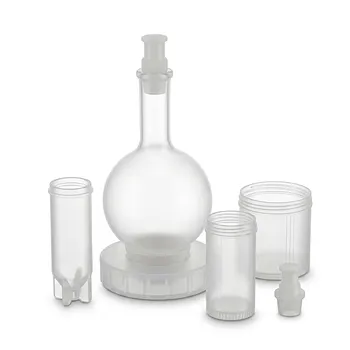
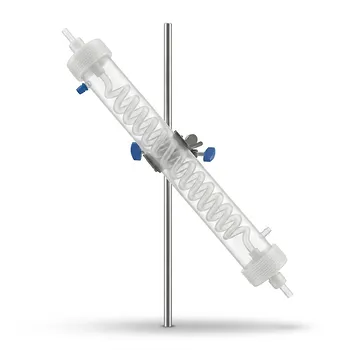
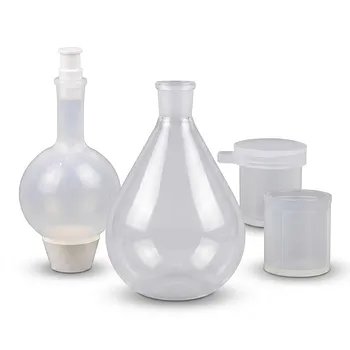
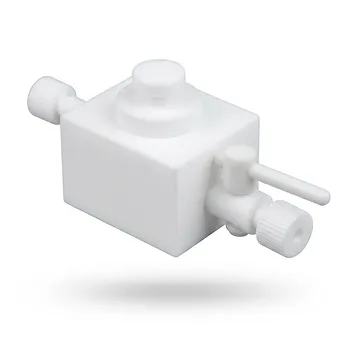
Ready to enhance your environmental remediation and filtration systems? At KINTEK, we specialize in high-performance PTFE and PFA labware and custom components. Our fluoropolymer products are engineered for maximum durability, chemical resistance, and precision. Whether you need standard beakers, filtration apparatus, or custom CNC-machined parts, our end-to-end PTFE/PFA solutions ensure reliability and contamination control. For product inquiries or custom orders, contact us today and let our experts support your mission!
Related Products
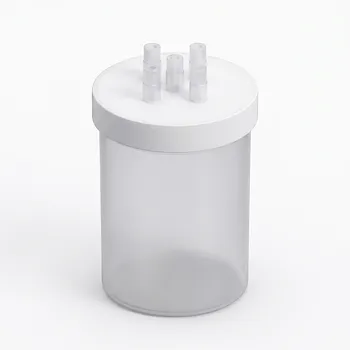
- High Purity 4L PFA Reaction Tank for Proton Exchange Membrane Electrolysis Water Oxygen Separation Systems
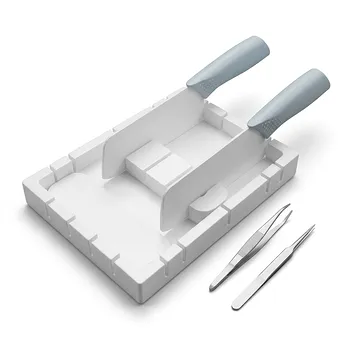
- High Purity PTFE Square Membrane Cutter and Filter Aliquot Device for Trace Analysis and Cleanroom Laboratory Applications
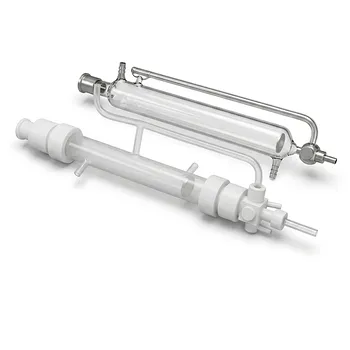
- High Purity PFA Chromatography Column with Collection Bottle Corrosion Resistant Fluoropolymer Filtration System for Trace Analysis
- High Purity PFA Chromatography Column Double Layer Constant Pressure Filter Column with Sieve Plate Acid Resistant Fluoropolymer Filtration System
- Custom PFA Tubing 1/4 Inch High Purity Corrosion Resistant Fluoropolymer Tube with Welding and Machining Services
People Also Ask
- Why Are High-Purity Fluoropolymer Vessels and Tubing Critical for Trace Analysis? Prevent Contamination Reliably
- What are the primary functional and temperature differences between PFA and FEP when selecting melt-processible fluoropolymers for custom laboratory apparatus?
- Why is the chemical stability of polymer endgroups critical when selecting melt-processible fluoropolymers like PFA for high-purity laboratory apparatus? Choose Stable Endgroups for Reliable Performance
- What are the characteristics of PFA material? A Guide to Its High-Performance Balance
- Why is Perfluoroalkoxy alkane (PFA) preferred over glass or stainless steel in pharmaceutical process development? Pure Yield