PPVE makes PTFE melt-processable by interrupting its rigid crystal structure. When perfluoropropyl vinyl ether (PPVE) is copolymerized with tetrafluoroethylene (TFE), its bulky perfluoroalkoxy side groups prevent PTFE chains from packing as efficiently as they do in the homopolymer. The resulting perfluoroalkoxy polymer (PFA) has reduced crystallinity, a lower melting point, and a controlled melt viscosity suitable for thermoplastic processing while retaining PTFE-like chemical and thermal resistance.
Core takeaway: PPVE does not fundamentally replace PTFE’s fluorinated backbone; it modifies chain packing. That controlled disruption converts an otherwise non-melt-processable PTFE structure into a PFA resin that can flow under heat and pressure.
Why Pure PTFE Is Difficult to Melt-Process
PTFE forms a highly ordered structure
Pure PTFE consists of long TFE-derived chains that pack into a highly crystalline matrix. This structure gives PTFE its exceptional chemical resistance, low friction, and thermal stability.
However, the same strong chain packing makes the polymer extremely resistant to flow.
High melt viscosity prevents conventional processing
PTFE undergoes a transition near its melting temperature, but it does not flow like an ordinary thermoplastic. Its melt viscosity remains extremely high, so conventional injection molding, extrusion, and other melt-processing methods are impractical.
PTFE is therefore commonly shaped by compression molding, paste extrusion, and sintering, rather than by normal thermoplastic processing.
How PPVE Changes the Polymer Structure
PPVE acts as a bulky comonomer
PPVE is copolymerized into the TFE chain rather than simply blended into finished PTFE. Its perfluorinated alkoxy side group is larger and less structurally regular than the repeating TFE unit.
These irregularities act like deliberate interruptions in the otherwise uniform PTFE chain.
The side groups disrupt crystal packing
A pure PTFE chain can align and pack efficiently with neighboring chains. PPVE units disturb that alignment, reducing the ability of the polymer to form a tightly ordered crystalline matrix.
The result is lower overall crystallinity and greater freedom for the chains to move when heated.
PPVE concentration controls the degree of modification
The amount of PPVE must be controlled carefully. Increasing the PPVE content generally produces greater disruption of crystallinity and can lower the resin’s melting point.
For example, the cited data show a melting-point reduction from approximately 330 °C for unmodified material to about 313 °C at 5.2 wt% PPVE.
Why the Modified Resin Can Be Melt-Processed
Reduced crystallinity allows chain movement
When PFA is heated above its melting range, its less perfectly ordered structure can respond to pressure and shear more readily than pure PTFE. The polymer can therefore fill a mold, pass through a die, or form detailed geometry.
This is the fundamental change: PPVE converts heat-induced softening into practical melt flow.
Molecular weight and melt viscosity are also managed
PPVE incorporation alone does not determine processing behavior. Polymerization conditions and, where necessary, chain-transfer agents such as methanol can be used to control molecular weight and reduce excessive melt viscosity.
The resin is consequently specified not only by composition, but also by its melt flow and viscosity window. PFA grades commonly exhibit melt flow rates in the approximate range of 1–100 g/10 min under ASTM D-1238 conditions, depending on grade and test conditions.
PFA becomes a true thermoplastic fluoropolymer
Unlike conventional PTFE, PFA can be processed using techniques such as:
- Injection molding
- Extrusion
- Compression molding with melt flow
- Thermoforming
- Precision molding of complex geometries
This enables the production of intricate, non-porous parts that would be difficult or impossible to manufacture by PTFE sintering alone.
What PFA Retains from PTFE
Chemical resistance remains exceptionally high
The TFE-derived fluorinated backbone remains the dominant structural feature of PFA. As a result, PFA retains outstanding resistance to acids, bases, solvents, and aggressive process chemicals.
It is therefore used where chemical inertness and low contamination are more important than low material cost.
Thermal stability remains high
PPVE reduces crystallinity and adjusts melting behavior, but it does not eliminate the thermal stability associated with the highly fluorinated polymer structure. PFA remains suitable for demanding elevated-temperature applications, subject to the specific grade and service conditions.
The cited material characteristics are broadly comparable to PTFE, including continuous-use temperatures around 260 °C for appropriate products.
Complex, sealed components become practical
Melt processing supports smooth, dense, and detailed components such as:
- Fluid-transfer fittings
- Valves and manifolds
- Tubing and connectors
- Digestion vessels
- Trace-analysis vessels
- Custom laboratory components
These parts can provide low-permeability, non-porous surfaces and reliable leak-tight geometry.
Understanding the Trade-offs
Lower crystallinity changes mechanical behavior
The reduction in crystallinity enables processing, but it also means PFA is not identical to PTFE in every mechanical property. Depending on grade and application, there may be differences in stiffness, creep, wear, or dimensional behavior.
Material selection should therefore consider load, temperature, pressure, and chemical exposure together.
More PPVE is not automatically better
Increasing PPVE can lower the melting point and improve flow, but excessive modification may reduce properties that depend on highly ordered PTFE crystallinity. The composition must be optimized rather than maximized.
Manufacturers balance melt processability, thermal performance, mechanical strength, and chemical resistance.
Melt flow is grade-specific
A stated melt flow rate is not a universal property of all PFA. It depends on PPVE content, molecular weight, polymerization control, and test conditions.
Comparisons are meaningful only when the test method, temperature, load, and resin grade are the same.
PFA is not simply “melted PTFE”
PFA is a chemically modified copolymer with its own processing window and performance profile. It should not be treated as pure PTFE that has merely been processed at a higher temperature.
That distinction matters when designing seals, pressure components, welded assemblies, or parts exposed to long-term mechanical loads.
How to Apply This to Your Project
PPVE modification is best understood as a controlled structural compromise: it sacrifices some perfect crystallinity to gain practical melt flow without abandoning fluoropolymer performance.
- If your primary focus is conventional PTFE chemical resistance: Use PTFE when sintering or paste-based fabrication is acceptable and maximum PTFE-specific properties are the priority.
- If your primary focus is complex molded geometry: Use PFA because PPVE-enabled melt flow supports detailed injection-molded and extruded components.
- If your primary focus is high-purity fluid handling: Select an appropriate PFA grade for its dense, non-porous surfaces, chemical inertness, and precise leak-tight geometry.
- If your primary focus is processing efficiency: Compare PFA grades by melt flow rate, melting range, molecular weight, and required molding conditions rather than by PPVE content alone.
PPVE makes PFA practical by disrupting PTFE’s crystal packing just enough to permit melt flow while preserving the defining advantages of a highly fluorinated polymer.
Summary Table:
| Feature | Pure PTFE | PFA (with PPVE) |
|---|---|---|
| Crystallinity | High | Reduced |
| Melting Point | ~330°C | ~313°C (at 5.2 wt% PPVE) |
| Melt Processability | Poor (requires sintering) | Excellent (injection molding, extrusion) |
| Chemical Resistance | Excellent | Excellent |
| Thermal Stability | Continuous use to ~260°C | Continuous use to ~260°C |
| Typical Applications | Compression-molded parts, seals | Injection-molded fittings, valves, labware |
Unlock the full potential of PFA for your complex lab components. At KINTEK, we specialize in high-performance fluoropolymers like PFA, offering precision CNC machining and a comprehensive range of labware from beakers to electrochemical cells. Our expertise ensures you get melt-processable PFA parts with superior chemical resistance and thermal stability. Contact us today to discuss your custom requirements and discover how we can enhance efficiency and reliability in your lab. Get in touch with our experts.
Related Products
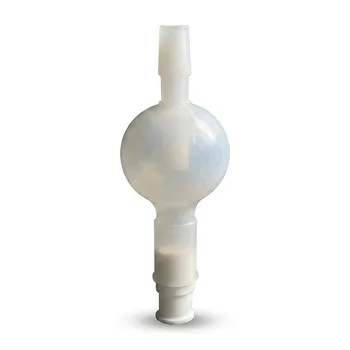
- High Purity PFA Chromatography Column with Collection Bottle Corrosion Resistant Fluoropolymer Filtration System for Trace Analysis
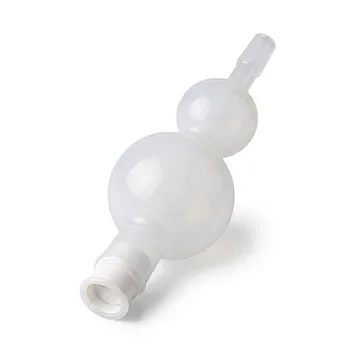
- High Purity PFA Chromatography Columns and Collection Bottles Corrosion Resistant Fluoropolymer Filtration Systems for Trace Analysis
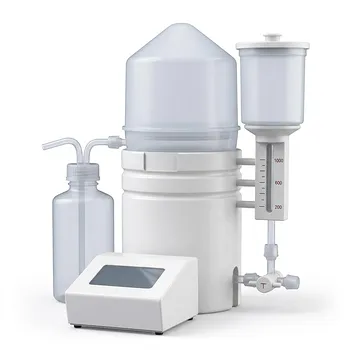
- PFA Sub Boiling Acid Purifier Electronic Grade Distillation System Laboratory Trace Analysis Equipment
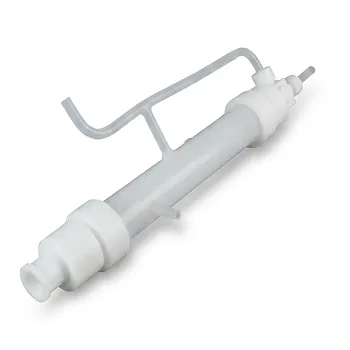
- High Purity PFA Chromatography Column Double Layer Constant Pressure Filtration System with Sieve Plate for Strong Acid Resistance
- High Purity PFA Chromatography Column and Collection Bottle System Corrosion Resistant Filter Column with Sieve Plate Glass Alternative
People Also Ask
- What are the primary functional and temperature differences between PFA and FEP when selecting melt-processible fluoropolymers for custom laboratory apparatus?
- Why is the chemical stability of polymer endgroups critical when selecting melt-processible fluoropolymers like PFA for high-purity laboratory apparatus? Choose Stable Endgroups for Reliable Performance
- What are the characteristics of PFA material? A Guide to Its High-Performance Balance
- Why is Perfluoroalkoxy alkane (PFA) preferred over glass or stainless steel in pharmaceutical process development? Pure Yield
- Why is PFA superior for cleaning and preventing cross-contamination? The Gold Standard for Ultra-Trace Lab Hygiene