Emulsion-polymerized fine-powder PTFE is required because its molecular weight, crystallinity, and fibrillation behavior allow it to be paste-extruded and stretched into ePTFE’s node-and-fibril structure. Granular PTFE made by suspension polymerization does not have the same morphology or deformation behavior, so it generally cannot form the uniform, interconnected microporous network required for high-performance filtration media and porous components.
ePTFE performance begins with the correct PTFE resin. High-molecular-weight, highly crystalline fine powder can be lubricated, paste-extruded, calendered, and stretched into a controlled porous structure; conventional granular PTFE cannot reliably undergo this transformation.
Why ePTFE Requires a Special PTFE Resin
The Porous Structure Is Created by Fibrillation
ePTFE is not simply PTFE with holes drilled or dissolved into it. Its pores form when the polymer is stretched and reorganized into a network of solid nodes connected by fine fibrils.
This interconnected structure provides open pathways for gas or liquid flow while retaining the chemical and thermal resistance of PTFE.
Fine Powder PTFE Supports Paste Extrusion
PTFE does not melt-flow like ordinary thermoplastics. Near and above its melting transition, it becomes a highly viscous gel with negligible practical flow, so conventional injection molding and melt extrusion are unsuitable.
Fine powder PTFE is instead blended with a processing lubricant, compressed into a preform, and forced through a die by paste extrusion. The powder’s particle and molecular structure allows the extrudate to develop the fibrillated precursor needed for later expansion.
High Molecular Weight Prevents Fracture During Stretching
The fine powder must have an extremely high molecular weight, typically in the tens of millions or approaching that range. Long, linear molecular chains can transfer stress across the material during high-strain stretching.
This chain length helps the precursor elongate without breaking apart. Lower-molecular-weight or structurally different PTFE would be more likely to tear, crack, or produce an inconsistent pore network.
How Polymerization Controls ePTFE Formation
Emulsion or Dispersion Polymerization Produces the Appropriate Fine Powder
In technical discussions, the resin used for ePTFE is often called fine-powder PTFE and is associated with emulsion or dispersion polymerization. The resulting primary particles and coagulated powder have the morphology required for paste processing.
This is materially different from granular PTFE produced through suspension polymerization, even though both are chemically based on polytetrafluoroethylene.
High Crystallinity Enables Controlled Deformation
Virgin fine-powder PTFE has very high crystallinity, commonly cited in the range of approximately 93% to 98%. Its crystalline domains help the polymer maintain strength while the amorphous regions and long molecular chains permit controlled deformation.
During stretching, this balance supports the separation and orientation of material into nodes and fibrils rather than uncontrolled rupture.
Standard Specific Gravity Reflects the Resin Structure
Fine-powder grades commonly have a standard specific gravity in the approximate range of 2.14 to 2.17. This property is not the sole determinant of expandability, but it is a useful indicator when evaluating whether a resin belongs to the appropriate PTFE grade family.
Procurement specifications should therefore assess the complete resin designation and processing suitability, not only chemical identity or nominal PTFE purity.
How Fine Powder Becomes a Microporous Component
Lubrication and Preforming Prepare the Powder
The PTFE powder is mixed with a lubricant and compressed into a preform. Compression removes air and creates a coherent billet that can be processed without conventional melting.
The lubricant level, mixing quality, and preform density affect extrusion stability and the uniformity of the resulting precursor.
Paste Extrusion Creates the Fibrillatable Precursor
The preform is pushed through a die, producing a profile or tape in which the PTFE particles and molecular chains have been highly oriented. Die geometry and extrusion conditions influence the degree of fibrillation.
The extrudate may then be calendered into a thin foil before the lubricant is removed through controlled drying.
Stretching Creates the Node-and-Fibril Network
The dried PTFE film is stretched at a carefully controlled temperature and strain rate, generally near the polymer’s crystalline melting transition. The exact conditions depend on the resin, film geometry, and desired porosity.
Under these conditions, the material elongates while portions of the structure separate and orient. The result is the characteristic microporous ePTFE membrane.
Why Granular PTFE Is Not an Equivalent Substitute
Granular PTFE Has a Different Polymerization Morphology
Granular PTFE is typically produced by suspension polymerization and is intended for processes such as compression molding, ram extrusion, and sintering. Its particle structure and deformation behavior differ from those of fine-powder paste-extrusion grades.
Chemical similarity does not make the two materials interchangeable for ePTFE production.
Granular PTFE Does Not Fibrillate in the Required Way
Effective expansion depends on the formation of long, interconnected fibrils under high-strain deformation. Granular PTFE generally lacks the specific morphology needed to develop this structure consistently.
Attempting to substitute it can produce poor expansion, discontinuous pores, cracking, low strength, or an uncontrolled pore-size distribution.
Sintered PTFE and ePTFE Serve Different Purposes
Granular PTFE can produce excellent dense components after compression molding, ram extrusion, and sintering. Those methods are appropriate for chemically resistant tubing, vessels, seals, and machinable stock.
They do not, however, create the same open microporous architecture as the paste-extrusion and stretching sequence used for ePTFE.
Why the Resin Choice Matters in Filtration Media
Pore Uniformity Controls Flow and Retention
A controlled node-and-fibril network provides a more predictable relationship between pore size, pressure drop, permeability, and particle retention.
For laboratory filtration, this consistency supports repeatable flow rates and more reliable clarification, sterile filtration, and gas or liquid venting performance.
Mechanical Integrity Depends on the Fibril Network
The fibrils provide structural reinforcement across the membrane. A well-formed network can withstand handling, pressure differentials, and assembly stresses while remaining porous.
Poor fibrillation can create weak regions that tear or deform, even if the finished material appears chemically compatible.
PTFE Preserves Chemical and Thermal Resistance
Expansion changes the physical structure of PTFE without replacing its fundamental fluoropolymer chemistry. ePTFE therefore retains PTFE’s low surface energy, chemical inertness, and resistance to many aggressive fluids.
This makes it useful where ordinary porous polymers could swell, degrade, or contaminate the process stream.
Understanding the Trade-offs
Porosity Reduces Bulk Strength
ePTFE is porous by design, so it is not mechanically equivalent to dense sintered PTFE. Increasing porosity can improve permeability but may reduce tensile strength, pressure resistance, or dimensional stability.
The membrane architecture must be selected for the operating pressure, handling requirements, and expected temperature.
Processing Is Sensitive to Resin and Conditions
Molecular weight, crystallinity, powder morphology, lubricant content, extrusion conditions, drying, temperature, and stretch rate all affect the final structure.
A resin that is chemically pure but unsuitable for paste extrusion may still fail to produce a useful ePTFE component.
Pore Size and Flow Are Not Determined by Resin Alone
The fine-powder grade establishes the foundation, but final performance also depends on film thickness, stretching ratio, orientation, thermal history, and manufacturing controls.
Material selection should therefore be paired with verification of pore-size distribution, permeability, strength, and chemical compatibility.
Terminology Requires Care
“Emulsion-polymerized” and “dispersion-polymerized” may be used differently across suppliers and technical literature. The decisive requirement is the fine-powder PTFE grade designed for paste extrusion and expansion, not the label alone.
Supplier documentation should confirm the resin’s intended process, molecular-weight class, crystallinity or morphology indicators, and suitability for ePTFE manufacture.
Making the Right Choice for Your Goal
The practical decision is to match the PTFE grade to the manufacturing route and the required porous performance.
- If your primary focus is filtration efficiency: Specify fine-powder PTFE suitable for paste extrusion and ePTFE expansion, then verify pore-size distribution and particle-retention performance.
- If your primary focus is predictable flow: Evaluate the complete membrane process, including stretch conditions and thickness, because resin selection alone does not determine permeability.
- If your primary focus is mechanical durability: Require a high-molecular-weight grade capable of forming a continuous fibril network, and verify tensile strength and pressure resistance in the finished component.
- If your primary focus is chemical purity: Select a virgin, high-purity ePTFE construction and confirm that processing aids are fully removed and compatible with the intended laboratory application.
- If your primary focus is dense machined or molded parts: Use the appropriate granular or other PTFE grade for compression molding, ram extrusion, sintering, and machining rather than specifying ePTFE fine powder by default.
Choosing the correct fine-powder PTFE grade is what makes controlled ePTFE porosity, strength, flow, and chemical resistance achievable in the same component.
Summary Table:
| Characteristic | Fine-Powder PTFE (Emulsion-Polymerized) | Granular PTFE (Suspension-Polymerized) |
|---|---|---|
| Polymerization Method | Emulsion/Dispersion | Suspension |
| Particle Morphology | Fine, coagulated powder | Granular, irregular |
| Processing Method | Paste extrusion, calendering, stretching | Compression molding, ram extrusion, sintering |
| Ability to Form ePTFE | Yes, forms node-and-fibril structure | No, does not fibrillate effectively |
| Molecular Weight | Extremely high (tens of millions) | Lower |
| Crystallinity | High (93-98%) | Moderate |
| Standard Specific Gravity | 2.14-2.17 | Typically higher |
| Typical Applications | ePTFE membranes, filtration media, porous components | Dense parts, seals, gaskets, tubing |
Leverage KINTEK's High-Performance PTFE Solutions
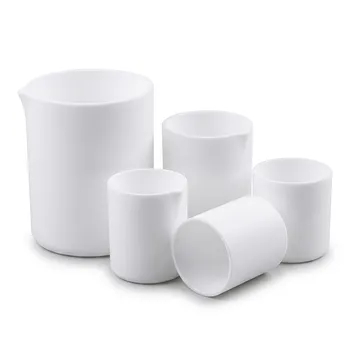
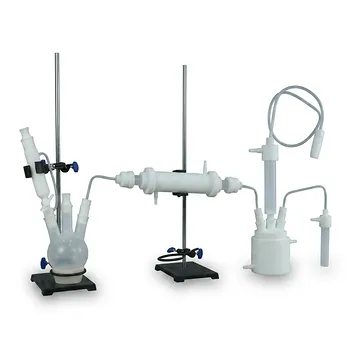
At KINTEK, we understand that the right resin is the foundation of exceptional ePTFE products. Our portfolio includes exclusively high-performance fluoropolymers, crafted from premium fine-powder PTFE and PFA. We provide a comprehensive range of labware, from beakers and digestion tubes to advanced filtration and reaction apparatus.
Whether you're developing filtration media, porous components, or custom lab setups, our team can help you select the ideal PTFE grade and manufacture components that meet your exact specifications. With our end-to-end PTFE/PFA custom CNC machining capabilities, we deliver everything from complex machined parts to high-volume orders.
Ready to enhance your ePTFE production? Contact us today to discuss your requirements and discover how KINTEK can elevate your lab's performance and reliability.
Related Products
- High Temperature Resistant PTFE Solid Sampler Corrosion Resistant Non Leaching Reusable Biopharmaceutical White Powder Sampling Device
- High Purity Laboratory Grade PTFE Syringe Chemical Resistant Fluoropolymer Injector for Trace Analysis
- Corrosion Resistant PTFE Laboratory Material Scoop for Biopharmaceutical Use Non Stick Easy Clean Fluoropolymer Shovel
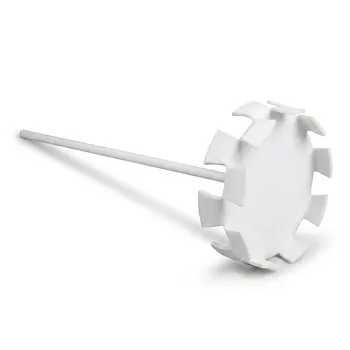
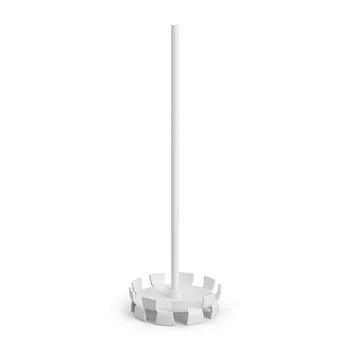
- High Purity PTFE Dispersion Disk for Food and Cosmetic Processing Non Stick Corrosion Resistant Large Stirring Paddle Customizable Fluoropolymer Impeller
- High Purity Virgin PTFE Syringe 20ml Chemical Resistant Liquid Handling for Syringe Pumps and PFA Tubing Integration
People Also Ask
- How does PTFE's electrical insulation property benefit electronic components? Ensure Reliability and Signal Integrity
- What process steps and conditions are critical during coagulation and drying of aqueous PTFE dispersions to ensure powder quality? Master key parameters for reliable downstream processing.
- What surface chemical species and binding energy signatures are detected on PTFE fluoropolymer sample holders during XPS analysis? Key insights for accurate calcium detection.
- What are the mechanical and safety advantages of using PTFE apparatus in a laboratory? Enhance Safety & Durability
- Why does PTFE require specialized powder processing techniques rather than standard melt-injection molding during component manufacturing? Unlock the secrets of PTFE processing.