Binderless PTFE agglomeration is governed primarily by wetting, particle collisions, mechanical interlocking, and interparticle attraction—not by a separate adhesive binder. In wet agglomeration, water or an organic liquid temporarily promotes contact between fine PTFE particles. Agitation brings the particles together, while liquid bridges, van der Waals forces, surface deformation, and mechanical entanglement hold them in soft, reversible granules that can later be dried and processed.
The liquid acts as a temporary processing medium rather than a permanent binder. Agglomerate growth results from the balance between collision and attachment, which build granules, and shear, crushing, and abrasion, which limit their size and redistribute material.
Why Fine PTFE Powder Requires Agglomeration
Poor Flowability Limits Direct Processing
Fine-cut PTFE powder has low bulk density and poor flowability. It can form lumps and retain air pockets, making consistent feeding and mold filling difficult in automatic or isostatic molding equipment.
Agglomeration Creates Processable Granules
Wet agglomeration converts the fine powder into larger, soft granules, often a few hundred micrometers in size. These granules flow more consistently, pack more densely, and improve the uniformity of subsequent compaction.
The Forces That Attach PTFE Particles
Liquid Bridges Promote Contact
When PTFE powder is wetted with water or an organic liquid such as acetone, the liquid helps particles approach and remain in contact during tumbling or high-shear mixing. As the liquid redistributes between particles, capillary or liquid-bridge forces contribute to temporary attachment.
The liquid is subsequently removed during drying. It therefore functions as a processing aid, not as a secondary adhesive binder.
Mechanical Entanglement Stabilizes the Agglomerate
Repeated collisions and shear cause particles to interlock mechanically. Fine PTFE particles can form physically entangled structures, particularly when the agglomerate is compressed or deformed during growth.
This mechanism helps explain why the granules can remain intact during handling while still breaking down during high-pressure molding.
Van der Waals Forces Add Cohesion
At close range, van der Waals attraction contributes to the cohesion between contacting PTFE surfaces. These forces are individually modest, but their combined effect across many particle contacts helps stabilize the developing granule.
Surface Softening Must Be Interpreted Carefully
The primary reference describes heat-induced surface softening. That should not be interpreted as ordinary thermal melting during standard wet agglomeration, because PTFE has a high melting temperature and wet granulation is generally performed far below it.
Any limited deformation or increased contact resulting from processing conditions should be distinguished from thermal fusion. The defining feature of the process is physical attachment without melting the particles into a continuous fused mass.
How Agglomerates Grow
Nucleation Builds the First Granules
Agglomeration begins when primary PTFE particles gather into small nuclei. These initial structures are typically porous and contain substantial liquid between or around the particles.
The rate of nucleation depends on wetting, liquid content, powder concentration, and the intensity of agitation.
Coalescence Compacts the Structure
Small nuclei collide and join to form larger, deformable agglomerates. Mechanical shear gradually compacts these structures and reduces some of their internal void space.
Coalescence is controlled by competition: collisions encourage growth, while shear can deform or break apart weak granules.
Snowballing Adds Fine Material
In the snowballing stage, smaller particles deposit onto larger, more established granules. The larger granules act as collection surfaces, allowing the overall particle size and mass to increase.
This mechanism is especially important when fine powder remains suspended in the wet processing medium.
Crushing and Layering Reshape the Granules
Equipment collisions can break larger agglomerates into smaller fragments. Fine material may then attach to those fragments or to other granules, creating a repeated cycle of crushing and layering.
This cycle helps establish the final particle-size distribution rather than allowing uncontrolled growth.
Abrasion Transfers Material Between Granules
Abrasion can remove material from one granule and transfer it to another. This particle exchange changes granule surfaces and contributes to the redistribution of mass during tumbling or high-shear processing.
The final granules are therefore produced by both constructive growth and mechanical attrition.
How Processing Conditions Control the Mechanism
Liquid Selection Controls Wettability
Water and organic liquids can be used as the wetting medium. In filled PTFE formulations, aqueous mixtures containing wetting agents such as ethylene/propylene glycol ethers or dipropylene glycol monobutyl ether help distribute the liquid through the powder.
The liquid must provide enough wetting to promote attachment without creating overly wet, weak, or difficult-to-dry granules.
Agitation Controls Collision and Shear
Rotating drums, tumblers, rotating pans, and blade mills provide the movement required for particle collision. Their operating conditions determine whether particles primarily nucleate, coalesce, layer, or fracture.
A blade mill and sizing screen can also break oversized structures and establish a more uniform particle size before pelletization.
Filler Dispersion Adds Another Requirement
For filled PTFE, glass fiber, graphite, or other fillers are dry-blended with the finely ground polymer before wetting. Uniform filler distribution is essential because poorly dispersed filler can create weak regions, inconsistent flow, or voids during molding.
The agglomeration mechanism must therefore produce both adequate granule cohesion and reliable composition uniformity.
Drying Removes the Temporary Liquid
After granulation, the pellets are dried to remove water or solvent. Drying must preserve the physical structure created during wet processing while eliminating the liquid that enabled particle contact.
The result is a free-flowing PTFE agglomerate whose cohesion comes from particle-to-particle contact and structure, not from a retained binder.
Binderless Agglomeration Versus Coagulation
Wet Granulation Uses a Processing Liquid
In solvent or aqueous wet agglomeration, existing fine PTFE powder is wetted and mechanically assembled into larger granules. Tumbling and pelletization control the growth process.
This method is used to improve flowability, bulk density, and mold filling.
Coagulation Forms Powder from a Dispersion
Coagulation begins with an aqueous PTFE dispersion rather than dry fine powder. Dilution, pH adjustment, and addition of an acid, salt, or water-soluble organic solvent destabilize the dispersion.
High-shear agitation then causes colloidal PTFE particles to coalesce, after which the solids are separated and dried. Although this also involves binderless particle aggregation, it is a different raw-material formation route from wet granulation of already isolated powder.
Understanding the Trade-offs
Excessive Shear Can Destroy Useful Granules
More agitation does not necessarily produce better pellets. Excessive shear can crush growing agglomerates, increase fines, and reduce the improvement in flowability.
The process must balance sufficient collision energy for growth with enough control to avoid excessive fragmentation.
Insufficient Wetting Produces Weak or Nonuniform Pellets
If the liquid does not distribute evenly, some particles will remain unattached while other regions become excessively consolidated. The result can be inconsistent granule strength, poor filler distribution, and variable mold filling.
Overlooking Thermal Behavior Leads to Incorrect Process Design
Treating PTFE agglomeration as a conventional heat-softening or melt-granulation process can lead to incorrect assumptions about particle bonding. Standard wet agglomeration should be understood as a mechanically assisted, liquid-mediated assembly process, not as thermal fusion.
Agglomeration Does Not Eliminate the Need for High-Pressure Compaction
The dried pellets are intentionally soft and physically assembled. They must still break down and compact under molding pressure to produce dense, pore-free fluoropolymer components.
The correct granule structure improves feeding and filling while retaining the ability to consolidate during molding.
How to Apply This to Your Project
The appropriate operating approach depends on the intended raw-material and molding requirements.
- If your primary focus is improved powder flow: Use controlled wet agglomeration to convert fine PTFE into uniform, free-flowing granules, then verify bulk density and particle-size consistency after drying.
- If your primary focus is filled PTFE performance: Prioritize uniform dry blending, effective wetting, and controlled sizing so filler dispersion remains consistent throughout the agglomerate.
- If your primary focus is dense molded components: Produce granules that are cohesive enough for handling but sufficiently soft and reversible to break down and compact under molding pressure.
- If your primary focus is understanding the bonding mechanism: Model the process as liquid-assisted collision and attachment moderated by mechanical entanglement, van der Waals attraction, coalescence, crushing, layering, and abrasion.
Reliable PTFE raw-material preparation comes from controlling the balance between temporary wetting, particle attachment, granule growth, and reversible compaction.
Summary Table:
| Mechanism | Description | Role in Agglomeration |
|---|---|---|
| Liquid Bridges | Water or organic liquids create temporary capillary forces between particles. | Promotes initial contact and attachment; acts as a processing aid, not a binder. |
| Mechanical Interlocking | Particles physically entangle due to collisions and shear. | Stabilizes granules during handling while allowing breakdown under pressure. |
| Van der Waals Forces | Weak attractive forces between close particle surfaces. | Adds cohesion across many contacts, enhancing granule stability. |
| Nucleation | Primary particles gather into small, porous nuclei. | Initiates granule formation; rate depends on wetting, liquid content, and agitation. |
| Coalescence | Small nuclei collide and merge into larger, deformable agglomerates. | Controls growth and compaction; balanced by shear that can deform or break granules. |
| Snowballing | Smaller particles deposit onto larger granules. | Increases granule size and mass, especially when fines are present. |
| Crushing & Layering | Larger granules break into fragments that reattach to other granules. | Redistributes material and establishes a uniform particle size distribution. |
| Abrasion | Material is removed from one granule and transferred to another. | Redistributes mass and modifies granule surfaces. |
Optimize your PTFE powder agglomeration with KINTEK's advanced laboratory supplies. Our high-performance PTFE and PFA products ensure precise control over wetting, mixing, and granulation processes. From beakers and mixing tanks to custom CNC-machined parts, we provide everything you need for reliable raw material preparation. Contact us today to enhance your lab's efficiency and achieve superior granule quality. Get in touch now!
Related Products
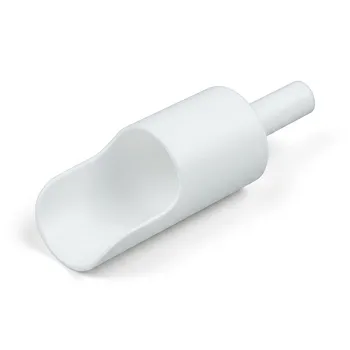
- Custom PTFE Pharmaceutical Sampling Scoop Low Leaching Cylindrical Chemical Powder Sampler Zero Contamination High Purity Laboratory Shovel
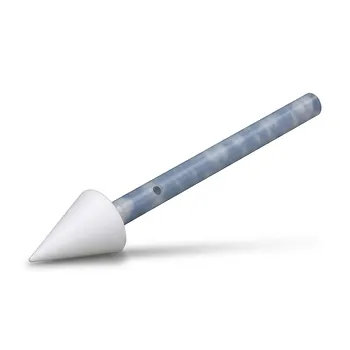
- High Temperature Resistant PTFE Solid Sampler Corrosion Resistant Non Leaching Reusable Biopharmaceutical White Powder Sampling Device
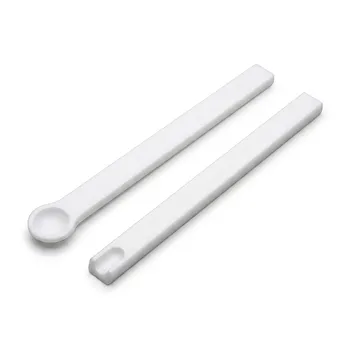
- Corrosion Resistant PTFE Sampling Spoon for High Purity Solid Powder Reagent Handling and Laboratory Chemical Transfer
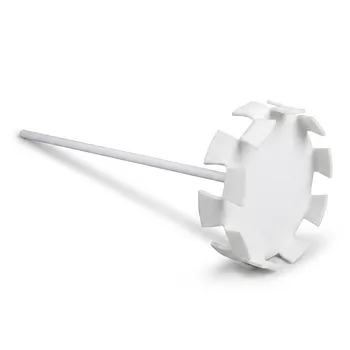
- PTFE Dispersion Disk Food Cosmetic Grade Non Stick Corrosion Resistant Large Stirring Paddle Customizable Impeller
- PTFE Chemical Solvent Sampling Spoon
People Also Ask
- What factors should be considered when selecting a PTFE shovel for laboratory use? Ensure Chemical Inertness & Sample Integrity
- How does the durability of PTFE shovels compare to plastic shovels? Discover the Superior Choice for Harsh Conditions
- What are the advantages of PTFE shovels over metal shovels? Precision Handling for Sensitive Materials
- How does the ergonomic design of PTFE shovels benefit users? Reduce Strain and Boost Lab Efficiency
- What are some specific applications of PTFE shovels in the laboratory? Ensure Sample Purity and Safety