Fluoropolymers are preferred because they remain chemically, mechanically, and thermally stable where many natural or conventional polymers deteriorate. In membrane-based water treatment, this resistance limits degradation, swelling, plasticization, and wear during exposure to oxidants, strong acids, bases, solvents, and repeated cleaning. Their morphology can also be engineered by controlling porosity, pore size, and surface wettability, allowing designers to balance water flux, contaminant retention, phase separation, and pollutant interaction.
Fluoropolymers provide a durable membrane matrix for aggressive filtration environments, while morphology control determines how efficiently that matrix transports fluids and retains contaminants. The combination improves service life, process consistency, and resistance to secondary pollution from membrane additives.
Why Fluoropolymers Suit Harsh Filtration Environments
Resistance to Chemical Degradation
Fluoropolymers contain strong carbon-fluorine bonds that provide high resistance to chemical attack. They can withstand acidic and basic solutions, hypochlorite, chlorine, bromine, and other aggressive cleaning or disinfection agents.
This is important because water-treatment membranes are often exposed continuously to oxidants used for biofouling control. Materials such as polyamide 6,6, polyethersulfone, and polysulfone can lose strength or undergo structural failure under prolonged exposure to chlorine-based disinfectants.
Retention of Mechanical Integrity
Chemical resistance alone is insufficient if a membrane loses its shape or tensile strength during operation. Fluoropolymer membranes retain structural integrity under harsh chemical exposure, helping preserve their filtration characteristics over longer service periods.
This stability reduces the risk of cracking, pore deformation, and premature replacement. It also supports more consistent filtration performance in laboratory, bioprocess, environmental, and chemical-processing systems.
Reduced Swelling and Plasticization
Many non-fluorinated polymers can swell when exposed to organic vapors or highly soluble gases such as carbon dioxide and hydrocarbons. Swelling changes the polymer structure and can reduce mechanical stability or separation selectivity.
Fluorinated structures have a lower tendency toward this type of plasticization. Their dimensional and molecular stability is therefore valuable when filtration involves chemically complex water streams or vapor-containing environments.
Long-Term Environmental Durability
Fluoropolymers also resist ultraviolet radiation, moisture, salt corrosion, thermal cycling, and weathering. These properties matter for outdoor treatment equipment and environmental filtration systems exposed to changing temperatures, sunlight, and corrosive surroundings.
Their low flammability and low tendency to generate toxic smoke can provide additional safety advantages in high-risk installations, although the specific safety profile still depends on the fluoropolymer grade and operating conditions.
How Morphology Determines Membrane Performance
Porosity Controls Transport Capacity
Porosity describes the fraction and arrangement of void space within the membrane. Increasing accessible porosity generally creates more pathways for fluid transport, which can raise permeate flux.
However, higher porosity can reduce mechanical strength or make it more difficult to retain small contaminants. Morphology control is therefore a design problem involving a balance between throughput, selectivity, and durability.
Pore Size Controls Retention
Pore size determines which particles, droplets, macromolecules, or microorganisms can pass through the membrane. Smaller pores improve exclusion of fine contaminants but usually increase hydraulic resistance.
A fluoropolymer matrix is valuable here because its chemical stability helps the designed pore structure remain intact during cleaning and operation. The membrane is less likely to experience chemical damage that changes its effective pore size.
Pore Connectivity Influences Percolation
Pores must be connected in a useful configuration for fluid to travel across the membrane. Morphology affects the length, tortuosity, and continuity of these pathways, which in turn influence pressure drop and flux.
A membrane with nominally high porosity may still perform poorly if its pores are poorly connected or highly tortuous. Morphological engineering therefore involves more than selecting an average pore diameter; it also requires controlling the three-dimensional transport network.
Surface Wettability Controls Interfacial Behavior
Fluoropolymers have very low surface energy because of their dense fluorinated groups, including -CF2- and -CF3. This produces strong hydrophobicity, which can be useful when water must be prevented from entering a porous structure.
In membrane distillation and liquid-liquid extraction, for example, hydrophobicity helps maintain phase separation and reduces aqueous penetration. It can also limit droplet adhesion and reduce liquid bypass through pathways that should remain non-wetted.
Surface Chemistry Affects Pollutant Interaction
Morphology and surface properties jointly determine how pollutants encounter the membrane. Surface area, pore structure, wettability, and the presence of functional additives can influence adsorption, interception, and transport.
These variables allow a membrane to be designed for a particular separation objective rather than treated as a passive sieve. The appropriate structure depends on whether the priority is particle retention, dissolved-contaminant interaction, phase separation, or high-throughput fluid transfer.
Why Stable Matrices Help Prevent Secondary Pollution
Nanoparticle Retention Matters
Functional nanoparticles may be incorporated into membranes to improve adsorption, catalysis, antimicrobial behavior, or other treatment functions. The membrane must hold these materials securely during fluid flow and chemical cleaning.
A stable fluoropolymer matrix reduces the likelihood that embedded particles detach and enter the treated water. This helps prevent the treatment device from introducing a new contaminant while removing existing ones.
Durability Supports Reuse
Repeated cleaning, sterilization, and chemical exposure can weaken less stable polymer matrices. Once the matrix deforms or degrades, both filtration performance and additive retention may decline.
Fluoropolymer stability supports longer reuse cycles and more predictable performance. It also reduces the frequency of membrane replacement and the associated material waste.
Understanding the Trade-offs
High Stability Can Complicate Processing
Strong molecular bonding and high crystallinity contribute to fluoropolymers' chemical inertness, but they can also make conventional processing more difficult. Some fluoropolymers require specialized fabrication methods or processing conditions.
Melt-processable grades such as PFA can improve manufacturability while retaining much of the desired chemical resistance. The selected grade must still match the required temperature, pressure, solvent, and filtration conditions.
Hydrophobicity Is Not Always Beneficial
Low wettability is advantageous when water penetration must be prevented, such as in membrane distillation. It can be less desirable when the application requires rapid aqueous wetting or strong water transport through the membrane.
Surface treatment, morphology, or material selection may therefore be needed to achieve the intended balance. Hydrophobicity should be treated as a functional design variable, not an automatic advantage.
Smaller Pores Increase Resistance
Reducing pore size can improve contaminant retention, but it typically increases resistance to flow. That can require higher operating pressure or reduce overall throughput.
The correct design is not the membrane with the smallest possible pores. It is the membrane whose pore structure matches the target contaminant and the available process energy.
Chemical Resistance Does Not Prevent Fouling
Fluoropolymers can survive aggressive cleaning more effectively than many alternatives, but chemical inertness does not eliminate fouling. Organic matter, biological material, and suspended solids can still accumulate at the surface or within pores.
Pretreatment, appropriate operating conditions, and a cleaning protocol suited to the feed water remain necessary. A durable membrane extends the useful life of a treatment strategy; it does not replace that strategy.
Making the Right Choice for Your Goal
Fluoropolymer selection and morphology control should be based on the complete operating environment rather than on chemical resistance alone.
- If your primary focus is chemical durability: Select a fluoropolymer membrane that retains strength and structure under the specific acids, bases, oxidants, solvents, and cleaning agents used in the process.
- If your primary focus is high fluid flux: Engineer sufficient connected porosity and low tortuosity while preserving the mechanical strength required for pressure-driven operation.
- If your primary focus is contaminant retention: Tune pore size and pore-size distribution to the target contaminant instead of maximizing porosity indiscriminately.
- If your primary focus is phase separation: Use a suitably hydrophobic fluoropolymer morphology to prevent unwanted aqueous wetting, droplet adhesion, and liquid bypass.
- If your primary focus is nanoparticle-enabled treatment: Use a stable matrix and morphology that minimize additive detachment during flow, cleaning, and reuse.
- If your primary focus is long service life: Evaluate resistance to chemical exposure, UV radiation, thermal cycling, swelling, and mechanical wear together with the membrane's initial filtration performance.
The central engineering principle is to pair fluoropolymer stability with deliberate morphology design so the membrane remains both durable and fit for its intended separation task.
Summary Table:
| Factor | Fluoropolymers | Natural Polymers |
|---|---|---|
| Chemical Resistance | High resistance to oxidants, acids, bases, and solvents | Lower resistance; can degrade with harsh chemicals |
| Mechanical Stability | Retains integrity under stress and cleaning | May lose strength over time |
| Swelling/Plasticization | Minimal swelling in organic environments | Prone to swelling and plasticization |
| Environmental Durability | UV, moisture, and thermal resistant | Less durable in harsh conditions |
| Morphology Control | Can engineer porosity, pore size, and wettability | Limited morphological tuning |
Optimize your water treatment with our high-performance fluoropolymer membranes. Our PTFE/PFA solutions are engineered for durability and precise morphology control, ensuring long service life and reliable filtration. Contact us today for expert guidance!
Related Products
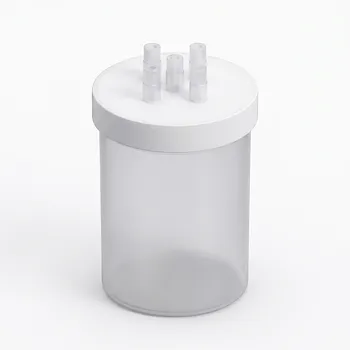
- High Purity 4L PFA Reaction Tank for Proton Exchange Membrane Electrolysis Water Oxygen Separation Systems
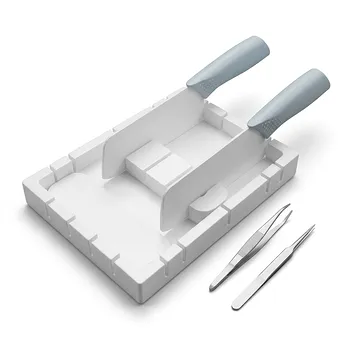
- High Purity PTFE Square Membrane Cutter and Filter Aliquot Device for Trace Analysis and Cleanroom Laboratory Applications
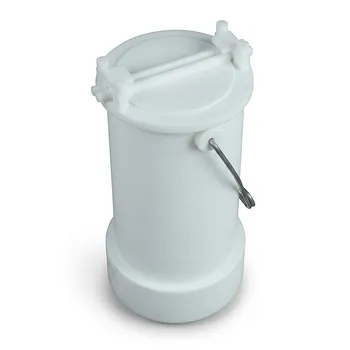
- Custom PTFE Groundwater Sampling Bucket Corrosion Resistant Detachable Fluoropolymer Sampler for Trace Analysis
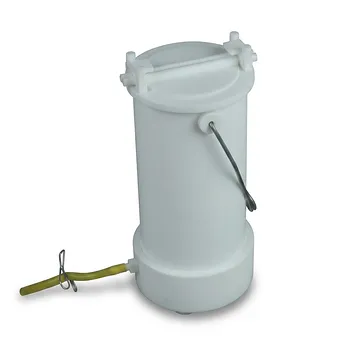
- Custom PTFE Deep Water Sampler Corrosion Resistant Low Background Teflon Sampling Bucket
- PTFE Filter Membrane Holder for Hydrogen Chloride and Water Filtration 90mm Environmental Sampling Clamp Customizable
People Also Ask
- Why Are High-Purity Fluoropolymer Vessels and Tubing Critical for Trace Analysis? Prevent Contamination Reliably
- What are the primary functional and temperature differences between PFA and FEP when selecting melt-processible fluoropolymers for custom laboratory apparatus?
- Why is the chemical stability of polymer endgroups critical when selecting melt-processible fluoropolymers like PFA for high-purity laboratory apparatus? Choose Stable Endgroups for Reliable Performance
- What are the characteristics of PFA material? A Guide to Its High-Performance Balance
- Why is Perfluoroalkoxy alkane (PFA) preferred over glass or stainless steel in pharmaceutical process development? Pure Yield