For reliable ePTFE expansion, the resin must be a highly crystalline, very-high-molecular-weight PTFE fine powder—not a conventional PTFE grade or PTFE-rich copolymer. The most important characteristics are dispersion- or emulsion-polymerized PTFE, molecular weight approaching 30 million, crystallinity typically 98% or higher, and a standard specific gravity (SSG) of approximately 2.14–2.17. These properties allow the resin to elongate rapidly near—but below—its melting point without fracturing, producing the interconnected node-and-fibril structure required for porous laboratory filtration membranes.
The resin must retain enough crystalline integrity to fibrillate under rapid stretching while also having sufficient molecular weight to avoid fracture. High-crystallinity PTFE homopolymer is therefore the foundation of uniform porosity, mechanical strength, and reliable ePTFE membrane performance.
What the Resin Must Do During Expansion
It must fibrillate rather than fracture
ePTFE is formed by rapidly stretching an unsintered PTFE structure. The polymer must undergo substantial elongation while its molecular chains unwind and form thin fibrils between solid polymer nodes.
A suitable resin deforms continuously under the expansion conditions. Resin that cracks, breaks, or fails to fibrillate will produce discontinuous pores, weak areas, and poor membrane yield.
It must support high strain-rate elongation
The expansion process applies deformation quickly at temperatures near the PTFE melting range. The resin therefore needs a combination of very high molecular weight and appropriate crystalline structure to withstand this high strain rate.
A molecular weight approaching 30 million, as indicated in the reference material, helps maintain chain entanglement and structural continuity during stretching.
It must form a uniform node-and-fibril network
The desired ePTFE morphology consists of relatively dense nodes connected by fine polymer fibrils. This architecture creates microporosity while preserving tensile integrity.
Uniform resin behavior is essential because variations in fibrillation can create uneven pore distribution, localized weak points, and inconsistent filtration performance.
The Critical Resin Characteristics
Dispersion- or emulsion-polymerized fine powder
The starting material should be a fine-powder PTFE resin produced through emulsion or dispersion polymerization. This resin form is intended for processing into an unsintered structure that can subsequently be expanded.
The polymerization route alone does not guarantee suitability, but it identifies the type of PTFE resin associated with paste-processing and ePTFE formation.
Extremely high molecular weight
The resin should have an exceptionally high molecular weight, approaching 30 million according to the primary reference.
This characteristic supports the chain continuity needed during rapid stretching. Lower-molecular-weight PTFE may be less capable of sustaining the required deformation without rupture or loss of mechanical integrity.
Very high crystallinity
Crystallinity is one of the most important selection criteria. A target of approximately 98% or higher is identified in the supporting material.
Highly crystalline PTFE provides organized lamellar regions that can participate in controlled molecular unwinding during stretching. Excessive amorphous content makes deformation less uniform and can interfere with the formation of consistent fibrils.
PTFE homopolymer chemistry
The preferred resin is essentially 100% tetrafluoroethylene homopolymer, with minimal or no comonomer content.
Comonomers introduce defects into the crystalline lattice. In significant amounts, these defects can disrupt fibrillation and make it more difficult to obtain high porosity with adequate mechanical strength.
Appropriate standard specific gravity
The expected SSG is typically approximately 2.14–2.17.
SSG is useful as a material-identification and quality-control indicator, but it should not be treated as the sole acceptance criterion. A resin can fall within a nominal density range while still being unsuitable if its molecular weight, crystallinity, or expansion behavior is inadequate.
Why These Characteristics Matter in Laboratory Equipment
They control pore structure
Laboratory filtration and separation devices require a controlled balance between pore volume, retention, airflow, and mechanical strength.
High-crystallinity, high-molecular-weight resin helps create a stable microporous network rather than an irregular or damaged structure. That consistency is particularly important when membranes must retain fine particles while allowing gases or vapors to pass.
They support liquid resistance and gas permeability
The node-and-fibril matrix provides a porous barrier while PTFE’s low surface energy makes the resulting ePTFE strongly non-wetting toward water-based liquids.
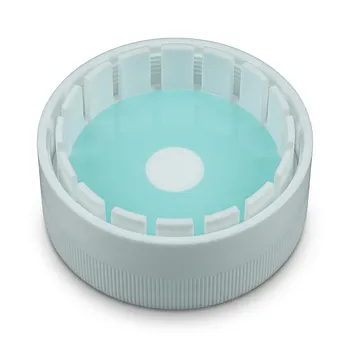
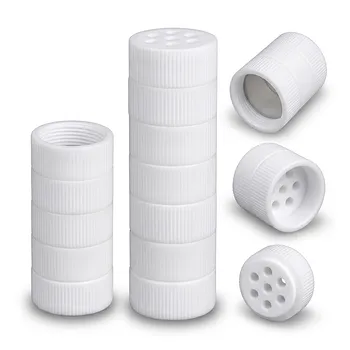
In laboratory applications, this combination can help prevent liquid leakage and contamination while allowing pressure equalization through gas-permeable components such as vent caps and digestion covers.
They preserve chemical and thermal stability
The expansion process changes the physical structure of PTFE but retains the underlying chemical resistance associated with the polymer.
For laboratory equipment exposed to aggressive reagents or elevated temperatures, the starting resin must therefore deliver both reliable expansion behavior and the expected chemical stability of PTFE.
Understanding the Trade-offs
Higher crystallinity is beneficial, but processing still matters
High crystallinity supports clean fibrillation and uniform pore development. However, final membrane properties also depend on processing variables such as extrusion quality, stretching conditions, temperature, and expansion rate.
Resin selection cannot compensate for poorly controlled processing.
High molecular weight improves toughness but can increase processing difficulty
Very high molecular weight is valuable because it helps the polymer resist rupture during rapid stretching. At the same time, highly viscous PTFE is demanding to process and requires appropriate paste-extrusion and expansion control.
The correct goal is not simply the highest nominal molecular weight, but a resin with the molecular-weight and crystallinity profile validated for the intended expansion process.
Copolymers are not interchangeable with PTFE homopolymer
Standard fluoropolymer copolymers may offer useful properties in other applications, but comonomer-related chain defects can impair the fibrillation required for ePTFE.
Substituting a copolymer for a high-crystallinity PTFE homopolymer can reduce expansion uniformity, porosity, and mechanical reliability.
SSG does not predict membrane performance by itself
A specific gravity within the expected range is reassuring, but it does not directly describe pore-size distribution or fibril quality.
Material qualification should consider SSG together with polymer type, crystallinity, molecular weight, and actual expansion performance.
How to Specify the Resin
The resin specification should connect each characteristic to the expansion outcome rather than listing density alone.
- If your primary focus is maximum porosity and uniform pore distribution: Select a highly crystalline PTFE homopolymer, preferably with crystallinity of approximately 98% or higher, and validate its fibrillation behavior during rapid stretching.
- If your primary focus is mechanical integrity during expansion: Use an exceptionally high-molecular-weight fine powder, approaching 30 million, that can elongate without fracture.
- If your primary focus is material identity and incoming quality control: Specify dispersion- or emulsion-polymerized fine-powder PTFE and use an SSG range of approximately 2.14–2.17, while confirming crystallinity and molecular-weight suitability separately.
- If your primary focus is reliable laboratory filtration performance: Avoid significant comonomer content and qualify the resin by the consistency of its node-and-fibril structure, not by chemistry or density alone.
The most reliable ePTFE membranes begin with a high-crystallinity PTFE homopolymer whose molecular weight and structure are capable of controlled, fracture-free fibrillation.
Summary Table:
| Characteristic | Target Value | Why It Matters |
|---|---|---|
| Polymerization method | Dispersion/emulsion | Produces fine powder suitable for paste-forming and subsequent expansion |
| Molecular weight | ~30 million | High MW provides chain entanglement, preventing fracture during rapid stretching |
| Crystallinity | ~98% or higher | High crystallinity ensures organized structure for clean fibrillation and uniform pores |
| Comonomer content | 0% (homopolymer) | Comonomers disrupt crystalline lattice, impairing fibrillation and porosity |
| Standard specific gravity | ~2.14–2.17 | Useful quality indicator, but not sufficient alone |
Ready to enhance your lab filtration with high-performance ePTFE components? KINTEK specializes in PTFE and PFA labware and custom parts. Our high-purity materials, including ePTFE membranes for vents and filtration, are engineered for reliability. Whether for research or production, our custom CNC machining can meet your exact specifications. Benefit from our expertise in fluoropolymer processing and superior product consistency. Contact us today to discuss your needs and discover how KINTEK can support your lab's performance.
Related Products
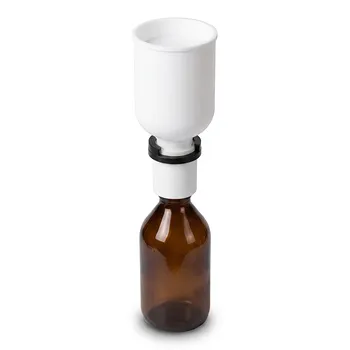
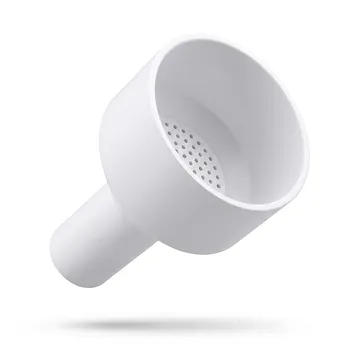
- Custom Corrosion Resistant PTFE Vacuum Filtration System with Teflon Buchner Funnel for Research Laboratories
- Custom PTFE Filtration System Acid Resistant High Purity Semiconductor Grade Chemical Processing Filter
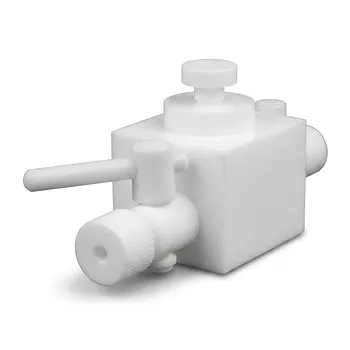
- High Purity PTFE Filter with PFA Valve Connections and Integrated Sieve Plate for Corrosive Fluid Processing
- PTFE PFA Vacuum Filtration System Corrosion Resistant Customizable Shatterproof Laboratory Device
- High Purity PTFE PM2.5 Filter Sample Splitter for Environmental Monitoring Customizable Square Filter Divider for CDC Analysis
People Also Ask
- What makes PTFE filtration systems advantageous for industrial and scientific use? Unmatched Chemical & Thermal Stability
- What temperature resistance do PTFE filters offer? Unmatched Thermal Stability from -200°C to +260°C
- How does the hydrophobicity of PTFE filters benefit their use? Ensure Uninterrupted Gas Flow and Solvent Filtration
- What steps are involved in selecting the proper PTFE filter? A 4-Step Guide to Optimal Filtration
- What sizes and pore options are available for PTFE filters? Choose the Right Filter for Your Application