Densified expanded PTFE offers nearly twice the cut-through resistance of standard PTFE film. In comparative testing on thin-wall insulation for 30 AWG conductors, densified ePTFE resisted approximately 1.40 kg of cut-through force, compared with 0.85 kg for standard PTFE film. That is about 65% greater resistance, helping the insulation remain intact under compression, abrasion, and concentrated mechanical loading.
Densification transforms ePTFE from a highly porous fluoropolymer structure into a much denser, mechanically stronger barrier. Compared with standard PTFE film, it requires substantially more force to penetrate, improving protection in applications exposed to severe physical wear.
Why Standard PTFE Film Is Vulnerable
PTFE Provides Excellent Chemical and Thermal Performance
Standard PTFE film is valued for its broad chemical resistance, electrical insulation, and high-temperature stability. These properties make it effective as a protective and dielectric material.
Mechanical Loading Is a Different Challenge
Conventional PTFE has relatively low tensile strength and limited resistance to localized penetration. Under a sharp edge, compression point, or repeated mechanical contact, the film can be more vulnerable to cut-through than tougher insulation materials.
Cut-Through Resistance Depends on Local Strength
Cut-through occurs when a concentrated force exceeds the material's ability to distribute or resist that force. A material can perform well chemically and electrically while still failing when exposed to a narrow, high-pressure contact.
How Densified ePTFE Improves Performance
Compression Increases Material Density
Densified ePTFE is produced by expanding PTFE tape and then compressing or calendering it between heated rolls. The process brings the material to a density near 1.96 g/cm³, substantially reducing the open structure associated with untreated expanded PTFE.
The Fibrillated Structure Becomes More Resistant to Penetration
Expanded PTFE contains nodes connected by microscopic fibrils. Mechanical densification consolidates this structure, producing a tighter and stronger barrier that is better able to withstand a cutting or penetrating load.
The Measured Advantage Is Substantial
For 30 AWG thin-wall conductor insulation, the reported cut-through force increased from 0.85 kg with standard PTFE film to 1.40 kg with densified ePTFE. The densified material therefore withstands approximately 1.65 times the penetration force in that comparison.
What This Means in Practical Applications
Better Protection Under Compression
Densified ePTFE is better suited to situations where insulation or a fluoropolymer barrier is squeezed against a hard surface or constrained inside a compact assembly. Its higher cut-through resistance reduces the likelihood of exposing the underlying conductor or component.
Greater Resistance to Physical Wear
Repeated rubbing, contact with edges, and mechanical handling can gradually damage thin films. The stronger densified structure provides a larger margin against this type of wear.
More Reliable Protective Components
High-performance barriers and custom-machined protective components must maintain their integrity while being installed and used. Densified ePTFE helps preserve that integrity when the application combines fluoropolymer chemical resistance with demanding mechanical conditions.
Understanding the Trade-offs
“Nearly Double” Does Not Mean Exactly Double
The cited result is 1.40 kg versus 0.85 kg, or roughly a 65% increase in required cut-through force. It is reasonable to describe this as nearly double in practical terms, but the exact improvement depends on the test design, thickness, construction, and processing conditions.
Densification Changes the Material's Primary Advantage
Highly expanded ePTFE is valued for its microporosity, low density, and permeability. Densification reduces those characteristics while improving mechanical robustness, so the material should be selected according to whether permeability or cut-through protection is the dominant requirement.
Testing Must Match the Real Assembly
A cut-through result from thin-wall conductor insulation should not be treated as a universal rating for every film or component. Actual performance depends on film thickness, support conditions, temperature, geometry, applied load, and whether the material is wrapped, laminated, or sintered.
Making the Right Choice for Your Goal
Densified ePTFE is most valuable when a standard PTFE film's chemical and electrical properties are needed alongside substantially improved mechanical protection.
- If your primary focus is cut-through protection: Choose densified ePTFE because it can require approximately 1.40 kg of penetration force compared with 0.85 kg for standard PTFE film in the cited 30 AWG comparison.
- If your primary focus is chemical and electrical insulation: Standard PTFE film may remain sufficient when localized mechanical damage is unlikely.
- If your primary focus is permeability or low density: Use appropriately expanded ePTFE, recognizing that additional densification reduces its porous structure.
- If your primary focus is severe physical wear: Evaluate densified ePTFE in a test that reproduces the application's actual contact forces, geometry, and temperature.
Densified ePTFE provides a major mechanical advantage by raising cut-through resistance to roughly 1.65 times that of standard PTFE film in the cited comparison.
Summary Table:
| Property | Standard PTFE Film | Densified ePTFE |
|---|---|---|
| Cut-through force (30 AWG) | 0.85 kg | 1.40 kg |
| Relative resistance | Baseline | 1.65x (65% higher) |
| Density | ~2.2 g/cm³ | ~1.96 g/cm³ |
| Structure | Non-porous, low porosity | Dense, consolidated fibrillar |
| Typical use | Chemical/electrical insulation | High mechanical stress + insulation |
Ready to enhance your products with superior cut-through resistance? KINTEK's advanced PTFE and PFA solutions, including custom densified ePTFE components, are engineered to meet your most demanding requirements. From labware to custom CNC-machined parts, we deliver precision and performance. Contact us today to discuss your project and discover how our expertise can improve your application's reliability.
Related Products
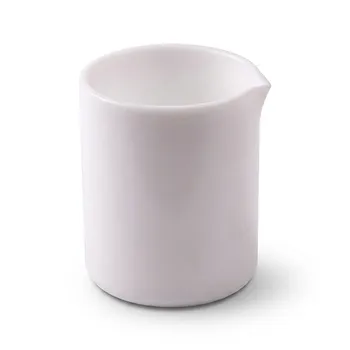
- Custom Thickened PTFE Beaker High Temperature Hot Plate Heating Laboratory Fluoropolymer Vessel Chemical Resistant Digestion Beaker
- Custom Thickened PTFE Laboratory Beaker for High Temperature Hot Plate Applications
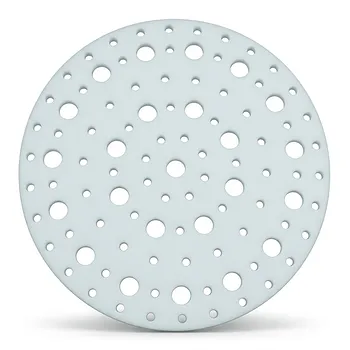
- High Temperature Resistant Insulating TFM Separator and Ultra Clean Laboratory PTFE Baffle Plate with Customizable Pore Size and Hole Configuration
- Custom PTFE Filtration System Acid Resistant High Purity Semiconductor Grade Chemical Processing Filter
- Custom Virgin Polytetrafluoroethylene Sieve Mesh Solid Waste Analysis Round Square Customizable PTFE Screens
People Also Ask
- Why is the material of the reaction vessel critical for tribocatalytic degradation? Boost Your Catalytic Yield!
- What thermal and non-reactive properties of PTFE fluoropolymers ensure sample purity and safety in high-temperature digestion equipment? Discover the Key Benefits for Your Lab
- What fundamental chemical properties make PTFE the material of choice for high-temperature chemical digestion vessels and aggressive reaction apparatus? Discover its chemical inertness and thermal stability.
- What are the limitations of pure PTFE in high temperature applications? Understanding the 200°C Ceiling
- Why are PTFE and PFA preferred over FEP for high-temperature digestion vessels and extreme chemical reaction apparatus? Key thermal margins and chemical resistance