The unique node-and-fibril microstructure of ePTFE is formed through the mechanical expansion of PTFE resin. By stretching the material under specific controlled conditions, the dense polymer is pulled apart into a three-dimensional, web-like network. This process transforms a solid, high-density fluoropolymer into a highly porous membrane defined by interconnected nodes and fine, oriented fibrils.
The node-and-fibril structure is a direct result of mechanical stretching, which converts dense PTFE crystallites into a microscopic porous web. This structural shift provides the material with a unique combination of high permeability, extreme chemical resistance, and enhanced dimensional stability.
The Mechanics of the Expansion Process
From Solid Resin to Microscopic Web
ePTFE begins as a fine powder PTFE resin that undergoes a high-stress mechanical expansion process. As the material is stretched, the molecular chains—which are naturally unrestrained in virgin PTFE—are pulled into a deliberate alignment. This expansion creates billions of microscopic pores, often resulting in a void volume between 60% and 80%.
The Role of Radical Polymerization
Before expansion can occur, the base Polytetrafluoroethylene (PTFE) must be created through radical polymerization. During this stage, tetrafluoroethylene molecules are passed through a radical initiator at specific pressures and temperatures. This creates the pure, high-molecular-weight polymer that serves as the raw material for the expansion process.
Anatomy of the Microstructure
The Function of Nodes
Nodes are dense agglomerates of PTFE crystallites that remain relatively intact during the expansion process. They act as the structural "anchors" of the membrane, providing mass and serving as the connection points for the fibrous network.
The Role of Fibrils
Fibrils are the fine, oriented polymer strands that bridge the gaps between the nodes. These strands are incredibly thin, typically ranging from 0.1 to 1 µm in diameter. The fibrils provide the material with its tensile strength and define the specific pore size of the membrane.
Performance Implications of the Web Structure
Multi-directional Strength
Advanced expansion techniques can create a multi-directional fiber structure within the membrane. This eliminates the "grain" or structural weakness found in traditionally processed PTFE. The result is a material with equal tensile strength in all directions, which is critical for high-pressure sealing.
Resistance to Creep and Cold Flow
Virgin PTFE is known for "cold flow," where the material deforms under a constant load. The node-and-fibril structure of ePTFE significantly mitigates this by interlocking the polymer chains. This mechanical resistance to creep ensures the material maintains its dimensions and seal integrity over long periods.
Understanding the Trade-offs
Porosity vs. Density
While the high porosity of ePTFE allows for excellent flow rates and gas permeability, it results in a lower density compared to solid PTFE. In certain sealing applications, this requires a higher initial compressive force to "crush" the pores and create a leak-tight barrier.
Conformability vs. Stiffness
The web-like structure makes ePTFE highly conformable, allowing it to seal against irregular or damaged surfaces. However, for applications requiring extreme compressive stiffness or minimal compression, a filled PTFE (using glass or carbon) may be more appropriate than an expanded one.
Selecting the Right Material for Your Goal
Choosing between virgin, filled, or expanded PTFE depends on the specific demands of your mechanical or filtration environment.
- If your primary focus is high flow rates or filtration: Use ePTFE membranes with high void volumes (up to 80%) to allow gas or liquid passage at extremely low pressure differentials.
- If your primary focus is sealing irregular or fragile surfaces: Select ePTFE for its high initial conformability, which allows the gasket to "nest" into surface imperfections without requiring excessive bolt load.
- If your primary focus is preventing seal failure due to creep: Opt for multi-directionally expanded PTFE to ensure the material retains its shape and thickness under long-term thermal and mechanical stress.
The mechanical expansion of PTFE transforms a simple polymer into a sophisticated, high-performance membrane capable of solving complex engineering challenges.
Summary Table:
| Structural Feature | Physical Description | Functional Role in ePTFE |
|---|---|---|
| Nodes | Dense agglomerates of PTFE crystallites | Act as structural anchors and provide dimensional mass. |
| Fibrils | Fine, oriented strands (0.1 to 1 µm) | Bridge nodes to provide tensile strength and define pore size. |
| Pores/Voids | Interconnected 3D web-like network | Enables high permeability and gas/liquid flow (60-80% volume). |
| Multi-directional Fibers | Interlocked polymer chain alignment | Eliminates structural grain to prevent creep and cold flow failure. |
Optimize Your Lab Performance with KINTEK Fluoropolymer Expertise
Are you looking for the superior durability and chemical resistance of high-performance ePTFE? KINTEK is your premier partner for precision-engineered laboratory supplies. From everyday basic labware like beakers, crucibles, and centrifuge tubes to complex fluid transfer components including tubing, fittings, and valves, we provide the high-purity solutions your research demands.
Our expertise extends to advanced reaction apparatus, including custom electrochemical cells, battery testing fixtures, and microwave digestion vessels. Every product is crafted with an absolute focus on high-performance materials like PTFE and PFA. Backed by end-to-end custom CNC fabrication, KINTEK can deliver everything from high-volume standard consumables to bespoke, non-standard machined parts tailored to your specific application.
Ready to upgrade your laboratory setup? Contact KINTEK today to discover how our high-performance fluoropolymer products and custom manufacturing capabilities can enhance your lab's efficiency and precision!
Related Products
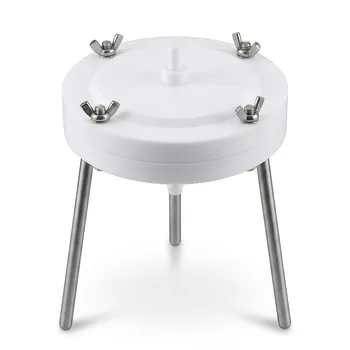
- PTFE Filter Membrane Holder for Hydrogen Chloride and Water Filtration 90mm Environmental Sampling Clamp Customizable
- PTFE Filter Membrane Holder 47mm Leak Proof Corrosion Resistant Environmental Sampling Unit Customizable
- PTFE Membrane Filter Holder for Aerosol Environmental Monitoring and Low Concentration Particulate Matter Sampling Chemical Resistant Air Quality Analysis Component
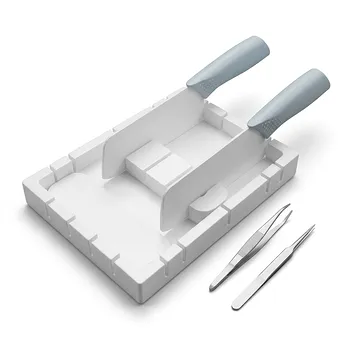
- High Purity PTFE Square Membrane Cutter Equipartition Device for Trace Analysis and Disease Control Centers Clean Non Stick No Leaching
- Custom PTFE Water Quality Filter 202mm Diameter 142mm Membrane Corrosion Resistant Holder
People Also Ask
- What are the structural characteristics and manufacturing principles of Polytetrafluoroethylene (PTFE) filter membranes?
- What is the thermal stability range for PTFE filter membranes? Master Extremes from -200°C to +260°C
- What is the chemical composition and temperature resistance of PTFE filter membranes? Essential Specs for Labs
- What are the performance advantages of PTFE filter membranes vs depth filters? Boosting Lab Purity and Efficiency
- How does the inherent hydrophobicity of PTFE filter membranes affect liquid and gas separation? Optimize Performance