Rigid cardo groups help fluorinated polymers avoid the usual permeability–permselectivity trade-off. Bulky, non-coplanar structures such as fluorene, phthalide, and spirodilactam restrict chain rotation while preventing polymer chains from packing too tightly. The resulting combination of high chain rigidity and controlled fractional free volume (FFV) can provide rapid gas transport without eliminating the size- or solubility-based discrimination required for selective separation.
The design principle is not simply to add more free volume. It is to create free volume that is sufficiently accessible for fast transport but constrained enough to preserve diffusivity selectivity, mechanical strength, and resistance to swelling or plasticization.
Why Conventional Polymer Design Creates a Trade-Off
Permeability depends on diffusion and solubility
Under the solution–diffusion model, gas permeability is expressed as:
[ P_A = D_A \times S_A ]
where (D_A) is the diffusion coefficient and (S_A) is the solubility coefficient of gas A.
A membrane with more accessible free volume generally allows gas molecules to move faster, increasing permeability. However, if the free-volume elements become too large or broadly distributed, gases of different sizes may diffuse with less discrimination.
Permselectivity reflects both transport mechanisms
For a gas pair A/B, ideal permselectivity is:
[ \alpha^*_{A/B} = \frac{P_A}{P_B} = \frac{D_A}{D_B} \times \frac{S_A}{S_B} ]
The diffusivity-selectivity term, (D_A/D_B), is especially important when separating gases with different kinetic diameters, such as hydrogen/methane or carbon dioxide/methane.
The central materials challenge is therefore to increase transport pathways without making them so unrestricted that both gases permeate at similar rates.
How Cardo Groups Control Polymer Structure
They restrict intra-chain rotation
Cardo groups are rigid, bulky structural units incorporated into the polymer backbone. Their fused-ring or spiro configurations reduce rotational freedom and inhibit local segmental motion.
This helps preserve a stiff glassy matrix, rather than allowing the polymer to behave like a soft, highly mobile material. High rigidity can maintain sharper distinctions between smaller and larger penetrants.
They disrupt efficient chain packing
Rigid chains alone can pack densely, which may reduce permeability. Cardo groups address this limitation by introducing steric bulk and non-coplanarity.
The groups prevent adjacent chains from aligning closely and efficiently. This creates controlled fractional free volume without requiring flexible segments that could weaken the matrix or promote swelling.
They create constrained transport pathways
The resulting free volume is not simply a collection of large, open voids. It is a constrained network of molecular-scale gaps whose accessibility depends on penetrant size, shape, and interaction with the fluorinated polymer.
Smaller or more mobile species can pass through these pathways more readily, while larger gases experience greater resistance. This supports higher diffusivity selectivity while maintaining useful overall flux.
Why Fluorination Strengthens the Design
Bulky fluorinated groups increase free volume
Fluorinated substituents such as hexafluoroisopropylidene, (-C(CF_3)_2-), and trifluoromethyl groups introduce substantial steric bulk into the chain.
They disrupt tight interchain packing and can increase FFV, improving gas permeability. Their steric effects also restrict local motion, helping the polymer retain a rigid, high-glass-transition-temperature structure.
Fluorination improves chemical resistance
Fluorinated backbones and substituents generally provide strong resistance to aggressive organic solvents and reduce the tendency of the polymer to swell.
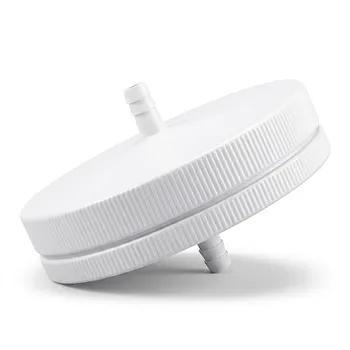
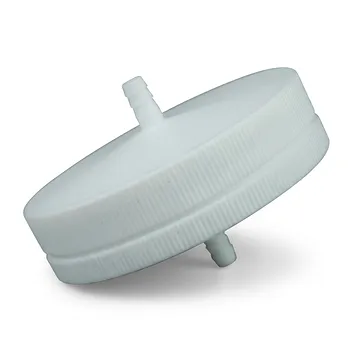
This matters in pervaporation, solvent dehydration, laboratory filtration, and fluid-handling environments, where swelling can alter pore dimensions, weaken dimensional stability, and change separation performance over time.
Fluorinated structure can influence solubility
Fluorination does more than create physical free volume. It also changes polymer polarity and the chemical environment experienced by penetrant molecules.
Consequently, a fluorinated polymer can be tuned through both diffusion behavior and solubility behavior, although the direction and magnitude of the effect depend on the specific gas pair and molecular architecture.
How This Improves Specific Separation Performance
Hydrogen and methane
Hydrogen is substantially smaller and more mobile than methane. A rigid cardo-modified matrix with constrained free volume can allow hydrogen to diffuse rapidly while imposing greater resistance on methane.
This can produce high H₂/CH₄ permselectivity, provided the free-volume distribution is sufficiently narrow and the membrane remains defect-free.
Oxygen and nitrogen
Oxygen and nitrogen are a more demanding pair because their molecular sizes and physical properties are relatively similar.
In this case, backbone rigidity alone is not enough. Fluorinated chemistry, free-volume geometry, and differences in gas solubility must work together to preserve useful O₂/N₂ discrimination while increasing flux.
Carbon dioxide and methane
Carbon dioxide often benefits from favorable interactions with polymer functional groups, while methane is larger and less strongly sorbed in many fluorinated systems.
A cardo-containing fluoropolymer can combine this solubility advantage with size-dependent diffusion resistance, supporting CO₂/CH₄ separation without relying exclusively on large increases in free volume.
Why Molecular Placement Matters
Substituent geometry affects transport
The location and symmetry of fluorinated groups influence how effectively they prevent chain packing. Ortho-, meta-, and para-substitution patterns can produce different chain conformations and free-volume distributions.
Therefore, two polymers with the same fluorinated chemical group may exhibit significantly different permeability and selectivity if the group is positioned differently along the backbone.
Asymmetry can preserve useful free volume
Bulky asymmetric or spiro-linked structures often frustrate regular packing more effectively than small, symmetric aromatic units.
This can increase permeability while maintaining a rigid matrix. The goal is not maximum structural irregularity, but a controlled architecture that produces accessible yet discriminating transport pathways.
Free volume must be balanced with rigidity
Excessive rigidity without sufficient free volume can suppress permeability. Conversely, excessive free volume or chain mobility can reduce selectivity and increase susceptibility to physical aging or plasticization.
The strongest designs balance rigid backbones, non-coplanar bulky units, and appropriately chosen linkages rather than maximizing any single structural feature.
Implications for Fluoropolymer Filtration Tools and Separation Hardware
Membrane performance comes from the selective layer
Cardo-modified polymer chemistry directly controls separation when it is used in a membrane or selective coating.
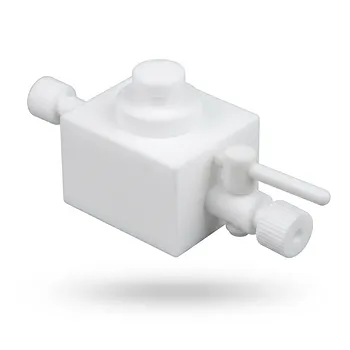
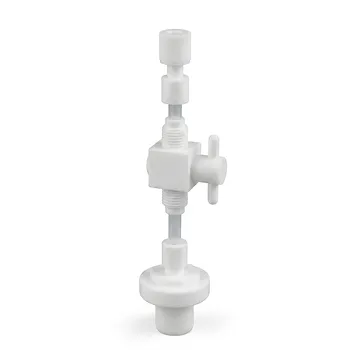
By contrast, a machined fluoropolymer manifold, valve, fitting, or vessel does not provide gas separation merely because it contains cardo or fluorinated groups. In those components, the same structural features primarily contribute to dimensional stability, chemical resistance, and reduced gas loss through the material.
Higher permeability can reduce equipment footprint
When a membrane provides higher permeability at a comparable separation factor, the required membrane area can decrease for a given throughput.
That can reduce the size of filtration modules and associated equipment. However, system design must still account for feed pressure, stage cut, membrane thickness, mixture effects, and the difference between ideal-gas data and actual mixed-gas performance.
Structural stability supports repeatable operation
Rigid fluorinated architectures can help maintain transport properties under pressure and in contact with solvents or condensable species.
This is particularly valuable in laboratory and process equipment where changes in swelling, compression, or chemical exposure could alter flow resistance, selective gas loss, or product purity.
Understanding the Trade-Offs
Higher permeability does not guarantee higher selectivity
The conventional compensation effect remains important: increasing permeability often reduces ideal permselectivity when free volume becomes too open or broadly distributed.
Cardo groups help manage this trade-off, but they do not eliminate it for every polymer, gas pair, or operating condition.
Physical aging can reduce long-term permeability
High-free-volume glassy polymers are often nonequilibrium materials. Over time, their free volume can relax toward a denser state, reducing permeability.
Rigid cardo structures can improve dimensional stability, but long-term performance still requires evaluation through aging tests rather than relying only on initial permeability measurements.
Plasticization can change mixture performance
Strongly sorbing gases, especially under elevated pressure, may increase chain mobility and enlarge transport pathways. This can reduce selectivity and alter the apparent permeability measured under mixed-gas conditions.
Solvent exposure can create analogous concerns in pervaporation and filtration applications, even when the polymer has strong intrinsic chemical resistance.
Processing defects can dominate molecular design
Pinholes, cracks, nonuniform selective layers, and poor interfacial adhesion can overwhelm the intended cardo-based transport behavior.
A high-performing polymer chemistry therefore needs compatible processing, controlled film thickness, defect inspection, and appropriate support materials.
Ideal selectivity is not full process selectivity
The value (\alpha^*_{A/B}=P_A/P_B) is commonly derived from pure-gas measurements. Real mixtures can show competitive sorption, concentration polarization, pressure effects, and plasticization.
Material selection should therefore use mixed-gas and application-specific data whenever the membrane will operate in a real separation process.
How to Apply This to Your Project
Use the molecular design principles together with application testing rather than selecting a fluoropolymer from permeability data alone.
- If your primary focus is maximum gas throughput: Favor cardo-containing fluoropolymer architectures with increased, well-connected FFV, while verifying that membrane aging and mechanical integrity remain acceptable.
- If your primary focus is high separation purity: Prioritize rigid, sterically constrained free volume and strong diffusivity or solubility discrimination for the target gas pair, even if this reduces absolute permeability.
- If your primary focus is solvent filtration or pervaporation: Select fluorinated structures that resist swelling and chemical attack, then validate flux and selectivity with the actual solvent mixture.
- If your primary focus is valves, fittings, manifolds, or vessels: Treat cardo-modified fluoropolymers primarily as chemically resistant, dimensionally stable construction materials; the separation function must come from a dedicated membrane or filter layer.
- If your primary focus is long-term reliability: Evaluate mixed-gas transport, pressure exposure, physical aging, plasticization, thermal cycling, and processing defects—not only initial pure-gas permeability.
The practical objective is a rigid fluorinated matrix with deliberately controlled free volume, because that is what enables high transport without surrendering selective separation.
Summary Table:
| Structural Feature | Effect on Free Volume | Effect on Rigidity | Impact on Permeability | Impact on Permselectivity |
|---|---|---|---|---|
| Cardo groups (fluorene, phthalide, spirodilactam) | Create constrained free volume by disrupting chain packing | Increase chain rigidity by restricting rotation | Moderate to high due to accessible free volume | High due to size-selective transport pathways |
| Fluorinated substituents (e.g., -C(CF3)2-) | Increase free volume via steric bulk | Add rigidity and chemical resistance | Enhance permeability | Can enhance solubility selectivity and reduce swelling |
| Asymmetric or non-coplanar linkages | Frustrate packing, maintain useful free volume | Enhance rigidity and prevent densification | Improve permeability without losing selectivity | Preserve diffusivity selectivity |
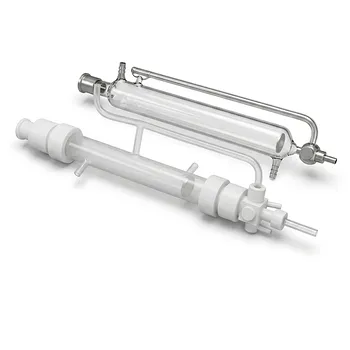
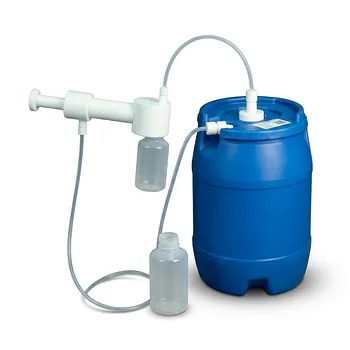
Ready to optimize your fluoropolymer filtration and separation systems? At KINTEK, we specialize in high-performance PTFE and PFA labware and custom components. Our products are designed to withstand harsh chemicals and deliver reliable performance. Whether you need standard beakers, advanced electrochemical cells, or bespoke machined parts, our expertise ensures your lab operates at peak efficiency. Contact us today to discuss your specific requirements and discover how KINTEK can enhance your separation processes. Get in touch with our team to learn more about our comprehensive range of PTFE/PFA solutions and start improving your lab's productivity now!
Related Products
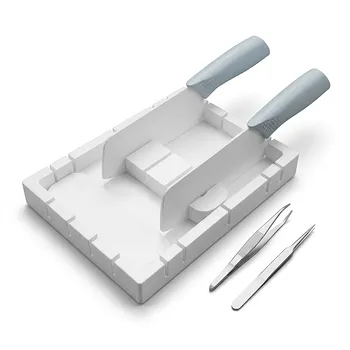
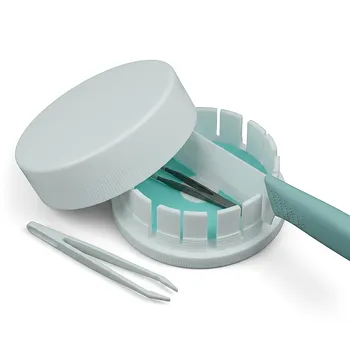
- High Purity PTFE Square Membrane Cutter and Filter Aliquot Device for Trace Analysis and Cleanroom Laboratory Applications
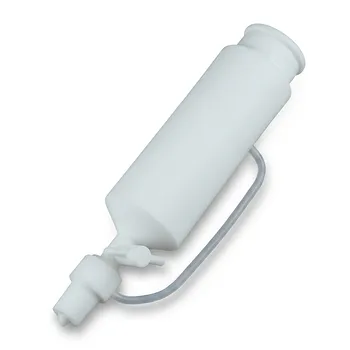
- Custom PTFE Constant Pressure Separatory Funnel 100ml Fluoropolymer Labware for Corrosive Chemical Transfer
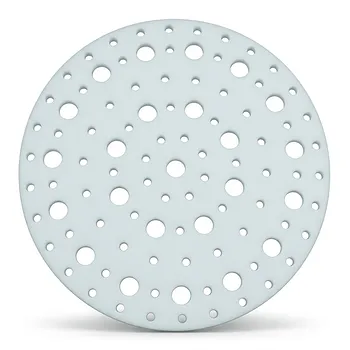
- High Temperature Resistant Insulating TFM Separator and Ultra Clean Laboratory PTFE Baffle Plate with Customizable Pore Size and Hole Configuration
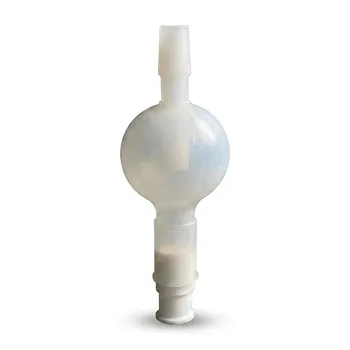
- High Purity PFA Chromatography Column with Collection Bottle Corrosion Resistant Fluoropolymer Filtration System for Trace Analysis
- High Purity PFA Chromatography Column Double Layer Constant Pressure Filter Column with Sieve Plate Acid Resistant Fluoropolymer Filtration System
People Also Ask
- What are the structural characteristics and manufacturing principles of Polytetrafluoroethylene (PTFE) filter membranes?
- What is the chemical composition and temperature resistance of PTFE filter membranes? Essential Specs for Labs
- How does the inherent hydrophobicity of PTFE filter membranes affect liquid and gas separation? Optimize Performance
- What are the performance advantages of PTFE filter membranes vs depth filters? Boosting Lab Purity and Efficiency
- What is the thermal stability range for PTFE filter membranes? Master Extremes from -200°C to +260°C