Expanded PTFE (ePTFE) is far more porous than standard PTFE, yet its measured bulk tensile strength can be substantially higher. Standard molded, extruded, or calendared PTFE typically has less than 0.5% porosity and a tensile strength of approximately 21–35 MPa. ePTFE, by comparison, can have about 90% porosity and a bulk tensile strength near 69 MPa, although the exact value depends strongly on its processing and structure.
The key distinction is structural: standard PTFE is nearly fully dense and rigid, while ePTFE is a lightweight network of nodes and highly oriented fibrils. That network produces high tensile strength relative to the material’s mass, but ePTFE is softer and more compressible than solid PTFE.
How the Materials Differ Structurally
Standard PTFE Is Nearly Fully Dense
Molded, extruded, and calendared PTFE form continuous, full-density polymer bodies. Their porosity is typically below 0.5%, so their measured mechanical properties primarily reflect the behavior of solid PTFE.
Typical tensile strengths fall between 21 MPa and 35 MPa. These materials provide dimensional stability and rigidity, particularly where resistance to compression and high-pressure loading is important.
ePTFE Contains an Intentional Microporous Network
ePTFE is produced by stretching PTFE at elevated temperatures and controlled, rapid strain rates. This process separates the polymer into small nodes connected by tightly spaced, highly oriented fibrils.
The result is a material with approximately 90% porosity in the example described by the primary reference. Other ePTFE products can have different porosity levels because the structure is controlled during processing.
Comparing Tensile Strength Directly
Bulk Tensile Strength Is Higher in the Referenced ePTFE
On a direct bulk-material basis, the referenced ePTFE reaches approximately 69 MPa in tensile strength. This is roughly two to three times the typical 21–35 MPa range for standard PTFE.
That comparison describes the force the manufactured ePTFE material can withstand per unit of its overall cross-sectional area, including its pores.
Orientation Creates Strength
The fibrils in ePTFE are highly oriented during expansion. Like aligned fibers in a textile, they can carry tensile loads efficiently along particular directions.
This orientation explains how a material with very low density can exhibit greater bulk tensile strength than an essentially solid PTFE component. The result is especially valuable where flexibility, low weight, and tensile resilience matter together.
The 690 MPa Figure Requires Careful Interpretation
The primary reference states that ePTFE can reach up to 690 MPa when evaluated on a 100% solid-material basis. This is a normalized structural value, not the direct tensile strength of a dense PTFE article.
At approximately 90% porosity, only a small fraction of the apparent cross-sectional area contains polymer. Normalizing the measured load to the polymer framework can therefore produce a much larger number. The 69 MPa bulk value is the more relevant figure for comparing the manufactured ePTFE article with standard PTFE in an application.
Comparing Porosity and Permeability
Standard PTFE Is Essentially Nonporous
With porosity below 0.5%, standard molded or extruded PTFE behaves as a solid, nonpermeable material for most practical purposes.
It is therefore suited to components that need a continuous barrier, rigid geometry, and resistance to fluid passage through the material itself.
ePTFE Is Designed to Be Permeable
The interconnected pores in ePTFE allow air and other gases to pass through under suitable pressure conditions. Depending on pore size, thickness, and construction, ePTFE can provide breathability or filtration while remaining resistant to liquid penetration at relatively low pressures.
This combination is the primary functional difference between ePTFE and standard PTFE. The porosity is not a defect; it is the feature created by the expansion process.
What the Difference Means in Use
ePTFE Favors Lightweight Tensile Applications
The high fibril orientation and low density of ePTFE make it useful for membranes, filtration media, breathable barriers, flexible tubing, and sealing products.
Its strength-to-weight behavior can be advantageous where the material must flex repeatedly or provide a large functional surface area without the mass of a solid PTFE component.
Standard PTFE Favors Rigid, Dense Components
Standard PTFE remains preferable when the component must maintain a solid shape under compression or resist deformation at high pressure.
Its nearly full-density structure provides a more predictable rigid body, even though its tensile strength is lower than the referenced bulk strength of ePTFE.
Understanding the Trade-offs
Higher Tensile Strength Does Not Mean Greater Rigidity
ePTFE’s tensile strength should not be interpreted as evidence that it is mechanically equivalent to solid PTFE in every direction or loading mode.
The porous fibril-and-node structure is soft, flexible, and compressible. Standard PTFE is generally the better choice when stiffness, resistance to collapse, or support under concentrated compressive loads is the priority.
ePTFE Properties Depend Strongly on Direction
Because expansion aligns fibrils, ePTFE can have different strengths and dimensional behavior in different orientations.
Designers should therefore evaluate tensile strength in the actual direction of loading and use supplier data for the specific grade, thickness, density, and processing condition.
Normalized Strength Can Mislead
The 690 MPa solid-basis figure is useful for understanding the efficiency of the polymer framework, but it should not replace the bulk tensile value in engineering calculations.
For component design, compare values measured using the same test method, specimen geometry, thickness, and basis of reporting.
Porosity Reduces Load-Bearing Cross-Section
The same pores that provide permeability also reduce the amount of polymer available to carry compression, support contact loads, and resist crushing.
ePTFE may also exhibit greater compressibility and lower shape rigidity than standard PTFE, limiting its suitability for high-pressure applications that require a stable solid seal or structural part.
Making the Right Choice for Your Goal
Select the material based on the required combination of permeability, density, tensile loading, and rigidity.
- If your primary focus is permeability or low density: Choose ePTFE because its approximately 90% porosity and interconnected fibril structure provide air permeability with substantially less mass.
- If your primary focus is direct tensile strength: Consider ePTFE, which reaches about 69 MPa in the referenced bulk comparison, while verifying orientation and test conditions.
- If your primary focus is rigidity or high-pressure compression: Choose standard molded or extruded PTFE because its near-solid structure is less compressible and better suited to maintaining a stable shape.
- If your primary focus is comparing intrinsic material strength: Use the 100%-solid normalized ePTFE value only as a structural reference, and use the bulk value for practical component design.
The right comparison is not simply “stronger or weaker,” but whether the application needs a dense PTFE body or a lightweight, porous fibril network.
Summary Table:
| Property | Standard PTFE (Molded/Extruded) | Expanded PTFE (ePTFE) |
|---|---|---|
| Porosity | <0.5% | ~90% (typical) |
| Bulk Tensile Strength | 21–35 MPa | ~69 MPa (referenced bulk) |
| Structure | Continuous, full-density polymer | Nodes and oriented fibrils network |
| Permeability | Essentially nonporous | Interconnected pores, breathable |
| Flexibility | Rigid | Soft, flexible, compressible |
| Best Suited For | Dense, rigid, high-pressure components | Lightweight, tensile, filtration applications |
Ready to leverage the unique properties of PTFE and ePTFE for your specific application? At KINTEK, we specialize in high-performance fluoropolymers, offering a comprehensive range of labware and custom components crafted from PTFE and PFA. From standard beakers and vials to advanced electrochemical cells and microwave digestion vessels, our end-to-end CNC machining capabilities ensure precision and reliability. Contact us today to discuss your requirements and benefit from our expertise in delivering tailored solutions for your lab. Get in touch with our team!
Related Products
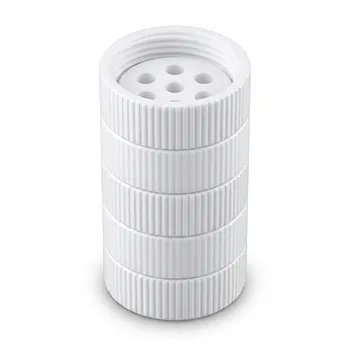
- High Temperature PTFE Reaction Sieve with Customizable Layers and Precision Pore Sizes for Threaded Sample Separation Devices
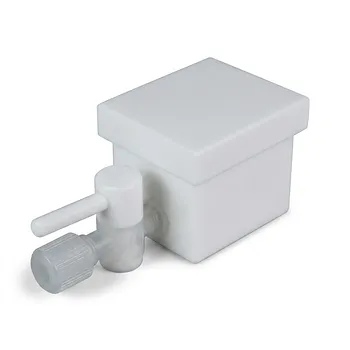
- Custom PTFE Laboratory Apparatus Corrosion Resistant Low Background Reaction Cells Precision CNC Fabrication
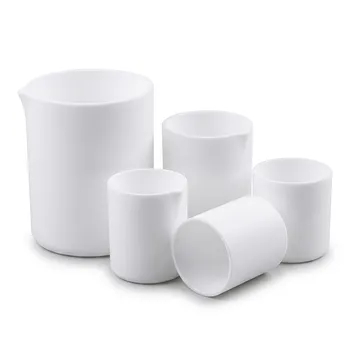
- Large Scale PTFE Beakers and Flasks for High Temperature Corrosion Resistant Laboratory Applications with Custom CNC Fabrication
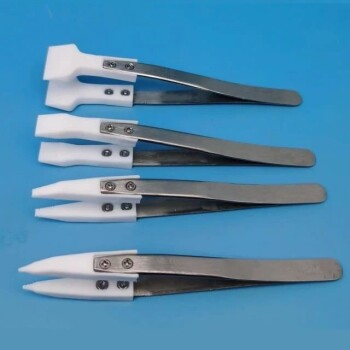
- Custom PTFE Parts Manufacturer for Teflon Parts and PTFE Tweezers
- Customizable PTFE Rods for Advanced Industrial Applications
People Also Ask
- What are the limitations of pure PTFE in high temperature applications? Understanding the 200°C Ceiling
- What customization options are available for PTFE materials? Tailor Performance for Your Application
- What are the temperature limits for PTFE in machining applications? Managing Thermal Expansion for Precision Parts
- What are the general characteristics of PTFE? Master Extreme Performance with This High-Performance Polymer
- Why is PTFE considered non-reactive? The Power of an Unbreakable Molecular Bond