The smaller-pore side of an asymmetric ePTFE membrane should face the incoming process fluid. This orientation creates effective surface filtration: contaminants are captured at the membrane’s upstream surface before they can penetrate the deeper, larger-pore structure. Installing the membrane backwards can promote internal fouling, restrict flow, and shorten the service life of the filtration assembly.
The fine-pore side must face the process fluid because asymmetric ePTFE membranes are designed to capture particles at the surface, not throughout their internal structure. Correct orientation preserves flow performance, reduces fouling, and extends membrane life.
Why Membrane Orientation Matters
Asymmetric Pore Structure
An asymmetric ePTFE membrane does not have the same pore size throughout its thickness. One side has smaller pores, while the underlying structure contains larger pores.
This arrangement creates a deliberate filtration gradient. The small-pore surface performs the primary separation, while the larger-pore region supports fluid passage beneath it.
Surface Filtration
With the smaller-pore side facing the incoming fluid, contaminants are retained near the upstream surface. The membrane therefore operates as a surface filter rather than allowing particles to travel deeply into its structure.
This makes the filtration process more predictable and helps maintain the membrane’s usable flow path.
Protection of the Internal Structure
The larger-pore region beneath the fine surface is intended to provide open passage for the filtered fluid. Keeping contaminants out of this deeper structure helps prevent internal blockage.
The membrane can then maintain its designed permeability for longer, supporting stable operation in high-purity fluoropolymer filtration assemblies.
What Happens When the Membrane Is Reversed
Deeper Particle Penetration
If the larger-pore side faces the process fluid, contaminants encounter more open pathways first. Particles may move into the membrane before reaching the smaller-pore region.
This changes the intended filtration mechanism and increases the risk of fouling within the membrane thickness.
Reduced Flow Performance
Internal fouling obstructs pathways that would otherwise carry filtered fluid. As these pathways become blocked, the membrane’s flow performance can decline.
The result may be reduced operating flow and less efficient use of the filtration assembly.
Shortened Operational Life
Fouling within the membrane is more difficult to remove or control than contamination collected at the surface. Once the internal structure is blocked, the membrane may reach the end of its useful operating life sooner.
Correct orientation helps keep captured contaminants where they can be managed through normal filtration maintenance or replacement procedures.
Understanding the Trade-offs
Surface Loading Still Requires Management
Correct orientation does not prevent the membrane from eventually collecting contaminants. The fine-pore surface will accumulate particles as filtration continues.
The benefit is that this loading occurs primarily at the intended filtration surface, making performance easier to monitor and manage.
Orientation Does Not Replace Process Control
Membrane direction is essential, but it is only one part of reliable filtration. Operating conditions and contaminant loading still influence flow behavior and service life.
A correctly installed membrane can still foul if the process introduces a high contaminant burden.
Installation Must Identify the Fine-Pore Side
The critical installation step is distinguishing the smaller-pore side from the larger-pore side. The membrane should not be installed based on appearance alone unless the assembly or manufacturer clearly identifies the process-facing surface.
A filtration design should provide an unambiguous orientation reference so the membrane cannot be installed backwards.
How to Apply This to Your Project
The correct decision depends on the filtration objective and the way the assembly identifies its membrane surfaces.
- `If your primary focus is high-purity filtration:** Install the smaller-pore side toward the incoming process fluid so contaminants are captured at the surface.
- `If your primary focus is maintaining flow rate:** Prevent reverse installation because fouling within the larger-pore structure can restrict internal flow paths.
- `If your primary focus is maximizing membrane life:** Use the intended asymmetric orientation to keep contamination out of the deeper membrane structure.
- `If your primary focus is installation reliability:** Confirm which side has the smaller pores before fitting the membrane into the assembly.
Correctly orienting the fine-pore side toward the process fluid is fundamental to achieving the membrane’s intended filtration performance.
Summary Table:
| Aspect | Correct Orientation (Fine-Pore Side Faces Fluid) | Incorrect Orientation (Large-Pore Side Faces Fluid) |
|---|---|---|
| Filtration Mechanism | Surface filtration: particles captured at the surface | Depth filtration: particles penetrate into membrane |
| Fouling Risk | Low; contaminants stay on surface | High; internal fouling occurs |
| Flow Performance | Maintains designed permeability | Reduced due to internal blockage |
| Membrane Life | Extended; easier to clean/replace | Shortened; internal fouling is hard to manage |
Ensure your filtration system operates at peak performance with correctly oriented high-purity PTFE/PFA membranes. At KINTEK, we specialize in advanced fluoropolymer solutions, from custom ePTFE membranes to complete filtration assemblies. Our expert team can help you select the right membrane and provide guidance on installation and maintenance to maximize efficiency and lifespan. Whether you need standard labware or bespoke filtration systems, we have the expertise to support your high-purity processes. Contact us today to discuss your application and discover how KINTEK's high-performance fluoropolymer products can enhance your results.
Related Products
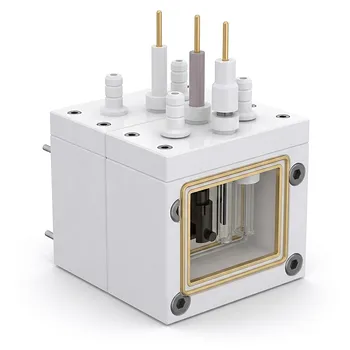
- All PTFE Exchangeable Membrane Electrochemical Cell Dual Chamber Three Electrode Photoelectrochemical Cell for Laboratory Trace Analysis
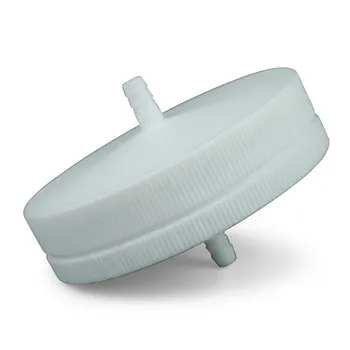
- PTFE Membrane Filter Holder for Aerosol Environmental Monitoring and Low Concentration Particulate Matter Sampling Chemical Resistant Air Quality Analysis Component
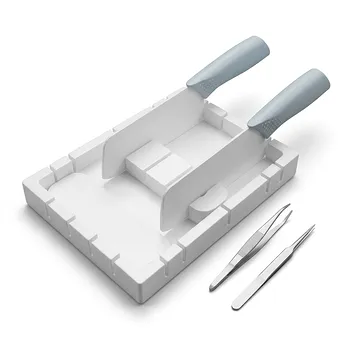
- High Purity PTFE Square Membrane Cutter Equipartition Device for Trace Analysis and Disease Control Centers Clean Non Stick No Leaching
- High Purity PTFE Square Membrane Cutter and Filter Aliquot Device for Trace Analysis and Cleanroom Laboratory Applications
- PTFE Filter Membrane Holder 47mm Leak Proof Corrosion Resistant Environmental Sampling Unit Customizable
People Also Ask
- What makes PTFE an ideal construction material for custom electrochemical cells and electronic analytical instrumentation housings? Discover superior chemical resistance and electrical insulation
- Why are high-performance fluoropolymers like PTFE and PFA preferred for electrochemical cells and sensitive analytical instrumentation? Achieve Reliable, Contamination-Free Measurements
- What material properties allow fluoropolymers to withstand extreme heat and corrosion? Discover how PTFE and PFA ensure inertness, stability, and purity for demanding lab applications.
- How does the microscopic node-and-fibril structure of ePTFE function in filtration and gas venting? Discover the key mechanisms for optimal lab performance.
- How is crushability of an ePTFE membrane evaluated, and why does crush resistance matter for fluoropolymer sealing and filtration products?