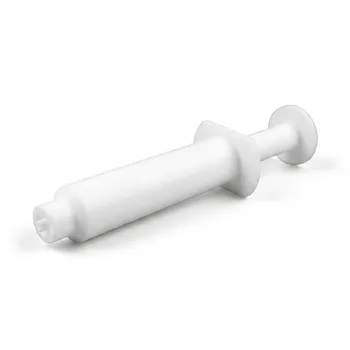
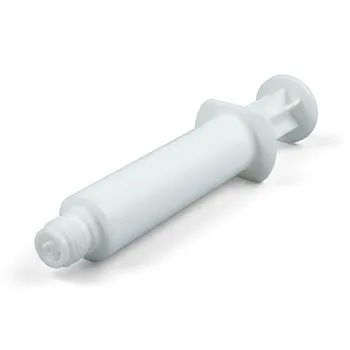
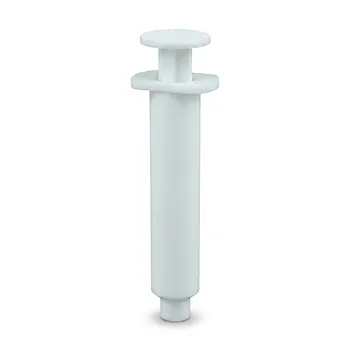
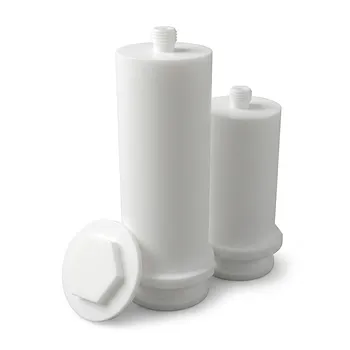
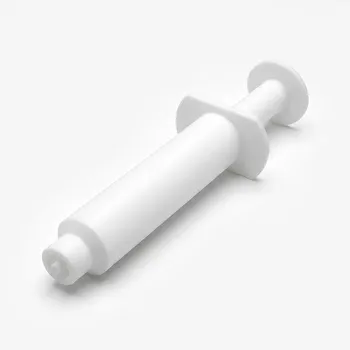
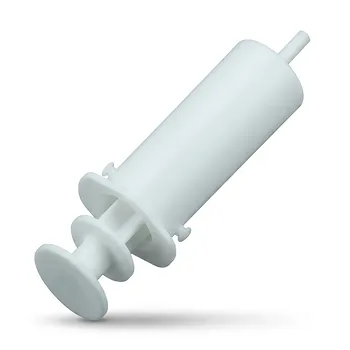
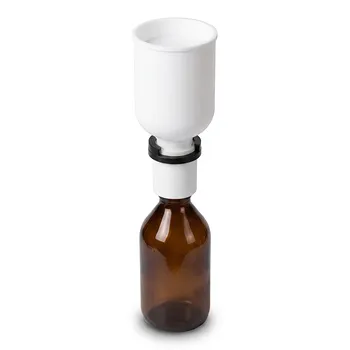
Filtering precursor solutions is a critical prerequisite for high-performance thin-film deposition. Using a PTFE syringe filter before depositing ZnO–WO3 films is technically necessary to remove micro-particles, undissolved precursors, and secondary aggregates that would otherwise create physical defects in the film. Because PTFE is chemically inert, it ensures the purity of the solution is maintained even in the presence of the aggressive organic solvents or acidic environments often required for metal oxide precursors.
Core Takeaway: The use of a PTFE syringe filter serves as a final quality control step that prevents particulate-induced defects and ensures the chemical integrity of the ZnO–WO3 electron transport layer, directly impacting the smoothness and efficiency of the resulting device.
Ensuring Morphological Integrity and Uniformity
Elimination of Physical Obstructions
During the preparation of ZnO–WO3 precursor solutions, minute amounts of undissolved substances or secondary aggregates can remain suspended. If these micro-particles are not removed via a 0.45 μm filter, they act as macroscopic obstacles during the spin-coating or deposition process, leading to "comet" streaks or pinholes in the film.
Achieving Atomic Smoothness
The performance of electron transport layers (ETLs) depends heavily on a defect-free, smooth interface with the photoactive layer. By removing particulates, the PTFE filter allows for the formation of a highly uniform film that facilitates better charge extraction and reduces the likelihood of electrical shorts across the device.
Controlling Nucleation Sites
Suspended impurities can act as sites for heterogeneous nucleation, which disrupts the intended crystallization path of the metal oxides. Removing these "nuclei" ensures that the film solidifies into a uniform grain structure with a consistent particle size distribution, rather than a patchy or multi-phase morphology.
The Technical Superiority of PTFE
Exceptional Chemical Resistance
ZnO–WO3 precursors often involve strong acidic or organic solvent systems that would degrade or dissolve standard nylon or cellulose filters. PTFE (polytetrafluoroethylene) possesses exceptional solvent resistance, ensuring the filter housing and membrane do not leach polymers or chemical impurities into the precursor solution.
Low Non-Specific Adsorption
PTFE is favored for its low non-specific adsorption properties, meaning it does not "trap" or retain the critical metal ions or target molecules from the solution. This ensures that the precise stoichiometric concentration of the ZnO and WO3 components is maintained after filtration, which is vital for the electronic properties of the film.
High Thermal and Pressure Stability
The filtration of dense or viscous polymer/metal-oxide solutions requires a membrane that can withstand the mechanical pressure of a syringe without tearing. PTFE membranes provide the structural integrity needed to filter complex solutions while maintaining a consistent 0.45 μm or 0.22 μm cutoff.
Understanding the Trade-offs
The Risk of Filter Clogging
While necessary, the use of fine-pore filters (0.22 μm to 0.45 μm) can lead to rapid clogging if the precursor solution is not well-aged or pre-dissolved. Forcing a solution through a clogged filter can introduce shear stresses that may inadvertently alter the aggregation state of certain polymers or sensitive complexes.
Potential for Concentration Shifts
In extremely dilute solutions, even the low adsorption of PTFE must be considered. While PTFE is the industry gold standard for inertness, an unprimed filter (one that hasn't been flushed with a small amount of solvent first) can occasionally cause a negligible initial drop in concentration as the first few drops pass through.
How to Apply This to Your Project
Implementation Strategies for Thin-Film Deposition
- If your primary focus is Maximum Film Smoothness: Use a 0.22 μm PTFE filter to remove the smallest possible sub-micron aggregates, though this may require more force during the manual filtration process.
- If your primary focus is Maintaining Solution Stoichiometry: Ensure the PTFE filter is chemically compatible with your specific solvent (e.g., DMSO, ethanol, or acidic water) to prevent any leaching of impurities that could dope the ZnO–WO3 layer.
- If your primary focus is High-Throughput Consistency: Standardize the aging time of your precursor solution before filtration to ensure the particle load is consistent, preventing premature filter blockage and ensuring reproducible film thickness.
By integrating PTFE filtration into the deposition workflow, researchers can eliminate the most common sources of physical film failure and ensure the chemical purity of the ZnO–WO3 interface.
Summary Table:
| Technical Requirement | Benefit to ZnO–WO3 Film | PTFE Advantage |
|---|---|---|
| Particle Removal | Prevents "comet" streaks, pinholes, and defects. | Precise 0.22/0.45 μm pore size cutoff. |
| Chemical Stability | Maintains solution purity without polymer leaching. | High resistance to aggressive acids and solvents. |
| Surface Inertness | Preserves exact stoichiometry and ion concentration. | Extremely low non-specific adsorption. |
| Mechanical Integrity | Ensures consistent filtration under pressure. | High thermal and structural stability during use. |
Elevate Your Research Precision with KINTEK
Achieving atomic smoothness in thin-film deposition requires equipment that never compromises on purity. KINTEK specializes in high-performance fluoropolymer solutions tailored for the most demanding laboratory environments.
From everyday basic labware—including beakers, measuring cylinders, crucibles, reagent bottles, and centrifuge tubes—to specialized components like high-purity trace analysis instruments and fluid transfer systems (tubing, fittings, valves), we provide the tools you need for reproducible results. Our expertise extends to sample prep tools, filters, and advanced reaction apparatus such as custom electrochemical cells, battery testing fixtures, and microwave digestion vessels.
Why choose KINTEK?
- Comprehensive Range: We manufacture virtually every lab supply imaginable from PTFE and PFA.
- Bespoke Fabrication: Backed by end-to-end custom CNC fabrication, we deliver everything from complex non-standard machined parts to high-volume orders.
- Unmatched Performance: Absolute focus on high-performance materials ensures chemical inertness and durability.
Don't let impurities compromise your ZnO–WO3 layers. Contact KINTEK today to discuss your standard or custom laboratory needs and discover how our fluoropolymer expertise can drive your next breakthrough.
References
- Ali Mujtaba, Dhafer O. Alshahrani. Enhancing perovskite solar cell efficiency: ZnO–WO<sub>3</sub> as an electron transport layer to minimize recombination losses. DOI: 10.1039/d5ra03446a
This article is also based on technical information from Kintek Knowledge Base .
Related Products
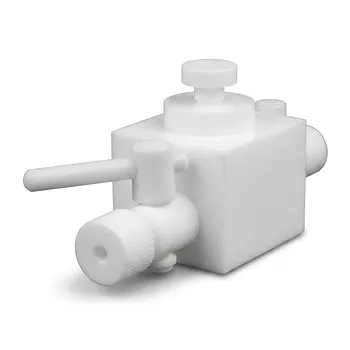
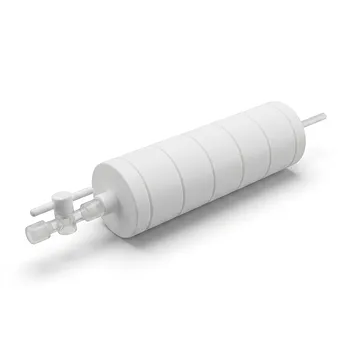
- Custom PTFE Filtration System Acid Resistant High Purity Semiconductor Grade Chemical Processing Filter
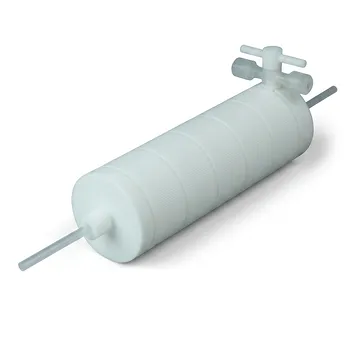
- High Purity PTFE Filter with PFA Valve Connections and Integrated Sieve Plate for Corrosive Fluid Processing
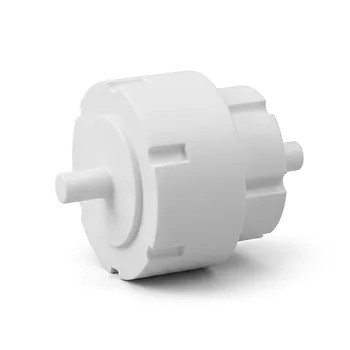
- Custom PTFE Vacuum Filter with Integrated Sieve Plate and Corrosion Resistant Particle Free Design for High Purity Water Quality Analysis
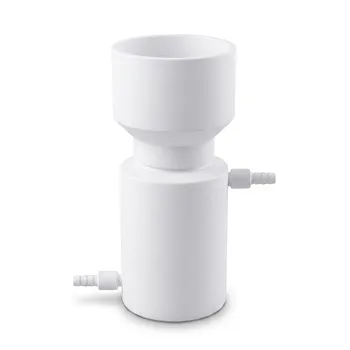
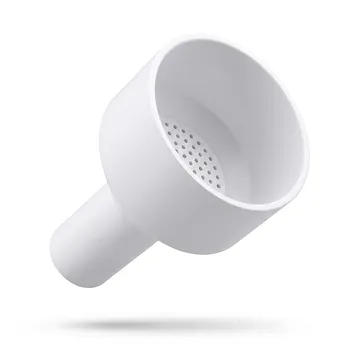
- High Purity PTFE Buchner Funnel Vacuum Filtration System Corrosion Resistant Low Trace Laboratory Suction Filter Apparatus
- PTFE Corrosion Resistant Filter with PFA Valve Connections and Integrated Sieve Plate
People Also Ask
- What makes PTFE filtration systems advantageous for industrial and scientific use? Unmatched Chemical & Thermal Stability
- What steps are involved in selecting the proper PTFE filter? A 4-Step Guide to Optimal Filtration
- What sizes and pore options are available for PTFE filters? Choose the Right Filter for Your Application
- How does the hydrophobicity of PTFE filters benefit their use? Ensure Uninterrupted Gas Flow and Solvent Filtration
- What temperature resistance do PTFE filters offer? Unmatched Thermal Stability from -200°C to +260°C