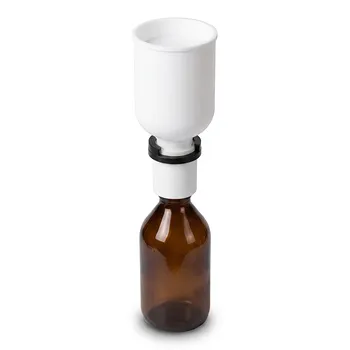
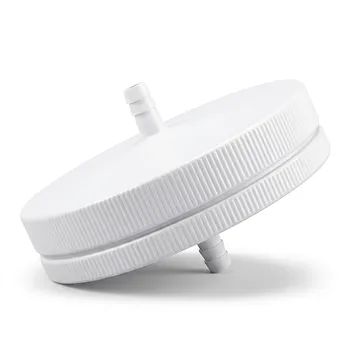
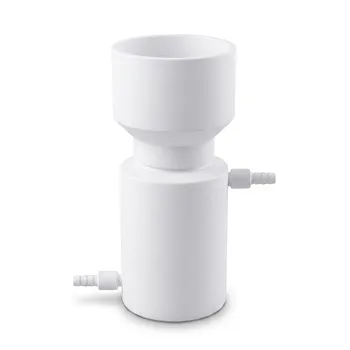
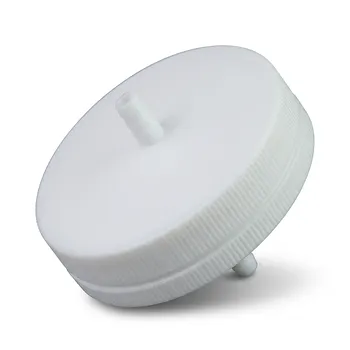
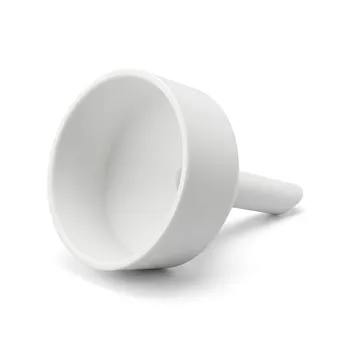
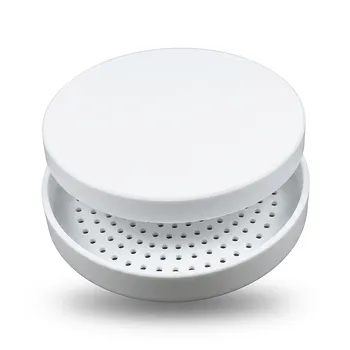
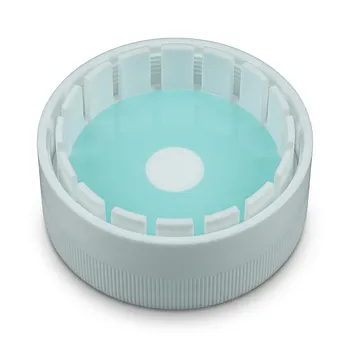
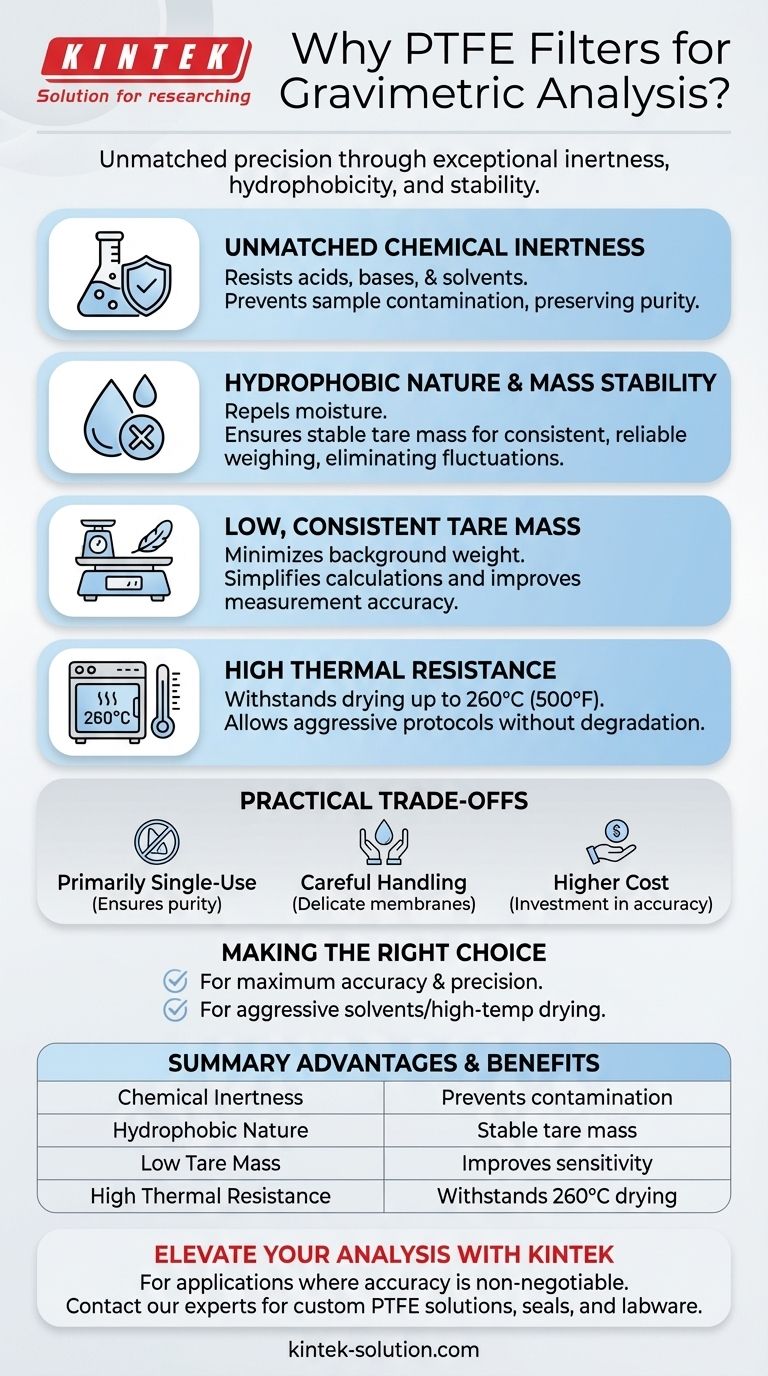
The primary advantages of PTFE filters in gravimetric analysis are their exceptional chemical inertness, hydrophobic nature, and low, stable tare mass. This combination ensures that the filter itself does not interfere with the measurement, either by reacting with the sample or by absorbing atmospheric moisture, which would alter its weight and compromise the accuracy of the results.
Gravimetric analysis hinges on one critical factor: precise mass measurement. The ideal filter is essentially invisible to the process, contributing no mass, reacting with no chemicals, and absorbing no moisture. PTFE comes closer to this ideal than almost any other material.
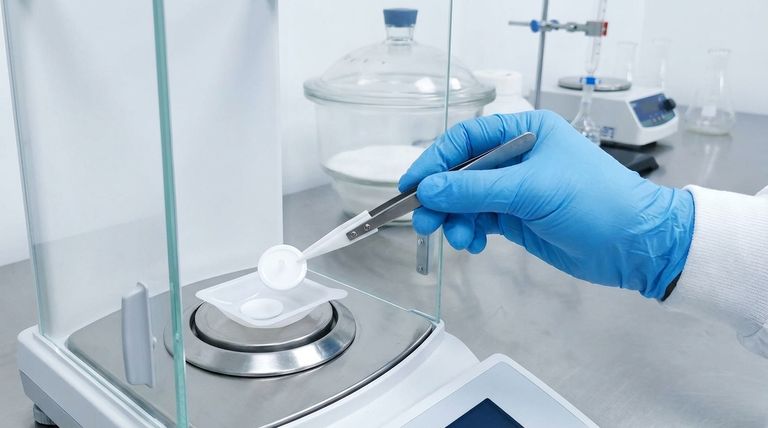
The Pillars of a Perfect Gravimetric Filter
Gravimetric analysis is a quantitative method that relies on determining the mass of a pure compound to which the analyte is chemically related. The filter used to separate this compound is not just a tool; it's a critical component of the measurement system. Any instability in the filter's properties directly translates to error in the final result.
Unmatched Chemical Inertness
The filter must not react with the sample, solvents, or any solutions used during the analysis.
PTFE is renowned for its resistance to nearly all acids, bases, and aggressive solvents. This inertness ensures that the filter will not degrade, dissolve, or leach impurities into your analyte, preserving its purity for accurate weighing.
Hydrophobic Nature and Mass Stability
A key source of error in gravimetric analysis is the absorption of atmospheric moisture by the filter medium, which can cause its weight to fluctuate.
PTFE is inherently hydrophobic—it actively repels water. This means it will not absorb moisture from the air during handling and weighing, providing a highly stable and consistent tare mass. This stability is fundamental to achieving reliable and reproducible results.
Low, Consistent Tare Mass
The mass of the filter itself should be as low and consistent as possible.
PTFE filters have a low tare mass, which simplifies calculations and improves measurement accuracy. When the filter's mass is low, the mass of the collected analyte represents a larger proportion of the total measured weight, reducing the impact of any minor weighing errors.
High Thermal Resistance
Analysis often requires drying the analyte in an oven at elevated temperatures to remove all moisture and achieve a constant weight.
PTFE filters can withstand temperatures up to 260°C (500°F). This high thermal stability allows for aggressive drying protocols without the risk of the filter melting, degrading, or changing its mass due to heat.
Understanding the Practical Trade-offs
While PTFE is the superior choice for high-precision work, it's important to understand its practical limitations. No material choice is without its compromises.
Primarily Single-Use
PTFE filters are typically designed for single use. While this ensures purity and prevents cross-contamination between samples, it can contribute to higher consumable costs and waste over time.
Handling and Mechanical Strength
Compared to other filter materials like glass fiber, PTFE membranes can be more delicate. They require careful handling with forceps to avoid punctures or tears that would render the measurement invalid.
Cost Considerations
As a high-performance material, PTFE filters are generally more expensive than common alternatives like standard cellulose filter papers. The cost is justified by the superior accuracy and reliability they provide for critical applications.
Making the Right Choice for Your Analysis
Choosing the right filter is a decision about managing sources of error. For gravimetric analysis, where precision is paramount, PTFE is almost always the correct technical choice.
- If your primary focus is maximum accuracy and precision: The chemical inertness and hydrophobic stability of PTFE make it the definitive standard for reliable gravimetric results.
- If your analysis involves aggressive solvents, strong acids, or high-temperature drying: PTFE's chemical and thermal resistance is non-negotiable to ensure the integrity of your sample.
- If you are performing routine, non-critical separations with a limited budget: You might consider other materials, but you must be prepared to account for their potential to absorb moisture and react with your chemicals.
Ultimately, specifying a PTFE filter is an investment in the quality and reliability of your final measurement.
Summary Table:
| Advantage | Key Benefit for Gravimetric Analysis |
|---|---|
| Chemical Inertness | Resists acids, bases, and solvents; prevents sample contamination. |
| Hydrophobic Nature | Repels moisture; ensures stable tare mass for accurate weighing. |
| Low Tare Mass | Minimizes background weight; improves measurement sensitivity. |
| High Thermal Resistance | Withstands oven drying up to 260°C without degradation. |
Elevate the precision of your gravimetric analysis with KINTEK's high-performance PTFE filters.
For applications in semiconductor, medical, laboratory, and industrial settings where accuracy is non-negotiable, our PTFE components—including seals, liners, and custom labware—are manufactured with precision to meet your exact specifications. We offer custom fabrication from prototypes to high-volume orders, ensuring you get the reliable, chemically inert filtration you need.
Contact our experts today to discuss your specific requirements and request a quote.
Visual Guide
Related Products
- Custom PTFE Filtration System Acid Resistant High Purity Semiconductor Grade Chemical Processing Filter
- Custom PTFE Vacuum Filter with Integrated Sieve Plate and Corrosion Resistant Particle Free Design for High Purity Water Quality Analysis
- Custom PTFE Water Quality Filter 202mm Diameter 142mm Membrane Corrosion Resistant Holder
- High Purity PTFE Filter with PFA Valve Connections and Integrated Sieve Plate for Corrosive Fluid Processing
- PTFE Corrosion Resistant Filter with PFA Valve Connections and Integrated Sieve Plate
People Also Ask
- What are the typical applications of PTFE filters in scientific filtration? Master Harsh Chemical and Gas Filtration
- What sizes and pore options are available for PTFE filters? Choose the Right Filter for Your Application
- What are the primary uses of PTFE filters? Achieve Pure, Sterile Filtration for Aggressive Chemicals
- What are common industrial applications of PTFE filters? Master Critical Filtration in Demanding Industries
- What steps are involved in selecting the proper PTFE filter? A 4-Step Guide to Optimal Filtration