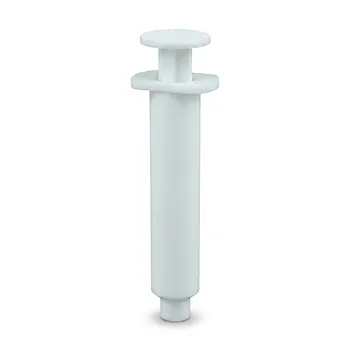
The primary reason for using a 0.2 μm PTFE syringe filter is to ensure an immediate halt to the photocatalytic reaction and to protect the accuracy of analytical measurements. By physically removing the solid catalyst from the dye solution, you prevent continued degradation and eliminate light scattering that would otherwise skew UV-Vis or HPLC results.
The 0.2 μm PTFE filter serves as a critical "mechanical quench," separating nanometer-scale catalysts from the solution to stop the reaction and protect analytical instruments from interference or damage.
Achieving Kinetic Accuracy through Physical Separation
Immediate Reaction Termination
In photocatalysis, the reaction occurs at the interface of the catalyst and the liquid. By passing the sample through a 0.2 μm filter, you physically isolate the catalyst particles, effectively "freezing" the reaction at the exact moment of sampling for precise kinetic data.
Protecting Spectroscopic Integrity
Suspended nanometer-scale catalysts can cause significant light scattering during UV-Vis absorption spectroscopy. Removing these particles ensures that the absorbance readings reflect only the concentration of the dye, preventing artificial inflation of the data.
Ensuring Sample Uniformity
The fine 0.2 μm pore size is specifically chosen to intercept even the smallest microparticles and mechanical impurities. This creates a clear, homogenous solution that is required for reproducible concentration measurements across multiple time points.
Why PTFE is the Material of Choice
Exceptional Chemical Inertness
Polytetrafluoroethylene (PTFE) is chosen for its broad chemical compatibility, meaning it will not dissolve or degrade when exposed to various reaction environments. This prevents the introduction of "leachables" into the sample, which could create ghost peaks in analytical results.
Minimal Analyte Adsorption
A critical requirement in dye degradation studies is that the filter must not "trap" the dye itself. PTFE exhibits low adsorption properties, ensuring that the concentration of the pollutant measured after filtration is a true representation of the reaction state.
Resistance to Organic Solvents
If the degradation experiment involves organic solvents or complex intermediate fragments, PTFE remains stable where other materials might fail. This stability makes it a universal choice for diverse photocatalytic systems, from aqueous dye solutions to complex organic pollutants.
Safeguarding Downstream Analytical Equipment
Preventing Column Clogging
For studies utilizing High-Performance Liquid Chromatography (HPLC), filtering is mandatory to protect the expensive stationary phase. Solid catalyst particles can easily clog the inlet frits or the column packing, leading to high backpressure and instrument failure.
Protecting Sensitive Components
In systems like Mass Spectrometry (MS) or Total Organic Carbon (TOC) analyzers, even trace amounts of solids can damage spray needles or injection valves. The 0.2 μm filter acts as a final gatekeeper, extending the lifespan of these high-precision components.
Maintaining Stable Baselines
Removing undissolved polymers or insoluble degradation fragments ensures a stable baseline during detection. This is vital for detecting low concentrations of intermediates that might otherwise be buried under the "noise" created by particulate matter.
Understanding the Trade-offs and Limitations
Membrane Saturation and Pressure
As catalyst concentration increases, the filter membrane may saturate quickly, leading to high resistance during manual filtration. Forcefully pushing the sample through a clogged filter can potentially cause the membrane to rupture, compromising the sample purity.
The "Hold-up" Volume
Every syringe filter retains a small amount of liquid, known as the "hold-up" volume. In experiments where sample volumes are extremely small, this loss must be accounted for to ensure enough liquid remains for the required analytical tests.
Potential for Filter Pre-conditioning
To ensure the highest accuracy, it is often necessary to discard the first few drops of the filtrate. This "pre-conditioning" saturates any minor active sites on the filter housing or membrane, ensuring the subsequent liquid is truly representative.
How to Apply This to Your Project
Before beginning your sampling, consider your specific analytical goals to optimize your filtration strategy.
- If your primary focus is Kinetic Precision: Filter the sample immediately upon withdrawal from the reactor to ensure the catalyst is separated from the dye without delay.
- If your primary focus is Instrument Protection: Always use a 0.2 μm (or 0.22 μm) filter specifically to prevent microparticles from entering HPLC columns or MS spray needles.
- If your primary focus is Trace Analysis: Pre-rinse the PTFE filter with a small amount of the reaction solution and discard the initial volume to eliminate any potential adsorption bias.
Using the correct filtration protocol is the most effective way to ensure your photocatalytic data is both reproducible and scientifically sound.
Summary Table:
| Feature | Primary Benefit | Experimental Impact |
|---|---|---|
| 0.2 μm Pore Size | Mechanical Quench | Immediately halts reaction by physically removing solid catalysts. |
| PTFE Membrane | Chemical Inertness | Prevents leaching and ensures minimal analyte adsorption for pure data. |
| Solid Separation | Optical Clarity | Eliminates light scattering to ensure accurate UV-Vis absorbance readings. |
| Micro-Filtration | Hardware Safety | Protects sensitive HPLC columns and MS needles from particulate clogging. |
Elevate Your Research Precision with KINTEK Fluoropolymer Solutions
Achieve uncompromising accuracy in your photocatalytic studies with KINTEK’s high-performance laboratory supplies. From the 0.2 μm PTFE syringe filters essential for kinetic quenching to high-purity PFA reagent bottles and digestion tubes, we provide the tools necessary for sensitive trace analysis.
As specialists in high-performance fluoropolymers, KINTEK offers an exhaustive range of products, including:
- Essential Labware: PTFE beakers, crucibles, and high-purity cleaning tanks.
- Fluid & Sample Prep: Tubing, valves, filters, pipettes, and separatory funnels.
- Advanced Apparatus: Custom electrochemical cells, hydrothermal synthesis liners, and microwave digestion vessels.
Backed by end-to-end custom CNC fabrication, we deliver everything from high-volume standard consumables to bespoke, non-standard machined parts tailored to your specific reactor setups. Ensure your results remain reproducible and your analytical instruments stay protected.
Contact KINTEK Today to discuss your custom laboratory requirements and experience the peak of chemical resistance and durability.
References
- Pietro Ostellari, Francesco Lamberti. Fe(III)‐Mediated Formation of Cu Nanoinclusions and Local Heterojunctions in CuWO<sub>4</sub> Photoanodes. DOI: 10.1002/admi.202500610
This article is also based on technical information from Kintek Knowledge Base .
Related Products
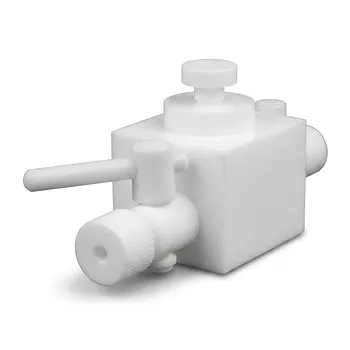
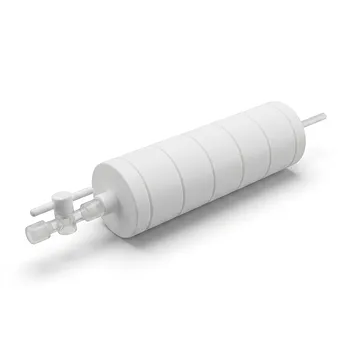
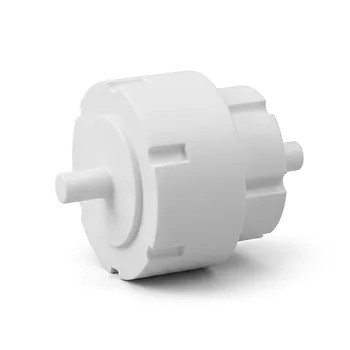
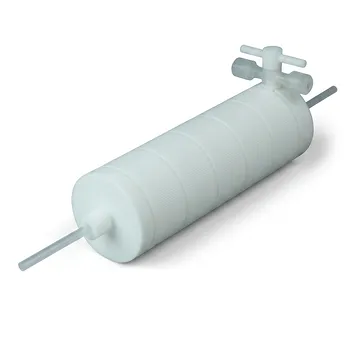
- Custom PTFE Filtration System Acid Resistant High Purity Semiconductor Grade Chemical Processing Filter
- PTFE Corrosion Resistant Filter with PFA Valve Connections and Integrated Sieve Plate
- PTFE PFA Vacuum Filtration System Corrosion Resistant Customizable Shatterproof Laboratory Device
- Custom PTFE Vacuum Filter with Integrated Sieve Plate and Corrosion Resistant Particle Free Design for High Purity Water Quality Analysis
- High Purity PTFE Filter with PFA Valve Connections and Integrated Sieve Plate for Corrosive Fluid Processing
People Also Ask
- What makes PTFE filtration systems advantageous for industrial and scientific use? Unmatched Chemical & Thermal Stability
- What sizes and pore options are available for PTFE filters? Choose the Right Filter for Your Application
- What steps are involved in selecting the proper PTFE filter? A 4-Step Guide to Optimal Filtration
- What temperature resistance do PTFE filters offer? Unmatched Thermal Stability from -200°C to +260°C
- How does the hydrophobicity of PTFE filters benefit their use? Ensure Uninterrupted Gas Flow and Solvent Filtration