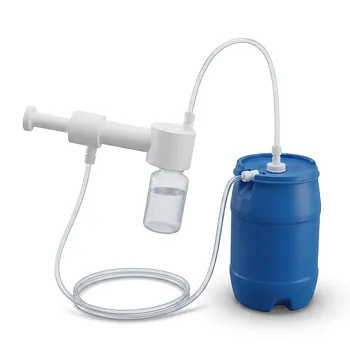
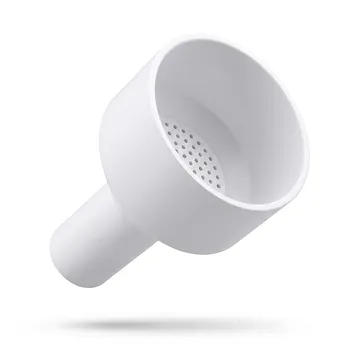
The significance of high-purity chemical filtration equipment lies in its role as the final gatekeeper for material purity. It enables the efficient collection of hybrid products while selectively removing unreacted precursor salts and excess impurity ions. By utilizing high-quality consumables, researchers prevent secondary contamination, ensuring that the synthesized materials reflect their true chemical and physical properties during advanced characterization.
High-purity filtration is a foundational requirement for ensuring that characterization data accurately reflects the material's synthesis. It serves the dual purpose of validating scientific results and protecting the sophisticated analytical instruments used for downstream measurement.
Maintaining Characterization Accuracy
Identifying True Phases and Morphologies
High-purity filtration ensures that materials like Ce-UiO-66 exhibit their true phases and morphologies during Scanning Electron Microscopy (SEM) and X-ray Diffraction (XRD). Without effective filtration, residual precursors can crystallize on the surface of the MOF, leading to misleading imagery and skewed diffraction patterns.
Eliminating Precursor Interference
The process effectively filters out unreacted precursor salts and excess impurity ions that remain after large-scale washing. This removal is critical because even trace amounts of unreacted reagents can alter the chemical behavior and thermal stability of the MOF hybrid.
Protecting Sophisticated Instrumentation
Preventing Clogging in Analytical Systems
In techniques like ICP-OES, filtration removes residual micro-particles that could otherwise clog the nebulizer and sample introduction tubing. This protection is vital for maintaining detection stability and preventing costly downtime for instrument repair.
Reducing Elemental Analysis Errors
High-performance filtration allows for thorough washing with solvents like ethanol to remove by-products such as acetic acid. This ensures that Carbon, Hydrogen, and Nitrogen (CHN) content errors remain within acceptable ranges during elemental analysis.
Material Resilience and Chemical Compatibility
Resisting Acid Erosion
Sample digestion solutions often involve strong acid environments that can degrade standard filtration components. High-purity equipment is designed with chemical compatibility in mind to prevent membrane rupture during these aggressive processing steps.
Preventing Secondary Contamination
Using chemically inert filter papers or membranes prevents the leaching of impurities into the sample. This is essential for ensuring that the final product meets the stringent purity requirements necessary for high-stakes research and industrial applications.
Understanding the Trade-offs
Pore Size Selection and Product Yield
Selecting the incorrect pore-size filter paper can lead to significant material loss or insufficient purification. If the pores are too large, smaller MOF particles pass through; if too small, the filtration rate slows drastically and may trap unwanted micro-impurities.
Material Compatibility vs. Cost
While high-purity, chemically inert membranes offer superior protection against secondary contamination, they often carry a higher cost than standard laboratory filters. However, using lower-quality consumables risks acid erosion and leaching, which can ultimately invalidate expensive analytical tests.
Applying Filtration Standards to Your Project
Recommendations Based on Research Goals
- If your primary focus is structural characterization (SEM/XRD): Prioritize high-quality filtration consumables to ensure the observed morphology reflects the synthesized phase rather than residual contaminants.
- If your primary focus is elemental precision (ICP-OES/CHN): Focus on equipment with high chemical compatibility and inert membranes to prevent leaching and ensure stable instrument performance.
- If your primary focus is large-scale production: Utilize high-performance laboratory filtration devices that allow for efficient solvent washing (e.g., ethanol) to rapidly remove reaction by-products like acetic acid.
High-purity filtration is the essential bridge between successful synthesis and accurate, repeatable material analysis.
Summary Table:
| Key Aspect | Significance for MOF Hybrids | Impact on Research Results |
|---|---|---|
| Purity Control | Removes unreacted precursor salts and excess ions | Eliminates baseline interference in characterization |
| Phase Integrity | Ensures true morphologies are visible via SEM/XRD | Prevents misleading data from residual crystal impurities |
| Instrument Protection | Filters micro-particles that clog nebulizers/tubing | Reduces downtime and maintenance for ICP-OES systems |
| Chemical Resistance | Withstands aggressive acid digestion environments | Prevents secondary contamination from membrane leaching |
| Elemental Accuracy | Facilitates thorough solvent washing (e.g., ethanol) | Minimizes CHN content errors and analysis deviations |
Secure Your MOF Research Integrity with KINTEK
Don’t let secondary contamination or material leaching compromise your high-stakes characterization data. At KINTEK, we specialize in high-performance fluoropolymer solutions designed for the most demanding laboratory environments. From everyday basic labware like PTFE beakers, centrifuge tubes, and filtration tools (separatory funnels, filters, and spatulas) to high-purity trace analysis instruments and cleaning tanks, we ensure your samples remain pristine.
Our expertise extends to comprehensive fluid transfer components (tubing, fittings, valves) and advanced reaction apparatus, including custom hydrothermal synthesis liners and microwave digestion vessels. Backed by end-to-end custom CNC fabrication, KINTEK can deliver everything from high-volume consumables to bespoke, non-standard machined parts tailored to your specific MOF synthesis needs.
Ready to elevate your lab's precision? Contact our experts today to discuss your custom fluoropolymer requirements!
References
- DINGETEGNA GODANA BOYNITO, G. Neelaiah. Synthesis and Characterization of Cerium Metal Organic Frameworks (Ce-UiO-66) and Its Inorganic Hybrids. DOI: 10.11648/j.am.20251401.11
This article is also based on technical information from Kintek Knowledge Base .
Related Products
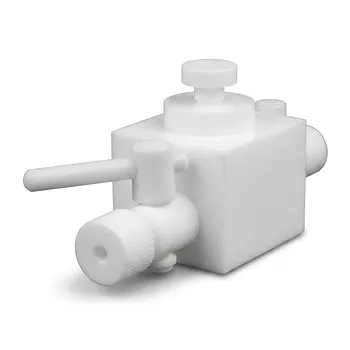
- Custom PTFE Filtration System Acid Resistant High Purity Semiconductor Grade Chemical Processing Filter
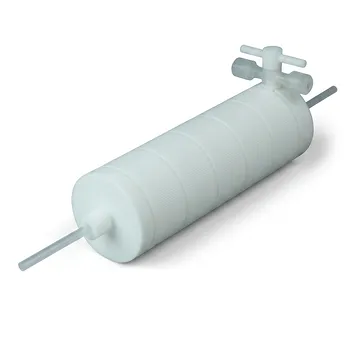
- High Purity PTFE Filter with PFA Valve Connections and Integrated Sieve Plate for Corrosive Fluid Processing
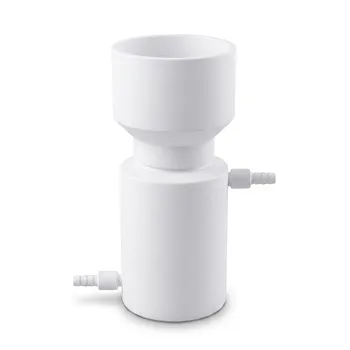
- High Purity PTFE Buchner Funnel Vacuum Filtration System Corrosion Resistant Low Trace Laboratory Suction Filter Apparatus
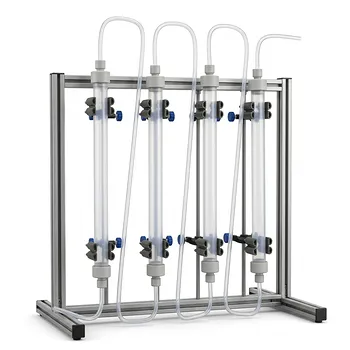
- High Purity PFA Chromatography Columns Series Filtration Resin Ion Exchange System with Sieve Plate Rack Customizable Corrosion Resistant Laboratory Fluid Handling
- PTFE Corrosion Resistant Filter with PFA Valve Connections and Integrated Sieve Plate
People Also Ask
- What makes PTFE filtration systems advantageous for industrial and scientific use? Unmatched Chemical & Thermal Stability
- What sizes and pore options are available for PTFE filters? Choose the Right Filter for Your Application
- What steps are involved in selecting the proper PTFE filter? A 4-Step Guide to Optimal Filtration
- What temperature resistance do PTFE filters offer? Unmatched Thermal Stability from -200°C to +260°C
- How does the hydrophobicity of PTFE filters benefit their use? Ensure Uninterrupted Gas Flow and Solvent Filtration