Fluoropolymer matrix materials prevent secondary contamination by immobilizing functional nanoparticles inside a stable porous membrane rather than allowing them to enter the filtrate. Their chemical resistance and mechanical durability help preserve this immobilization during repeated exposure to solvents, corrosive liquids, and operating cycles. As a result, nanoparticle-functionalized membranes can retain effective separation performance while reducing nanoparticle release and material-derived contamination.
The core principle is containment: the fluoropolymer provides a chemically inert, mechanically stable framework that holds TiO₂, MOF, or metal oxide nanoparticles in place, protecting both the treated fluid and the membrane’s long-term reusability.
How the Matrix Prevents Secondary Contamination
Nanoparticles remain locked into the membrane
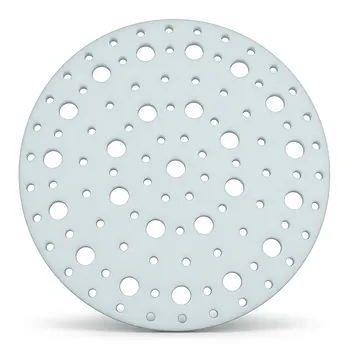
In a functionalized composite membrane, nanoparticles are incorporated into the fluoropolymer’s porous structure. The matrix physically and mechanically restricts particle movement, reducing the risk that nanoparticles detach and pass into the treated effluent.
This is especially important when nanoparticles are used for adsorption, photocatalysis, or selective separation. The active material must remain available at the membrane surface without becoming a contaminant itself.
The porous structure acts as a containment framework
The membrane’s pores provide pathways for fluid transport while the surrounding polymer structure helps retain the functional particles. Proper fabrication and particle-matrix integration are therefore essential: high filtration performance depends not only on pore size, but also on how securely the nanoparticles are embedded.
Chemical inertness limits material-derived contamination
Fluoropolymers resist attack from aggressive solvents, acids, and corrosive process fluids. This reduces degradation of the matrix and limits chemical leaching from the membrane into the sample or product stream.
That stability is particularly valuable in analytical sample preparation, where even trace contamination can affect detection limits and repeatability.
Why Fluoropolymer Membranes Remain Reusable
Structural stability preserves filtration performance
Repeated filtration exposes a membrane to pressure, flow, chemical contact, and cleaning or regeneration steps. A durable fluoropolymer matrix helps maintain the membrane’s physical structure under these conditions.
Because the matrix does not readily degrade, its pores and nanoparticle-containing regions remain functional over multiple operating cycles.
Chemical resistance supports repeated processing
A membrane that reacts with the feed solution may swell, embrittle, lose active material, or release contaminants. Fluoropolymers are resistant across a broad range of chemical environments, which supports repeated use in demanding liquid purification and sample-preparation applications.
Performance loss can remain limited
The primary reference indicates that these materials can maintain high operational performance over repeated cycles, with efficiency losses often around 10% after multiple uses. The exact result depends on nanoparticle loading, membrane fabrication, feed composition, fouling, and the regeneration procedure.
This means reusability should be demonstrated under the intended operating conditions rather than assumed solely from the polymer type.
How Contamination Control Works at the System Level
The membrane is only one contamination source
Even if nanoparticles are securely immobilized, contamination can enter through housings, fittings, tubing, seals, or transfer tools. Standard plastics or metallic components may contribute trace metals, particulates, or extractable chemicals, particularly when exposed to acid-digested samples.
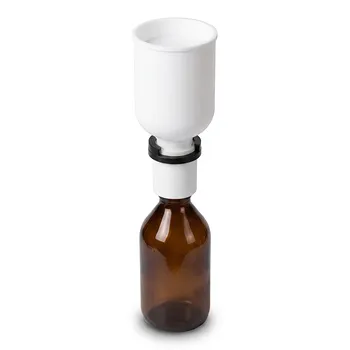
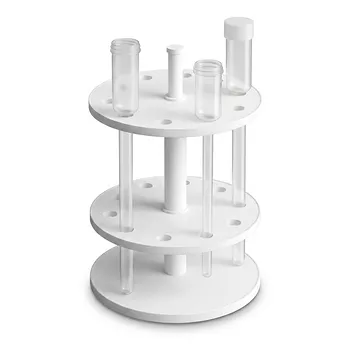
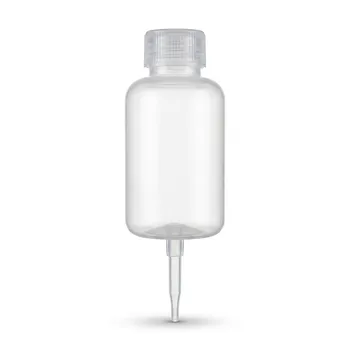
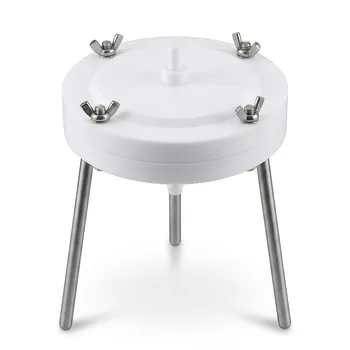
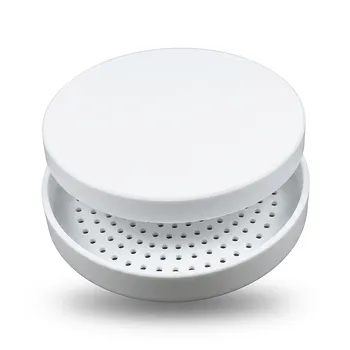
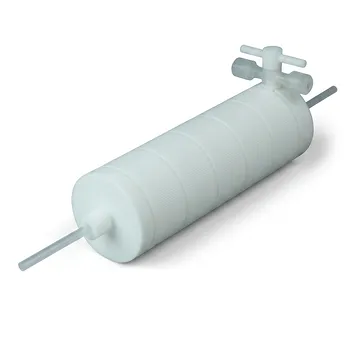
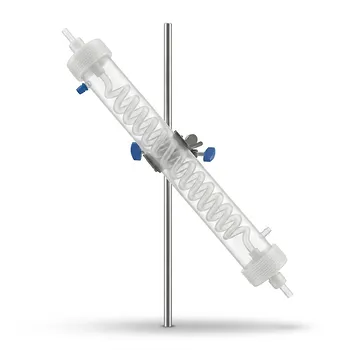
High-purity fluoropolymer funnels, pipette tips, centrifuge tubes, tubing, and other wetted components help maintain sample purity throughout filtration and transfer.
Wetted surfaces should be chemically compatible
The most important design rule is to ensure that every surface contacting the fluid is compatible with the process chemistry. PTFE, PFA, and FEP components are commonly used where resistance to corrosive media and low contamination are required.
In higher-risk systems, fluoropolymer linings and double-containment designs can provide additional separation between the process fluid, structural materials, and the external environment.
Clean handling protects analytical reliability
For trace analysis, preventing nanoparticle release is not enough. The entire workflow must minimize metallic-ion leaching, particulate shedding, and cross-contamination.
This is why fluoropolymer-based filtration systems can be valuable in sensitive laboratory workflows: they protect both the physical separation process and the integrity of the analytical measurement.
Understanding the Trade-offs
Immobilization is not an absolute guarantee
Physical and mechanical locking substantially reduces nanoparticle leaching, but it does not prove that release is impossible. Defects, abrasion, poor particle adhesion, excessive flow conditions, or aggressive regeneration can still cause detachment.
Leachability should therefore be tested by analyzing the filtrate for the relevant nanoparticle constituents under realistic operating and cleaning conditions.
Fouling can reduce apparent reusability
A membrane may remain structurally intact while its performance declines because contaminants block pores or cover active sites. A measured efficiency loss may therefore reflect fouling, incomplete regeneration, or changes in feed chemistry rather than degradation of the fluoropolymer itself.
Cleaning protocols must restore performance without damaging the matrix or dislodging the nanoparticles.
Surface properties require deliberate control
Fluoropolymers can be engineered or modified to provide different wetting behaviors, including lipophilic or highly water-repellent surfaces. These properties influence how liquids enter the pores, how oils or organics interact with the membrane, and how easily fouling develops.
A surface optimized for one separation may be poorly suited to another, so chemical resistance alone is not a complete membrane-selection criterion.
Reuse must be validated for the application
A membrane suitable for repeated water purification may not have the same lifetime in concentrated acids, organic solvents, high-temperature service, or heavily fouling mixtures. Validation should include cycle-by-cycle flux, rejection, nanoparticle release, and chemical extractables.
How to Apply This to Your Setup
The most reliable approach combines nanoparticle immobilization with chemically compatible, low-contamination fluid handling components.
- If your primary focus is preventing secondary nanoparticle contamination: Select a composite membrane in which the nanoparticles are firmly embedded in the fluoropolymer matrix, then verify filtrate leachables under actual operating conditions.
- If your primary focus is long-term reusability: Evaluate flux, rejection, and active-site performance across repeated filtration and regeneration cycles rather than relying only on initial membrane specifications.
- If your primary focus is trace analytical accuracy: Use high-purity fluoropolymer components throughout the wetted path to minimize metallic-ion leaching, particulates, and extractable contaminants.
- If your primary focus is aggressive chemical processing: Confirm compatibility of the membrane, housing, seals, tubing, and cleaning chemicals as a complete system, not as isolated components.
A well-designed fluoropolymer-based setup treats particle containment, chemical stability, and contamination control as one integrated reliability problem.
Summary Table:
| Aspect | Mechanism | Benefit |
|---|---|---|
| Nanoparticle immobilization | Physical/mechanical locking within porous matrix | Prevents particle release into filtrate |
| Chemical inertness | Resistance to solvents, acids, and corrosive fluids | Limits matrix degradation and leaching |
| Structural stability | Durable polymer retains pore structure | Maintains performance over repeated cycles |
| Reusability | Efficiency loss ~10% after multiple uses | Cost-effective and sustainable operation |
| System-level purity | High-purity wetted components | Minimizes trace contamination in sensitive analyses |
Ensure your filtration system delivers pure, reproducible results with KINTEK's high-performance PTFE and PFA labware. Our fluoropolymer components—from funnels and tubing to custom filtration setups—are designed for chemical resistance and minimal contamination. Contact us today to upgrade your lab's reliability and efficiency. Get in touch with our experts.
Related Products
- High Purity PFA Chromatography Columns and Collection Bottles Corrosion Resistant Fluoropolymer Filtration Systems for Trace Analysis
- High Purity PFA Chromatography Column with Collection Bottle Corrosion Resistant Fluoropolymer Filtration System for Trace Analysis
- High Purity PFA Chromatography Column Double Layer Constant Pressure Filter Column with Sieve Plate Acid Resistant Fluoropolymer Filtration System
- Custom PTFE Filtration System Acid Resistant Chemical Semiconductor Fluoropolymer Filter Assembly
- PTFE PFA Vacuum Filtration System Corrosion Resistant Customizable Shatterproof Laboratory Device
People Also Ask
- Why use high-purity PFA bottles for Carbon Quantum Dots? Ensure Ink Stability and Prevent Fluorescence Quenching
- Why is PFA often selected over traditional PTFE for manufacturing complex fluoropolymer fluid components, custom fittings, and sealed laboratory digestion vessels? Discover the key advantages for your lab.
- What are the primary functional and temperature differences between PFA and FEP when selecting melt-processible fluoropolymers for custom laboratory apparatus?
- Why is the chemical stability of polymer endgroups critical when selecting melt-processible fluoropolymers like PFA for high-purity laboratory apparatus? Choose Stable Endgroups for Reliable Performance
- What are the characteristics of PFA material? A Guide to Its High-Performance Balance