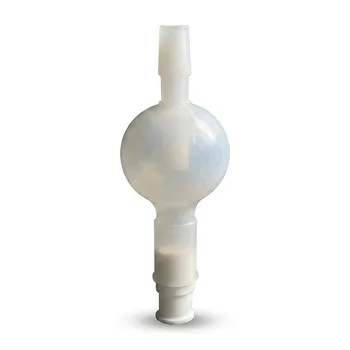
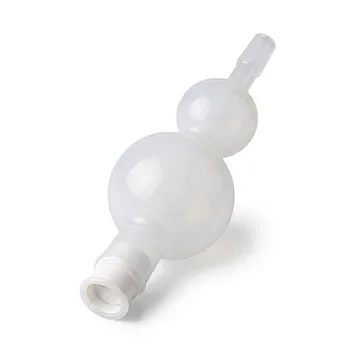
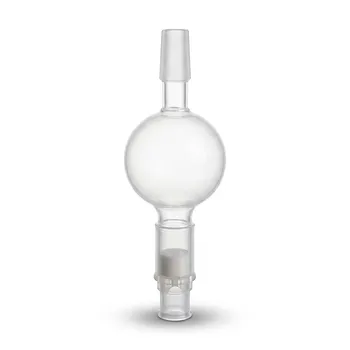
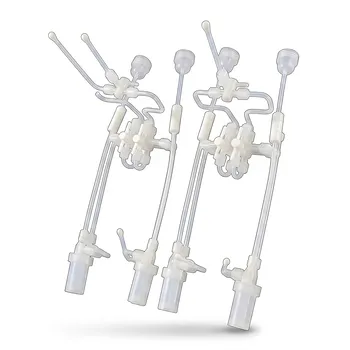
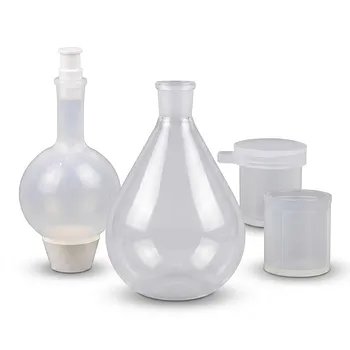
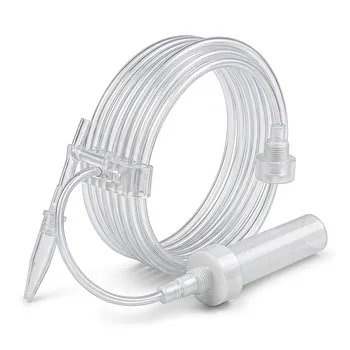
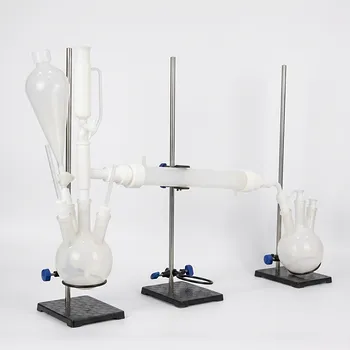
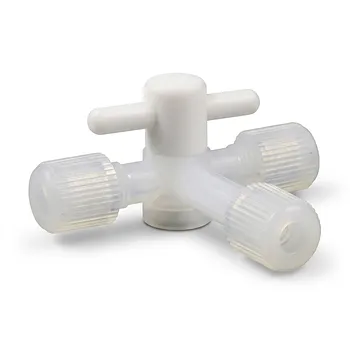
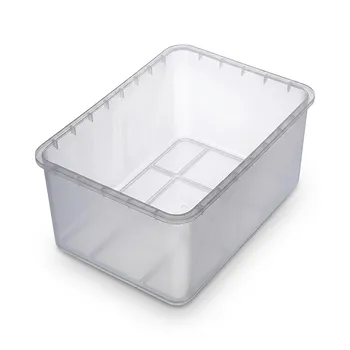
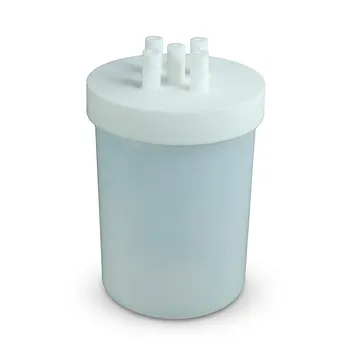
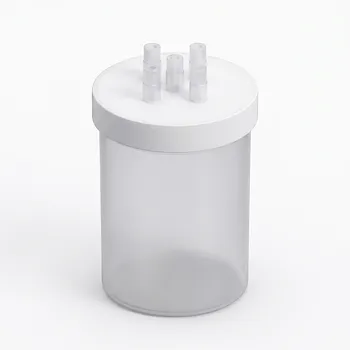
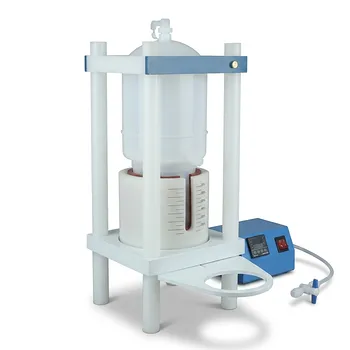
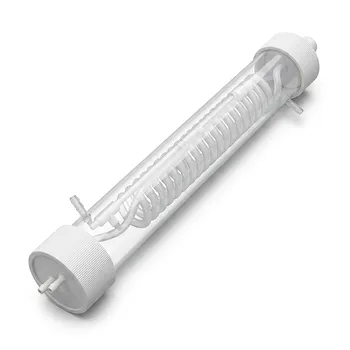
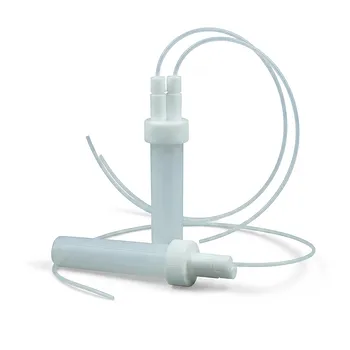
PFA is often selected over traditional PTFE because it preserves PTFE’s exceptional chemical and thermal performance while adding true melt-processability. Both materials can withstand highly aggressive acids, solvents, and continuous service temperatures up to approximately 260°C, but standard PTFE cannot be conventionally injection-molded or extruded. PFA can be melt-processed into intricate, seamless, low-porosity components, making it especially useful for custom fittings, precision fluid hardware, and sealed laboratory digestion vessels.
The decisive difference is manufacturing flexibility: PFA provides PTFE-like chemical inertness and temperature resistance, but its lower melt viscosity allows complex, high-integrity shapes to be molded with tight tolerances and reliable sealing.
Why PTFE’s Processing Method Creates Constraints
PTFE Does Not Flow Like Conventional Thermoplastics
Standard PTFE has an exceptionally high melt viscosity. Above its melting point, it forms a stiff, non-flowing gel rather than flowing readily through conventional injection-molding equipment.
As a result, PTFE parts are typically produced through suspension molding, compression molding, sintering, and CNC machining. These methods remain effective, but they become more difficult and labor-intensive as geometries become smaller, more intricate, or more customized.
Machining Limits Geometric Complexity
PTFE can be machined into high-performance seals, fittings, and laboratory components, but machining removes material from a preformed blank. Internal passages, complex transitions, thin walls, and integrated features may therefore require multiple operations or specialized tooling.
That increases manufacturing time and can make certain seamless or highly detailed designs impractical.
What PFA Adds to PTFE-Level Performance
Melt-Processing Enables Complex Shapes
PFA is a copolymer of tetrafluoroethylene and perfluoroalkyl vinyl ether. This molecular structure reduces melt viscosity and allows PFA to be processed using techniques such as injection molding and melt extrusion.
Manufacturers can form intricate valve bodies, threaded fittings, tubing connectors, and custom fluid-handling components with fewer secondary operations. The process is particularly valuable when a component requires integrated channels, precise interfaces, or repeatable production across multiple units.
Molded Parts Can Be Seamless and Low-Porosity
Melt-processing can produce smooth, non-porous PFA surfaces with fewer opportunities for micro-voids or discontinuities than a component assembled from multiple pieces. This supports leak-tight fluid paths and reduces locations where chemical residue or trace contamination could accumulate.
That characteristic is important in high-purity analytical systems, semiconductor-related chemical handling, and laboratory equipment used for trace analysis.
PFA Retains Broad Chemical Resistance
PFA offers chemical inertness broadly comparable to PTFE across demanding laboratory conditions. It can handle aggressive acids, solvents, and other reactive reagents while maintaining its material stability.
This makes the processing advantage meaningful: manufacturers gain design freedom without having to move to a less chemically resistant polymer simply because the geometry is difficult to produce.
PFA Supports Elevated-Temperature Operation
PFA and PTFE both have an upper continuous service temperature commonly stated at approximately 260°C, depending on the specific grade, design, and operating environment. PFA is therefore suitable for components exposed to elevated temperatures during digestion, reaction, transfer, and cleaning processes.
The material’s thermal performance helps preserve dimensional stability and seal function when chemical exposure and heat occur simultaneously.
Why PFA Suits Complex Fluid Components
Fittings and Connectors Need Reliable Sealing
Custom fittings often combine threaded sections, narrow flow passages, sealing faces, and connections to tubing or valves. PFA’s melt-processability allows these features to be incorporated with high dimensional precision and smooth internal surfaces.
Its chemical resistance protects the fitting from the process fluid, while its structural integrity supports leak-free operation over repeated use.
Valves and Fluid Paths Benefit From Integrated Geometry
Valve bodies and similar components may contain several intersecting passages or difficult-to-machine internal features. Molding PFA can simplify the production of these geometries and reduce the number of joints, inserts, or assembled interfaces.
Fewer interfaces can mean fewer potential leak paths and fewer locations for contamination in ultra-pure fluid systems.
Tubing and Transfer Components Require Clean Surfaces
PFA can be extruded into tubing and molded into compatible connectors, manifolds, and transition components. Its low surface energy and smooth finish help limit wetting, residue retention, and interaction with transported chemicals.
These properties complement PFA’s low permeability and resistance to chemical degradation in demanding fluid-transfer applications.
Why PFA Works Well for Sealed Digestion Vessels
Digestion Combines Heat, Pressure, and Aggressive Chemistry
Laboratory digestion vessels may be exposed to concentrated acids, solvents, elevated temperatures, and pressure generated during sample preparation. The vessel must remain chemically stable while preserving its shape and seal integrity.
PFA addresses this combination by providing PTFE-like chemical resistance and a continuous service temperature near 260°C, subject to the vessel design and operating conditions.
Molded Designs Improve Seal Integrity
A sealed vessel often benefits from precise mating surfaces, integrated sealing features, and consistent wall geometry. Melt-molding allows these details to be produced repeatably, reducing dependence on extensive machining or multi-part construction.
PFA’s toughness, low permeability, and resistance to cracking under thermal stress further support long-term containment.
Purity Matters During Trace Analysis
Trace-analysis vessels must not introduce contaminants or retain residues from previous samples. Smooth, low-porosity PFA surfaces help minimize micro-voids and provide a clean, chemically resistant environment for digestion and subsequent analysis.
PFA is also available in translucent or clear forms, which can aid visual inspection without sacrificing the core chemical and thermal advantages required by the application.
Understanding the Trade-offs
PTFE Still Has Important Advantages
PTFE remains an excellent choice when the design is relatively standard, when low friction and non-wetting behavior are the dominant requirements, or when a part can be efficiently machined. It is also widely used for seals, gaskets, laboratory supplies, and custom CNC-machined components.
Choosing PFA does not mean PTFE is technically inadequate. The choice usually reflects the required geometry, manufacturing method, mechanical demands, and production volume.
PFA Is Not Automatically Better for Every Seal
PFA can offer improved toughness, lower permeability under thermal stress, and better post-molding structural integrity than standard PTFE in relevant designs. However, sealing performance still depends on temperature, pressure, chemical exposure, dimensions, surface finish, installation, and the specific grade.
Material selection should therefore be based on the complete operating envelope rather than on the polymer name alone.
Processing Requires Appropriate Equipment and Design
PFA’s melt-processability is an advantage only when the manufacturer has suitable extrusion or injection-molding capability. Mold design, thermal control, shrinkage, tolerances, and post-processing still require careful engineering.
For a simple one-off component, machining PTFE may be faster or more economical than developing a PFA mold.
Service Limits Remain Application-Dependent
The approximately 260°C continuous service value is a material reference point, not a guarantee that every molded fitting or vessel can operate at that temperature under all pressures and chemical conditions. Wall thickness, stress, cycling, pressure, and exposure time can reduce the practical operating limit.
The finished component must be validated in its actual service conditions.
Making the Right Choice for Your Goal
The best material depends on whether the primary challenge is geometry, purity, sealing, friction, or production efficiency.
- If your primary focus is complex geometry: Select PFA when injection molding or extrusion can produce intricate passages, integrated features, or seamless shapes more efficiently than machining PTFE.
- If your primary focus is chemical and thermal resistance: Choose either PFA or PTFE when the application requires broad chemical inertness and continuous service near 260°C, then compare the design-specific mechanical requirements.
- If your primary focus is leak prevention: Favor molded PFA for precise, low-porosity fittings, valves, and vessels where fewer joints and consistent sealing surfaces are valuable.
- If your primary focus is low friction or a simple custom part: PTFE may remain the more practical option when its non-wetting and low-friction properties dominate and the geometry is readily machined.
- If your primary focus is high-purity digestion or trace analysis: Consider PFA for smooth, low-permeability, chemically resistant vessels that must tolerate aggressive reagents and elevated temperatures without compromising cleanliness.
PFA is selected over PTFE when the application needs PTFE-level chemical and thermal performance together with the manufacturing freedom, precision, and sealing integrity of a melt-processable fluoropolymer.
Summary Table:
| Feature | PTFE | PFA |
|---|---|---|
| Chemical resistance | Excellent | Excellent |
| Continuous service temp | ~260°C | ~260°C |
| Melt-processability | Poor (cannot be injection molded or extruded) | Excellent (injection moldable, extrudable) |
| Manufacturing methods | Compression molding, sintering, machining | Injection molding, extrusion, CNC machining |
| Geometric complexity | Limited by machining constraints | High complexity achievable with tight tolerances |
| Porosity | Can have micro-voids | Low-porosity, smooth surfaces |
| Sealing integrity | May require multi-part construction | Seamless, low-leakage designs |
| Typical applications | Gaskets, seals, simple labware | Custom fittings, valves, vessels, high-purity components |
Ready to enhance your lab's efficiency with high-performance PFA components? KINTEK specializes in crafting custom PTFE/PFA labware and fluid handling systems, from complex machined parts to high-volume orders. Our melt-processable PFA solutions ensure superior chemical resistance, thermal stability, and leak-tight precision. Contact us today to discuss your requirements — our experts are ready to assist! Get in touch.
Related Products
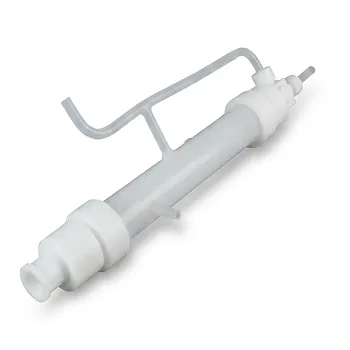
- High Purity PFA Chromatography Column with Collection Bottle Corrosion Resistant Fluoropolymer Filtration System for Trace Analysis
- High Purity PFA Chromatography Columns and Collection Bottles Corrosion Resistant Fluoropolymer Filtration Systems for Trace Analysis
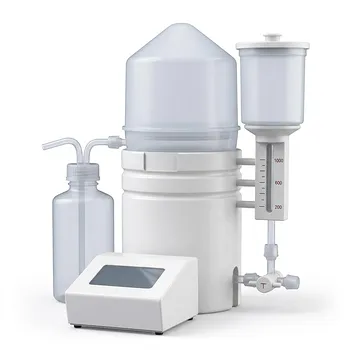
- PFA Sub Boiling Acid Purifier Electronic Grade Distillation System Laboratory Trace Analysis Equipment
- High Purity PFA Chromatography Column Double Layer Constant Pressure Filtration System with Sieve Plate for Strong Acid Resistance
- High Purity PFA Chromatography Column and Collection Bottle System Corrosion Resistant Filter Column with Sieve Plate Glass Alternative
People Also Ask
- Why is the chemical stability of polymer endgroups critical when selecting melt-processible fluoropolymers like PFA for high-purity laboratory apparatus? Choose Stable Endgroups for Reliable Performance
- What are the characteristics of PFA material? A Guide to Its High-Performance Balance
- Why is Perfluoroalkoxy alkane (PFA) preferred over glass or stainless steel in pharmaceutical process development? Pure Yield
- Why is PFA superior for cleaning and preventing cross-contamination? The Gold Standard for Ultra-Trace Lab Hygiene
- What are the key properties of PFA (PerFluoroAlkoxy)? A Guide to Extreme Chemical and Thermal Resistance