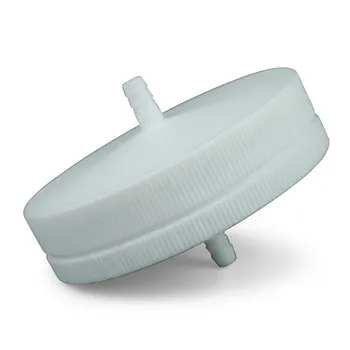
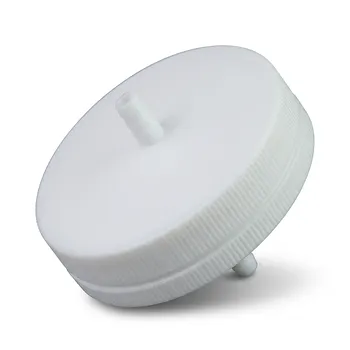
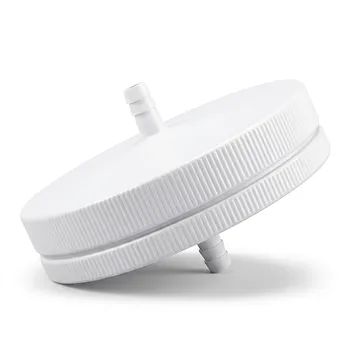
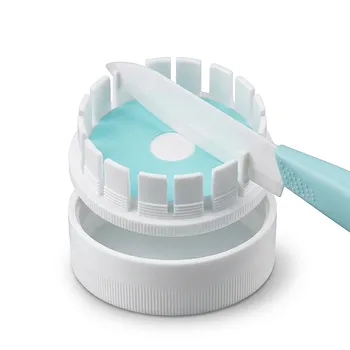
PTFE's hydrophobic nature is the primary defense against filter "blinding" and pressure instability. By maintaining a water contact angle typically exceeding 110 degrees, these membranes repel liquid water while allowing gas molecules to pass freely. This ensures consistent airflow and low differential pressure, even in high-humidity or condensing environments.
The core advantage of PTFE in filtration lies in its extremely low surface energy, which prevents pore wetting. This creates a reliable barrier against liquid moisture while maintaining a "breathable" path for gases, significantly reducing energy costs and maintenance frequency.
The Physics of Resistance
Low Surface Energy and C–F Bonds
The performance of Polytetrafluoroethylene (PTFE) begins at the molecular level with non-polar C–F (carbon-fluorine) bonds. These bonds result in an extremely low surface energy, meaning the membrane does not "want" to interact with aqueous liquids.
Because the surface is so difficult to wet, water droplets maintain a high contact angle rather than spreading out. This prevents the liquid from being drawn into the microscopic pores of the membrane by capillary action.
Selective Permeability
PTFE membranes act as a selective barrier due to their unique structure. They effectively block liquid water droplets (which are typically 100 to 1000 µm) while allowing much smaller water vapor and gas molecules to pass through unhindered.
This selective permeability is essential for sterile venting and breathable waterproof applications. It ensures that while the gas stream moves through the system, the internal components remain dry and protected from liquid contaminants.
Enhancing Operational Efficiency
Preventing Filter "Blinding"
In industrial gas filtration, "blinding" occurs when moisture accumulates on the filter surface, creating a muddy layer that blocks airflow. PTFE’s hydrophobicity prevents this by ensuring that condensed moisture beads up and rolls off the surface.
By resisting moisture-induced blockage, the membrane maintains a consistent differential pressure. This stability is critical for industrial dust collection systems that must operate continuously in wet or high-humidity conditions.
Energy Savings and Pressure Drop
In cleanroom and semiconductor environments, PTFE membranes offer a significant mechanical advantage over traditional glass-fiber media. They often provide initial pressure drops that are 50% lower than glass-fiber equivalents.
This lower resistance means that HVAC systems require less power to move the same volume of air. Over the life of a facility, this translates into substantial energy cost savings and more stable airflow for sensitive photolithography processes.
Durability in Extreme Environments
Chemical and Thermal Inertness
Beyond repelling water, PTFE is chemically inert to nearly all acids, bases, and organic solvents. It can withstand aggressive substances like hydrofluoric acid and strong oxidizers without degrading or leaching contaminants into the gas stream.
This makes it the standard choice for corrosive gas filtration in semiconductor manufacturing. It ensures that the air or gas remains pure, protecting delicate wafers from chemical impurities.
Structural Integrity through Lamination
To handle the physical rigors of industrial use, hydrophobic PTFE membranes are often laminated onto polypropylene netting. This reinforcement improves handleability and strength.
Lamination allows the thin, high-performance membrane to be used in standard disc filter holders or large-scale HVAC units. It combines the chemical benefits of PTFE with the mechanical durability required for long-term service.
Understanding the Trade-offs
The Challenge of Aqueous Filtration
While hydrophobicity is a benefit for gas filtration, it is a barrier for filtering water-based liquids. If a standard PTFE membrane is used for liquid filtration, it must be pre-wet with a low-surface-tension fluid like alcohol before water can pass through.
Modification and Longevity
Some membranes are modified via chemical or radiation treatments to become hydrophilic. While this allows for easier liquid processing, these treatments can sometimes alter the surface charge or slightly reduce the extreme chemical resistance inherent to raw PTFE.
Initial Cost vs. Life Cycle
PTFE membranes generally carry a higher initial purchase price than glass-fiber or polyester alternatives. However, the investment is usually offset by a three-fold increase in dust-holding capacity and reduced energy consumption.
How to Apply This to Your Project
Making the Right Choice for Your Goal
To maximize the benefits of PTFE membranes, align your selection with your specific operational environment:
- If your primary focus is Industrial Dust Collection: Choose expanded PTFE (ePTFE) to prevent filter blinding in humid environments and ensure easy cake release during cleaning.
- If your primary focus is Semiconductor Cleanrooms: Utilize PTFE HEPA/ULPA filters to achieve the lowest possible pressure drop and minimize the risk of particle shedding.
- If your primary focus is Corrosive Gas Venting: Select high-purity, non-laminated or chemically compatible laminated PTFE to prevent membrane degradation and filtrate contamination.
- If your primary focus is Vacuum Distillation: Leverage the high contact angle of PTFE to prevent "liquid entry" while allowing high-ratio vapor recovery.
By leveraging the inherent water-repellent properties of PTFE, you can ensure a filtration system that is both energy-efficient and resilient against the most challenging environmental conditions.
Summary Table:
| Feature | Performance Benefit |
|---|---|
| Low Surface Energy | Prevents pore wetting and capillary liquid intake |
| High Contact Angle (>110°) | Repels liquid water while allowing gas molecules to pass |
| Selective Permeability | Ensures sterile venting and breathable, waterproof barriers |
| Chemical Inertness | Resists aggressive acids and organic solvents |
| Low Pressure Drop | Reduces HVAC energy consumption by up to 50% |
Enhance Your Lab's Precision with KINTEK’s High-Performance Fluoropolymers
Maximize your filtration efficiency and experimental accuracy with KINTEK, your premier source for advanced PTFE and PFA laboratory solutions. From everyday basic labware like beakers, crucibles, and reagent bottles to high-purity trace analysis instruments and cleaning tanks, we provide the durability your research demands.
Our expertise extends to comprehensive fluid transfer components (tubing, valves, fittings), sample prep tools (filters, pipettes, spatulas), and advanced reaction apparatus—including custom electrochemical cells, battery testing fixtures, and microwave digestion vessels. Whether you need high-volume consumables or complex, non-standard machined parts, our end-to-end custom CNC fabrication ensures a perfect fit for your specific requirements.
Ready to upgrade your laboratory setup? Contact us today to discuss your custom project and discover the value of KINTEK’s absolute focus on high-performance materials.
Related Products
- PTFE Membrane Filter Holder for Aerosol Environmental Monitoring and Low Concentration Particulate Matter Sampling Chemical Resistant Air Quality Analysis Component
- PTFE Filter Membrane Holder 47mm Leak Proof Corrosion Resistant Environmental Sampling Unit Customizable
- PTFE Filter Membrane Holder for Hydrogen Chloride and Water Filtration 90mm Environmental Sampling Clamp Customizable
- High Purity PTFE Filter Membrane Cutter with Ceramic Blade for PM2.5 Analysis and Customizable Laboratory Filter Paper Splitter
- High Purity PTFE Square Membrane Cutter Equipartition Device for Trace Analysis and Disease Control Centers Clean Non Stick No Leaching
People Also Ask
- How does the inherent hydrophobicity of PTFE filter membranes affect liquid and gas separation? Optimize Performance
- What are the structural characteristics and manufacturing principles of Polytetrafluoroethylene (PTFE) filter membranes?
- What is the thermal stability range for PTFE filter membranes? Master Extremes from -200°C to +260°C
- What is the chemical composition and temperature resistance of PTFE filter membranes? Essential Specs for Labs
- What are the performance advantages of PTFE filter membranes vs depth filters? Boosting Lab Purity and Efficiency