The Robeson trade-off is a practical design limit: in polymer membranes, higher gas permeability generally comes with lower gas selectivity, while highly selective polymers often transport gases more slowly. Permeability determines the membrane area and module size required for a target throughput; selectivity determines how effectively the membrane separates gases and the purity achievable downstream.
Material selection is not about maximizing permeability or selectivity alone. The best fluoropolymer is the one that provides an acceptable balance between transport rate, separation efficiency, chemical durability, mechanical stability, and operating conditions—ideally approaching or exceeding the Robeson upper bound for the target gas pair.
What the Robeson Trade-Off Measures
Permeability controls membrane size
Permeability describes how readily a gas passes through a membrane under a given pressure driving force. A highly permeable material can deliver the required gas flow through less membrane area.
This can reduce the size, weight, and capital cost of gas separation modules, sample-preparation devices, and fluid-transfer components.
Selectivity controls separation quality
Selectivity, often expressed as an ideal permselectivity or permeability ratio, compares the transport rates of two gases. For example, CO₂/CH₄ selectivity indicates how preferentially a membrane transports carbon dioxide over methane.
Higher selectivity generally improves product purity and reduces the separation burden placed on downstream equipment.
The relationship is empirical, not an absolute law
The Robeson relationship is usually represented by plotting permeability against selectivity for a specific gas pair. The resulting upper bound describes the approximate performance limit observed across conventional polymeric membrane materials.
It is not a fundamental law that every material must obey. New polymer architectures, improved physical aging resistance, thin-film processing, and carefully controlled operating conditions can move performance closer to or beyond an established upper bound.
Why the Trade-Off Exists in Polymer Membranes
Gas transport depends on solubility and diffusion
Polymer gas permeability reflects two major contributions: how much gas dissolves into the polymer and how quickly it diffuses through the polymer.
Increasing free volume can accelerate diffusion and raise permeability. However, excessive or poorly controlled free volume may reduce the membrane’s ability to distinguish molecules by size, lowering selectivity.
Rigid polymers can improve size sieving
Rigid, glassy polymer backbones can restrict segmental motion and create narrower transport pathways. These pathways may discriminate more effectively between gases with different molecular sizes.
The limitation is that rigidity without sufficient free volume can make the material too resistant to gas transport, producing high selectivity but impractically low permeability.
Fluorination changes chain packing and polarity
Fluorinated groups can alter polymer polarity, steric structure, chain packing, and internal free volume. These effects can improve both gas uptake and molecular transport when the polymer architecture is designed correctly.
The result is not simply “more fluorine equals better performance.” The location and arrangement of fluorinated groups are critical.
How Advanced Fluoropolymers Address the Trade-Off
Efficient chain packing can preserve selectivity
Advanced amorphous perfluoropolymers can combine substantial free volume with efficient chain packing. This combination supports relatively rapid gas transport while retaining strong size-sieving behavior.
For light gas pairs such as He/CH₄, H₂/CH₄, and CO₂/CH₄, such materials may perform near or above the conventional Robeson upper-bound line.
Hexafluoroisopropylidene groups increase transport potential
Replacing an aliphatic isopropylidene group, [-C(CH₃)₂-], with a hexafluoroisopropylidene group, [-C(CF₃)₂-], can increase free volume and modify polymer polarity.
This molecular change can raise permeability while also supporting permselectivity, making it useful when a material must deliver both gas throughput and separation efficiency.
Bulky heterocycles create useful free volume
Bulky, asymmetric heterocyclic groups—such as pyridinyl-containing structures—can disrupt close, regular packing in the polymer backbone. They may generate larger internal free volume than smaller or more symmetric aromatic units.
This can increase permeation rates without necessarily causing a proportional loss in selectivity.
Substitution position matters
The spatial position of trifluoromethyl groups can significantly affect chain packing and transport pathways. Reported trends indicate that ortho- and para-substituted structures can provide roughly three- to four-times higher permeability than comparable meta-substituted structures, while dual trifluoromethyl substitution can produce increases of more than tenfold in some material families.
These values should be treated as structure-dependent design trends rather than universal guarantees. They must be confirmed using the actual polymer composition, membrane morphology, gas pair, and test conditions.
Applying Robeson Thinking to Gas Separation Tools
Start with the target gas pair
Robeson performance is gas-pair specific. A material that performs well for CO₂/CH₄ may not provide the same balance for O₂/N₂ or H₂/CH₄.
Define the feed composition, desired product, operating pressure, temperature, and acceptable impurity level before comparing materials.
Translate permeability into equipment requirements
If a fluoropolymer has insufficient permeability, achieving the required flow may demand a larger membrane area, more modules, or higher pressure driving force.
For laboratory sample-preparation tools, this may increase device size or processing time. For industrial modules, it can increase capital cost and pumping or compression requirements.
Translate selectivity into process requirements
Low selectivity may require additional membrane stages, recycle, compression, or polishing equipment. It can also increase product losses because more of the undesired gas accompanies the target component.
Selectivity therefore affects operating cost and process complexity, not merely the purity number reported in a material datasheet.
Consider the actual membrane form
Intrinsic polymer-film data are useful for screening, but practical performance can change when the polymer is formed into a thin selective layer, supported membrane, hollow fiber, filter, or fluid-transfer component.
Mechanical strength, defects, support resistance, plasticization, and physical aging can all influence whether laboratory material performance translates into a reliable tool.
Understanding the Trade-Offs
High permeability can reduce separation efficiency
A polymer with abundant free volume may transport gases quickly but provide weaker molecular discrimination. This is the classic compensation effect: increasing gas flux can reduce ideal permselectivity.
The correct response is not always to choose the highest-permeability material. A slightly slower material may be preferable if it substantially reduces downstream purification requirements.
High selectivity can limit throughput
Highly size-selective polymers may require large membrane areas or long residence times. This can be acceptable for analytical sample preparation but unattractive for high-throughput gas processing.
The engineering choice depends on whether area, pressure, processing time, or product purity is the dominant constraint.
Chemical resistance does not eliminate design constraints
Fluoropolymers offer strong resistance to aggressive solvents, corrosive media, and elevated temperatures. They can also provide useful surface properties, including lipophilic or superhydrophobic behavior.
However, chemical inertness does not guarantee adequate gas transport, mechanical strength, sealing compatibility, or resistance to physical aging. These properties must be evaluated together.
Do not optimize molecular structure in isolation
Excessive chain rigidity can suppress permeability if it is not accompanied by appropriate non-coplanar bulky groups, ether linkages, or other sources of controlled free volume.
Conversely, too much disruption can weaken size sieving or mechanical integrity. The practical target is a stable, well-controlled transport network rather than maximum free volume alone.
Making the Right Choice for Your Goal
Use the Robeson trade-off as a screening framework, then validate the shortlisted fluoropolymer in the actual device geometry and operating environment.
- If your primary focus is high gas throughput: Prioritize permeability and controlled free volume, while confirming that the remaining selectivity is sufficient for the required separation.
- If your primary focus is product purity: Prioritize permselectivity and molecular size-sieving, accepting that greater membrane area or more processing stages may be necessary.
- If your primary focus is compact laboratory sample preparation: Seek a fluoropolymer near the relevant gas-pair upper bound so that high flux and effective separation can coexist in a small device.
- If your primary focus is harsh chemical or solvent exposure: Select a chemically resistant fluoropolymer first, then compare permeability, selectivity, mechanical stability, and leaching behavior among compatible candidates.
- If your primary focus is module or apparatus reliability: Evaluate thin-film processability, defect tolerance, physical aging, pressure stability, seals, and support compatibility in addition to intrinsic membrane data.
The most effective fluoropolymer is the one that balances transport, separation, durability, and manufacturability for the complete application—not the one with the highest single Robeson-plot value.
Summary Table:
| Gas Pair | Permeability (Barrer) | Selectivity | Robeson Upper Bound (2008) | Notes |
|---|---|---|---|---|
| CO2/CH4 | 10-100 | 10-50 | log(P_CO2) = -2.0 * log(α) + 4.0 | Targets CH4 purification |
| O2/N2 | 0.1-10 | 3-10 | log(P_O2) = -1.0 * log(α) + 2.5 | Air separation |
| H2/CH4 | 50-200 | 10-100 | log(P_H2) = -2.0 * log(α) + 5.0 | Hydrogen recovery |
| He/CH4 | 50-300 | 50-200 | log(P_He) = -2.0 * log(α) + 5.5 | Helium purification |
Optimize Your Gas Separation with KINTEK
Looking for fluoropolymer membranes that balance permeability, selectivity, and chemical resistance? KINTEK offers a wide range of PTFE and PFA labware, filtration tools, and custom CNC-machined components designed to meet your exact gas separation needs. Whether you're developing sample preparation methods or scaling up industrial processes, our expertise in advanced fluoropolymers helps you achieve superior performance and reliability.
Contact our experts today to discuss your application and discover how our high-performance materials can enhance your gas separation systems. Get in touch now.
Related Products
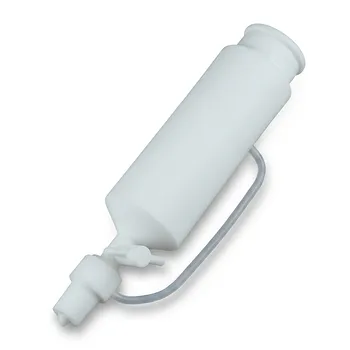
- Custom PTFE Constant Pressure Separatory Funnel 100ml Fluoropolymer Labware for Corrosive Chemical Transfer
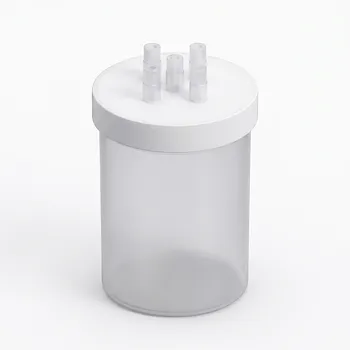
- High Purity 4L PFA Reaction Tank for Proton Exchange Membrane Electrolysis Water Oxygen Separation Systems
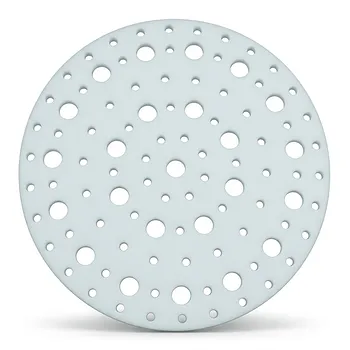
- High Temperature Resistant Insulating TFM Separator and Ultra Clean Laboratory PTFE Baffle Plate with Customizable Pore Size and Hole Configuration
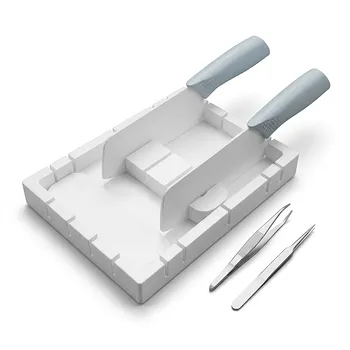
- High Purity PTFE Square Membrane Cutter and Filter Aliquot Device for Trace Analysis and Cleanroom Laboratory Applications
- High Purity PFA Reaction Vessel 4L Water Oxygen Separation Tank for Proton Exchange Membrane Electrolysis Experiments Customizable Laboratory Fluid Component
People Also Ask
- How do synthetic processability advantages of semi-fluorinated aromatic ether polymers influence custom fluoropolymer equipment? Discover how PTFE/PFA apparatus enhances synthesis
- How does increasing fluorine content affect the physical and chemical performance of fluoropolymer laboratory supplies and components?
- Which material characteristics make fluoropolymers suitable for lithium-ion battery separators, and how do fluoropolymer laboratory supplies support separator performance testing?
- How do block length and domain segregation in fluoropolymers influence surface tension and interfacial behavior? Choosing PTFE & PFA Labware for Non-Wetting
- How does substituting fluorine for hydrogen in polymer backbones enhance the performance of fluoropolymer laboratory supplies exposed to aggressive chemicals? Discover the key benefits for your lab.