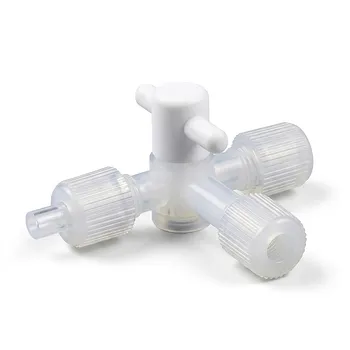
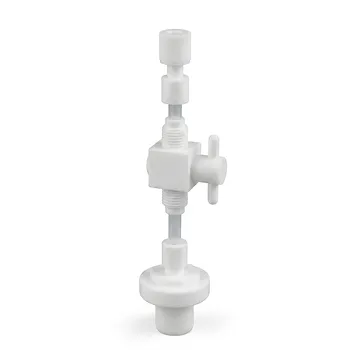
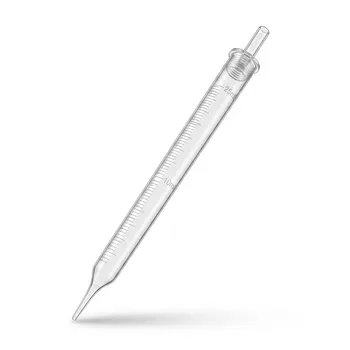
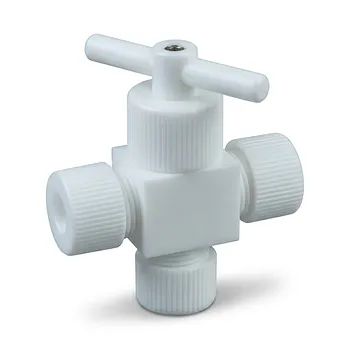
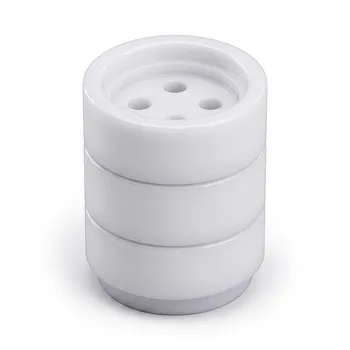
Fluoropolymers are preferred because they maintain chemical and mechanical integrity when repeated exposure to strong oxidizing disinfectants would degrade many conventional membrane materials. Agents such as sodium hypochlorite, chlorine, and bromine can cause polyamide (PA) and polyethersulfone (PES) membranes to lose strength, deform, or fail structurally. Fluoropolymer components, including PTFE, PFA, and certain PVDF grades, generally provide longer service life and more consistent filtration under these conditions.
Strong oxidative sanitization is a materials-compatibility problem as much as a sterilization problem: fluoropolymers resist chemical attack while preserving the structure, purity, and performance of the filtration component.
Why Oxidative Sanitization Is Demanding
Oxidants attack polymer structure
Chlorine-based disinfectants and hypochlorite solutions are highly reactive. During repeated or continuous exposure, they can chemically alter susceptible polymer chains, causing embrittlement, loss of tensile strength, swelling, cracking, or eventual membrane failure.
The risk is greater when sanitization is frequent, temperatures are elevated, or the component remains in contact with the oxidant for extended periods.
Filtration membranes must retain precise structure
A filter cannot remain effective if its pore structure or support layer changes. Oxidative degradation can alter flow resistance, retention performance, mechanical strength, and resistance to pressure differentials.
This makes chemical stability essential for applications where filtration performance must remain consistent over many cleaning or sanitization cycles.
Why Fluoropolymers Perform Better
Strong carbon-fluorine bonding limits chemical attack
Fluoropolymers benefit from the stability of their carbon-fluorine molecular structure. This gives materials such as PTFE and PFA exceptional resistance to hypochlorite, chlorine, bromine, strong acids, and strong bases.
The result is a lower tendency toward chain degradation, dissolution, or chemical weakening during aggressive treatment.
Mechanical strength is better preserved
Chemical resistance alone is insufficient if the membrane becomes mechanically fragile. Fluoropolymer filtration components retain their structural integrity and tensile performance more effectively after exposure to strong oxidizing environments.
That stability helps prevent tearing, rupture, deformation, and failure during pressure-driven filtration.
They help preserve filtration purity
Fluoropolymer membranes are highly resistant to dissolving, swelling, and leaching in demanding chemical environments. This reduces the risk that the filter itself will introduce contaminants or interfere with the sample.
That characteristic is particularly important in laboratory sample preparation, analytical workflows, sterile vent filtration, and bioprocessing.
What Happens to PES and PA
Polyamide is particularly vulnerable to chlorine exposure
Polyamide, including PA 6,6, can degrade relatively quickly in the presence of chlorine and other strong oxidants. Oxidative attack can reduce mechanical strength and compromise the membrane's ability to withstand operating pressure.
Because chlorine exposure may occur repeatedly during biofouling control or sanitization, even gradual damage can become a significant service-life limitation.
PES can also lose structural reliability
PES offers useful filtration properties in many applications, but extended exposure to chlorine-based disinfectants and strong oxidizing agents can cause chemical degradation. As the material weakens, the membrane may become more susceptible to cracking, deformation, or structural failure.
PES should therefore be selected only after confirming compatibility with the actual oxidant concentration, exposure time, temperature, and cleaning frequency.
Compatibility depends on the complete component
The membrane is not always the only material exposed to the sanitizer. Supports, housings, seals, adhesives, and connectors may have different resistance profiles.
A fluoropolymer membrane cannot compensate for a chemically vulnerable support or seal, so the entire wetted assembly must be evaluated.
Operational Benefits of Fluoropolymer Components
Longer service life
By resisting oxidative degradation, fluoropolymers can remain functional through more demanding cleaning and sanitization cycles. This can reduce premature replacement and minimize interruptions in laboratory or production workflows.
More consistent filtration
Preserving pore geometry and mechanical strength helps maintain predictable flow and retention characteristics. This is important when process repeatability and validated filtration performance matter.
Lower risk in high-purity applications
Fluoropolymer materials are chemically inert across a broad range of environments and have a low tendency to contribute extractables or leachables under aggressive conditions. That supports applications involving sensitive samples, analytical instruments, and bioprocess fluids.
Understanding the Trade-offs
Chemical resistance is not the only selection criterion
Fluoropolymers may have different mechanical, thermal, pore-forming, and processing characteristics from PES or PA. The best material still depends on the required pore size, flow rate, pressure rating, temperature, sterilization method, and sample chemistry.
A chemically resistant membrane is not automatically the best choice for every filtration duty.
Not every fluoropolymer behaves identically
PTFE, PFA, PVDF, and other fluoropolymers do not have identical properties. Their resistance can vary with formulation, porosity, reinforcement, processing history, and the specific chemical exposure.
Manufacturers' compatibility data should be checked for the exact grade and component design.
Exposure conditions determine real-world performance
“Chlorine resistant” is not a complete operating specification. Concentration, pH, temperature, contact time, pressure, and the number of sanitization cycles all influence material life.
Qualification testing should reproduce the intended cleaning or sterilization procedure rather than relying only on a generic material-resistance label.
Making the Right Choice for Your Goal
Select the material based on the full sanitization cycle and the performance that must be maintained afterward.
- If your primary focus is oxidative chemical resistance: Choose a qualified fluoropolymer membrane and verify compatibility with the exact chlorine, hypochlorite, or bromine exposure conditions.
- If your primary focus is filtration consistency: Prioritize a material and support structure that retain pore geometry, tensile strength, and pressure resistance after repeated sanitization.
- If your primary focus is sample purity: Use fluoropolymer wetted components with documented low extractables and confirm that housings, seals, and supports meet the same purity requirements.
- If your primary focus is cost control: Compare total service life, replacement frequency, downtime, and validation costs rather than membrane purchase price alone.
For strong oxidative sanitization, fluoropolymers provide the most reliable combination of chemical stability, structural durability, and filtration integrity when the complete component is properly specified.
Summary Table:
| Material | Chemical Resistance to Oxidants | Structural Integrity | Service Life | Suitability for Strong Oxidative Sanitization |
|---|---|---|---|---|
| PTFE/PFA (Fluoropolymers) | Excellent | High | Long | Highly Recommended |
| PES (Polyethersulfone) | Moderate | Moderate | Short/Moderate | Conditional |
| PA (Polyamide) | Poor | Low | Short | Not Recommended |
Ensure your filtration components withstand harsh sanitization. Choose KINTEK's high-performance PTFE and PFA labware, designed for exceptional chemical resistance and durability. From filter membranes to custom assemblies, our fluoropolymer products deliver reliable performance and extended service life. Contact us today to upgrade your lab's efficiency and reduce downtime.
Related Products
- High Purity PFA Chromatography Column Double Layer Constant Pressure Filter Column with Sieve Plate Acid Resistant Fluoropolymer Filtration System
- High Purity PFA Chromatography Column with Collection Bottle Corrosion Resistant Fluoropolymer Filtration System for Trace Analysis
- High Purity PFA Chromatography Columns and Collection Bottles Corrosion Resistant Fluoropolymer Filtration Systems for Trace Analysis
- Custom PTFE Filtration System Acid Resistant Chemical Semiconductor Fluoropolymer Filter Assembly
- PTFE PFA Vacuum Filtration System Corrosion Resistant Customizable Shatterproof Laboratory Device
People Also Ask
- How does the incorporation of comonomers such as perfluoropropyl vinyl ether (PPVE) alter the molecular structure and processing characteristics of TFE-based fluoropolymers like PFA compared to standard PTFE?
- How does PPVE modification make PTFE melt-processable into PFA equipment? Unlock precision molding
- What is the significance of high-purity chemical filtration for MOF materials? Ensure Purity & Precise Characterization
- What analytical conditions are used to evaluate the thermal properties of fluoroalkene-based polymer electrolytes? Optimize Your Lithium Battery Materials
- How do fluoropolymer matrix materials prevent secondary contamination and maintain reusability in nanoparticle-functionalized filtration setups? Understanding the containment mechanism and long-term performance