PPVE converts PTFE from a sintering-grade fluoropolymer into a melt-processable PFA copolymer. When a small amount of perfluoropropyl vinyl ether (PPVE) is copolymerized with tetrafluoroethylene (TFE), its bulky perfluoroalkoxy side groups interrupt the regular chain packing of PTFE. This lowers crystallinity and melt viscosity enough for thermoplastic processing, while preserving the chemical inertness and high-temperature capability associated with PTFE.
Core takeaway: PPVE does not make PTFE melt-processable by simply “softening” it; it changes the polymer’s molecular architecture. Reduced crystallinity, coupled with controlled molecular weight and comonomer content, gives PFA a usable melt-flow window for molding complex, dense, high-purity equipment.
How PPVE Changes the PTFE Structure
Pure PTFE has exceptionally rigid chain packing
PTFE consists of highly regular TFE chains whose fluorinated structure promotes strong crystallinity and exceptional chemical and thermal resistance.
Above its melting transition, pure PTFE remains extremely viscous. It therefore cannot be processed like conventional thermoplastics by ordinary injection molding or extrusion.
Instead, conventional PTFE is generally shaped by compression molding, paste extrusion, and sintering.
PPVE interrupts crystallization
PPVE introduces a bulky perfluoroalkoxy side group into the TFE chain. This side group prevents neighboring chains from packing as uniformly and tightly as they do in PTFE homopolymer.
The result is a less crystalline copolymer with a more disordered molecular structure. Increasing comonomer content generally lowers the heat of fusion and melting point, although the exact values depend on resin composition and grade.
The modification is molecular, not a surface treatment
PPVE is incorporated during polymerization, so the change extends throughout the polymer matrix. It is not an additive that can migrate out or be removed from the surface during processing.
This is why PFA retains the characteristic nonporous, chemically resistant fluoropolymer structure while gaining thermoplastic processing capability.
Why the Modified Structure Can Melt-Process
Crystallinity and viscosity are both reduced
Lower crystallinity makes the polymer easier to transition into a processable melt. The altered chain structure also reduces the extreme melt resistance associated with pure PTFE.
PFA grades can therefore be formulated with melt flow rates commonly spanning approximately 1–100 g/10 min under ASTM D-1238 conditions, depending on grade and test conditions.
Molecular weight must also be controlled
PPVE incorporation is the primary structural reason PFA becomes melt-processable, but comonomer content alone does not determine processing behavior.
Polymerization conditions and, where used, chain-transfer agents such as methanol can control molecular weight and melt viscosity. This allows manufacturers to select a processing window suitable for molding, extrusion, or other thermoplastic operations.
Melting temperature can be tuned
Higher PPVE concentrations generally disrupt crystallinity more strongly and lower the melting point of the copolymer. Reported examples show melting points falling from approximately 330°C for unmodified material to about 313°C at 5.2 wt% PPVE.
The usable processing temperature remains high, but the resin can be processed with more practical thermal conditions than pure PTFE.
How PFA Enables Complex Fluoropolymer Equipment
Melt molding replaces dependence on sintering
Because PFA can flow when heated, manufacturers can use precision thermoplastic methods to form intricate geometries directly.
This supports the production of fluid-transfer fittings, valves, tubing, digestion vessels, trace-analysis vessels, and custom laboratory components with fewer limitations than conventional PTFE sintering.
Complex shapes can be produced with better dimensional control
Molding can reproduce internal channels, thin sections, sealing features, and other details that are difficult to obtain consistently through PTFE powder processing.
PFA components can also be machined or finished after molding when a design requires tight tolerances, custom interfaces, or post-processing of specialized laboratory parts.
Dense molded structures improve containment
The ability to melt and consolidate the material helps produce smooth, nonporous components with strong leak-tight performance.
Compared with traditional sintered PTFE, appropriately processed PFA can provide reduced void volume, lower permeability, and less opportunity for trace contaminants or chemicals to become absorbed into the structure.
What Properties PFA Retains from PTFE
Chemical resistance remains exceptional
The polymer backbone remains overwhelmingly fluorinated, so PFA preserves resistance to a very broad range of aggressive chemicals.
This makes it suitable for high-purity fluid handling, corrosive chemical service, digestion procedures, and laboratory environments where contamination control is critical.
Thermal stability remains high
PFA retains high-temperature performance comparable to PTFE for many applications. The PPVE ether linkage is stable within the intended operating range, and the modification does not eliminate the material’s high thermal capability.
The exact continuous-use temperature depends on grade, stress, environment, and design; a nominal temperature rating should not be treated as universal for every application.
Surface properties support high-purity service
PFA provides a smooth, low-adhesion, chemically inert surface. These characteristics are valuable in vessels, valves, and fluid pathways where deposits, extractables, and cross-contamination must be minimized.
Understanding the Trade-offs
More PPVE is not always better
Increasing PPVE generally lowers crystallinity, melting temperature, and melt viscosity, but excessive modification can reduce stiffness, strength, or high-temperature dimensional stability.
The appropriate composition is therefore a balance between flowability, toughness, chemical resistance, and load-bearing performance.
PFA is not identical to PTFE
PFA is melt-processable, but it should not be assumed to match PTFE in every tribological or mechanical property. The two materials can differ in creep, modulus, friction, wear, and dimensional response under load.
Material selection should be based on the actual combination of temperature, pressure, chemical exposure, stress, and sealing requirements.
Processing temperature still demands discipline
PFA requires high processing temperatures, and excessive heat history can damage the polymer or contaminate high-purity equipment.
Mold design, residence time, cooling, weld conditions, and cleanliness must all be controlled when producing laboratory or semiconductor-grade components.
Melt flow rate is not a complete design specification
Melt flow rate is useful for comparing processability, but it does not by itself predict part strength, weld performance, creep resistance, or dimensional stability.
A resin grade should be evaluated using its full datasheet and, for critical equipment, application-specific testing.
Making the Right Choice for Your Goal
PFA is most valuable when the design requires both fluoropolymer performance and thermoplastic manufacturing flexibility.
- If your primary focus is complex molded geometry: Select a PFA grade with a melt-flow level appropriate for the required wall thickness, channels, tolerances, and molding method.
- If your primary focus is chemical purity and leak-tight containment: Prioritize a high-purity PFA grade and a process that produces dense, smooth, low-void components.
- If your primary focus is high-temperature service: Verify the complete temperature-under-load capability rather than relying only on the melting point or nominal continuous-use rating.
- If your primary focus is mechanical durability: Balance PPVE-driven flexibility and melt flow against creep, stiffness, pressure, and repeated-stress requirements.
- If your primary focus is custom laboratory equipment: Use melt-molded PFA for the primary complex body and apply machining or finishing only where the design requires tighter interfaces or specialized features.
By disrupting PTFE’s crystalline packing while preserving its fluorinated chemistry, PPVE provides the structural basis for PFA’s combination of melt processability, purity, chemical resistance, and high-temperature performance.
Summary Table:
| Property | PTFE (Unmodified) | PFA (with PPVE) |
|---|---|---|
| Crystallinity | High | Reduced |
| Melt processability | No (needs sintering) | Yes (injection molding, extrusion) |
| Melt viscosity | Extremely high | Controlled (MFR ~1-100 g/10 min) |
| Melting point | ~330°C | ~313°C (at 5.2 wt% PPVE) |
| Chemical resistance | Excellent | Excellent |
| Thermal stability | High | High |
| Typical processing | Compression molding, paste extrusion, sintering | Thermoplastic molding, extrusion |
| Suitability for complex shapes | Limited | Good to excellent |
| Purity/leak-tightness | Dense but can have voids | Superior (dense, low porosity) |
Ready to elevate your lab or industrial processes with custom PFA equipment? At KINTEK, we harness the melt-processability of PFA to craft high-performance, contamination-free components for demanding applications. From fluid handling systems to digestion vessels and custom-machined parts, our PTFE/PFA expertise ensures precision, durability, and purity. Contact us today to discuss your project and get a quote. Get in touch with our team.
Related Products
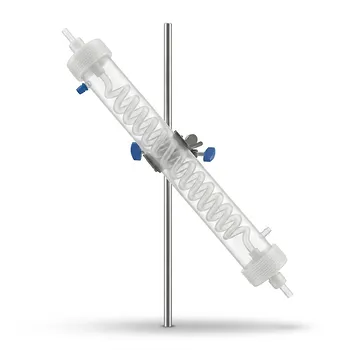
- High Purity PFA Chromatography Columns and Collection Bottles Corrosion Resistant Fluoropolymer Filtration Systems for Trace Analysis
- High Purity PFA Chromatography Column with Collection Bottle Corrosion Resistant Fluoropolymer Filtration System for Trace Analysis
- High Purity PFA Chromatography Column Double Layer Constant Pressure Filter Column with Sieve Plate Acid Resistant Fluoropolymer Filtration System
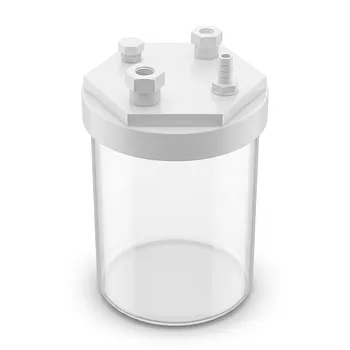
- PTFE PFA Vacuum Filtration System Corrosion Resistant Customizable Shatterproof Laboratory Device
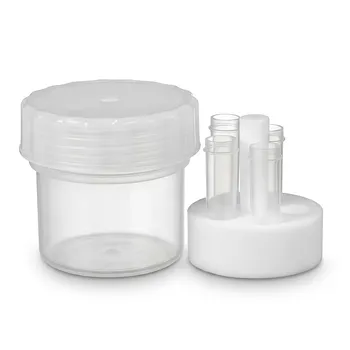
- High Purity Corrosion Resistant PFA Reaction Vessel with PTFE Holder and Integrated Sampling Tube for Trace Analysis
People Also Ask
- Why use high-purity PFA bottles for Carbon Quantum Dots? Ensure Ink Stability and Prevent Fluorescence Quenching
- Why is PFA often selected over traditional PTFE for manufacturing complex fluoropolymer fluid components, custom fittings, and sealed laboratory digestion vessels? Discover the key advantages for your lab.
- What are the primary functional and temperature differences between PFA and FEP when selecting melt-processible fluoropolymers for custom laboratory apparatus?
- Why is the chemical stability of polymer endgroups critical when selecting melt-processible fluoropolymers like PFA for high-purity laboratory apparatus? Choose Stable Endgroups for Reliable Performance
- What are the characteristics of PFA material? A Guide to Its High-Performance Balance