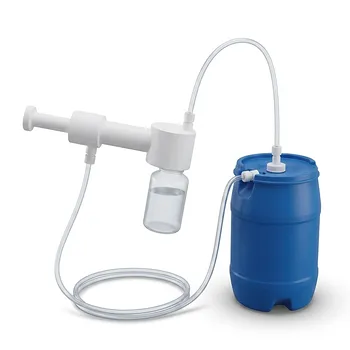
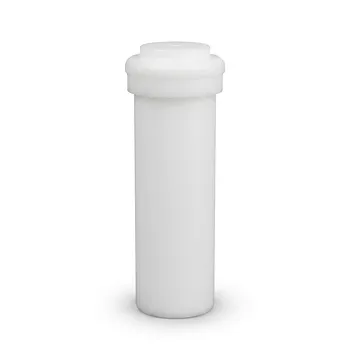
The analytical conditions are defined by the thermal property being measured. Thermogravimetric analysis (TGA) is performed in air from room temperature to 550 °C at 10 °C/min using approximately 10–15 mg of polymer to measure weight loss and thermal degradation. Differential scanning calorimetry (DSC) is performed under nitrogen from −50 °C to +200 °C at 20 °C/min with about 10 mg of sample to identify the glass transition temperature (Tg). High-purity PTFE and PFA preparation tools help preserve sample purity so that the resulting degradation curves and heat-capacity transitions reflect the polymer rather than contamination.
TGA measures degradation under an oxidative atmosphere, while DSC measures phase behavior under an inert atmosphere. Consistent sample mass, heating rate, temperature range, and contamination control are essential for obtaining reproducible thermal data from fluoroalkene-based polymer electrolytes.
How Thermal Stability Is Evaluated
TGA Conditions for Degradation
TGA is conducted under air at a heating rate of 10 °C/min. The temperature is increased from room temperature to 550 °C, using a sample mass of approximately 10–15 mg.
The instrument records mass change as the temperature rises. This identifies the onset and progression of thermal degradation, including the high-temperature stability expected from fluoroalkene copolymers designed for lithium battery operation.
What the TGA Result Shows
The primary output is a weight-loss curve. A later or more gradual mass loss generally indicates greater resistance to thermal decomposition under the selected oxidative conditions.
The test is especially relevant because these materials are intended to remain stable in demanding battery environments, including systems operating at approximately 3–5 V. TGA does not, by itself, establish electrochemical stability or battery lifetime; it specifically characterizes mass loss during heating in air.
How Phase Behavior Is Evaluated
DSC Conditions for Glass Transition
DSC is performed under a nitrogen atmosphere at 20 °C/min over −50 °C to +200 °C. The typical sample mass is around 10 mg.
Nitrogen limits oxidative reactions during the scan, allowing the measurement to focus on thermal transitions within the selected temperature range. The glass transition temperature is identified from the change in heat capacity, commonly observed as a heat-capacity step or jump in the DSC trace.
Why Tg Matters for Polymer Electrolytes
Tg helps indicate how the polymer matrix responds across temperatures relevant to battery operation. A polymer’s segmental mobility affects the behavior of attached poly(ethylene oxide) chains, which complex lithium salts and support lithium-ion transport.
Fluoroalkene copolymers with chlorotrifluoroethylene backbones and PEO side chains combine a thermally resistant fluorinated structure with ion-coordinating segments. DSC therefore helps connect polymer architecture and low-temperature behavior with the material’s intended electrolyte function.
Why Sample Purity Affects the Measurements
Contamination Can Distort Thermal Curves
Trace metals, moisture, residual reagents, and other impurities can alter apparent mass loss or introduce additional thermal events. In TGA, contamination may produce extra weight-loss steps or change the apparent degradation profile.
In DSC, impurities can shift or broaden the glass-transition signal, making the heat-capacity change more difficult to locate and reducing measurement-to-measurement reproducibility.
Residual Metals Are a Particular Concern
Polymerization routes such as transition-metal-catalyzed ATRP can leave residual metal ions in the copolymer. These residues are undesirable for lithium battery electrolytes because they can impair lithium-ion transport and contribute to reduced battery performance.
Purification must therefore address both the chemical composition of the polymer and the possibility of contamination introduced during handling. The analytical result is only as representative as the sample preparation process that precedes it.
How PTFE and PFA Tools Support Reliable Preparation
Inert Contact Surfaces
High-purity PTFE and PFA dishes, beakers, digestion vessels, filtration components, and storage containers provide chemically inert contact surfaces during purification and sample handling. Their resistance to corrosive reagents, harsh solvents, and elevated temperatures reduces the likelihood of leaching from the preparation equipment.
This is important when working with active solvents, lithium salts, or purified polymer fractions whose thermal transitions may be sensitive to trace contamination.
Reduced Metallic and Elemental Contamination
Fluoropolymer tools help prevent metal or elemental contaminants from entering the copolymer during digestion, filtration, transfer, and storage. This supports more accurate TGA weight-loss curves and clearer DSC heat-capacity transitions.
The tools do not replace controlled instrument calibration, atmosphere control, or standardized weighing. Their role is to protect the sample before it reaches the TGA or DSC instrument.
Consistent Handling and Composition
PTFE and PFA surfaces are non-stick and have very low leaching levels. This reduces polymer or electrolyte residue on vessel walls and helps maintain the intended ratios of polymer, solvent, and lithium salt during preparation.
Consistent composition is particularly important when comparing Tg values or degradation temperatures between formulations. Small differences in residual solvent, moisture, salt concentration, or catalyst residue can otherwise be mistaken for changes caused by polymer design.
Understanding the Trade-offs
TGA and DSC Answer Different Questions
TGA provides information about mass loss and degradation, whereas DSC identifies thermal transitions such as Tg. A polymer can show strong resistance to mass loss in TGA while still having a Tg that limits mechanical or transport behavior at a particular operating temperature.
Neither technique alone provides a complete assessment of a polymer electrolyte. Thermal results should be interpreted alongside electrochemical stability, ionic conductivity, salt compatibility, and battery cycling data.
Atmosphere Changes the Meaning of the Result
TGA under air evaluates degradation in an oxidative environment, while DSC under nitrogen minimizes oxidation during the thermal scan. Results from these tests should not be compared as though they were obtained under identical conditions.
Changing the atmosphere, heating rate, sample mass, or temperature range can change the observed transition or degradation profile. Method parameters must remain fixed when comparing formulations.
High-Purity Tools Do Not Eliminate Every Source of Error
PTFE and PFA labware reduce contamination risk, but they cannot correct for incomplete purification, residual moisture, poor sample sealing, inaccurate weighing, or inconsistent thermal history. Sample preparation should therefore include controlled drying, clean handling, and consistent storage procedures appropriate to the polymer and electrolyte formulation.
How to Apply This to Your Project
Use the prescribed conditions as a controlled baseline for comparing fluoroalkene-based polymer electrolyte formulations:
- If your primary focus is thermal degradation: Use TGA in air from room temperature to 550 °C at 10 °C/min with a 10–15 mg sample, and compare the resulting weight-loss profiles.
- If your primary focus is glass transition behavior: Use DSC under nitrogen from −50 °C to +200 °C at 20 °C/min with approximately 10 mg of sample, and identify the heat-capacity change associated with Tg.
- If your primary focus is reproducibility: Use high-purity PTFE or PFA preparation and storage components to limit metal, moisture, solvent, and elemental contamination before analysis.
- If your primary focus is battery performance: Treat TGA and DSC as thermal characterization methods and combine their results with lithium-ion conductivity and electrochemical stability measurements.
Reliable thermal analysis begins with controlled measurement conditions and a sample preparation process that preserves the polymer’s true composition.
Summary Table:
| Analytical Technique | Atmosphere | Temperature Range | Heating Rate | Sample Mass | Key Measurement |
|---|---|---|---|---|---|
| TGA | Air | Room temp to 550 °C | 10 °C/min | 10–15 mg | Weight loss and thermal degradation |
| DSC | Nitrogen | -50 °C to +200 °C | 20 °C/min | ~10 mg | Glass transition temperature (Tg) |
For high-purity PTFE and PFA labware that ensures your thermal analysis reflects your polymer, not contamination, contact KINTEK today. Our products are exclusively dedicated to high-performance fluoropolymers, including beakers, dishes, digestion vessels, and more. Ensure reliable TGA and DSC results with our chemically inert tools. Contact us now to discuss your needs!
Related Products
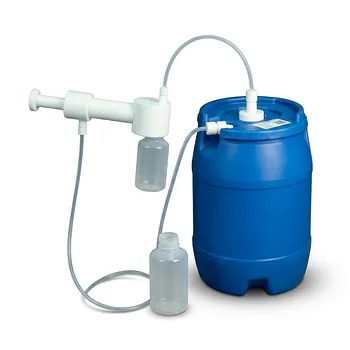
- PTFE Ultrapure Liquid Sampler Corrosion Resistant Acid Sampling Tool for 200L Reactors Custom Fluoropolymer Sampling Device
- High Purity PFA Sampling Scoop Custom Fluoropolymer Water Ladle Organic Solvent Resistant Dipper
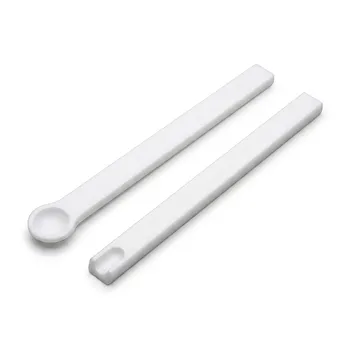
- Corrosion Resistant PTFE Sampling Spoon for High Purity Solid Powder Reagent Handling and Laboratory Chemical Transfer
- Corrosion Resistant PTFE Sampling Cup Custom Fabricated PTFE Sampling Scoop Laboratory Fluoropolymer Sampling Tools
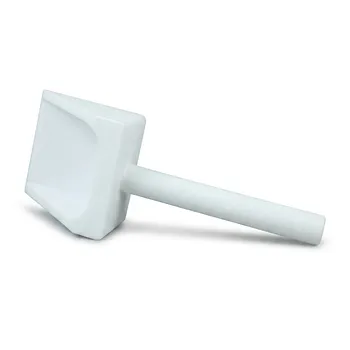
- Customized PTFE Sampling Scoop Corrosion Resistant High Purity Low Background Chemical Pharmaceutical Laboratory Shovel
People Also Ask
- How do synthetic processability advantages of semi-fluorinated aromatic ether polymers influence custom fluoropolymer equipment? Discover how PTFE/PFA apparatus enhances synthesis
- Why is raw material purity control during TFE polymerization crucial for manufacturing ultra-pure fluoropolymer labware used in sensitive chemical applications?
- Why do specialty fluoropolymers command higher costs? Discover the high-purity performance that justifies the premium
- What are the benefits of using nickel foam as a current collector for Bi2MoO6 supercapacitors? Enhanced 3D Conductivity
- What is the purpose of using corrosion-resistant reactors for dilute acid pretreatment? Ensure High Yield & Lab Safety