Specialty fluoropolymers cost more because they are expensive to make, difficult to process, and engineered for environments where contamination or material failure is unacceptable. Fluorine-containing raw materials, hazardous polymerization conditions, corrosion-resistant equipment, and specialized fabrication all increase production costs. The premium is justified when PTFE or PFA must withstand aggressive chemicals, elevated temperatures, and stringent purity requirements that standard plastics cannot reliably meet.
The key issue is lifecycle cost, not purchase price. In high-purity fluid handling and reaction apparatus, fluoropolymers prevent chemical attack, leaching, contamination, and premature replacement—often making the more expensive material the lower-risk and lower-cost choice over the equipment’s operating life.
Why Fluoropolymers Cost More
Expensive fluorinated raw materials
Fluorine is costly to source and incorporate into polymer chains. Basic PTFE may cost approximately $15–$30 per kilogram, while specialty grades such as PFA can exceed $100 per kilogram, depending on grade, purity, form, and supply conditions.
The cost reflects more than the fluorine itself. Producing consistent, high-performance fluoropolymers requires tightly controlled chemistry and processing.
Hazardous and capital-intensive production
Fluoropolymer manufacturing involves highly reactive and hazardous fluorinated compounds. Polymerization therefore requires specialized containment, process controls, and safety systems.
The equipment must also resist corrosive intermediates and process chemicals. This raises capital, maintenance, compliance, and quality-control costs compared with equipment used for common plastics such as polypropylene or PVC.
Difficult processing and fabrication
PTFE has excellent chemical resistance but is not readily processed by conventional melt techniques. It is commonly formed through specialized methods and may require machining for custom vessels, fittings, seals, and reaction components.
PFA is melt-processable, allowing more complex shapes to be produced through molding or extrusion. However, its processing still requires carefully controlled equipment and high-purity manufacturing practices.
What Gives Fluoropolymers Their Performance
The protective carbon–fluorine structure
The performance of PTFE and PFA is rooted in their strong carbon–fluorine bonds. Fluorine atoms form a protective sheath around the carbon backbone, limiting access by solvents and reactive chemicals.
This molecular structure helps explain their high chemical inertness, low solubility, and resistance to degradation under severe chemical conditions.
Resistance to chemical attack
PTFE and PFA withstand many aggressive inorganic acids, organic solvents, and cleaning agents that can attack standard plastics. This is particularly important when handling hydrofluoric acid, nitric acid, sulfuric acid, and concentrated process reagents.
No material is universally resistant to every chemical under every combination of concentration, temperature, pressure, and exposure time. Compatibility must still be verified for the actual service conditions.
Thermal stability and dimensional reliability
Fluoropolymers generally tolerate higher operating temperatures than common plastics such as PVC or polypropylene. They are less likely to soften, deform, or lose dimensional stability during high-temperature reactions, cleaning, or fluid transfer.
That stability is valuable in apparatus where a small change in shape can cause leakage, inaccurate dosing, or loss of vessel integrity.
Low contamination potential
High-purity PTFE and PFA can provide low levels of organic leaching and metal extraction. Their chemically inert surfaces also reduce the risk that process fluids will react with, dissolve, or extract material from the component.
This matters in trace analysis, semiconductor processing, laboratory filtration, and ultrapure fluid systems, where even small contamination levels can compromise results.
Why They Are Justified in High-Purity Applications
Protecting analytical samples
In trace analysis, the container or fluid path can become a source of background contamination. Standard plastics may swell, degrade, or release extractables when exposed to harsh reagents.
Fluoropolymer vessels, tubing, fittings, and liners help preserve sample integrity by resisting chemical attack and minimizing material contribution to the sample.
Supporting microwave digestion and reaction vessels
Microwave digestion and related reaction processes combine aggressive reagents with elevated temperature and pressure. A vessel material must remain chemically stable and mechanically reliable throughout the cycle.
Fluoropolymers are selected where their chemical inertness and thermal performance provide a safer and more durable alternative to ordinary laboratory plastics.
Maintaining ultrapure fluid systems
In semiconductor wet benches, ultrapure-water systems, and high-purity chemical distribution, contamination control is as important as fluid transport. PTFE and PFA components can resist aggressive cleaning agents, acids, ozone, and steam exposure more effectively than many conventional plastics.
PFA is especially useful when a complex, high-purity component must be molded or extruded. PTFE remains valuable for custom-machined parts, flexible components, and applications requiring its distinctive nonstick and chemical-resistant properties.
Reducing failure-related costs
A failed valve, fitting, vessel, or transfer line can cause more than a replacement-material expense. It may interrupt production, contaminate a batch, damage analytical work, or require extensive cleaning and validation.
Fluoropolymers reduce these risks when their properties match the service conditions. The economic justification comes from avoiding downtime, rework, sample loss, and frequent component replacement.
Why Standard Plastics Can Be Inadequate
Chemical swelling and degradation
Many standard plastics lose strength or dimensional stability when exposed to aggressive solvents, acids, or other reagents. Swelling can alter seals and flow paths, while chemical degradation can produce cracking, embrittlement, or surface damage.
These failure modes are particularly serious in precision fluid handling and custom reaction apparatus.
Thermal deformation
A plastic that performs adequately at room temperature may soften or deform during heated reactions, sterilization, steam exposure, or aggressive cleaning. Deformation can produce leaks and change the internal volume or geometry of a component.
Fluoropolymers are often chosen because they provide a wider and more reliable operating envelope.
Leaching and extractables
Standard plastics can release additives, oligomers, or degradation products into the process stream. Even when the quantities are small, they may interfere with trace measurements or violate purity requirements.
A high-purity fluoropolymer grade can substantially reduce this risk, although cleanliness depends on the entire manufacturing, handling, and installation process—not only the polymer choice.
Understanding the Trade-offs
Higher material and fabrication costs
Fluoropolymers are not automatically the best choice for every plastic component. Their purchase price, machining requirements, tooling, and specialized joining methods can be substantially higher than those of commodity plastics.
For mild chemicals, moderate temperatures, and noncritical service, a standard plastic may provide adequate performance at a much lower cost.
Mechanical limitations still matter
Chemical resistance does not eliminate mechanical design requirements. PTFE, in particular, can exhibit creep, cold flow, and relatively low stiffness compared with engineering plastics or metals.
Designers must evaluate pressure, load, sealing force, dimensional tolerance, thermal cycling, and support requirements rather than treating fluoropolymer as a universal replacement material.
Grade and formulation are critical
The word “fluoropolymer” covers many materials and formulations with different purity, mechanical, thermal, and processing characteristics. Fillers, pigments, blends, and recycled content can change contamination behavior and chemical performance.
For high-purity service, the specification should identify the exact grade, manufacturing controls, cleaning method, and relevant extractables or trace-metal requirements.
Blends may compromise long-term performance
A formulation with a lower fluoropolymer concentration may not provide the same surface stability or degradation resistance as a high-fluoropolymer formulation. Over time, inferior formulations can be more vulnerable to micro-cracking, chalking, leaching, or surface deterioration.
The appropriate comparison is therefore not simply “fluoropolymer versus plastic,” but the performance of the specific material grade under the actual exposure conditions.
Making the Right Choice for Your Goal
The correct decision should balance chemical compatibility, purity, temperature, mechanical loading, fabrication method, and the cost of failure.
- If your primary focus is maximum chemical resistance: Select a qualified PTFE or PFA grade after checking compatibility against the exact chemicals, concentrations, temperatures, and exposure times.
- If your primary focus is ultrapure fluid handling: Prioritize high-purity PFA or PTFE components with documented cleanliness, low extractables, and controlled manufacturing.
- If your primary focus is complex molded geometry: Consider PFA, which can be melt-processed into tubing, fittings, valve bodies, and other intricate components.
- If your primary focus is custom reaction apparatus: Consider PTFE where custom machining, flexible components, or highly inert vessel surfaces are required, while accounting for creep and mechanical support.
- If your primary focus is lowest initial cost: Use a standard plastic only after confirming that it will not swell, deform, degrade, or contaminate the process under real operating conditions.
When contamination, chemical attack, or downtime is expensive, specialty fluoropolymers earn their premium by protecting the process rather than merely forming its components.
Summary Table:
| Factor | Why It Increases Cost | Why It's Justified |
|---|---|---|
| Raw materials | Fluorine is expensive and complex to incorporate | Enables unmatched chemical resistance and purity |
| Manufacturing | Hazardous process requires specialized equipment and safety measures | Ensures high-quality, high-purity product |
| Fabrication | Difficult processing demands specialized techniques and machining | Allows for custom high-performance parts |
| Performance | High thermal stability and low contamination | In harsh conditions, prevents failures and contamination, reducing lifecycle costs |
| Standard plastics | Lower initial cost but may swell, degrade, or leach | Under aggressive conditions, they fail prematurely, leading to downtime and contamination risks |
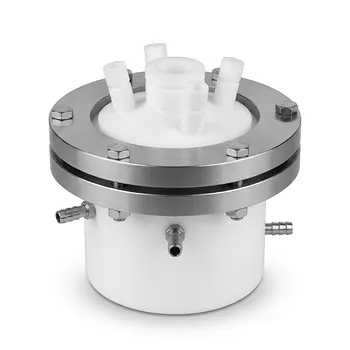
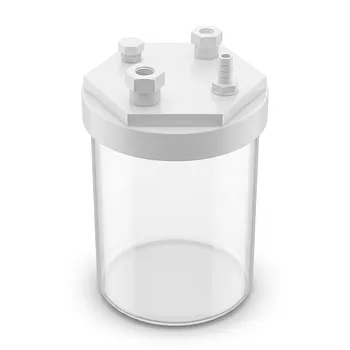
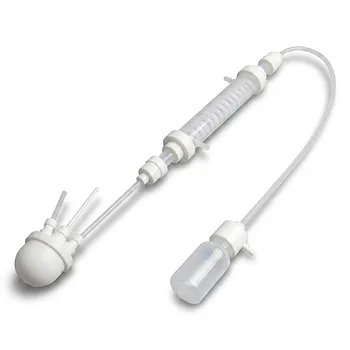
Ensure the purity and reliability of your high-purity fluid handling and reaction systems. KINTEK offers a full range of PTFE and PFA products—from labware and custom machined parts to complex reaction apparatus—all engineered to meet your most demanding requirements. Our high-performance fluoropolymers resist chemical attack, withstand elevated temperatures, and minimize contamination, safeguarding your processes and reducing downtime. Whether you need standard components or bespoke solutions, our end-to-end capabilities ensure exceptional quality and reliability. Contact us today to discuss your application and discover how we can enhance your operations.
Related Products
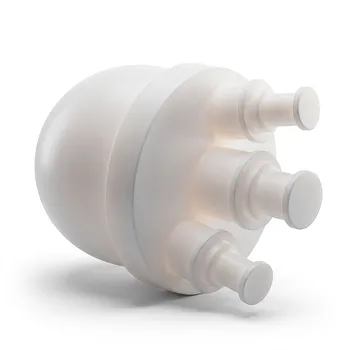
- High Purity Custom PTFE Large Volume 15L Flask Corrosion Resistant Low Trace Background Fluoropolymer Reaction Vessel
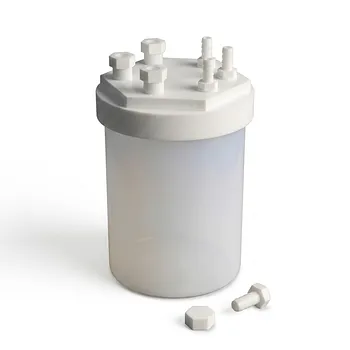
- PFA Chemical Reaction Tank with Customizable Fittings for Corrosive Solvent Synthesis and High Purity Lab Applications
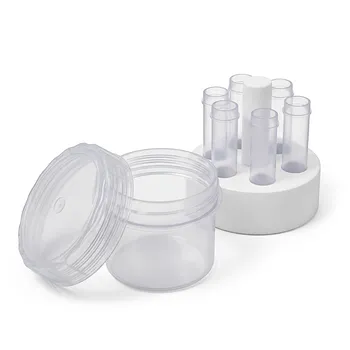
- High Purity Corrosion Resistant PFA Reaction Vessel with PTFE Holder and Integrated Sampling Tube for Trace Analysis
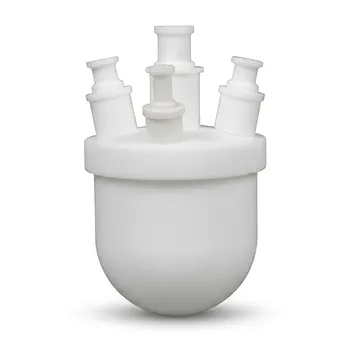
- Custom PTFE Flask 250ml High Purity Fluoropolymer Laboratory Vessel for Chemical Research
- Custom PTFE Continuous Reaction Bottles Virgin Fluoropolymer High Purity Low Background Synthesis Vessels
People Also Ask
- What toxicological hazards and safe handling protocols must be established when PTFE fluoropolymer reaction vessels are subjected to pyrolysis temperatures? Learn essential safety measures now.
- Why are high-purity PTFE or PFA reaction vessels recommended for the synthesis of PANI-TiC hybrid materials? - Guide
- How do perfluorinated solvent environments influence the selection of reaction vessels and fluid handling components in nonaqueous emulsion polymerizations? Choose fluoropolymer materials.
- What reaction vessel and fluid handling considerations are necessary for living cationic polymerization of fluorinated monomers involving Lewis acid catalysts? Key design and safety tips
- Ion Activation Reaction Vessel Requirements: Why PTFE is Critical for Membrane Performance