Fluoropolymers make laboratory filtration and separation tools more dependable by resisting chemical attack, heat, solvent uptake, and contamination. Their chemical inertness helps prevent membrane degradation and leaching when processing aggressive solvents, acids, oxidizing media, or corrosive mixtures. Low-surface-energy and tunable surface properties also improve liquid release, reduce analyte adsorption, and enable selective separation of difficult systems such as oil-in-water emulsions.
The central benefit is stability without compromising separation performance: fluoropolymer membranes and filter components maintain their structure and cleanliness under demanding chemical and thermal conditions, helping laboratories obtain more consistent results and longer service life.
Why Aggressive Liquids Challenge Filtration Tools
Chemical exposure can damage the separation medium
Strong acids, oxidative reagents, aggressive organic solvents, and corrosive liquids can attack conventional polymeric or fibrous filter media. Degradation may cause loss of mechanical strength, changes in pore structure, chemical leaching, or fiber shedding into the filtrate.
Fluoropolymers provide high chemical inertness and low solvent absorption, reducing these failure modes. This helps preserve pore uniformity, membrane integrity, and filtrate purity during sample preparation and liquid clarification.
Heat can accelerate material failure
Many laboratory processes combine chemical exposure with elevated temperature. A filtration medium that performs well at room temperature may soften, swell, or degrade when exposed to hot corrosive streams.
Fluoropolymer materials offer broad thermal stability, allowing porous membranes, coated filter media, tubing, fittings, and valves to maintain their function across demanding temperature conditions.
How Fluoropolymers Improve Reliability
They reduce degradation and chemical leaching
Fluoropolymers are highly resistant to strong acids, oxidizing environments, and many aggressive solvents. This resistance limits reactions between the filtration tool and the processed liquid.
The result is a lower risk that the membrane will release contaminants or that its chemistry will alter the sample. This is particularly important in high-purity work, trace analysis, and sample preparation.
They maintain structural and pore stability
Membrane performance depends on consistent pore size, porosity, and mechanical strength. Swelling or chemical attack can change these characteristics and reduce separation accuracy.
Fluoropolymer membranes can be engineered into nanoporous, multilayer, or other controlled structures. Their strength and chemical stability help maintain predictable flow and retention behavior under demanding conditions.
They resist particle shedding
Aggressive liquids and hot streams can weaken conventional fibers or coatings. If the medium sheds particles, the filtrate may become contaminated and downstream analysis may be compromised.
Fluoropolymer-coated or porous fluoropolymer media are less susceptible to this type of degradation. This supports cleaner filtrates and more reliable analytical workflows.
How Fluoropolymers Improve Filtration Efficiency
Low surface energy improves liquid release
The fluorine-rich surface of a fluoropolymer has very low surface energy. This produces non-stick behavior, low friction, and low adhesion.
For filtration tools, these properties help reduce liquid retention on membrane and component surfaces. More of the processed sample can be recovered, and cleaning can be more thorough.
Reduced adsorption protects sample composition
Some analytes or sample components can adhere to filter surfaces or container walls. This is a significant concern when working with low-concentration samples or valuable materials.
Fluoropolymer surfaces reduce absorption and adsorption compared with more interactive materials. That helps preserve sample integrity and reduces cross-contamination between runs.
Easier cake release can improve throughput
During particulate filtration, solids accumulate as a filter cake. Strong adhesion between the cake and the filter can make discharge slow, difficult, or incomplete.
The non-stick character of fluoropolymer media supports easier cake release. This can simplify cleaning, reduce downtime, and improve repeatability in clarification processes.
How Surface Design Enables Selective Separation
Surface properties can be tailored to the liquid system
Fluoropolymers naturally provide low surface energy, but their surfaces can also be modified to achieve different wetting behaviors. Depending on the design, a membrane may be made lipophilic, hydrophobic, superhydrophobic, or combined with hydrophilic chemistry.
This tunability allows the membrane to control which phase preferentially wets and passes through the structure. It is especially useful for complex liquid mixtures that cannot be separated efficiently by pore size alone.
Oil-water separation benefits from opposing wettability
Hybrid membranes can combine hydrophilic polymer networks with fluorinated structures. The resulting surface can be highly water-wetting while strongly repelling oil, including under submerged conditions.
In gravity-driven filtration, water can permeate while oil droplets and emulsions are rejected. This supports efficient oil-water separation, wastewater cleanup, and laboratory sample preparation.
Separation can remain effective without aggressive driving forces
A properly engineered wetting contrast can enable separation under relatively low-pressure or gravity-driven operation. That reduces the need for high-pressure equipment and can simplify laboratory workflows.
The practical result is a filtration tool that combines chemical durability with selective transport rather than relying solely on mechanical sieving.
Material Choices and Component Design
Porous membranes support direct separation
Porous fluoropolymer membranes provide the active filtration structure. They can be designed with controlled morphology and pore characteristics for particulate removal, clarification, or phase separation.
PVDF, PTFE, PFA, and related fluoropolymer systems are used in different forms depending on the required chemical, thermal, mechanical, and surface-performance balance.
Coated media combine strength with chemical protection
A fluoropolymer coating can protect an underlying filter medium from corrosive liquids while retaining the support material’s mechanical or handling advantages.
This approach is useful where the application requires both a robust substrate and a chemically resistant, low-adhesion surface.
Solid fluoropolymer components protect fluid paths
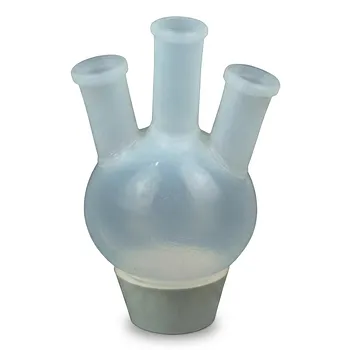
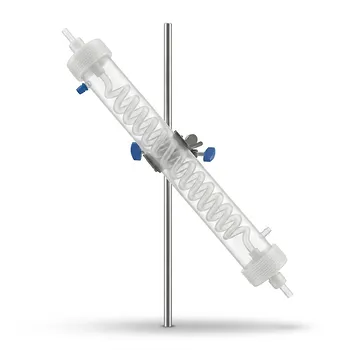
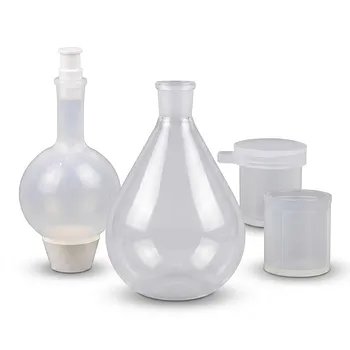
Tubing, fittings, valves, vessels, and other fluid-contact components influence filtration reliability even when the membrane itself performs well. If these components absorb solvents, shed particles, or react with the sample, the overall system can still fail.
Fluoropolymer fluid-handling parts reduce contamination risk and help maintain seal integrity and dimensional stability in aggressive chemical service.
Understanding the Trade-offs
Not every fluoropolymer has identical performance
“Fluoropolymer” describes a broad material family rather than one universal chemical specification. Resistance depends on the specific polymer, temperature, solvent concentration, exposure time, pressure, and component geometry.
Material selection should therefore be based on the actual chemical compatibility and operating conditions, not on the fluoropolymer label alone.
Thin films may swell in certain solvents
Thin fluoropolymer films exposed to aromatic hydrocarbons or ketones can experience swelling, clouding, increased flexibility, and measurable weight gain. These changes may affect dimensional stability and membrane performance.
Thicker molded or machined fluoropolymer components generally show substantially lower solvent uptake under comparable ambient conditions. A membrane design should account for this distinction rather than applying the performance of bulk material directly to a thin film.
Surface durability and throughput still require validation
A highly non-stick or oleophobic surface may improve release and selectivity, but surface treatments can respond differently to abrasion, pressure, fouling, or repeated cleaning. High separation efficiency also does not automatically guarantee high throughput or long-term performance in every matrix.
Testing should measure flux, retention, chemical exposure, recovery, fouling, and mechanical integrity using the actual sample chemistry.
Fluoropolymers are not a substitute for process control
Even chemically resistant membranes can foul when exposed to concentrated solids, viscous liquids, or stable emulsions. Pretreatment, appropriate pore selection, pressure control, and cleaning procedures remain important.
The material reduces a major source of failure, but it does not eliminate the need for sound filtration-system design.
How to Apply This to Your Project
Fluoropolymers are most valuable when chemical exposure, contamination control, and repeatable separation are all critical.
- If your primary focus is chemical compatibility: Select a fluoropolymer membrane or component whose specific grade has been validated against the solvent, acid, oxidizer, temperature, and exposure time involved.
- If your primary focus is sample integrity: Use low-adsorption fluoropolymer contact surfaces to reduce analyte loss, leaching, and cross-contamination.
- If your primary focus is oil-water or emulsion separation: Evaluate membranes with deliberately engineered hydrophilic and oleophobic or superoleophobic surface behavior.
- If your primary focus is operating efficiency: Prioritize low-adhesion media that support liquid recovery, easier filter-cake release, and simplified cleaning.
- If your primary focus is long-term durability: Consider the complete fluid path—including tubing, fittings, valves, vessels, and seals—rather than evaluating the membrane in isolation.
- If your primary focus is dimensional stability: Treat thin films and thick molded components differently, and test for solvent swelling or clouding under real operating conditions.
The right fluoropolymer design combines chemical resistance, controlled surface wettability, structural stability, and validated compatibility with the specific aggressive liquid being processed.
Summary Table:
| Benefit | Description |
|---|---|
| Chemical Resistance | Withstands acids, solvents, and oxidizers without degradation or leaching. |
| Thermal Stability | Maintains performance under high temperatures. |
| Low Surface Energy | Reduces adhesion, improving sample recovery and cleaning. |
| Low Adsorption | Preserves sample integrity by minimizing analyte loss. |
| Tunable Wettability | Enables selective separation, e.g., oil-water emulsions. |
| Structural Stability | Keeps pore size and mechanical strength for consistent results. |
| Low Particle Shedding | Minimizes contamination of filtrate. |
Enhance your lab's filtration with high-performance PTFE/PFA components from KINTEK. Our fluoropolymer labware, membranes, and custom CNC-machined parts ensure chemical resistance, low adsorption, and reliable separation for aggressive liquids. From porous membranes to complete fluid path solutions, we help you achieve consistent results and extended service life. Contact us today to discuss your application and get a tailored quote – contact us!
Related Products
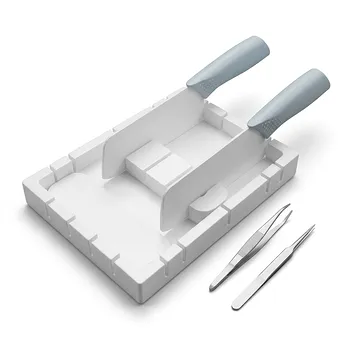
- High Purity PTFE Square Membrane Cutter and Filter Aliquot Device for Trace Analysis and Cleanroom Laboratory Applications
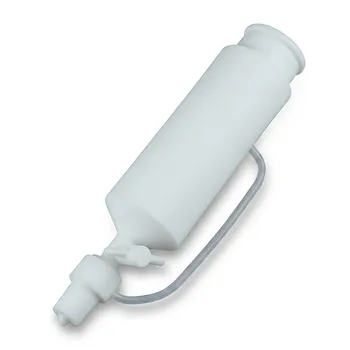
- Custom PTFE Constant Pressure Separatory Funnel 100ml Fluoropolymer Labware for Corrosive Chemical Transfer
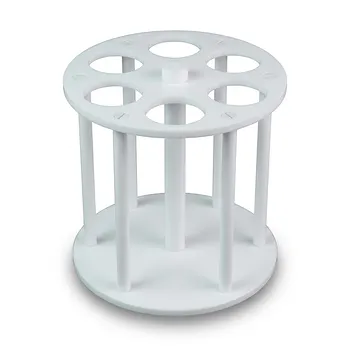
- Custom PFA Separatory Funnel Rack PTFE Machined Laboratory Support Stand Corrosion Resistant Low Background Fluoropolymer Fixture
- PTFE PFA Vacuum Filtration System Corrosion Resistant Customizable Shatterproof Laboratory Device
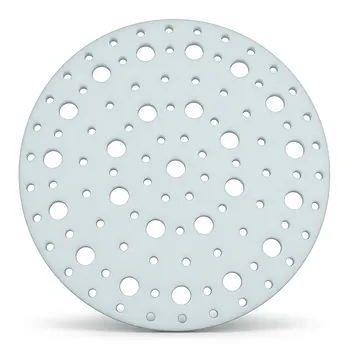
- High Temperature Resistant Insulating TFM Separator and Ultra Clean Laboratory PTFE Baffle Plate with Customizable Pore Size and Hole Configuration
People Also Ask
- What are the structural characteristics and manufacturing principles of Polytetrafluoroethylene (PTFE) filter membranes?
- What is the chemical composition and temperature resistance of PTFE filter membranes? Essential Specs for Labs
- How does the inherent hydrophobicity of PTFE filter membranes affect liquid and gas separation? Optimize Performance
- What are the performance advantages of PTFE filter membranes vs depth filters? Boosting Lab Purity and Efficiency
- What is the thermal stability range for PTFE filter membranes? Master Extremes from -200°C to +260°C