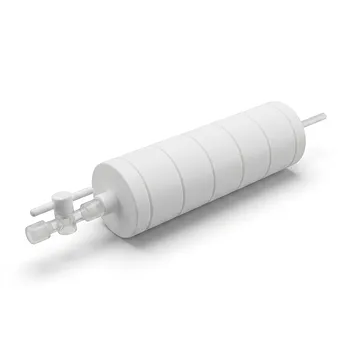
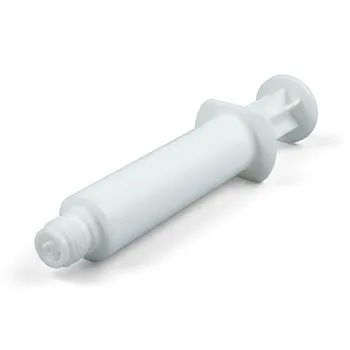
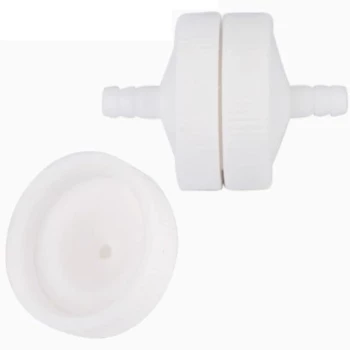
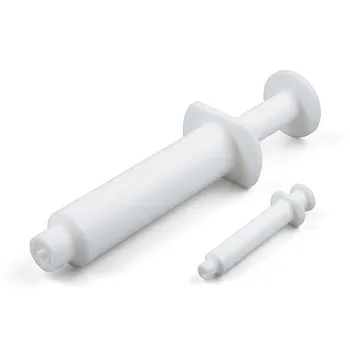
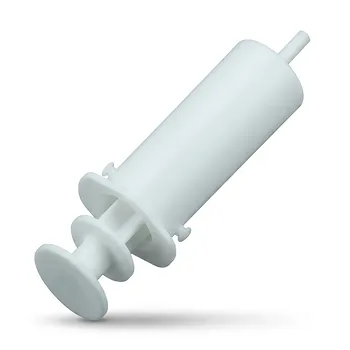
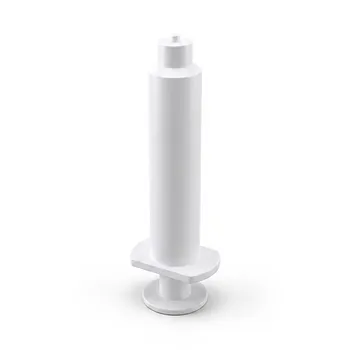
Sub-micron polytetrafluoroethylene (PTFE) syringe filters are essential for removing undissolved microscopic impurities that act as uncontrolled nucleation sites. By eliminating these "seeds" from the monomer solution, the filtration process significantly reduces the number of crystal nuclei. This control over the starting population of nuclei is the primary mechanism for shifting synthesis away from polycrystalline aggregates and toward the growth of large, high-quality 2.5D single crystals.
Core Takeaway: Filtration suppresses heterogeneous nucleation by removing particulate contaminants, ensuring that crystal growth is concentrated on a limited number of sites. This precise control over the solution environment is mandatory for achieving high-purity, single-crystal Covalent Organic Frameworks (COFs).
Precision Control of Nucleation Kinetics
Suppressing Heterogeneous Nucleation
In the synthesis of 2.5D COFs, even tiny, undissolved particles can trigger heterogeneous nucleation, where crystals begin forming around a foreign impurity. If these particles remain in the monomer solution, they create a massive number of competing growth points. This results in a "crowded" growth environment where monomers are spread thin across too many sites.
Shifting to Single-Crystal Growth
By using a sub-micron filter (typically 0.22 μm or 0.45 μm), the concentration of these unintended nuclei is drastically reduced. With fewer starting points, the available monomers in the solution are forced to aggregate onto a limited number of sites. This promotes the development of large-sized single crystals rather than a wide distribution of small, disordered polycrystalline products.
Ensuring Uniform Particle Distribution
Consistency is a major challenge in COF synthesis. Removing particulate contaminants ensures a more uniform nucleation process, which leads to a narrower particle size distribution. This predictability is vital for the downstream application of COFs in electronics, membranes, or catalysis, where structural regularity is paramount.
Why PTFE is the Material of Choice
Exceptional Chemical Inertness
COF monomers are frequently dissolved in strong polar solvents or aggressive organic liquids like DMAc, methanol, or acetonitrile. PTFE (Polytetrafluoroethylene) is selected for its superior resistance to chemical corrosion, allowing it to maintain its structural integrity even in the presence of concentrated acids or harsh solvents.
Elimination of Secondary Contaminants
Low-quality filters can leach plasticizers or membrane fragments into the solution, introducing new impurities that interfere with crystal growth. PTFE is known for its low extractable characteristics, ensuring that the filtration process itself does not introduce secondary contamination. This maintains the high purity required for accurate electrochemical testing and high-resolution imaging.
Protection of Downstream Equipment
Beyond the chemistry of the COF itself, filtration protects precision instruments. Removing fine particulates prevents the clogging of microfluidic channels or high-pressure chromatography columns (HPLC). This extends the service life of expensive lab hardware and ensures the reliability of analytical results.
Understanding the Trade-offs
Risk of Sample Loss
When working with very low concentrations of monomers, a small amount of the target material may adsorb onto the filter membrane. This can lead to a slight decrease in the final yield or a shift in the stoichiometric ratio if one monomer adsorbs more readily than the other.
Filtration Pressure and Membrane Integrity
Forcing a highly viscous solution through a 0.22 μm pore can require significant pressure, which may lead to membrane rupture if not handled carefully. If a filter fails during the process, it can dump a large concentration of both the original impurities and filter fragments into the solution, ruining the batch.
Pore Size Selection
While a 0.22 μm filter offers the highest level of purity, it can become blocked rapidly if the initial solution contains a high volume of undissolved solids. In some cases, a two-step filtration—starting with a 0.45 μm filter—is necessary to prevent constant clogging and ensure an efficient workflow.
How to Apply This to Your Project
Recommendations for Implementation
- If your primary focus is single-crystal quality: Use a 0.22 μm PTFE filter to ensure the maximum removal of microscopic nucleation sites.
- If your primary focus is harsh chemical environments: Always verify the chemical compatibility of the filter housing (not just the membrane) with your specific solvent to prevent leaching.
- If your primary focus is high-viscosity solutions: Perform a pre-filtration step with a 0.45 μm filter to remove larger aggregates before attempting fine sub-micron filtration.
Precise filtration transforms a chaotic, multi-nuclei environment into a controlled system optimized for high-performance crystal growth.
Summary Table:
| Feature | Importance in 2.5D COF Synthesis |
|---|---|
| Primary Function | Removes undissolved particles that act as uncontrolled nucleation sites |
| Pore Size (0.22/0.45 μm) | Reduces nuclei count to promote large single-crystal growth over aggregates |
| PTFE Material | Provides exceptional inertness against aggressive solvents like DMAc and ACN |
| Purity Control | Low extractables prevent secondary contamination during crystallization |
| System Protection | Prevents clogging in microfluidic channels and downstream analytical tools |
Elevate Your Lab Precision with KINTEK Fluoropolymer Solutions
Achieving high-purity single-crystal growth requires equipment that never compromises on chemical integrity. KINTEK specializes in high-performance PTFE and PFA laboratory supplies designed for the most demanding research environments.
From everyday basic labware (beakers, measuring cylinders, crucibles, reagent bottles, and centrifuge tubes) and filtration tools (syringe filters, separatory funnels, and pipettes) to advanced fluid transfer components (tubing, fittings, and valves), we provide the tools necessary for flawless COF synthesis. Our expertise extends to custom CNC-fabricated reaction apparatus, including electrochemical cells, battery testing fixtures, and microwave digestion vessels tailored to your specific research needs.
Ready to optimize your synthesis workflow? Contact KINTEK today to discuss our bespoke fabrication services or to place a high-volume order for high-performance fluoropolymer consumables.
References
- Tomoki Kitano, Yoichi Murakami. 2.5-dimensional covalent organic frameworks. DOI: 10.1038/s41467-024-55729-2
This article is also based on technical information from Kintek Knowledge Base .
Related Products
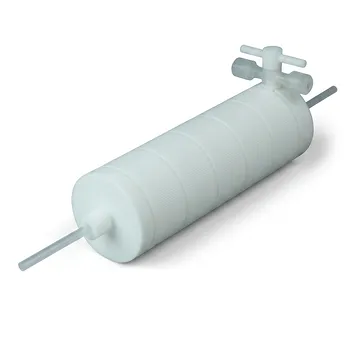
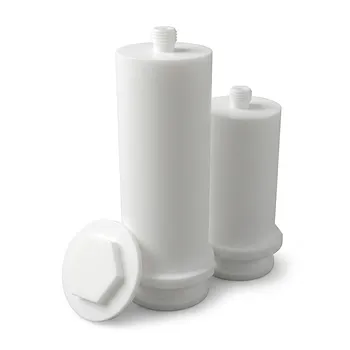
- Custom PTFE Filtration System Acid Resistant High Purity Semiconductor Grade Chemical Processing Filter
- Custom PTFE Vacuum Filter with Integrated Sieve Plate and Corrosion Resistant Particle Free Design for High Purity Water Quality Analysis
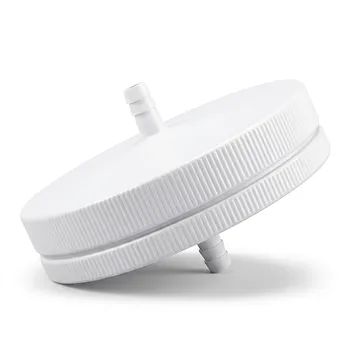
- PTFE Filter Membrane Holder 47mm Leak Proof Corrosion Resistant Environmental Sampling Unit Customizable
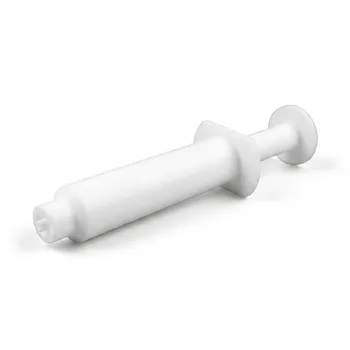
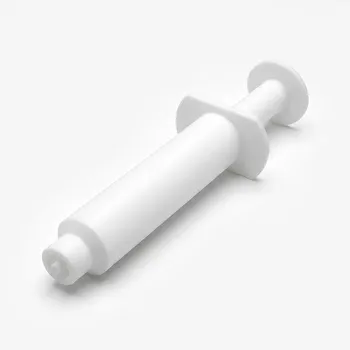
- High Purity 25ml PTFE Syringe for Trace Analysis and Automated Syringe Pump Systems
- PTFE PFA Vacuum Filtration System Corrosion Resistant Customizable Shatterproof Laboratory Device
People Also Ask
- What makes PTFE filtration systems advantageous for industrial and scientific use? Unmatched Chemical & Thermal Stability
- What steps are involved in selecting the proper PTFE filter? A 4-Step Guide to Optimal Filtration
- What sizes and pore options are available for PTFE filters? Choose the Right Filter for Your Application
- How does the hydrophobicity of PTFE filters benefit their use? Ensure Uninterrupted Gas Flow and Solvent Filtration
- What temperature resistance do PTFE filters offer? Unmatched Thermal Stability from -200°C to +260°C