Knowledge PTFE filter membrane What temperature and stretching parameters are required to prevent film rupture during the expansion of extruded PTFE materials? Heat to 300°C for safe stretching
Author avatar

Tech Team · Kintek

Updated 1 month ago

What temperature and stretching parameters are required to prevent film rupture during the expansion of extruded PTFE materials? Heat to 300°C for safe stretching


The critical requirement is to expand extruded PTFE film at approximately 300°C. Stretching at 50°C to 225°C causes rupture in paste-extruded and calendared films, regardless of whether the expansion rate is 5%/s or 500%/s. The expansion may be monoaxial or biaxial, but it requires precise thermal control near 300°C to support uniform node-and-fibril formation.

Use an expansion temperature near 300°C, with tightly controlled heating and film temperature. The available data does not identify a single mandatory stretching rate; both 5%/s and 500%/s produced rupture when the film was stretched below the effective expansion temperature.

The Conditions That Prevent Film Rupture

Maintain an expansion temperature near 300°C

The primary process parameter is temperature. Paste-extruded or calendared PTFE film should be brought to approximately 300°C before expansion.

At lower temperatures, the film does not form the intended porous node-and-fibril structure reliably. Instead, the applied tensile stress can concentrate in the film and cause rupture.

Control the temperature uniformly

PTFE has low thermal conductivity and a high coefficient of thermal expansion. Uneven heating can therefore create local differences in softness, dimensional stability, and strain response.

The film should be heated and maintained as uniformly as practical throughout the stretching zone. Temperature measurement and control are especially important during continuous expansion, where the film may cool as it moves or stretch.

Select the stretching direction based on the product requirement

Expansion can be performed uniaxially or biaxially. The available results indicate that either mode can be used when the temperature is properly controlled near 300°C.

The stretching direction is therefore primarily a design and performance decision rather than the fundamental rupture-prevention parameter. Temperature is the controlling variable identified by the reference data.

What the Expansion Rate Data Shows

Low and high rates both fail at low temperature

Tests using expansion rates of approximately 5%/s and 500%/s resulted in film rupture when the material was stretched between 50°C and 225°C.

This means that changing the rate alone does not correct the underlying problem. A faster or slower stretch cannot compensate for an expansion temperature that is too low.

No single rate is established as mandatory

The reference data supports the conclusion that the process must operate near 300°C, but it does not establish one required stretching rate, strain rate, or final stretch ratio.

The rate should therefore be selected through process development after the film reaches the correct temperature. The key validation criterion is stable expansion with consistent node-and-fibril formation and no tearing.

Avoid interpreting temperature as a sintering condition

The approximately 300°C expansion temperature should not be confused with the separate PTFE sintering stage. Unsintered PTFE is typically heated above its melting point of approximately 342°C during sintering to coalesce particles and eliminate voids.

Expansion requires a controlled temperature near 300°C, while sintering uses a higher thermal cycle. These stages should be treated as distinct operations.

Understanding the Trade-offs

Higher temperature improves extensibility but narrows process control

Heating near 300°C enables the deformation required for porous structure development. However, the process remains sensitive to temperature gradients, residence time, and thermal history.

The objective is controlled heating at the expansion temperature, not simply exposure to the highest available oven temperature.

Excessive heat can damage PTFE

Prolonged exposure above approximately 380°C should be avoided because PTFE can degrade and produce hazardous off-gassing. Sintering equipment may operate at higher setpoints, commonly 400°C to 600°C, but that does not make those temperatures appropriate for film expansion.

Expansion and sintering require separate thermal controls and safety limits.

Residual lubricant creates a separate rupture risk

Paste extrusion uses liquid lubricant, and roughly 40% by volume may need to be evaporated before sintering. If lubricant remains when the material enters a high-temperature zone, trapped solvent can expand rapidly and cause cracking.

Drying must therefore be completed before the relevant high-temperature operation. Expansion temperature control cannot compensate for improperly dried material.

Mechanical parameters still require validation

Although the supplied data shows rupture at both 5%/s and 500%/s under low-temperature conditions, it does not define the acceptable limits for stretch ratio, web tension, draw ratio, or film thickness.

Those parameters must be established experimentally for the specific resin, extrusion history, film geometry, and desired porosity.

How to Apply This to Your Process

Begin process development by stabilizing the film temperature near 300°C, then evaluate the stretching rate and direction for the required product structure.

  • If your primary focus is preventing rupture: Heat the extruded film uniformly to approximately 300°C before applying monoaxial or biaxial expansion.
  • If your primary focus is selecting a stretching rate: Treat 5%/s and 500%/s as demonstrated low-temperature failure conditions, then qualify the appropriate rate only after reaching the required expansion temperature.
  • If your primary focus is producing consistent porosity: Monitor thermal uniformity and verify that expansion produces continuous node-and-fibril formation rather than localized tearing.
  • If your primary focus is process safety and material quality: Remove residual lubricant before high-temperature processing and prevent unnecessary prolonged exposure above approximately 380°C.

Reliable ePTFE expansion depends first on precise temperature control near 300°C, with stretching rate and direction qualified around that thermal condition.

Summary Table:

Parameter Value / Condition
Expansion Temperature ~300°C
Stretching Rate 5%/s and 500%/s both fail at 50–225°C
Stretching Direction Monoaxial or biaxial
Sintering Temperature >342°C (separate step)
Maximum Safe Temperature Avoid prolonged exposure >380°C
Critical pre-step Remove residual lubricant (~40% by volume) before heating

Ensure optimal PTFE processing with KINTEK's precision lab supplies. Our PTFE and PFA products are designed for high-temperature and chemical resistance. Contact us today to learn how we can support your ePTFE production needs. Get in touch for expert guidance and custom solutions.

Related Products

People Also Ask

Related Products

High Purity PTFE Square Membrane Cutter Equipartition Device for Trace Analysis and Disease Control Centers Clean Non Stick No Leaching

High Purity PTFE Square Membrane Cutter Equipartition Device for Trace Analysis and Disease Control Centers Clean Non Stick No Leaching

Optimize laboratory precision with this high-purity PTFE square membrane cutter. Engineered for disease control centers, this non-stick, zero-leaching equipartition device ensures sample integrity during critical trace analysis and filtration tasks across diverse demanding chemical environments.

PTFE Dispersion Disk Food Cosmetic Grade Non Stick Corrosion Resistant Large Stirring Paddle Customizable Impeller

PTFE Dispersion Disk Food Cosmetic Grade Non Stick Corrosion Resistant Large Stirring Paddle Customizable Impeller

High-performance PTFE dispersion disk designed for food and cosmetic processing. This non-stick, corrosion-resistant stirring paddle ensures zero leaching and superior chemical inertness. Custom-engineered dimensions available to meet specific industrial mixing requirements and high-purity laboratory standards today for B2B professionals.

Custom PTFE Dispersing Disc and Stirring Rod for Chemical Processing and Laboratory Mixing

Custom PTFE Dispersing Disc and Stirring Rod for Chemical Processing and Laboratory Mixing

Engineered for aggressive chemical environments, this custom PTFE dispersing disc and stirring rod offer superior corrosion resistance and a low-background profile. Ideal for high-purity laboratory mixing, pharmaceutical processing, and industrial dispersion applications requiring virgin fluoropolymer materials.

Custom PTFE Volatile Matter Condensation Reflux Reaction Device Corrosion Resistant Pressure Resistant

Custom PTFE Volatile Matter Condensation Reflux Reaction Device Corrosion Resistant Pressure Resistant

High-performance custom PTFE condensation reflux reaction device offering exceptional corrosion resistance and 0.1MPa pressure stability. Ideal for volatile matter recovery in trace analysis and aggressive chemical synthesis where high-purity laboratory standards are non-negotiable and strictly required.

Custom PTFE Condenser Tube Hydrofluoric Acid Resistant Reflux Device Constant Pressure Separatory Funnel

Custom PTFE Condenser Tube Hydrofluoric Acid Resistant Reflux Device Constant Pressure Separatory Funnel

Engineered for extreme chemical environments, our custom PTFE condenser tubes and hydrofluoric acid resistant reflux devices offer unparalleled corrosion resistance and non-stick performance. These high-purity laboratory tools ensure zero sample contamination and long-term durability in demanding industrial applications.

Corrosion Resistant PTFE Dispersing Disc and High Temperature Propeller Stirring Paddle for Laboratory Chemical Mixing

Corrosion Resistant PTFE Dispersing Disc and High Temperature Propeller Stirring Paddle for Laboratory Chemical Mixing

Optimize laboratory mixing with corrosion-resistant PTFE dispersing discs and propeller stirrers. Engineered for high-temperature stability and ultra-pure trace analysis, these custom-fabricated stirring paddles ensure maximum chemical compatibility and long-term durability in demanding industrial and research environments.

Custom PTFE Condensation Reflux Apparatus with Serpentine Coil and Flask Collection System for Corrosive Chemical Processing

Custom PTFE Condensation Reflux Apparatus with Serpentine Coil and Flask Collection System for Corrosive Chemical Processing

High-performance custom PTFE condensation reflux apparatus designed for extreme chemical resistance. This integrated serpentine coil and flask system offers superior thermal stability and purity for advanced laboratory synthesis and industrial chemical processing applications. Contact us for bespoke solutions.

High Purity PTFE Dispersion Disk for Food and Cosmetic Processing Non Stick Corrosion Resistant Large Stirring Paddle Customizable Fluoropolymer Impeller

High Purity PTFE Dispersion Disk for Food and Cosmetic Processing Non Stick Corrosion Resistant Large Stirring Paddle Customizable Fluoropolymer Impeller

Professional grade PTFE dispersion disk designed for ultra-pure food and cosmetic mixing. Features high corrosion resistance, non-stick surface, and zero leaching. This customizable large stirring paddle ensures optimal emulsification and consistency for industrial laboratory and large-scale chemical processing.

Customizable PTFE Scrapers and Shovels for Demanding Applications

Customizable PTFE Scrapers and Shovels for Demanding Applications

High-purity PTFE scrapers & shovels for labs, semiconductor & chemical industries. Chemical-resistant, non-stick, durable tools for precise material handling. Custom solutions available.

Customizable PTFE Rods for Advanced Industrial Applications

Customizable PTFE Rods for Advanced Industrial Applications

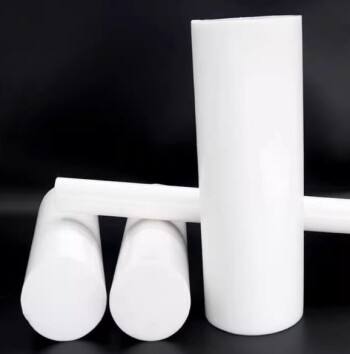
High-performance PTFE solid rods for chemical-resistant, low-friction components. Ideal for lab, medical & industrial applications. Custom machining available.

High Temperature PTFE Reaction Sieve with Customizable Layers and Precision Pore Sizes for Threaded Sample Separation Devices

High Temperature PTFE Reaction Sieve with Customizable Layers and Precision Pore Sizes for Threaded Sample Separation Devices

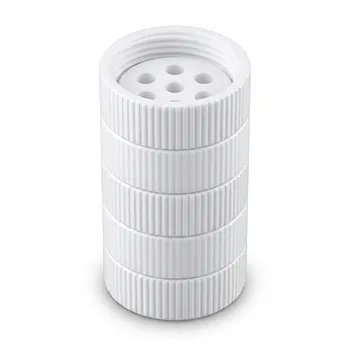
Engineered for extreme chemical environments, this customizable PTFE reaction sieve features adjustable layers and pore counts. Designed with secure threaded connections, it ensures reliable sample separation and high-temperature performance for demanding laboratory and industrial chemical reaction processes.

Custom Thickened PTFE Beaker High Temperature Hot Plate Heating Laboratory Fluoropolymer Vessel Chemical Resistant Digestion Beaker

Custom Thickened PTFE Beaker High Temperature Hot Plate Heating Laboratory Fluoropolymer Vessel Chemical Resistant Digestion Beaker

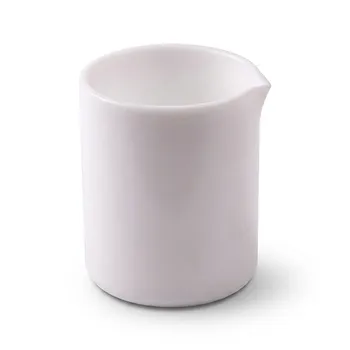
This precision-engineered custom PTFE beaker is designed for hot plate heating and extreme chemical resistance. These thickened fluoropolymer vessels offer superior thermal stability and deformation resistance, ensuring reliable performance in demanding laboratory environments. Contact us for bespoke high-purity solutions.

PTFE Ultrapure Liquid Sampler Corrosion Resistant Acid Sampling Tool for 200L Reactors Custom Fluoropolymer Sampling Device

PTFE Ultrapure Liquid Sampler Corrosion Resistant Acid Sampling Tool for 200L Reactors Custom Fluoropolymer Sampling Device

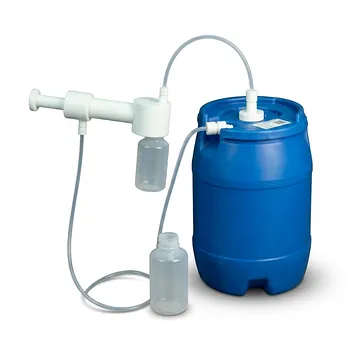
Engineered for high-purity laboratory environments, this PTFE ultrapure liquid sampler provides exceptional corrosion resistance for acid extraction in 200L reactors. Fully customizable dimensions ensure seamless integration with complex industrial setups while maintaining absolute material integrity and sample purity.

Custom PTFE Sleeves and Hollow Rods for Advanced Applications

Custom PTFE Sleeves and Hollow Rods for Advanced Applications

High-performance PTFE hollow rods & sleeves for chemical resistance, thermal stability, and low friction. Custom sizes available. Contact KINTEK today!

PTFE Anti Scald Heat Insulation Sleeve Hot Plate Support Feet Laboratory Benchtop Protection Customizable Thermal Barrier

PTFE Anti Scald Heat Insulation Sleeve Hot Plate Support Feet Laboratory Benchtop Protection Customizable Thermal Barrier

Protect laboratory benchtops with customizable PTFE anti-scald insulation sleeves and support feet. Engineered for high-temperature stability and chemical resistance, these bespoke components ensure safe thermal isolation for hot plates and sensitive equipment in modern high-performance research environments.

Customizable PTFE Heat Insulation Plate High Temperature Corrosion Resistant Laboratory Support Layered Multi Tier Stand

Customizable PTFE Heat Insulation Plate High Temperature Corrosion Resistant Laboratory Support Layered Multi Tier Stand

High-performance customizable PTFE heat insulation plates offer superior 250°C thermal stability and chemical resistance. Expertly engineered for laboratory environments, these bespoke layered supports ensure maximum durability and precision for demanding industrial fluid or chemical processing applications in modern facilities.

PTFE Condensation Reflux and Gas Collection Apparatus for Corrosive Biochemical Processing Customizable High Temperature System

PTFE Condensation Reflux and Gas Collection Apparatus for Corrosive Biochemical Processing Customizable High Temperature System

High-performance PTFE condensation reflux and gas collection apparatus designed for corrosive biochemical processing. This customizable system offers superior thermal stability and chemical inertness, ensuring reliable performance in demanding laboratory environments where standard materials fail.

Custom PTFE Insulating Gaskets and Corrosion Resistant Fluoropolymer Seals for Industrial Electrical Applications

Custom PTFE Insulating Gaskets and Corrosion Resistant Fluoropolymer Seals for Industrial Electrical Applications

Premium custom PTFE insulating gaskets offer exceptional corrosion resistance, superior dielectric strength, and wide temperature stability. Ideal for demanding industrial environments, these anti-aging fluoropolymer components ensure reliable electrical isolation and long-term sealing performance in extreme conditions for procurement.

Custom PTFE Parts Manufacturer for Teflon Parts and PTFE Tweezers

Custom PTFE Parts Manufacturer for Teflon Parts and PTFE Tweezers

KINTEK prioritizes precision production and offers custom fabrication from prototypes to high-volume orders.

Customizable PTFE Seals Filter Holders for Versatile Applications

Customizable PTFE Seals Filter Holders for Versatile Applications

Enhance filtration with KINTEK's PTFE-sealed filter holders for leak-proof, chemical-resistant performance in labs and industries. Explore now!


Leave Your Message