Difluorination can improve organic solar cell efficiency by tuning both electronic energy levels and polymer morphology. Adding fluorine atoms at the 5,6-positions of benzothiadiazole acceptor units lowers the polymer’s frontier orbital energies, increases backbone planarity, and encourages a favorable face-on orientation relative to the substrate. These changes can suppress bimolecular recombination and improve the key photovoltaic parameters: open-circuit voltage (Voc), short-circuit current density (Jsc), fill factor (FF), and overall power conversion efficiency (PCE).
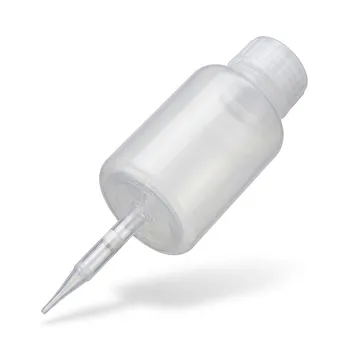
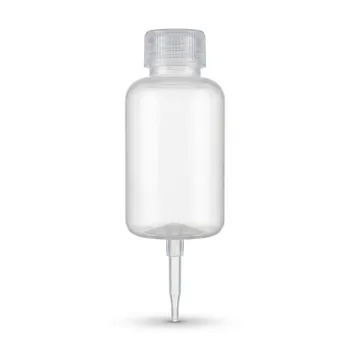
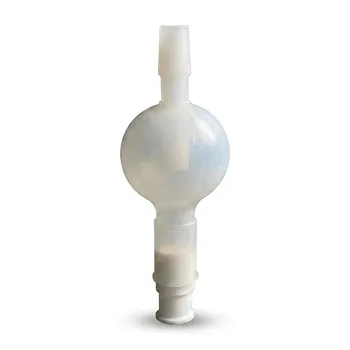
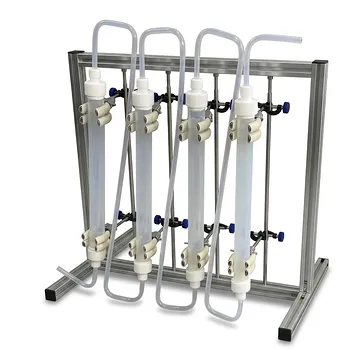
The efficiency gain comes from coordinated electronic and structural control. Difluorination helps the polymer absorb and transport charge more effectively, while high-purity PFA/PTFE processing equipment and filtration components protect that carefully engineered material from trace contamination and particulates.
Why Difluorination Improves Polymer Performance
Lowering Frontier Orbital Energy Levels
Fluorine is strongly electron-withdrawing. When introduced onto the benzothiadiazole acceptor unit, it can lower the energy of the polymer’s frontier orbitals, including the highest occupied molecular orbital and lowest unoccupied molecular orbital.
This energy-level adjustment can support more favorable charge-generation behavior and contribute to higher Voc, provided that the donor and acceptor materials remain energetically well matched.
Increasing Backbone Planarity
Difluorination can strengthen the structural preference for a flatter conjugated backbone. A more planar polymer typically supports greater conjugation along the chain and can improve electronic communication between neighboring repeat units.
Planarity alone does not guarantee higher efficiency, but it is valuable when it produces a morphology that supports charge transport without excessive aggregation or disorder.
Promoting Face-On Orientation
The polymer chains can adopt different orientations in the active layer. A face-on orientation places the conjugated backbone more favorably relative to the substrate for vertical charge transport toward the electrodes.
Difluorinated benzothiadiazole polymers have been reported to show a more favorable face-on orientation. This morphological change can improve the continuity of charge-transport pathways through the photovoltaic layer.
How These Changes Translate Into Efficiency
Reducing Bimolecular Recombination
After photoexcitation, electrons and holes must reach their respective electrodes before recombining. If charge carriers encounter one another too frequently, bimolecular recombination reduces the photocurrent and lowers device efficiency.
Improved planarity and face-on organization can make charge transport more efficient, reducing the time carriers spend in unfavorable or disconnected regions. The resulting reduction in bimolecular recombination can increase Jsc and FF.
Improving Multiple Device Parameters
The benefit of difluorination is not limited to one metric. Better energy-level alignment may improve Voc, while enhanced conjugation and morphology can support higher Jsc and FF.
The cited comparison illustrates this combined effect: PCE increased from 5.0% to 7.2%, accompanied by improvements in Voc, Jsc, and FF.
Treating the Polymer and Morphology as One System
The acceptor unit does more than determine the molecule’s energy levels. Its substitution also influences chain conformation, intermolecular packing, orientation, and the resulting bulk heterojunction morphology.
This is why difluorination should be viewed as a materials-design strategy rather than simply an attempt to shift an orbital energy.
Why PFA and PTFE Processing Tools Matter
Protecting Against Trace Metal Contamination
Organic semiconductor performance can be highly sensitive to impurities introduced during synthesis, purification, dissolution, or filtration. Trace metal ions may alter chemical reactions, affect charge transport, or create unwanted electronic trap states.
High-purity PFA and PTFE labware help reduce this risk because they are designed to minimize extractable and leachable contaminants compared with unsuitable conventional materials.
Preserving Chemical Integrity
Polymer purification and solution preparation often involve chemically aggressive solvents or processing conditions. PFA and PTFE offer strong chemical resistance across many such environments, helping containers, tubing, vessels, and filter components remain stable during use.
The relevant requirement is not merely that the equipment survive physically. It must also avoid releasing species that change the polymer solution or compromise reproducibility.
Supporting Reproducible Solution Preparation
Conjugated-polymer solutions must maintain controlled composition, concentration, and cleanliness before coating. A contaminated vessel or incompatible contact material can change the solution without producing an obvious visual warning.
Using high-purity contact materials reduces uncontrolled variables and makes differences in device performance more likely to reflect the intended polymer chemistry and processing conditions.
Why Trace Analysis and Filtration Are Both Required
Trace Analysis Verifies What Cannot Be Seen
Filtration removes particulate matter, but it does not by itself prove that the solution is free from dissolved metals or other ionic contaminants. Trace-analysis tools are therefore needed to identify contamination at levels that may be invisible and too low for routine visual inspection.
This provides a quality-control check on raw materials, purified polymers, solvents, containers, and processing stages.
Filtration Removes Particles and Aggregates
Even chemically pure polymer solutions can contain dust, undissolved material, aggregates, or gel-like particles. These species can produce coating defects, pinholes, roughness, and local variations in active-layer thickness.
Appropriate filtration components remove this physical contamination before deposition and help produce a more uniform photovoltaic film.
The Two Controls Address Different Failure Modes
Trace analysis addresses chemical contamination. Filtration addresses physical contamination and solution uniformity.
Using only one leaves a significant gap: a filtered solution may still contain dissolved metal ions, while a chemically clean solution may still contain particles that damage the coated layer.
Understanding the Trade-offs
Fluorination Is Not Automatically Beneficial
The effect of fluorination depends on the complete polymer structure, donor-acceptor balance, molecular weight, blend partner, solvent system, and processing conditions. Lowering orbital energies can be useful, but excessive energy-level shifts may create unfavorable offsets or reduce compatibility with another material.
Difluorination should therefore be evaluated through the full device architecture rather than by assuming that more fluorine always means better performance.
Better Packing Can Also Increase Aggregation
Greater planarity and stronger intermolecular interactions may improve charge transport, but they can also make the polymer less soluble or encourage excessive aggregation. Large aggregates can reduce blend uniformity and impair film formation.
The target is controlled ordering, not maximum crystallinity or maximum planarity in isolation.
Material Compatibility Still Requires Verification
PFA and PTFE are broadly resistant to many aggressive solvents, but compatibility depends on the specific solvent, concentration, temperature, pressure, exposure time, and component design. Filter membranes, seals, tubing, and support materials may not share the same resistance as the main vessel.
The complete fluid-contact path should be checked against the actual processing chemistry before use.
Purity Does Not Replace Process Control
High-purity labware and filtration components reduce contamination risk, but they cannot correct poor polymer purification, inappropriate filter selection, uncontrolled drying, or inconsistent coating conditions.
Reliable device performance requires contamination control to be integrated with chemical synthesis, solution preparation, and film processing.
How to Apply This to Your Project
Difluorination and contamination control should be treated as connected parts of an efficiency and reproducibility strategy.
- If your primary focus is maximizing PCE: Evaluate difluorination for its combined effects on frontier orbital levels, backbone planarity, face-on orientation, recombination, Voc, Jsc, and FF.
- If your primary focus is improving process reproducibility: Use high-purity PFA/PTFE contact materials, verify trace contamination analytically, and filter polymer solutions before coating.
- If your primary focus is protecting polymer quality: Confirm chemical compatibility for every wetted component and minimize opportunities for metal-ion leaching or particulate release.
- If your primary focus is diagnosing inconsistent device results: Separate chemical-contamination testing from particle-removal checks, because filtration and trace analysis measure different risks.
The most reliable efficiency gains come from pairing deliberate molecular design with disciplined control of polymer-processing purity and morphology.
Summary Table:
| Aspect | Key Points |
|---|---|
| Difluorination Effects | Lowers frontier orbital energy levels, increases backbone planarity, promotes face-on orientation. |
| Efficiency Gains | Reduces bimolecular recombination, improves Voc, Jsc, FF, and PCE (e.g., from 5.0% to 7.2%). |
| PFA/PTFE Tools | Minimize trace contamination, preserve chemical integrity, ensure reproducible solution preparation. |
| Trace Analysis | Detects invisible dissolved metals/ions, quality control. |
| Filtration | Removes particles/aggregates, prevents coating defects, improves film uniformity. |
| Trade-offs | Fluorination isn't always beneficial; packing can increase aggregation; material compatibility and process control are crucial. |
| Application | Tailor strategy: maximize PCE, improve reproducibility, protect quality, or diagnose issues by combining molecular design with purity discipline. |
Elevate your organic solar cell research with KINTEK's high-purity PFA/PTFE solutions. Our labware, filtration, and trace analysis tools are engineered to protect your materials from contamination, ensuring reproducible and efficient devices. Trust KINTEK for all your fluoropolymer processing needs—contact us today to optimize your workflow!
Related Products
- High Purity PFA Crucible and Corrosion Resistant PTFE Beaker for Trace Analysis and Custom Laboratory Applications
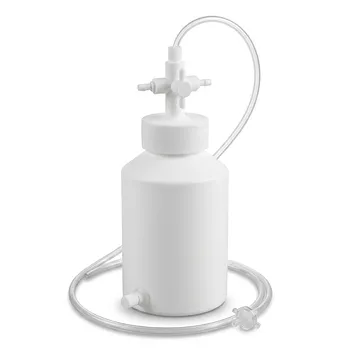
- PTFE PFA Vacuum Filtration System Corrosion Resistant Customizable Shatterproof Laboratory Device
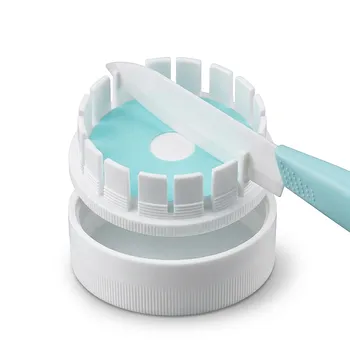
- High Purity PFA Filtration Bottle with Integrated Sieve Plate and Squeezable Body for Trace Analysis
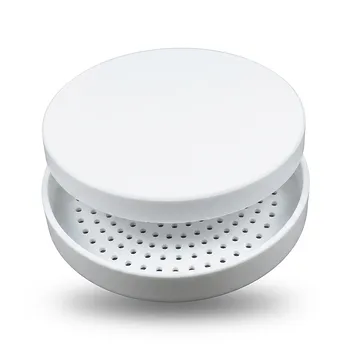
- High Purity PFA Filtration Reagent Bottle with Squeezable Body and Integrated Bottom Sieve Plate for Trace Analysis
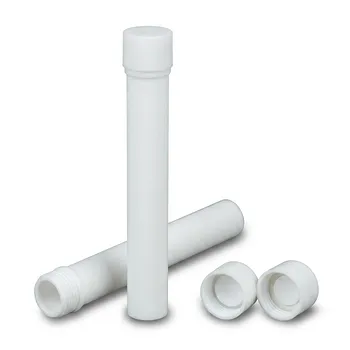
- High Purity PFA Chromatography Column with Collection Bottle Corrosion Resistant Fluoropolymer Filtration System for Trace Analysis
People Also Ask
- Why are high-purity vessels critical for BiFeO3 synthesis? Ensuring Phase Purity
- Why is the use of high-purity PFA or PTFE labware critical during TiO2 nanoparticle purification? Protect Sample Purity
- Why is high-purity PFA trace analysis labware used for MXene? Ensure Superior Material Integrity in Research
- Why is high-purity PFA labware necessary for Znx@LS-2 zeolite ICP-OES analysis? Ensure Trace-Level Precision
- What key material characteristics make PTFE and PFA suitable for high-purity laboratory labware, trace analysis containers, and medical microporous tubing? Discover the essential properties that ensure purity.