ePTFE is not simply “more porous PTFE”; it is a different structural form of the same fluoropolymer. Solid PTFE is a dense, nearly continuous material with very low friction, broad temperature resistance, and exceptional chemical inertness. Expanded PTFE is stretched while heated to create a three-dimensional network of solid nodes joined by fine fibrils, producing controlled microporosity, flexibility, air permeability, and improved resistance to deformation. These features make ePTFE particularly effective as a filtration membrane and as a conformable seal in micro-fluidic systems.
The key distinction is structure: solid PTFE provides a dense, chemically inert barrier, while ePTFE combines PTFE’s chemical and thermal stability with a porous node-and-fibril matrix. That matrix allows efficient gas or liquid filtration and enables seals that conform to delicate, irregular surfaces with less compression force.
How the Physical Structures Differ
Solid PTFE is dense and continuous
Solid PTFE consists of a substantially continuous fluoropolymer body with negligible internal porosity. Its dense structure provides excellent resistance to chemical attack, low friction, hydrophobicity, low flammability, and a wide operating-temperature range.
Its primary limitation in sealing is mechanical rather than chemical. Under sustained compression, solid PTFE can exhibit cold flow and creep, gradually moving away from the loaded region and reducing sealing stress.
ePTFE contains nodes, fibrils, and micro-voids
ePTFE is produced by controlled stretching of PTFE, typically after extrusion of fine PTFE powder. The stretching separates portions of the polymer into solid nodes interconnected by elongated micro-fibrils, leaving interconnected voids between them.
This structure gives ePTFE lower density, high porosity, air permeability, and greater flexibility than solid PTFE. The porosity and mechanical behavior can be tailored for different membrane and sealing requirements.
The same chemistry is retained
The expansion process does not remove PTFE’s fundamental chemical advantages. ePTFE remains highly resistant to aggressive acids, bases, and many organic solvents, while retaining hydrophobic behavior, low friction, broad thermal stability, and low flammability.
The major changes are therefore physical and mechanical, not a loss of PTFE’s chemical identity.
Why ePTFE Performs Better in Filtration
Microporosity creates selective flow paths
The interconnected micro-voids allow gases and, depending on construction and pressure conditions, liquids to pass through the membrane while retaining larger particles and contaminants. The result is a highly efficient barrier for micro-particulate filtration and controlled venting.
Filtration performance depends on pore structure, membrane thickness, surface treatment, pressure differential, and the properties of the fluid. “Microporous” does not mean that every ePTFE membrane has the same filtration rating.
It combines permeability with chemical resistance
Many filtration materials provide permeability but degrade in aggressive chemicals or at elevated temperatures. ePTFE combines its porous structure with PTFE’s strong chemical inertness and thermal stability.
This makes it useful for laboratory sample preparation, process filtration, gas venting, and fluid-handling systems exposed to demanding chemical environments.
Hydrophobicity supports gas venting
ePTFE is naturally hydrophobic, so it can permit air or other gases to pass while resisting liquid penetration under suitable pressure conditions. This is useful for breathable barriers, pressure equalization, and protected vents.
The liquid-blocking behavior is pressure-dependent. A sufficiently high liquid pressure, low surface tension, or surfactant contamination can force liquid through the pores.
Low mass and high flexibility simplify integration
Compared with a dense PTFE component, an ePTFE membrane can provide a lighter, more flexible filtration layer. It can also be laminated, supported, or formed into specialized components for laboratory and process equipment.
Its flexibility helps it tolerate handling and conform to supporting surfaces without requiring a thick rigid body.
Why ePTFE Benefits Micro-Fluidic Sealing
Conformability enables low-force sealing
The soft, fibrillated matrix compresses and conforms to surface irregularities more readily than dense PTFE. This is valuable in micro-fluidic devices, laboratory manifolds, glass-lined equipment, quartz components, and polymeric parts where surfaces may be delicate, slightly uneven, or easily damaged.
A conformable ePTFE seal can achieve effective contact without the high bolt loads that a stiff, dense gasket may require.
The structure helps preserve sealing stress
Solid PTFE can deform laterally and gradually extrude from a highly loaded joint. ePTFE’s interconnected fibrillar network provides greater resistance to this type of cold flow and can help maintain contact pressure over time.
This does not make ePTFE immune to compression set, creep, or installation-related deformation. Correct density, thickness, compression, backing support, and joint design remain essential.
It tolerates chemical and thermal exposure
Micro-fluidic systems may carry solvents, acids, bases, reagents, or heated fluids. ePTFE preserves the broad chemical compatibility and temperature capability associated with PTFE, making it suitable where elastomeric seals might swell, harden, or chemically degrade.
The actual service limit must still be established for the specific grade, pressure, temperature, and chemical combination.
It supports delicate or low-torque assemblies
Because ePTFE can conform under relatively low compression, it is useful where excessive clamping force could crack glass, distort polymer channels, or damage miniature flow paths. This is especially important in low-torque laboratory flange connections and compact micro-fluidic interfaces.
In dynamic applications, its flexibility and fatigue resistance can also be advantageous compared with a rigid, full-density PTFE component.
Understanding the Trade-offs
Porosity can allow unwanted permeation
The same pores that enable filtration and gas transmission can also permit vapor transport or liquid breakthrough under excessive pressure. ePTFE is therefore not automatically a universal liquid barrier or hermetic seal.
For a liquid-tight micro-fluidic seal, the design must prevent the operating pressure from driving fluid through the porous matrix. A dense backing layer, laminate, filled construction, or separate sealing geometry may be required.
Filtration performance is application-specific
Retention efficiency, pressure drop, flow rate, and service life depend on the membrane’s pore structure and the operating fluid. A highly porous membrane may provide high flow but lower particle retention or lower resistance to pressure-driven breakthrough.
Selection should be based on the required contaminant size, fluid compatibility, differential pressure, temperature, and allowable pressure drop—not on the material name alone.
ePTFE still requires mechanical support
The fibrillar structure improves flexibility and resistance to deformation, but unsupported ePTFE can be more compliant than solid PTFE. High-pressure filtration and sealing assemblies may need a support layer, compression stop, retaining screen, or properly designed groove.
Improper installation can damage the membrane, unevenly compress the seal, or create leakage paths.
Dimensional behavior is more complex
ePTFE can respond differently along and across the expansion direction. Its porosity, density, compression response, and thermal behavior may also vary with processing conditions.
For precision micro-fluidics, qualification should include actual measurements of leakage, compression, pressure cycling, chemical exposure, and temperature cycling.
Making the Right Choice for Your Goal
- If your primary focus is filtration: Choose an ePTFE membrane when you need efficient particulate retention, controlled gas permeability, hydrophobic venting, and strong chemical or thermal resistance; specify the pore rating and pressure limits for the actual fluid.
- If your primary focus is micro-fluidic sealing: Choose ePTFE when low compression force, surface conformability, chemical resistance, and improved resistance to cold flow are more important than a fully dense, intrinsically nonporous structure.
- If your primary focus is high-pressure liquid containment: Do not assume bare ePTFE is sufficient; use a supported or laminated construction and verify liquid breakthrough, compression stability, and leakage under operating conditions.
- If your primary focus is dimensional precision: Evaluate the specific ePTFE grade and processing direction, because porosity and fibril orientation can affect compression, strength, and long-term dimensional stability.
Choose solid PTFE for a dense, nonporous body; choose ePTFE when PTFE’s chemistry must be combined with permeability, flexibility, conformability, or improved load-bearing behavior.
Summary Table:
| Property | Solid PTFE | ePTFE |
|---|---|---|
| Structure | Dense, continuous, negligible porosity | Porous network of nodes and fibrils |
| Porosity | Very low | High and controllable |
| Flexibility | Stiff, less conformable | Flexible, conformable to surfaces |
| Cold flow/creep | Prone to cold flow | Better resistance to cold flow |
| Filtration | Not suitable (non-porous) | Excellent for filtration and venting |
| Sealing | Requires high compression, may extrude | Conforms under low force, good for delicate surfaces |
| Chemical resistance | Excellent | Excellent (same as PTFE) |
| Temperature range | Broad, -200°C to 260°C | Broad, similar to PTFE |
Looking for high-performance PTFE and ePTFE components for your lab? KINTEK offers expert manufacturing of custom fluoropolymer parts, from porous membranes to precision seals. Our advanced machining and expansion processes can tailor ePTFE to your exact filtration and micro-fluidic needs. Contact us today to optimize your application with our high-purity solutions!
Related Products
- Corrosion Resistant PTFE Evaporation Cell Electrophoresis Tank 400ml Flame Retardant Insulated Reaction Vessel Customizable
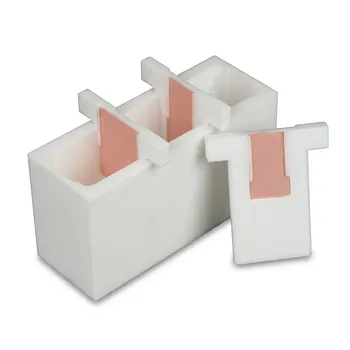
- White PTFE Electrolytic Cell with Movable Slider and Insulated Lid for Fluorine Corrosion Resistance
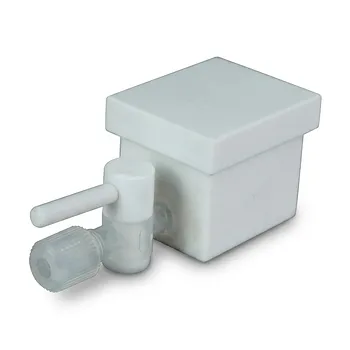
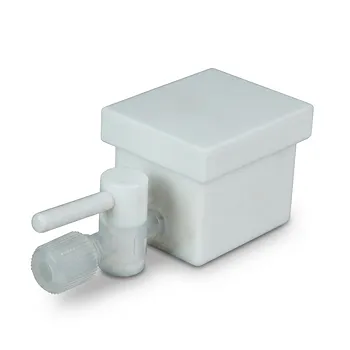
- Custom PTFE Corrosion Resistant Insulating Electrophoresis Reaction Cell with Septum and Valves for Low Background Trace Analysis
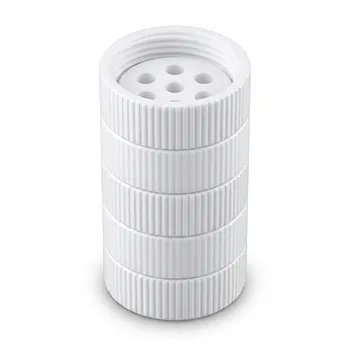
- High Temperature PTFE Reaction Sieve with Customizable Layers and Precision Pore Sizes for Threaded Sample Separation Devices
- Large Scale PTFE Beakers and Flasks for High Temperature Corrosion Resistant Laboratory Applications with Custom CNC Fabrication
People Also Ask
- How do perfluorinated solvent environments influence the selection of reaction vessels and fluid handling components in nonaqueous emulsion polymerizations? Choose fluoropolymer materials.
- What reaction vessel and fluid handling considerations are necessary for living cationic polymerization of fluorinated monomers involving Lewis acid catalysts? Key design and safety tips
- Why are high-purity PTFE or PFA reaction vessels recommended for the synthesis of PANI-TiC hybrid materials? - Guide
- Why are fluoroplastic (PTFE) reaction vessels recommended for Methylene Blue (MB) adsorption kinetic experiments?
- Ion Activation Reaction Vessel Requirements: Why PTFE is Critical for Membrane Performance