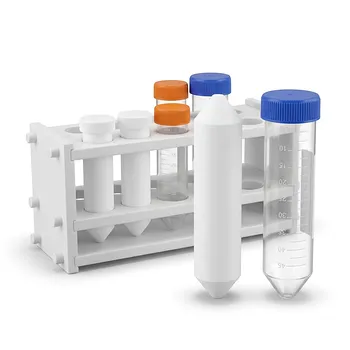
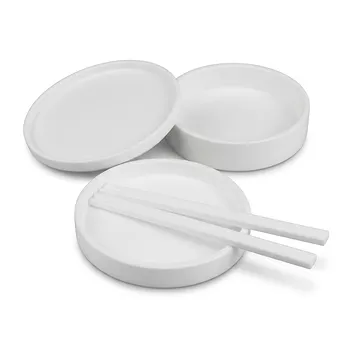
Fluoropolymers are ideal when water must be rejected rather than absorbed or allowed to pass through a porous structure. Their dense concentration of fluorinated groups, particularly –CF₂– and –CF₃, gives them exceptionally low surface energy. This produces high water contact angles, minimal droplet adhesion, and strong resistance to aqueous wetting—properties that are crucial in custom filtration media, membrane distillation, and liquid–liquid separation equipment.
The central advantage is controlled non-wetting: fluoropolymer surfaces resist water penetration while remaining chemically inert, thermally stable, and suitable for engineered porous structures.
Why Fluoropolymers Resist Water Wetting
Low surface energy limits water adhesion
Fluoropolymers have a high density of strong carbon–fluorine bonds. These fluorinated groups create a surface with very low surface energy, making it energetically unfavorable for water to spread across or adhere strongly to the material.
The practical result is a high water contact angle: water forms relatively discrete droplets instead of forming a continuous film.
Hydrophobicity protects porous structures
In a porous membrane or filter, unwanted water penetration can block pores, alter flow behavior, or allow liquid to bypass the intended separation pathway. A hydrophobic fluoropolymer surface helps keep aqueous phases from entering pores unless the applied pressure exceeds the material’s wetting resistance.
This is particularly important for membrane distillation, where vapor is intended to pass through the membrane while liquid water remains on the feed side.
Non-wetting reduces residual droplets
Water-repellent fluoropolymer surfaces reduce droplet adhesion and make drainage more complete. This helps limit liquid hold-up within filtration components, vessels, and custom separation apparatus.
For trace sample preparation, reduced retention can also support more complete recovery and lower the risk of cross-contamination between steps.
Why Hydrophobicity Matters in Separation Applications
It preserves phase selectivity
Separation systems depend on controlling which phase moves through, contacts, or remains outside the separation medium. A non-wetting membrane helps preserve that phase boundary.
In liquid–liquid extraction and water–oil separation, fluoropolymer components can support clean handling of immiscible phases while resisting chemical attack from the fluids being processed.
It helps prevent liquid bypass
Unintended wetting can create alternate flow paths around or through a membrane. This can reduce separation efficiency and compromise the reliability of the apparatus.
PTFE and PFA components are useful in these settings because their water repellency helps maintain the designed flow path and separation mechanism.
It supports sensitive laboratory workflows
Non-wetting labware and porous fluoropolymer components can reduce droplet adhesion, sample loss, and liquid retention. These benefits matter when working with limited-volume samples or trace analytes where even small recovery losses can affect results.
Why Chemical and Thermal Stability Also Matter
Chemical inertness protects the separation medium
Hydrophobicity alone is not sufficient for aggressive laboratory or chemical-processing environments. The material must also resist acids, oxidizing reagents, solvents, and other process chemicals.
Fluoropolymers provide broad chemical resistance, reducing the risk of membrane degradation, swelling, or contaminant leaching into high-purity samples.
Low absorption helps preserve sample integrity
Fluoropolymers generally exhibit low water and solvent absorption. This limits changes in material dimensions and reduces the possibility that the apparatus will retain or release components from previous process streams.
That characteristic is valuable in trace analysis, solvent handling, and repeated filtration operations.
Thermal stability supports demanding processes
Fluoropolymer components can maintain their structural and functional properties across broad temperature ranges. This supports applications involving heated feeds, thermal cycling, aggressive cleaning, or vapor-based separation processes.
The exact operating limit depends on the specific fluoropolymer, geometry, pressure, and exposure conditions.
How Fluoropolymers Can Be Engineered for Filtration
Porosity can be tailored to the process
Fluoropolymers can be processed into porous membranes, thin films, woven media, nonwoven fibers, and electrospun structures. These forms allow designers to balance pore size, porosity, mechanical strength, and fluid flux.
The material therefore supports more than simple water repellency; it can be incorporated into a separation architecture designed for a specific contaminant or phase.
Surface wettability can be customized
Fluoropolymer-based systems can be designed with different surface characteristics, ranging from hydrophobic and lipophilic to highly water-repellent. Surface modification can also improve adhesion to otherwise hydrophilic substrates.
Some engineered coatings can reach superhydrophobic behavior, including reported contact angles above 150 degrees. However, this performance depends on the coating chemistry, surface texture, processing method, and test conditions; it should not be assumed for every fluoropolymer product.
PTFE, PFA, and PVDF serve different design needs
PTFE and PFA are commonly selected where extreme chemical resistance and non-wetting behavior are priorities. PVDF can offer a useful combination of chemical resistance, mechanical strength, and processability into controlled porous structures.
The correct choice depends on the operating temperature, chemical exposure, pressure, required flexibility, pore structure, and fabrication method.
Understanding the Trade-offs
Hydrophobicity does not eliminate pressure-driven wetting
A hydrophobic membrane can still become wetted if liquid pressure exceeds its liquid-entry pressure or if surfactants and contaminants reduce the surface tension of the fluid. Wetting resistance must therefore be evaluated against the actual process conditions.
Contact-angle data is useful for comparing surfaces, but it does not by itself predict full membrane performance.
Surface condition affects real-world performance
Scratches, fouling, residues, aging, and manufacturing variation can alter wettability. A membrane that is initially strongly water-repellent may behave differently after repeated cleaning or exposure to complex mixtures.
Material selection should therefore include compatibility testing with the actual feed, cleaning agents, and operating cycle.
Chemical resistance is grade-specific
“Fluoropolymer” describes a broad material family rather than one uniform performance level. PTFE, PFA, FEP, PVDF, and fluoropolymer coatings differ in temperature capability, mechanical behavior, permeability, fabrication options, and solvent resistance.
Design decisions should be based on the specific grade and component construction, not the polymer family name alone.
Extremely low adhesion can complicate assembly
Non-stick surfaces can be difficult to bond, coat, or seal without specialized surface treatment or mechanical retention. This matters when a custom apparatus combines fluoropolymer media with metals, elastomers, or hydrophilic support layers.
The joining method must preserve both the seal and the intended separation surface.
Choosing Fluoropolymers for the Application
The best selection begins with the required wetting behavior, then verifies chemical, thermal, mechanical, and geometric requirements.
- If your primary focus is maximum water repellency: Use a fluoropolymer surface or engineered coating with verified contact-angle and liquid-entry-pressure performance under the actual process conditions.
- If your primary focus is membrane distillation or aqueous phase separation: Select a hydrophobic porous structure with controlled pore size, sufficient mechanical strength, and resistance to feed chemicals and operating temperature.
- If your primary focus is trace sample recovery: Prefer non-wetting PTFE, PFA, or compatible fluoropolymer labware that minimizes droplet adhesion, absorption, and carryover.
- If your primary focus is corrosive chemical filtration: Evaluate chemical compatibility, structural integrity, and leaching behavior alongside hydrophobicity rather than selecting solely by contact angle.
- If your primary focus is custom apparatus design: Treat pore architecture, seals, pressure limits, surface condition, and cleaning procedure as part of the material selection—not as separate afterthoughts.
Fluoropolymers provide a powerful combination of extreme non-wetting behavior, chemical inertness, thermal stability, and adaptable porous structures, enabling reliable separation when water penetration and contamination must be tightly controlled.
Summary Table:
| Property | Benefit for Filtration | Key Consideration |
|---|---|---|
| Low surface energy | High water contact angle; water beads off, resists wetting | Validate with actual liquid-entry pressure |
| Chemical inertness | Withstands aggressive solvents and acids | Grade-specific; confirm compatibility |
| Thermal stability | Functions across broad temperatures | Exact limits depend on material and design |
| Low absorption | Minimal sample loss; reduces carryover | Test with process fluids |
| Tailorable porosity | Pore size and structure can be optimized | Balance flux and mechanical strength |
| Non-stick nature | Easier cleaning; low droplet retention | May complicate bonding or sealing |
Ready to enhance your filtration or membrane separation with high-performance PTFE/PFA components? At KINTEK, we specialize in custom-engineered fluoropolymer labware, porous media, and complete apparatus. Our solutions provide extreme hydrophobicity, broad chemical resistance, and thermal stability—backed by end-to-end CNC machining for bespoke designs. Contact us today to discuss your application, or request a quote for custom filtration media or membrane systems.
Related Products
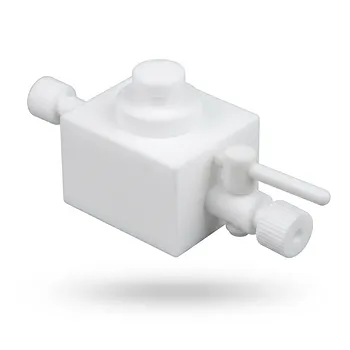
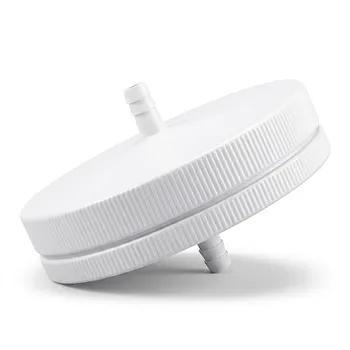
- Custom PTFE Filtration System Acid Resistant Chemical Semiconductor Fluoropolymer Filter Assembly
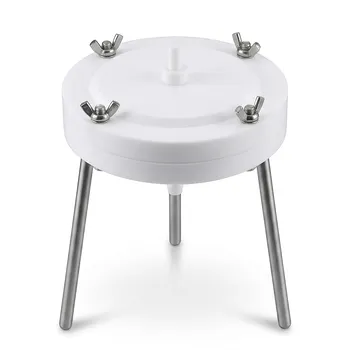
- PTFE PFA Vacuum Filtration System Corrosion Resistant Customizable Shatterproof Laboratory Device
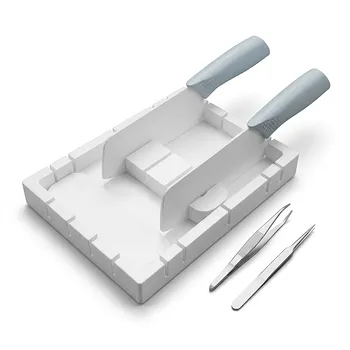
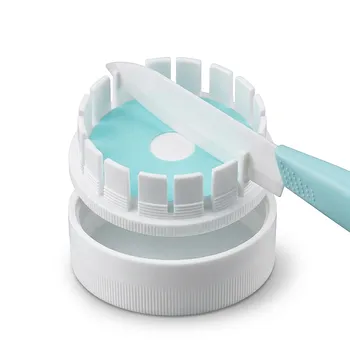
- High Purity PTFE Square Membrane Cutter and Filter Aliquot Device for Trace Analysis and Cleanroom Laboratory Applications
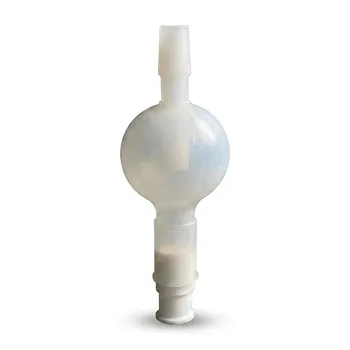
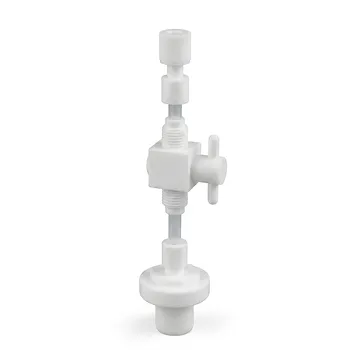
- High Purity PFA Chromatography Column with Collection Bottle Corrosion Resistant Fluoropolymer Filtration System for Trace Analysis
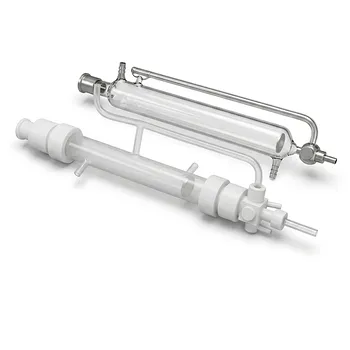
- High Purity PFA Chromatography Column Double Layer Constant Pressure Filter Column with Sieve Plate Acid Resistant Fluoropolymer Filtration System
People Also Ask
- What makes PTFE filtration systems advantageous for industrial and scientific use? Unmatched Chemical & Thermal Stability
- What steps are involved in selecting the proper PTFE filter? A 4-Step Guide to Optimal Filtration
- What sizes and pore options are available for PTFE filters? Choose the Right Filter for Your Application
- Which chemicals are fully compatible with PTFE filters? Discover Unmatched Chemical Resistance
- What temperature resistance do PTFE filters offer? Unmatched Thermal Stability from -200°C to +260°C