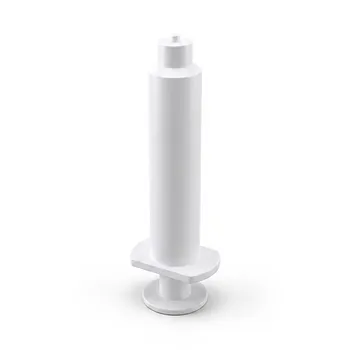
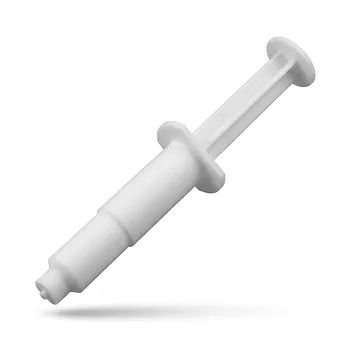
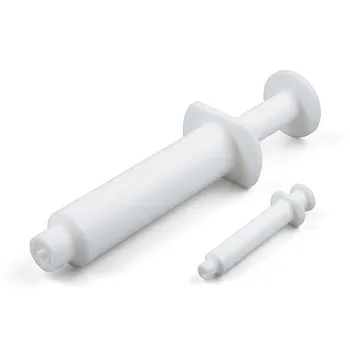
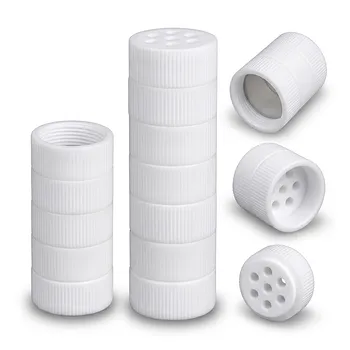
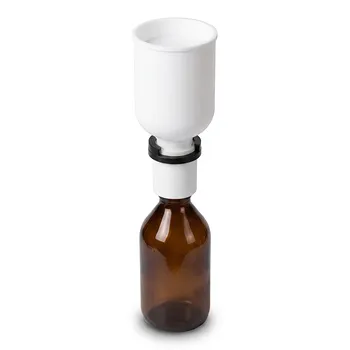
High-purity PTFE syringe filters are essential in cellulose photoreforming analysis because they remove abrasive solid photocatalysts and unreacted cellulose while ensuring no loss of delicate intermediate analytes. These filters provide a critical mechanical barrier that protects sensitive Ion Chromatography (IC) and HPLC columns from damage without introducing chemical contaminants or adsorbing the organic acids and sugars being measured.
Core Takeaway: PTFE filters act as a "neutral gatekeeper" that purifies liquid samples by removing micro-particulates while maintaining the exact chemical composition of the soluble intermediates through superior chemical inertness and low adsorption.
Protecting High-Precision Analytical Hardware
Removal of Photocatalyst and Cellulose Particles
Cellulose photoreforming involves suspended solid catalysts and unreacted cellulose fibers that can easily enter the sample stream. High-purity PTFE membranes effectively trap these micro-powders and suspended solids, preventing them from entering the analytical system.
Prevention of Column Clogging and System Failure
Modern chromatography columns utilize tightly packed beds that are easily obstructed by even microscopic debris. By removing particles as small as 0.20 µm to 0.45 µm, PTFE filters prevent column blockages, stabilize system pressure, and protect sensitive components like instrument tubing and mass spectrometry ion sources.
Ensuring High Signal-to-Noise Ratios
Particulate contamination in a sample creates "noise" and baseline fluctuations during analysis. Filtering with PTFE ensures a clean sample matrix, which leads to clearer peaks and more accurate quantification of trace intermediate products.
Preserving the Chemical Integrity of the Sample
Exceptional Chemical Inertness
PTFE is a high-performance fluoropolymer known for its extreme resistance to chemical attack. During the analysis of photoreforming products—which often include reactive organic acids—the filter material must not leach any impurities that could be mistaken for reaction intermediates.
Minimizing Analyte Loss Through Low Adsorption
A primary challenge in cellulose analysis is the loss of sugars and organic acids to the filter membrane itself. PTFE possesses low non-specific adsorption characteristics, ensuring that the concentration of target molecules in the filtrate accurately reflects the true concentration in the reaction vessel.
Versatility Across Aqueous and Organic Phases
Intermediate products of cellulose reforming can span a wide range of polarities. PTFE membranes, particularly hydrophilic-treated versions, offer the versatility to process these diverse liquid extracts without requiring different filter types for different solvents.
Understanding the Trade-offs
Pore Size vs. Backpressure
Selecting a smaller pore size (e.g., 0.22 μm) provides superior protection for UPLC systems but requires higher manual force or mechanical pumping to pass the sample through. Over-pressurizing a clogged filter can lead to "bursting," where the membrane fails and contaminants bypass the filter entirely.
Hydrophobic vs. Hydrophilic Variants
Standard PTFE is naturally hydrophobic and will resist aqueous samples unless pre-wetted with an organic solvent like methanol. For cellulose photoreforming, which is often conducted in water, specifically designated hydrophilic PTFE filters must be used to ensure high flow rates and ease of use.
Cost vs. Data Reliability
While PTFE filters are generally more expensive than nylon or cellulose acetate alternatives, using cheaper materials in photoreforming research often leads to inaccurate data. Inferior membranes may adsorb the very organic acids you are trying to measure, leading to significant underreporting of yield.
How to Apply This to Your Research
If you are analyzing soluble products from cellulose photoreforming, your choice of filtration should align with your specific analytical detection method.
- If your primary focus is Ion Chromatography (IC) or HPLC: Use 0.45 µm PTFE filters to provide a balance between high flow rates and sufficient protection for standard analytical columns.
- If your primary focus is Mass Spectrometry or UPLC: Use 0.20 µm or 0.22 µm PTFE filters to ensure the removal of the smallest colloidal particles that could foul sensitive ion sources or high-pressure capillaries.
- If your primary focus is Trace Recovery of Sugars/Acids: Always verify that your PTFE filter is "high-purity" or "HPLC-certified" to guarantee that the membrane will not retain your target molecules through non-specific binding.
The use of high-purity PTFE syringe filters is the standard for ensuring that the transition from a complex reaction slurry to a precise analytical result is both clean and chemically representative.
Summary Table:
| Key Feature | Benefit for Cellulose Photoreforming Analysis |
|---|---|
| High Particle Retention | Removes abrasive photocatalysts & fibers to prevent HPLC/IC column clogging. |
| Chemical Inertness | Prevents leaching of impurities, ensuring high signal-to-noise ratios and clean peaks. |
| Low Non-specific Adsorption | Minimizes loss of sugars and organic acids for accurate concentration measurement. |
| Wide Compatibility | Versatile for aqueous and organic phases (with hydrophilic/hydrophobic options). |
| Precision Pore Sizes | 0.22µm for UPLC/Mass Spec or 0.45µm for standard HPLC system protection. |
Elevate Your Analytical Precision with KINTEK’s Fluoropolymer Expertise
In the demanding field of cellulose photoreforming, sample purity is paramount. KINTEK specializes in high-performance PTFE and PFA laboratory supplies designed to safeguard your research data and analytical hardware.
From everyday basic labware (beakers, measuring cylinders, crucibles, dishes, reagent/wash bottles, centrifuge and digestion tubes) and high-purity trace analysis instruments to comprehensive fluid transfer components (tubing, fittings, valves), sample prep and filtration tools (separatory funnels, burettes, filters, pipettes, tweezers, spatulas), and general consumables (stirring bars, O-rings, gaskets, seal tapes, caps, septa), we have you covered.
Our expertise extends to advanced derivative and reaction apparatus like standard or custom electrochemical cells, battery testing fixtures, electrode accessories, hydrothermal synthesis liners, microwave digestion vessels, microchannel reactors, and condensation/reflux devices. Backed by end-to-end custom CNC fabrication, KINTEK is equipped to deliver everything from complex non-standard machined parts to high-volume orders, maintaining an absolute focus on high-performance fluoropolymers.
Don't let contamination compromise your results.
Contact KINTEK today for a consultation or quote and ensure your lab is equipped with the ultimate in chemical resistance and precision.
References
- Sergio Belda-Marco, María Carmen Román‐Martínez. Optimization of Active Sites in TiO <sub>2</sub> –Cu Photocatalysts for H <sub>2</sub> Generation via Cellulose Photo‐Reforming. DOI: 10.1002/cctc.202500250
This article is also based on technical information from Kintek Knowledge Base .
Related Products
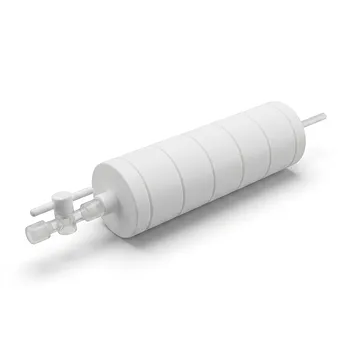
- Custom PTFE Filtration System Acid Resistant High Purity Semiconductor Grade Chemical Processing Filter
- High Purity PTFE Filter with PFA Valve Connections and Integrated Sieve Plate for Corrosive Fluid Processing
- Custom PTFE Vacuum Filter with Integrated Sieve Plate and Corrosion Resistant Particle Free Design for High Purity Water Quality Analysis
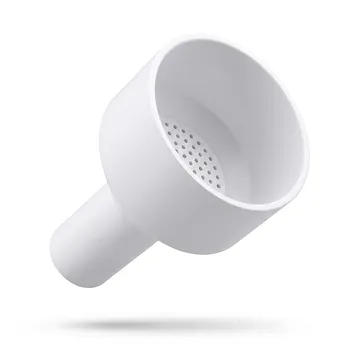
- High Purity PTFE Buchner Funnel Vacuum Filtration System Corrosion Resistant Low Trace Laboratory Suction Filter Apparatus
- PTFE Corrosion Resistant Filter with PFA Valve Connections and Integrated Sieve Plate
People Also Ask
- What makes PTFE filtration systems advantageous for industrial and scientific use? Unmatched Chemical & Thermal Stability
- What sizes and pore options are available for PTFE filters? Choose the Right Filter for Your Application
- What steps are involved in selecting the proper PTFE filter? A 4-Step Guide to Optimal Filtration
- What temperature resistance do PTFE filters offer? Unmatched Thermal Stability from -200°C to +260°C
- How does the hydrophobicity of PTFE filters benefit their use? Ensure Uninterrupted Gas Flow and Solvent Filtration