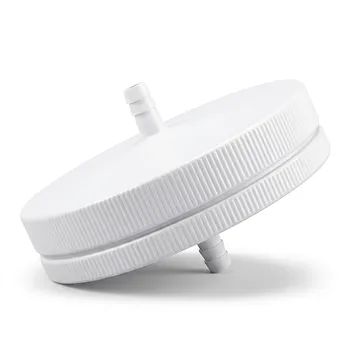
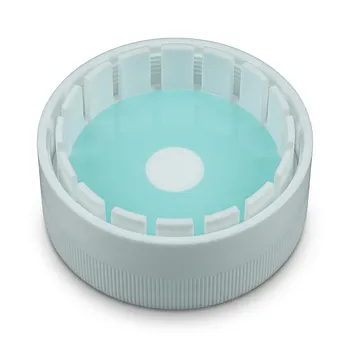
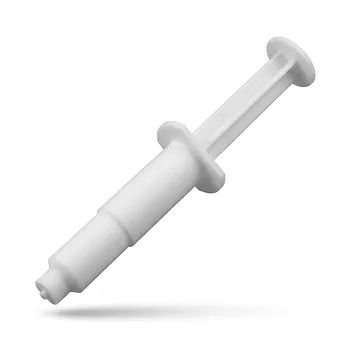
Filtration is a mandatory prerequisite for accurate wastewater analysis. Using a 0.45 micron PTFE syringe filter ensures that only dissolved lead ions are measured by removing suspended micro-particles that would otherwise clog precision instruments like an Atomic Absorption Spectrometer (AAS). This step is vital to prevent hardware damage and eliminate analytical interference that leads to overestimating lead concentrations.
The Core Takeaway: A 0.45 micron PTFE filter serves as a physical and chemical safeguard that removes solid interferences without adsorbing lead ions, thereby ensuring the data reflects the true "dissolved" concentration while protecting the analytical instrument's internal components.
Protecting High-Precision Analytical Hardware
Preventing Nebulizer and Capillary Clogging
Precision instruments like AAS and ICP-MS rely on a nebulizer to convert liquid samples into a fine aerosol. Even microscopic suspended solids, such as hydroxyapatite or undissolved silicates, can accumulate in the narrow capillaries or the nebulizer tip. This causes blockages that disrupt the flow rate, leading to unstable readings and expensive instrument downtime for maintenance.
Preserving the Sampling Interface
In more sensitive systems like ICP-MS, particles can damage the sampling cone and internal pump tubing. Consistent filtration ensures that no solid matter reaches these components, which are highly susceptible to physical wear. By removing these micro-solids, you maintain a steady "sample introduction" environment, which is essential for reproducible results.
Ensuring Sample Integrity and Data Accuracy
Distinguishing Dissolved from Total Lead
Lead in wastewater can exist in two forms: dissolved ions and ions bound to suspended solids. If these solids are not filtered out, the high temperatures of the instrument (flame or plasma) may vaporize them, causing a false spike in the "residual concentration." The 0.45 micron threshold is the industry standard for defining the "dissolved" fraction of a liquid sample.
Minimal Analyte Loss Through PTFE
PTFE (Polytetrafluoroethylene) is chosen specifically because it has extremely low adsorption of trace metal ions. Unlike other materials that might "trap" lead ions on the membrane surface, PTFE ensures that the lead concentration remains unaltered as it passes through the filter. This chemical inertness is critical when measuring trace amounts of lead where even a tiny loss of ions could compromise the data.
Resistance to Acidic Matrices
Lead samples are often preserved or digested in strong acidic matrices (like nitric acid) to keep the ions in solution. PTFE is highly resistant to chemical degradation and will not leach metallic impurities into the sample when exposed to these acids. This prevents "background noise" or contamination that could lead to inaccurate, inflated lead measurements.
Understanding the Trade-offs
The Risk of Membrane Saturation
If the wastewater sample has a high concentration of suspended solids, a single 0.45 micron filter may clog rapidly. Forcing the sample through a saturated filter can cause the syringe to leak or the filter housing to burst. In these cases, a pre-filtration step with a larger pore size (such as 1.0 micron) is often necessary to protect the final 0.45 micron membrane.
Potential for Pressure-Induced Errors
Applying excessive manual pressure during filtration can occasionally force smaller particles through the membrane or cause "channeling." This compromises the 0.45 micron cutoff and allows interferences to enter the instrument. Users must apply a slow, steady pressure to ensure the filtration remains effective and the membrane's integrity is maintained.
How to Apply This to Your Analysis
Making the Right Choice for Your Goal
- If your primary focus is instrument longevity: Ensure every sample passes through a 0.45 micron filter to prevent nebulizer blockages and reduce wear on pump seals.
- If your primary focus is regulatory compliance: Use PTFE membranes specifically to ensure you are accurately reporting the "dissolved lead" fraction without adding or removing ions.
- If your primary focus is high-throughput analysis: Consider a pre-filter or a multi-layer syringe filter for highly turbid wastewater to prevent frequent filter changes.
By strictly adhering to this filtration protocol, you guarantee that your lead analysis is both technically sound and protective of your laboratory’s most valuable assets.
Summary Table:
| Feature | Benefit for Lead Ion Analysis |
|---|---|
| 0.45μm Pore Size | Removes suspended solids to define the "dissolved" lead fraction. |
| Hardware Protection | Prevents nebulizer clogging and capillary blockages in AAS/ICP-MS. |
| PTFE Membrane | Ensures extremely low adsorption of lead ions for sample integrity. |
| Chemical Resistance | Withstands strong acidic matrices (HNO3) without leaching impurities. |
| Analytical Accuracy | Eliminates false spikes caused by the vaporization of solid particles. |
Elevate Your Analytical Precision with KINTEK Fluoropolymers
Ensure the highest accuracy in your trace metal analysis with premium PTFE and PFA solutions from KINTEK. Whether you are performing routine wastewater monitoring or complex trace element research, our high-purity labware is designed to eliminate contamination and protect your sensitive instrumentation.
From everyday basic labware (beakers, measuring cylinders, crucibles, reagent bottles) and high-purity trace analysis tools to comprehensive fluid transfer components (tubing, fittings, valves) and sample prep tools (filters, pipettes, spatulas), KINTEK manufactures virtually all imaginable laboratory supplies crafted from high-performance PTFE and PFA. For specialized requirements, our advanced derivative apparatus—including custom electrochemical cells, microwave digestion vessels, and microchannel reactors—are backed by end-to-end custom CNC fabrication.
Ready to optimize your lab's workflow with bespoke fluoropolymer solutions? Contact us today to discuss your high-volume orders or custom machined parts with our technical experts.
References
- Wipada Chaiyachet, Ekkachai Kanchanatip. Microwave-assisted hydrothermal synthesis of hydroxyapatite from fermented fish by-product for removal of lead from contaminated water. DOI: 10.1186/s43088-025-00704-z
This article is also based on technical information from Kintek Knowledge Base .
Related Products
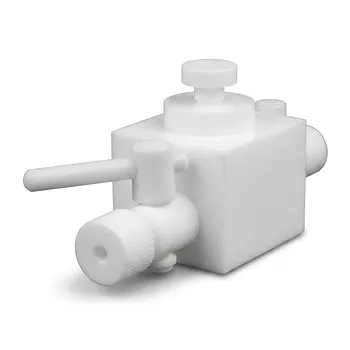
- Custom PTFE Filtration System Acid Resistant High Purity Semiconductor Grade Chemical Processing Filter
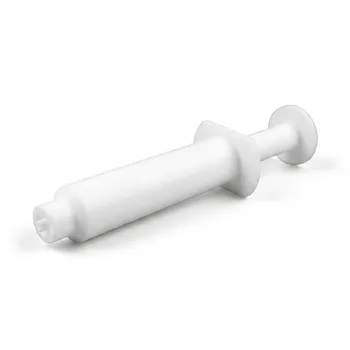
- High Purity 25ml PTFE Syringe for Trace Analysis and Automated Syringe Pump Systems
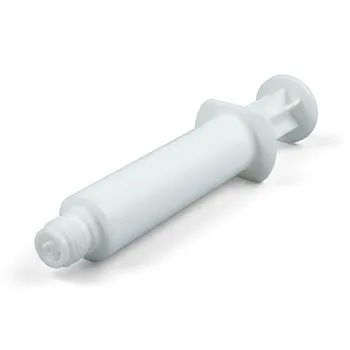
- Virgin PTFE Laboratory Syringe 50ml for Corrosive Chemical Handling and Automated Syringe Pump Systems with FEP Tube Compatibility
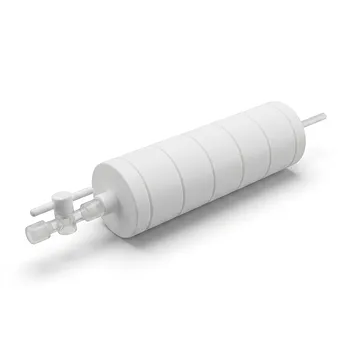
- PTFE Corrosion Resistant Filter with PFA Valve Connections and Integrated Sieve Plate
- PTFE PFA Vacuum Filtration System Corrosion Resistant Customizable Shatterproof Laboratory Device
People Also Ask
- What makes PTFE filtration systems advantageous for industrial and scientific use? Unmatched Chemical & Thermal Stability
- What steps are involved in selecting the proper PTFE filter? A 4-Step Guide to Optimal Filtration
- What sizes and pore options are available for PTFE filters? Choose the Right Filter for Your Application
- What temperature resistance do PTFE filters offer? Unmatched Thermal Stability from -200°C to +260°C
- How does the hydrophobicity of PTFE filters benefit their use? Ensure Uninterrupted Gas Flow and Solvent Filtration