ePTFE submicron membranes are effective because they combine controlled microporosity with PTFE’s inherent hydrophobicity, chemical inertness, and thermal stability. Their node-and-fibril structure creates fine, consistent pores that permit rapid gas transfer and deaeration while retaining particles and blocking liquid passage under appropriate operating conditions. The result is a thin, durable, low-contamination membrane for fluid-transfer assemblies, laboratory filtration, and venting components.
The central advantage of ePTFE is its combination of selective permeability and material durability: gases can pass through its microporous structure, while liquids, particles, and chemical contaminants are effectively contained or retained.
How the ePTFE Structure Enables Performance
Controlled submicron pores
Expanded PTFE consists of microscopic solid nodes connected by thin fluoropolymer fibrils. The spacing and geometry of this network determine the membrane’s pore-size distribution, permeability, and particle-retention behavior.
Submicron pores allow ePTFE to function as a fine filtration and clarification medium while still providing useful gas flow. The structure can also be manufactured in ultra-thin configurations, including membranes below 10 µm.
High porosity with structural strength
The node-and-fibril architecture creates a large connected pore volume without eliminating mechanical integrity. This supports high gas permeability and practical flow rates in compact components.
The porous matrix also remains flexible and conformable, helping membranes seal or integrate into tubing, gaskets, vent assemblies, filter holders, and other fluid-handling components.
Selective gas and liquid behavior
ePTFE’s low surface energy and hydrophobic nature make it naturally resistant to wetting by water-based fluids. This enables gas exchange or venting while helping prevent liquid leakage through the membrane.
In deaeration systems, the membrane provides a controlled path for trapped air and dissolved or volatile gases to escape without exposing the fluid directly to the surrounding environment.
Why ePTFE Works for Fluid Transfer and Deaeration
Efficient gas permeability
The interconnected pores provide a low-resistance route for air and other gases. This is valuable for gas dissolution, pressure equalization, sterile venting, and removal of entrained gas from fluid-transfer lines.
Specialized ePTFE tubing and thin membranes can therefore support gas-liquid contact or gas removal without requiring large, bulky assemblies.
Protection from liquid ingress
The hydrophobic membrane acts as a barrier against liquid passage under the component’s specified pressure and operating conditions. This is useful in vents for pumps, reservoirs, sensors, reactors, and analytical equipment.
The same barrier helps protect sensitive instrumentation from moisture, fluid splash, and external contamination.
Reduced contamination risk
PTFE is highly chemically inert and does not readily degrade, swell, or leach into process fluids. That makes ePTFE appropriate for sensitive sample preparation and laboratory fluid-transfer applications involving aggressive solvents, acids, reagents, or high-temperature fluids.
For demanding processes, this chemical stability is as important as the pore size because the membrane must retain its filtration and barrier properties after repeated chemical exposure.
Why ePTFE Supports Laboratory Filtration
High particle-retention efficiency
Submicron pores provide controlled removal of fine particles and other particulate contaminants. This supports liquid clarification, microfiltration, sterile filtration, and protection of analytical equipment.
Retention performance depends on the selected pore structure and component design, so the membrane must be matched to the target particle size, fluid, pressure, and flow requirement.
Stable performance across harsh conditions
The fluorinated PTFE backbone provides broad chemical resistance and high thermal stability. ePTFE can therefore be used where conventional polymeric membranes might soften, swell, or degrade.
This stability is valuable in laboratory assemblies exposed to strong reagents, aggressive solvents, repeated cleaning, or elevated temperatures.
Low fluid interaction
ePTFE has very low water absorption and low surface energy. These characteristics help limit fluid uptake and reduce the likelihood that the membrane will significantly alter the composition of a sensitive sample.
Its chemical inertness and biocompatibility also support use in laboratory, food-contact, and other contamination-sensitive environments when the complete component is appropriately qualified.
Mechanical Properties That Improve Component Reliability
Flexibility and conformability
ePTFE is soft and conformable, allowing it to adapt to contact surfaces and changing loads. This helps in sealing applications such as gaskets, packaging fibers, and membrane interfaces.
Conformability can improve containment and reduce leakage when assemblies experience dimensional variation or compression.
Flex-fatigue resistance
Expanded PTFE’s structure provides strong resistance to repeated flexing. This benefits flexible tubing, diaphragms, and components used with peristaltic pumps or other cyclic equipment.
The ability to tolerate continuous mechanical movement helps extend service life without sacrificing chemical resistance.
Recovery and dimensional stability
ePTFE exhibits useful recovery properties and low cold-flow tendency compared with materials that permanently deform more readily under load. These characteristics support more reliable sealing and performance during pressure or load changes.
However, mechanical performance still depends on membrane thickness, reinforcement, compression, temperature, and the design of the finished component.
Understanding the Trade-offs
Hydrophobicity can complicate aqueous liquid filtration
The same hydrophobicity that helps ePTFE block liquid passage can make direct filtration of aqueous liquids more demanding. The membrane and operating method must be selected so the intended fluid can pass at the required pressure and flow rate.
A membrane effective for sterile gas venting is not automatically optimized for liquid filtration or deaeration.
Permeability and retention must be balanced
Smaller pores generally improve fine-particle retention but can reduce gas or liquid throughput. Larger or more open structures may provide higher flow but lower retention.
The correct design balances pore size, porosity, thickness, pressure drop, flow rate, and required contaminant control rather than maximizing any single property.
Pressure and wetting limits matter
Liquid blocking is not absolute under every pressure condition. Excessive differential pressure, unsuitable fluid characteristics, or membrane wetting can change the membrane’s behavior.
Component qualification should therefore include the actual fluid, pressure, temperature, chemical exposure, and expected service life.
Thin membranes require appropriate support
Ultra-thin ePTFE membranes offer low resistance and compact designs, but they may require careful handling or structural support. The finished assembly must protect the membrane from puncture, abrasion, excessive compression, and incompatible mechanical loads.
Making the Right Choice for Your Goal
Select the membrane based on the required combination of gas flow, liquid blocking, particle retention, chemical exposure, and mechanical durability.
- If your primary focus is gas deaeration or sterile venting: Choose a hydrophobic, high-gas-permeability ePTFE structure that permits pressure equalization and gas escape while resisting liquid ingress and particulate contamination.
- If your primary focus is laboratory liquid filtration: Match the submicron pore structure and membrane configuration to the required particle-retention level, fluid properties, flow rate, and pressure conditions.
- If your primary focus is aggressive chemical handling: Use ePTFE for its chemical inertness, thermal stability, low absorption, and resistance to swelling, degradation, and leaching.
- If your primary focus is long-term component reliability: Favor designs that exploit ePTFE’s flexibility, conformability, flex-fatigue resistance, recovery, and dimensional stability while providing suitable membrane support.
The most effective ePTFE component is one whose pore structure, hydrophobic barrier behavior, chemical resistance, and mechanical design are matched to the actual fluid-handling task.
Summary Table:
| Property | Benefit |
|---|---|
| Controlled submicron pores | Fine particle retention and clarification |
| High porosity | High gas permeability and flow rates |
| Hydrophobicity | Blocks liquid, allows gas venting |
| Chemical inertness | Resists aggressive solvents and acids |
| Thermal stability | Withstands high temperatures |
| Flexibility & conformability | Seals well, reduces leakage |
| Flex-fatigue resistance | Durable in cyclic applications |
Optimize your lab's fluid transfer and filtration with KINTEK's high-performance PTFE and PFA components. Our ePTFE membranes deliver superior chemical resistance, precise submicron filtration, and reliable deaeration. Contact us today to find the perfect solution for your application. Get in touch now!
Related Products
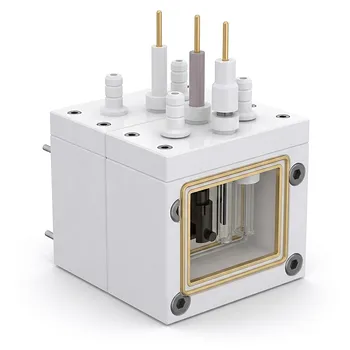
- All PTFE Exchangeable Membrane Electrochemical Cell Dual Chamber Three Electrode Photoelectrochemical Cell for Laboratory Trace Analysis
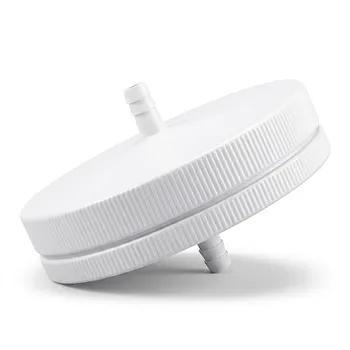
- PTFE Membrane Filter Holder for Aerosol Environmental Monitoring and Low Concentration Particulate Matter Sampling Chemical Resistant Air Quality Analysis Component
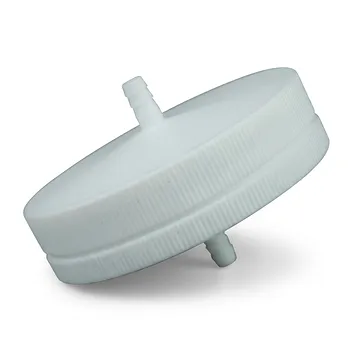
- PTFE Filter Membrane Holder for Hydrogen Chloride and Water Filtration 90mm Environmental Sampling Clamp Customizable
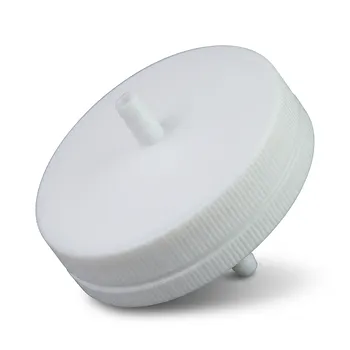
- PTFE Filter Membrane Holder 47mm Leak Proof Corrosion Resistant Environmental Sampling Unit Customizable
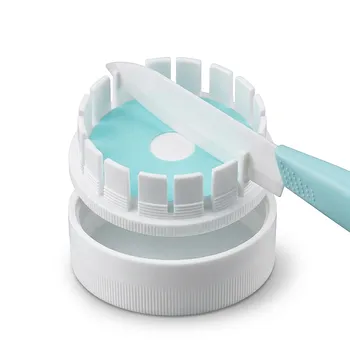
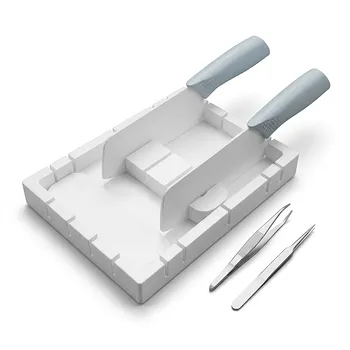
- High Purity PTFE Filter Membrane Cutter with Ceramic Blade for PM2.5 Analysis and Customizable Laboratory Filter Paper Splitter
People Also Ask
- What makes PTFE an ideal construction material for custom electrochemical cells and electronic analytical instrumentation housings? Discover superior chemical resistance and electrical insulation
- What parameters govern the electrochemical decomposition of perfluorooctanoic acid (PFOA) in aqueous solutions, and why are custom PTFE electrochemical cells preferred? Key factors include anode material, current density, electrolyte, and cell design.
- Why are high-performance fluoropolymers like PTFE and PFA preferred for electrochemical cells and sensitive analytical instrumentation? Achieve Reliable, Contamination-Free Measurements
- What material and design considerations are critical for electrofluorination and aggressive fluorinated intermediates? Key factors for safe PTFE/PFA systems
- How is cyclic voltammetry performed on fluoropolymer-modified electrodes within electrochemical cells, and what factors affect energy bandgap calculations?