Perfluorinated monomers make polymer surfaces liquid-repellent by presenting a dense, fluorine-rich outer layer with exceptionally low surface energy. The resulting C–F-rich surface weakens intermolecular attraction to water and many contaminants, increasing contact angles and reducing adhesion. However, low surface energy alone does not guarantee superoleophobicity: repelling low-surface-tension oils and solvents usually also requires micro- or nanoscale roughness, re-entrant textures, or other surface structuring.
Core takeaway: Fluorinated chemistry reduces the surface’s affinity for liquids, while engineered roughness can amplify that effect by trapping air beneath droplets. In PTFE and PFA laboratory equipment, this low-energy, chemically inert interface minimizes wetting, sample retention, cross-contamination, and difficult cleanup.
How Perfluorinated Monomers Change Surface Wetting
Fluorinated chains concentrate at the interface
Perfluorinated monomers contain densely fluorinated segments that can become concentrated at the polymer–air interface during polymerization, curing, or blending. This surface segregation places fluorine-rich groups exactly where liquid contact occurs.
The result is a surface dominated by strong C–F bonds and a highly shielded, weakly polarizable outer layer. That layer has unusually low solid surface energy, commonly described by a surface tension in the approximate range of 10–25 mN/m for highly fluorinated materials.
Low surface energy reduces liquid adhesion
Surface energy reflects the energetic preference of a solid surface to interact with another phase. Because fluorinated surfaces have relatively weak intermolecular attractions, liquids are less likely to spread across them or form strong adhesive interactions.
Water therefore tends to form compact droplets rather than films. This produces hydrophobic behavior and high water contact angles, often above 115° for appropriately fluorinated and structured surfaces.
Contact angle indicates repellency, not the whole story
A high static contact angle shows that a droplet does not spread readily, but it does not fully describe practical repellency. Contact-angle hysteresis and sliding or roll-off angle indicate how strongly the droplet remains pinned.
A surface with a contact angle near 150° but high hysteresis may still hold droplets in place. A low sliding angle—such as approximately 7° in a suitably engineered system—indicates that droplets can move or roll off with little applied force.
Why Fluorinated Surfaces Can Repel Water and Oils
Water is relatively easy to repel
Water has comparatively high surface tension, so a low-energy fluoropolymer surface can cause it to dewet and form a large contact angle. Smooth fluoropolymer surfaces are therefore intrinsically hydrophobic, although their water contact angle is generally limited to roughly 130° without additional texturing.
The term superhydrophobic is typically reserved for surfaces with water contact angles above approximately 150°, combined with low contact-angle hysteresis. Achieving that state requires both suitable fluorinated chemistry and an appropriate surface structure.
Oils and solvents are more difficult to repel
Many oils, alcohols, and organic solvents have much lower liquid surface tension than water. They can therefore wet a smooth fluoropolymer surface even when water beads up effectively.
This is why low surface energy is necessary but not always sufficient for superoleophobicity. A fluorinated surface must have an even lower effective affinity for the liquid, or it must use texture to prevent the liquid from penetrating and spreading across the surface.
Roughness creates a composite solid–air interface
Micro- and nanoscale roughness can support droplets on a combination of solid peaks and trapped air pockets. This is commonly described as a Cassie–Baxter wetting state.
Re-entrant geometries are particularly useful for resisting the tendency of low-surface-tension liquids to penetrate surface features. When the fluorinated chemistry and hierarchical texture work together, water or oil droplets can achieve contact angles above 150°, low hysteresis, and low roll-off angles.
Why Low Surface Energy Matters in Laboratory Equipment
It minimizes sample hold-up
In a vessel, tube, valve, or fitting, liquid that spreads across the wall can remain as a thin film or isolated droplets after draining. Low-energy PTFE and PFA surfaces reduce this wetting and promote more complete liquid discharge.
That matters directly in trace analysis, where a small retained volume can alter recovery, concentration, or measured composition.
It reduces cross-contamination
Residual analyte or reagent can contaminate the next sample if it adsorbs to a component and is later released. Non-wetting surfaces reduce the area and strength of liquid attachment, lowering the risk of carryover.
This is especially valuable in tubing, liquid-transfer components, separation funnels, wash bottles, and vessel linings that handle multiple chemical streams.
It improves cleanability and recovery
A droplet that rolls or drains away is easier to remove than a continuous film bonded to the wall. PTFE and PFA equipment therefore supports more effective rinsing and higher sample recovery.
Ultra-smooth surfaces are particularly useful when handling low-surface-energy polymer solutions or dense fluorinated solvent phases that might otherwise cling to conventional glass or polymer containers.
It complements chemical resistance
Low surface energy addresses wetting and adhesion, while fluoropolymer chemistry also provides broad resistance to aqueous reagents and many organic solvents. Together, these properties make PTFE and PFA suitable for aggressive chemical handling and high-purity laboratory workflows.
Chemical resistance should still be evaluated for the specific solvent, temperature, pressure, and exposure time. Non-wetting behavior does not mean that every fluoropolymer is immune to every chemical or processing condition.
Understanding the Trade-offs
Smooth fluoropolymer is not automatically superoleophobic
A smooth PTFE or PFA surface may repel water effectively but still be wetted by low-surface-tension solvents. Therefore, “fluoropolymer,” “hydrophobic,” and “superoleophobic” are not interchangeable descriptions.
For ordinary labware, excellent non-stick performance and chemical compatibility may be sufficient. For extreme oil or solvent repellency, engineered texture is usually required.
Static contact angle can overstate performance
A single static contact-angle measurement does not reveal whether droplets pin, leave residue, or drain completely. Practical evaluation should include advancing and receding angles, hysteresis, sliding angle, and retained liquid after drainage.
Surface contamination, wear, and chemical exposure can also change wetting behavior over time.
Texturing introduces manufacturing compromises
Micro- and nanoscale textures can improve repellency, but they may be more difficult to manufacture, clean, or maintain than a smooth fluoropolymer surface. They can also trap particles or residues if the geometry is not designed for laboratory cleaning.
For many lab components, a smooth PTFE or PFA surface offers a better overall balance of cleanability, chemical resistance, durability, and low sample retention.
Low adhesion is not zero adsorption
Fluoropolymer surfaces minimize nonspecific wetting and adhesion, but they do not eliminate every possible interaction. Highly reactive, surface-active, or particulate-containing samples may still deposit through mechanisms unrelated to simple liquid spreading.
Good rinsing protocols, material compatibility testing, and appropriate component selection remain necessary.
Making the Right Choice for Your Goal
The correct design depends on whether the priority is routine non-stick behavior, extreme droplet mobility, or analytical recovery.
- If your primary focus is water repellency: Use a low-surface-energy fluoropolymer, and add hierarchical texture when contact angles above approximately 150° and low hysteresis are required.
- If your primary focus is oil and solvent repellency: Combine fluorinated chemistry with re-entrant or hierarchical surface structures, because smooth low-energy fluoropolymer surfaces may still be wetted by low-surface-tension liquids.
- If your primary focus is trace-analysis recovery: Prefer smooth PTFE or PFA components that minimize liquid retention, carryover, and adsorption while providing broad chemical resistance.
- If your primary focus is reliable laboratory fluid handling: Evaluate drainage, retained volume, cleanability, and chemical compatibility—not contact angle alone.
Low surface energy is the chemical foundation of fluoropolymer repellency, while surface structure determines how far that repellency can be pushed in practice.
Summary Table:
| Property | Role of Low Surface Energy | Impact on Lab Equipment |
|---|---|---|
| Hydrophobicity | Causes water to bead up; smooth PTFE can reach ~130° contact angle | Reduces wetting and sample hold-up |
| Oleophobicity | Required but not sufficient for oil repellency; needs surface texture | Prevents spreading and penetration of oils/solvents |
| Sample recovery | Minimizes liquid adhesion and retained volume | Improves complete liquid discharge |
| Cross-contamination | Reduces residual adhesion and carryover | Lowers risk of sample contamination |
| Cleanability | Lowers contact-angle hysteresis and sliding angle | Enhances rinsing and removal of residues |
| Chemical resistance | Complements non-wetting behavior | Provides broad resistance to aggressive reagents |
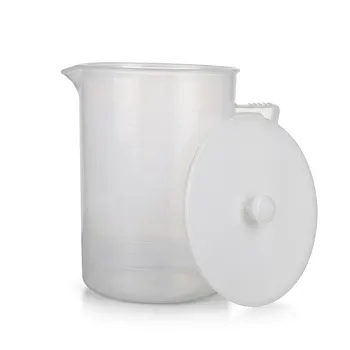
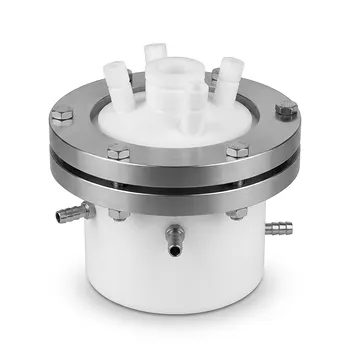
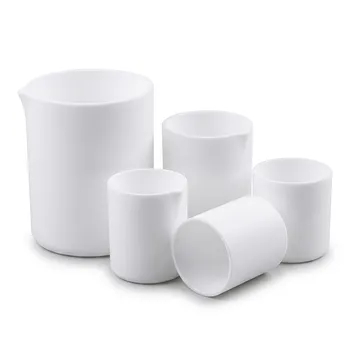
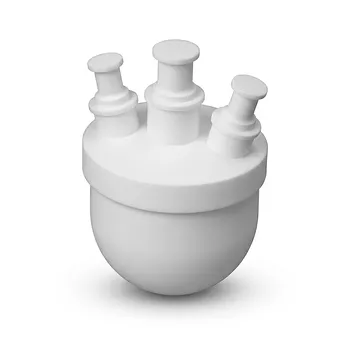
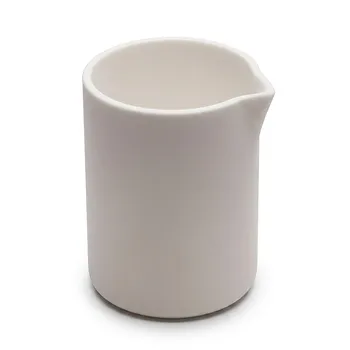
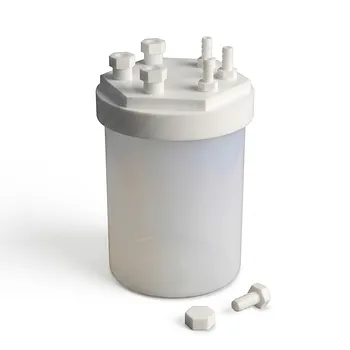
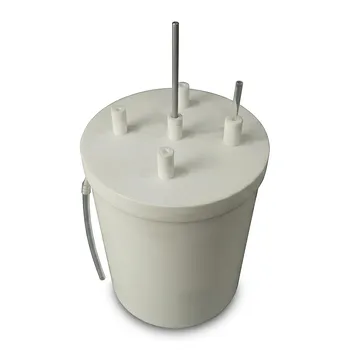
Ensure maximum purity and reliability in your lab with KINTEK's high-performance PTFE/PFA labware. Our products are designed to minimize sample retention and cross-contamination, ideal for trace analysis and aggressive chemical handling. From basic beakers to custom CNC-machined parts and reaction apparatus, we deliver over 1500 fluoropolymer components tailored to your exact needs. Contact our specialists today to discuss your application and discover how our low-surface-energy solutions can enhance your workflow. Get in touch for a consultation and receive a personalized quote.
Related Products
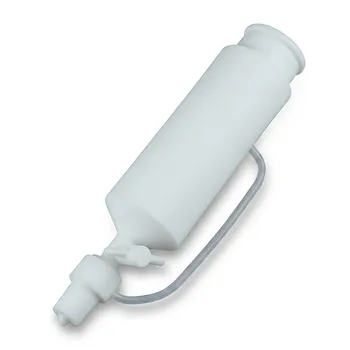
- Custom PTFE Constant Pressure Separatory Funnel 100ml Fluoropolymer Labware for Corrosive Chemical Transfer
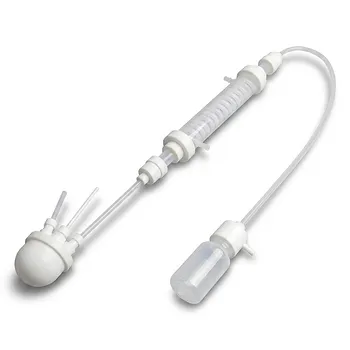
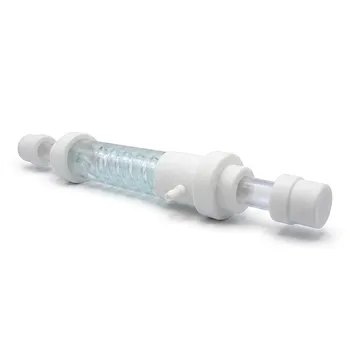
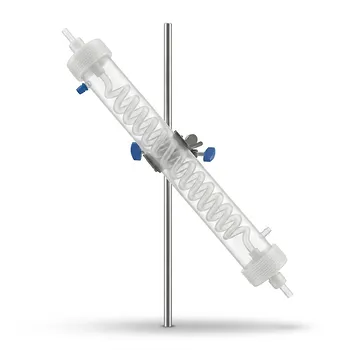
- Corrosion Resistant Hydrogen Fluoride Reflux Apparatus PTFE Flask Condenser Separatory Funnel Collection Bottle High Temperature Laboratory System
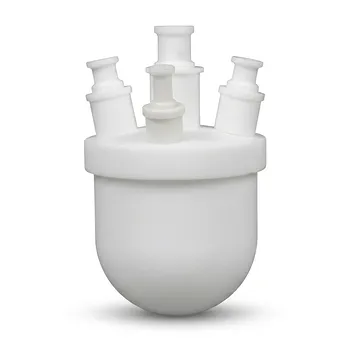
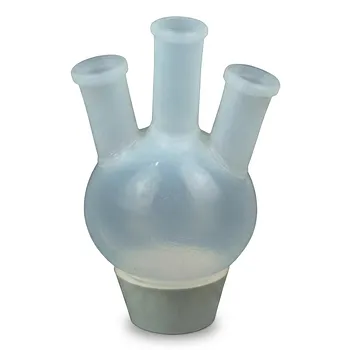
- Custom PTFE Flask 250ml High Purity Fluoropolymer Laboratory Vessel for Chemical Research
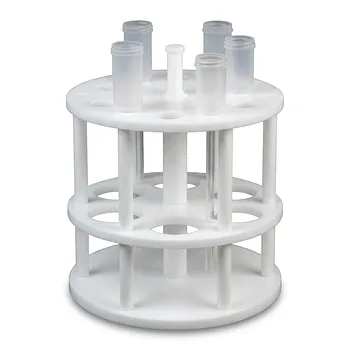
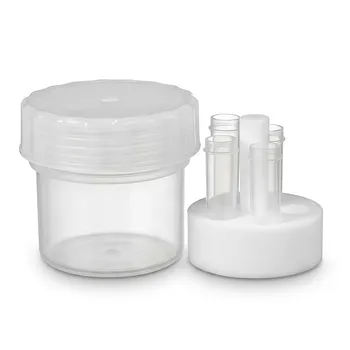
- Custom PFA Microcolumn Racks and PTFE Machined Low Background Corrosion Resistant Laboratory Fixtures
- High Purity PFA Beaker with Handle and Large Capacity Washable Soak Basket Multi Spec Teflon Laboratory Labware
People Also Ask
- Which material characteristics make fluoropolymers suitable for lithium-ion battery separators, and how do fluoropolymer laboratory supplies support separator performance testing?
- What performance changes occur when increasing the fluorine content in fluoropolymer materials used for specialized laboratory supplies?
- How does resin stratification occur during the curing of fluoropolymer coatings, and why might solid fluoropolymer laboratory apparatus be preferred over surface coatings for aggressive chemical applications?
- How does PTFE's chemical resistance make it suitable for high-purity lab supplies and transfer systems? Discover its key benefits in handling extreme corrosives.
- Why is controlling the cooling rate during thermal processing critical when manufacturing high-density fluoropolymer laboratory apparatus? Optimize Strength, Clarity, and Durability