Mixed-substituent side-chain engineering achieves the balance by combining molecular disorder, flexible fluorinated segments, and covalent crosslinking. A random distribution of two different fluoroalkoxy side groups disrupts regular chain packing and suppresses microcrystallite formation, lowering the glass transition temperature to approximately -60 °C while maintaining an amorphous structure. A small fraction of allyl-containing co-substituents then enables free-radical curing, converting the polymer gum into an elastomer that remains flexible without sacrificing resistance to hydrocarbons, aggressive hydraulic fluids, and harsh chemicals.
The central design principle is controlled irregularity: mixed side groups keep fluoropolymer chains mobile at low temperature, while crosslinking prevents those chains from slipping or permanently deforming under pressure and tension.
Why Low-Temperature Flexibility Requires Molecular Control
Regular packing creates rigidity
Polymer chains become less mobile as temperature falls. If chemically similar side groups are arranged too regularly, the chains can align and form ordered microcrystalline regions, which restrict movement and make the material more likely to stiffen or fracture.
Mixed-substituent engineering interrupts this regularity. Two distinct fluoroalkoxy groups create differences in size, shape, and local mobility along the backbone, making efficient packing more difficult.
Random substitution preserves an amorphous structure
The resulting amorphous morphology contains fewer ordered regions that could act as rigid fracture-initiation sites. This allows the polymer chains to retain segmental motion at temperatures where more regularly structured fluoropolymers would become brittle.
The effect is a depressed glass transition temperature, or Tg, near -60 °C in the referenced material design. Below Tg, chain mobility falls sharply, so lowering Tg is essential for maintaining compliance in cold environments.
Ether-containing groups improve chain mobility
Fluoroalkoxy side groups contain ether linkages whose oxygen atoms support rotational flexibility. This helps offset the stiffness normally associated with highly fluorinated structures and allows the chains to accommodate bending, compression, and thermal contraction.
The chemical value of the fluorinated groups is retained at the same time. Strong carbon-fluorine bonds contribute to low swelling, low solubility, and resistance to chemically aggressive fluids.
How Crosslinking Converts Flexibility Into Seal Performance
The uncrosslinked gum is not enough
A low-Tg polymer gum may remain flexible, but its chains can slide past one another when exposed to tensile loads, pressure, or repeated deformation. That can cause creep, permanent set, and loss of sealing force.
For critical seals, flexibility must therefore be paired with a stable three-dimensional network.
Allyl groups provide curing sites
A small percentage of allyl-containing co-substituents introduces reactive sites for free-radical curing. During curing, these sites form covalent links between polymer chains.
The crosslinks preserve the disordered amorphous morphology while restricting large-scale chain movement. In practical terms, the material can flex and recover, but it is less likely to flow or remain permanently deformed under load.
Crosslinking protects elasticity under pressure
A seal must maintain contact pressure against a mating surface despite compression, temperature changes, and fluid exposure. Crosslinking helps the elastomer recover after deformation and reduces the risk that the sealing element will lose its shape.
The specific curing system also affects compression set. Bisphenol AF/phosphonium chloride systems generally provide lower compression set than peroxide systems, although coagents such as TAIC can improve peroxide-cured performance.
Why Fluorination Resists Aggressive Hydraulic Fluids
Carbon-fluorine bonds reduce chemical attack
Fluorinated chains have strong carbon-fluorine bonds and low chemical reactivity. This gives them greater resistance to hydrocarbons, fuels, oils, organic solvents, oxidizing agents, and hydroperoxides than many hydrocarbon-based elastomers.
The result is reduced chain scission, embrittlement, and chemical degradation during service.
Fluorinated surfaces limit swelling
Fluoroalkyl groups also reduce the polymer's solubility in many non-polar fluids. When the fluid has limited compatibility with the elastomer, it penetrates less readily and causes less volumetric swelling.
Lower swelling helps preserve dimensions and sealing force. This is particularly important for O-rings, gaskets, valve interfaces, and fluid-transfer connections where small dimensional changes can create leakage.
Chemical resistance complements amorphous flexibility
The same design must address two different failure mechanisms. Molecular mobility prevents cold brittleness, while fluorination limits fluid-induced swelling and degradation.
Neither characteristic alone is sufficient. A very flexible material may swell or soften in hydraulic fluid, while a highly chemical-resistant but rigid material may fail to seal at low temperature.
How Performance Is Evaluated in Practice
Tg describes molecular mobility
Tg is a fundamental material property indicating when large-scale segmental motion becomes restricted. A Tg near -60 °C indicates that the polymer is designed to retain useful molecular mobility well below ordinary sub-ambient operating temperatures.
However, Tg should not be treated as the complete service-temperature specification.
TR 10 measures functional low-temperature recovery
The TR 10 test, defined by ASTM D1329 and ISO 2921, evaluates temperature retraction. A stretched specimen is frozen, then heated until it retracts by 10 percent; the corresponding temperature is reported as the TR 10 value.
TR 10 is often more useful than Tg for seal selection because it evaluates recovery behavior after deformation. It provides a practical indication of whether a sealing element can regain contact as temperature changes.
Brittle point and service limits remain application-specific
Standard fluorocarbon elastomer grades may have brittle points roughly between -25 °C and -40 °C, while specialized low-temperature formulations can perform substantially better. Actual performance depends on formulation, cure system, geometry, compression, fluid exposure, and thermal history.
Engineers should therefore qualify the complete component rather than selecting a material from Tg alone.
Understanding the Trade-offs
Flexibility and chemical resistance are not automatically aligned
Increasing fluorine content can improve resistance to hydrocarbons and aggressive chemicals, but the resulting structure may become less flexible at low temperature. Introducing flexible fluoroalkoxy groups addresses this limitation, but it must be balanced against mechanical strength and dimensional stability.
The target is not the lowest possible Tg in isolation. It is sufficient low-temperature recovery alongside the required fluid resistance, compression set, and mechanical durability.
Conventional plasticizers can create fluid compatibility problems
Low-molecular-weight plasticizers can temporarily improve flexibility by increasing chain mobility. In hydrocarbon or hydraulic-fluid service, however, those additives may migrate or be extracted from the elastomer.
Once the plasticizer is removed, the material can embrittle and lose its original properties. Molecularly built-in flexibility is therefore more reliable for demanding fluid-handling applications.
Fillers can improve one property while reducing another
Rigid PTFE filler can reduce swelling, improve wear resistance, and increase oil resistance. Excessive filler loading, however, can reduce matrix elasticity and slightly weaken low-temperature flexibility.
Filler content must be chosen according to the dominant failure mode rather than maximized for chemical resistance.
Different FKM families serve different environments
FKM Type 2 provides strong hydrocarbon and high-temperature resistance but generally has limited low-temperature flexibility. Type 3, which incorporates PMVE, is better suited to sub-zero service, while Types 4 and 5 are formulated for demanding base, amine, coolant, or steam exposure.
These grades should not be treated as interchangeable. The fluid chemistry and temperature profile must be matched to the comonomer structure and cure system.
Making the Right Choice for Your Goal
The material should be specified from the combined requirements of temperature, fluid chemistry, pressure, recovery, and service life.
- If your primary focus is low-temperature sealing: Choose a formulation with a low Tg and a verified TR 10 value appropriate to the minimum operating temperature, then confirm performance under the actual compression and thermal cycling conditions.
- If your primary focus is aggressive hydraulic-fluid resistance: Prioritize fluorinated chemistry with low swelling and strong chemical compatibility, and verify that the selected grade does not sacrifice required low-temperature recovery.
- If your primary focus is resistance to compression set: Evaluate the curing system as carefully as the base polymer, with bisphenol AF/phosphonium chloride systems generally favored for low compression set.
- If your primary focus is cryogenic or laboratory fluid transfer: Use a highly flexible, chemically inert fluoropolymer design and qualify the complete tubing, fitting, gasket, or seal assembly rather than relying on a single handbook property.
- If your primary focus is balanced all-temperature performance: Use mixed fluoroalkoxy substitution for molecular flexibility, controlled allyl crosslinking for mechanical recovery, and application-specific testing for fluid swelling and long-term durability.
The most reliable critical seals are designed around a deliberate balance of amorphous low-temperature mobility, covalent mechanical stability, and fluorine-driven chemical resistance.
Summary Table:
| Design Goal | Engineering Approach | Result |
|---|---|---|
| Low-temperature flexibility | Random fluoroalkoxy side groups disrupt packing, lower Tg | Amorphous, flexible down to -60 °C |
| Mechanical stability | Allyl groups enable crosslinking | Elastic recovery, low compression set |
| Fluid resistance | Strong C-F bonds, reduced solubility | Low swelling, resistance to aggressive fluids |
Ready to source high-performance PTFE/PFA components? KINTEK offers custom-engineered seals, tubing, and labware that leverage advanced fluoropolymer design. Contact us today for a quote and enhance your process reliability — Get in touch!
Related Products
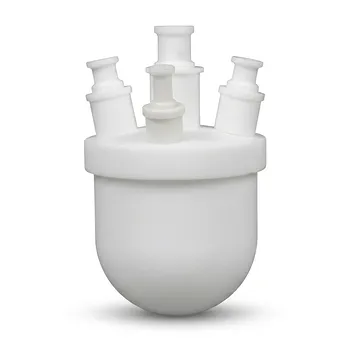
- Custom PTFE Flask 250ml High Purity Fluoropolymer Laboratory Vessel for Chemical Research
- Custom PTFE Insulating Gaskets and Corrosion Resistant Fluoropolymer Seals for Industrial Electrical Applications
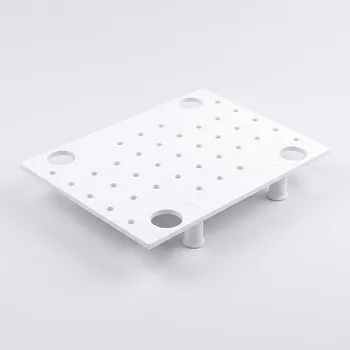
- High Temperature Resistant PTFE Thermal Insulation Board Corrosion Resistant Metal Free Fluoropolymer Stand for Ultra Clean Laboratories
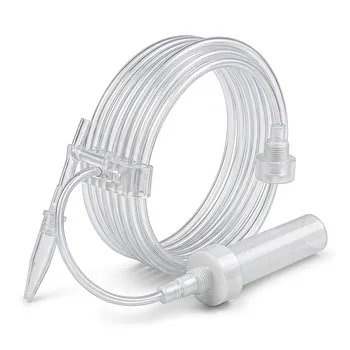
- Custom PFA Tubing 1/4 Inch High Purity Corrosion Resistant Fluoropolymer Tube with Welding and Machining Services
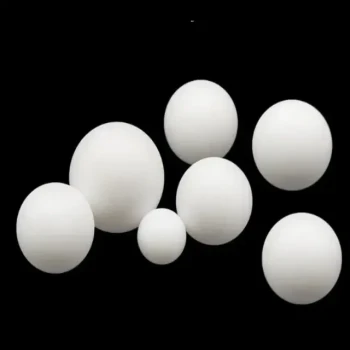
- Custom PTFE Teflon Balls for Advanced Industrial Applications
People Also Ask
- What are the key steps for structural integrity in molded PTFE lab reaction vessels? Master fine powder processing.
- When synthesizing TFVE monomers involving reactive organometallic reagents and aggressive polar solvents, what material performance characteristics are required? Ensure purity with PTFE/PFA.
- Why Are High-Purity Fluoropolymer Vessels and Tubing Critical for Trace Analysis? Prevent Contamination Reliably
- Why do PTFE fluoropolymer laboratory vessels and containers exhibit superior chemical resistance against harsh solvents and corrosive acids compared to standard plastic labware? Discover the molecular secrets
- How do choice of solvent and chain transfer activity affect molecular weight during vinylidene fluoride (VDF) radical polymerization? Learn Key Factors for High-MW PVDF