Reinforcing the polymer matrix for industrial reliability. While virgin PTFE is prized for its chemical inertness, it is mechanically "soft" and prone to permanent deformation under pressure. Fillers solve this by physically obstructing the movement of polymer chains, which significantly increases compressive strength, wear resistance, and the material's ability to maintain its shape under load.
Core Takeaway: Fillers transform PTFE from a pliable plastic into a high-performance engineering material by restricting molecular mobility, effectively doubling its resistance to creep and increasing its wear resistance by up to 1,000 times compared to unfilled grades.
Overcoming the Structural Weaknesses of Virgin PTFE
Restricting Molecular Mobility
At a microscopic level, virgin PTFE molecules slide past each other relatively easily when subjected to force. Adding fillers like glass fiber, carbon, or bronze creates a reinforced matrix that acts as a physical barrier. This internal structure anchors the polymer, preventing the "slippage" that typically leads to gasket failure.
Mitigating Cold Flow and Creep
The most significant weakness of virgin PTFE is cold flow, or the tendency of the gasket to spread and thin out under constant pressure. Filled PTFE grades exhibit significantly higher dimensional stability. By incorporating rigid particles, the material can resist "creeping" out of the flange, ensuring a tighter, long-lasting seal even during thermal cycling.
Quantifiable Improvements in Mechanical Integrity
Dramatic Increases in Wear and Abrasion Resistance
Unfilled PTFE wears down quickly in dynamic applications or environments with high friction. Research indicates that adding specific fillers can improve abrasion resistance by approximately 1,000 times. This makes filled gaskets and seals suitable for high-velocity or high-pressure (PV) applications where virgin material would disintegrate.
Enhanced Thermal and Load-Bearing Capacity
Fillers do more than just add strength; they also modify the thermal profile of the material. Certain fillers can double the thermal conductivity of the gasket, allowing heat to dissipate more effectively. This prevents localized overheating, which preserves the mechanical properties of the seal and increases its overall load-bearing capacity.
Understanding the Trade-offs
Chemical Compatibility Risks
While fillers improve strength, they can introduce chemical vulnerabilities. For example, glass-filled PTFE offers excellent strength but may be attacked by hydrofluoric acid or strong bases. You must ensure the filler material—not just the PTFE base—is compatible with your specific process media.
Machining and Manufacturing Challenges
Increasing the hardness and stiffness of PTFE makes it more difficult to machine. Filled PTFE is more abrasive to cutting tools, often requiring specialized coatings or slower feed rates to achieve a precise finish. Additionally, the addition of fillers reduces the material's ductility, making it less forgiving in applications requiring extreme flexibility.
Making the Right Choice for Your Goal
To select the appropriate PTFE configuration, you must align the filler properties with your operational environment.
- If your primary focus is maximum wear resistance: Utilize carbon or graphite fillers, which provide excellent self-lubricating properties and can increase wear life by up to 1,000 times.
- If your primary focus is reducing creep in high-load flanges: Opt for glass-filled or silica-filled PTFE to significantly improve compressive strength and minimize cold flow.
- If your primary focus is thermal management: Select bronze or metallic fillers to increase thermal conductivity and improve heat dissipation in dynamic seals.
- If your primary focus is a combination of chemical purity and creep resistance: Consider expanded PTFE (ePTFE), which uses a unique physical structure rather than additives to eliminate cold flow while maintaining 100% virgin purity.
By selecting the right filler, you transition from a material that merely survives a process to one that actively enhances the reliability of the entire system.
Summary Table:
| Filler Type | Key Mechanical Improvement | Ideal Application |
|---|---|---|
| Glass Fiber | Maximizes compressive strength; reduces cold flow | High-load industrial flanges |
| Carbon/Graphite | 1,000x increase in wear resistance; self-lubricating | High-velocity dynamic seals |
| Bronze | Superior thermal conductivity and load-bearing | Heat-dissipating mechanical parts |
| Silica | Improved dimensional stability & acid resistance | Chemical processing seals |
| Virgin PTFE | Maximum chemical purity; high ductility | Low-pressure corrosive environments |
Elevate Your Lab’s Performance with KINTEK Fluoropolymers
Don’t let material deformation compromise your results. KINTEK specializes in high-performance PTFE and PFA solutions tailored for extreme environments. From everyday essentials like beakers, crucibles, and reagent bottles to precision-engineered fluid transfer components, filtration tools, and electrochemical cells, we provide the structural integrity your research demands.
Why choose KINTEK?
- Advanced Fabrication: End-to-end custom CNC machining for bespoke laboratory setups and complex non-standard parts.
- Comprehensive Range: We supply everything from digestion tubes and stirring bars to hydrothermal synthesis liners and microchannel reactors.
- Expertise in Fillers: We optimize material properties to ensure up to 1,000x better wear resistance and zero cold flow.
Whether you need a single custom component or high-volume consumables, our absolute focus on high-performance fluoropolymers ensures your system's reliability. Contact our technical team today to discuss your specific application needs!
Related Products
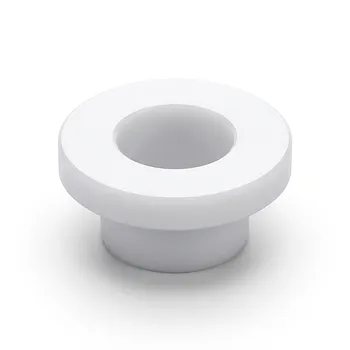
- Customizable High Temperature Resistant Anti Static PTFE Insulating Gaskets Flame Retardant Corrosion Proof Industrial Seals
- Custom PTFE Insulating Gaskets Corrosion Resistant Teflon Seals Tailored Engineering Plastic Components
- Custom PTFE Insulating Gaskets and Corrosion Resistant Fluoropolymer Seals for Industrial Electrical Applications
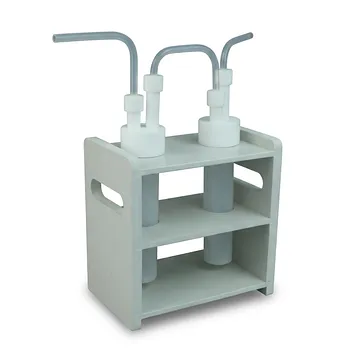
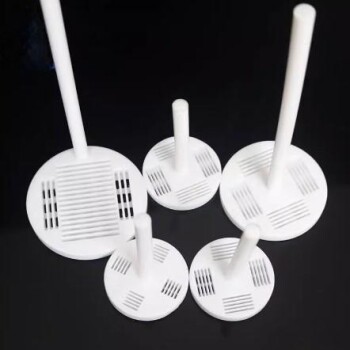
- Custom PTFE Acid Resistant Support Rack Multi Hole PFA Hydrogen Absorption System Bracket
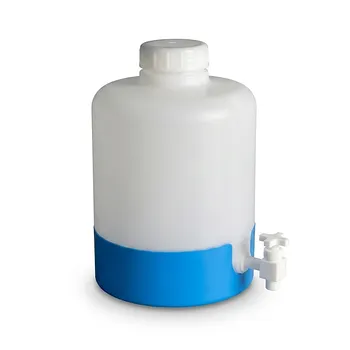
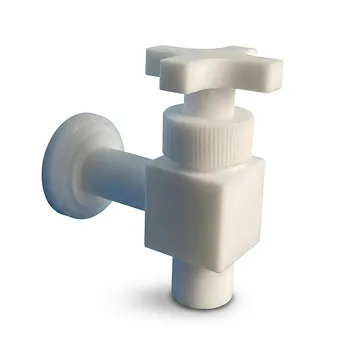
- High Corrosion Resistant PTFE Faucet Polytetrafluoroethylene Valve for Chemical Storage Drums and Fluid Transfer Systems Customizable Industrial Grade
People Also Ask
- Why is PTFE an ideal material choice for sealing gaskets, valves, and fluid transfer tubing exposed to extremely aggressive chemicals? Discover Its Superior Chemical Resistance and Reliability
- How is PTFE utilized in seals and gaskets? Leverage Its Chemical & Temperature Resistance
- What are the key properties of PTFE that make it suitable for seals and gaskets? Unlock Superior Sealing Performance
- What are some specific applications of PTFE gaskets in the chemical processing industry? Prevent Leaks in Corrosive Systems
- How should PTFE gaskets be stored to maintain their quality? Ensure Long-Term Sealing Reliability