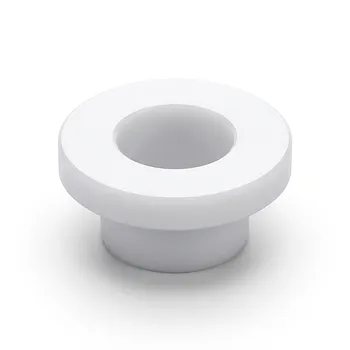
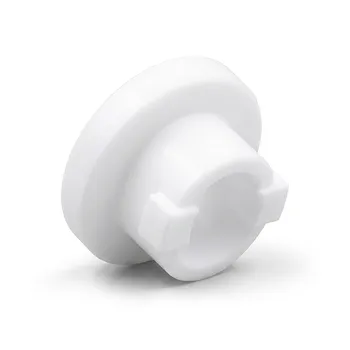
PTFE gaskets are the industry standard for sanitary applications because they provide an inert, non-contaminating seal that survives the rigorous sterilization cycles of modern production.
These gaskets are manufactured in FDA-compliant and USP Class VI grades, ensuring that no extractables or particulates migrate into the product stream. Their unique chemical structure allows them to remain stable when exposed to aggressive cleaning chemicals and high-temperature steam sterilization, maintaining a leak-proof seal where traditional elastomers often fail.
Core Takeaway: PTFE gaskets are preferred because they combine absolute chemical inertness with high-temperature resistance, ensuring both regulatory compliance and the total purity of pharmaceutical and food products during intensive cleaning cycles.
Ensuring Absolute Product Purity
Non-Reactive Chemical Foundation
PTFE consists of a strong chain of carbon atoms linked to fluorine atoms, creating a bond that does not interact with other substances. This non-reactive quality ensures that the gasket will not leach chemicals into food, drugs, or biotechnological cultures, even under extreme conditions.
Eliminating Contamination Risks
Unlike traditional materials, high-grade PTFE introduces zero particulates or extractables into the process. This is critical for maintaining "clean room" standards and ensuring that the final product remains free of foreign matter or chemical taints.
Resistance to Media Adsorption
PTFE is non-adsorbent, meaning it does not soak up the fluids or gases it comes into contact with. This prevents "flavor carryover" in food processing and cross-contamination between different batches in pharmaceutical manufacturing.
Durability in Harsh Sanitary Environments
Surviving CIP and SIP Protocols
Sanitary equipment must undergo aggressive Clean-in-Place (CIP) and Steam-in-Place (SIP) cycles to ensure sterility. PTFE gaskets resist the corrosive acids and alkalis used in these cleaners, as well as the high-pressure steam used for sterilization.
Thermal and Pressure Resilience
While traditional gaskets may degrade or become brittle when exposed to heat, PTFE maintains its integrity across a wide temperature range. This resilience reduces the frequency of maintenance shutdowns and prevents unexpected seal failures during production.
Non-Stick Surface Characteristics
The naturally low-friction, non-stick surface of PTFE facilitates easy equipment disassembly and cleaning. This prevents organic material from "baking" onto the seal, which significantly reduces the risk of bacterial growth and biofilm formation.
Understanding the Trade-offs
Managing Cold Flow and Creep
Standard virgin PTFE is susceptible to "cold flow," where the material slowly deforms under constant pressure. To mitigate this, engineers often specify "filled" PTFE or expanded PTFE (ePTFE) to improve dimensional stability.
Considerations for Fragile Equipment
Standard PTFE requires high seating stress to create a seal, which can damage fragile glass-lined or ceramic vessels. In these specific cases, ePTFE (expanded PTFE) is used because it is softer and creates a reliable seal at much lower torque levels.
Thermal Expansion and Contraction
PTFE has a higher rate of thermal expansion than many of the metals it seals against. In systems with extreme temperature fluctuations, this can lead to "bolt relaxation," requiring the use of specialized gasket designs or live-loading hardware to maintain constant pressure.
Selecting the Right PTFE Solution for Your Goal
How to Apply This to Your Project
Depending on your specific process requirements, the type of PTFE gasket you select will vary based on equipment fragility and sterilization intensity.
- If your primary focus is Fragile Equipment (Glass/Ceramic): Utilize expanded PTFE (ePTFE) to achieve a secure seal at low seating stresses without risking hardware fractures.
- If your primary focus is Maximum Chemical Resistance: Use virgin or modified PTFE to ensure the seal can withstand the most aggressive acids and solvents without degrading.
- If your primary focus is Regulatory Compliance (FDA/USP): Ensure your supplier provides documentation for USP Class VI and FDA-compliant grades to meet stringent safety standards.
By prioritizing the correct grade of PTFE, you ensure a sterile, compliant, and efficient production environment that protects both the consumer and the equipment.
Summary Table:
| Key Feature | Benefit for Sanitary Applications | Ideal Industry |
|---|---|---|
| Chemical Inertness | Zero leaching or contamination of sensitive products | Pharmaceutical & Biotech |
| High Thermal Stability | Survives intensive Steam-in-Place (SIP) sterilization | Food & Beverage |
| Regulatory Compliance | Meets FDA and USP Class VI safety standards | All Sanitary Sectors |
| Non-Stick Surface | Prevents bacterial growth and simplifies cleaning | Dairy & Food Processing |
| Non-Adsorbent | Eliminates flavor carryover and cross-contamination | Multipurpose Production |
Elevate Your Lab Purity with KINTEK’s High-Performance Fluoropolymers
Ensure absolute integrity in your pharmaceutical, food, or research applications with KINTEK. We specialize in high-performance fluoropolymer materials, offering everything from everyday basic labware (beakers, crucibles, reagent bottles, and digestion tubes) to high-purity trace analysis instruments and comprehensive fluid transfer components like tubing, valves, and fittings.
Whether you require standard consumables such as stirring bars and filters or advanced derivative apparatus like custom electrochemical cells, battery testing fixtures, and microwave digestion vessels, KINTEK has you covered. Backed by end-to-end custom CNC fabrication, we deliver everything from complex non-standard machined parts to high-volume orders with precision.
Ready to optimize your process? Contact KINTEK today to discuss your custom PTFE and PFA requirements!
Related Products
- Customizable High Temperature Resistant Anti Static PTFE Insulating Gaskets Flame Retardant Corrosion Proof Industrial Seals
- Custom PTFE Insulating Gaskets Corrosion Resistant Teflon Seals Tailored Engineering Plastic Components
- Custom PTFE Insulating Gaskets and Corrosion Resistant Fluoropolymer Seals for Industrial Electrical Applications
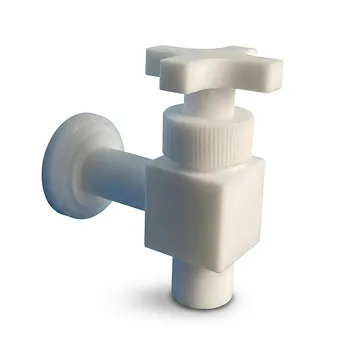
- High Corrosion Resistant PTFE Faucet Polytetrafluoroethylene Valve for Chemical Storage Drums and Fluid Transfer Systems Customizable Industrial Grade
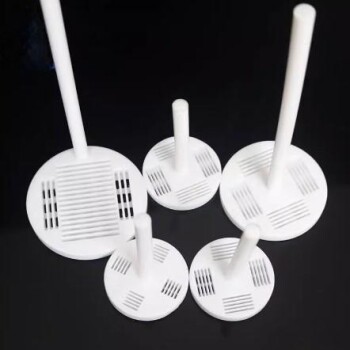
- Custom PTFE Acid Resistant Support Rack Multi Hole PFA Hydrogen Absorption System Bracket
People Also Ask
- Why is PTFE an ideal material choice for sealing gaskets, valves, and fluid transfer tubing exposed to extremely aggressive chemicals? Discover Its Superior Chemical Resistance and Reliability
- How is PTFE utilized in seals and gaskets? Leverage Its Chemical & Temperature Resistance
- What are the key properties of PTFE that make it suitable for seals and gaskets? Unlock Superior Sealing Performance
- What are the advantages of using PTFE gaskets? Achieve Superior Chemical and Thermal Sealing
- How does the sealing performance of PTFE gaskets benefit industrial applications? Ensure Leak-Free Reliability in Harsh Environments