Fluorinated fluids and lubricants maintain gasket and O-ring compatibility primarily through chemical inertness and thermal stability. Fluorinated molecules, including oligomeric lubricants with fluorinated side groups, are less likely than many conventional petrochemical fluids to react with, oxidize, or break down sealing materials. This helps reduce swelling, softening, embrittlement, contamination, and leakage in high-temperature hydraulic and mechanical systems.
The key principle is controlled chemical interaction: fluorinated fluids resist attacking elastomers and remain stable under severe operating conditions, but compatibility still depends on the specific fluid, gasket material, temperature, pressure, and exposure time.
Why Fluorinated Fluids Protect Sealing Elements
High Chemical Inertness
Fluorinated fluids contain highly stable carbon-fluorine bonds, which make them resistant to many chemical reactions. As a result, they are less likely to extract components from an elastomer, chemically degrade its polymer structure, or generate reactive byproducts during service.
This is especially valuable where seals are exposed to aggressive chemicals, elevated temperatures, or long maintenance intervals.
Resistance to Thermal Degradation
High-performance fluorinated fluids and lubricants can retain their properties across demanding temperature ranges. They are less prone to oxidation, cracking, varnish formation, and breakdown than many conventional lubricants.
Stable fluid chemistry reduces the likelihood that degraded lubricant products will attack gaskets or change the physical properties of O-rings.
Reduced Swelling and Softening
Conventional hydrocarbon-based fluids can diffuse into certain elastomers and cause them to swell or soften. Other formulations may extract plasticizers or other ingredients, causing shrinkage and loss of elasticity.
Fluorinated fluids generally have lower chemical affinity for many common sealing compounds, which can limit these dimensional and mechanical changes. The seal is therefore more likely to retain its intended compression and contact pressure.
How Compatibility Supports System Reliability
Maintaining Seal Compression
An O-ring seals by remaining compressed against mating surfaces. If the material swells excessively, softens, or loses elasticity, the seal may deform or extrude; if it shrinks or hardens, it may lose contact pressure.
By minimizing fluid-induced property changes, fluorinated lubricants help preserve the seal geometry and resilience required for leak prevention.
Reducing Leakage and Contamination
Seal degradation can release elastomer particles, degraded additives, or lubricant byproducts into the working fluid. It can also create leakage paths that allow external contaminants to enter the system.
Fluorinated fluids support cleaner operation by remaining chemically stable and reducing the likelihood of seal attack. This matters in precision hydraulics, aerospace equipment, vacuum systems, instrumentation, and other contamination-sensitive applications.
Supporting Long Service Intervals
A fluid that remains stable and does not rapidly alter gasket properties can reduce maintenance demands. The benefit is greatest when the fluid, seal material, and operating conditions have been selected as a complete system.
Fluid stability alone does not eliminate the need to inspect seals, because mechanical wear, pressure cycling, temperature cycling, and installation damage can still cause failure.
Which Material Properties Matter
Fluoroelastomer Seals
Fluoroelastomers such as FKM are commonly selected where resistance to heat, fuels, oils, and many chemicals is required. They are often a logical starting point for fluorinated-fluid systems, but the exact compound and cure formulation still matter.
Different grades can have substantially different low-temperature behavior, compression set, and resistance to particular chemicals.
Perfluoroelastomer Seals
Perfluoroelastomers such as FFKM provide very broad chemical resistance and high-temperature capability. They are used when the fluid environment is especially aggressive or when seal replacement is costly.
Their higher material cost means they should be chosen based on verified performance requirements rather than treated as a universal solution.
PTFE and Other Low-Reactivity Materials
PTFE offers very high chemical resistance and low interaction with many fluorinated fluids. However, PTFE is not an elastomer, so it does not provide the same inherent elastic recovery as an O-ring.
In dynamic or pressure-cycling applications, its wear, deformation, installation, and backup-ring requirements must be evaluated separately.
Understanding the Trade-offs
Compatibility Is Not Universal
The statement that fluorinated fluids do not attack seals should be understood as a general tendency, not an unconditional guarantee. Compatibility can vary with the fluid's molecular structure, additives, impurities, seal formulation, temperature, pressure, and duration of exposure.
A fluid that is compatible with one FKM or FFKM compound may perform differently with another compound from the same material family.
Low Swelling Can Still Create Design Issues
Limited swelling is usually beneficial, but an O-ring must still maintain adequate contact pressure across the operating temperature range. Excessive shrinkage, poor low-temperature flexibility, or compression set can cause leakage even when chemical degradation is minimal.
Seal dimensions and gland design must therefore be checked alongside chemical compatibility.
Permeation and Mechanical Failure Remain Possible
Chemical inertness does not prevent every failure mode. Fluids can permeate through some elastomers, while pressure spikes can cause extrusion, and repeated motion can produce wear.
Installation damage, surface roughness, improper lubrication during assembly, and incompatible backup materials can also compromise the seal.
Testing Is More Reliable Than Material Labels
“Fluorinated” describes a broad class of fluids and does not provide enough information for a final seal selection. Qualification testing should use the actual fluid, seal compound, temperature, pressure, and exposure duration expected in service.
Measurements should include volume change, hardness, tensile or elongation changes, compression set, leakage, and visual evidence of cracking or surface damage where appropriate.
Making the Right Choice for Your Goal
The most reliable selection process treats the fluid, seal compound, hardware, and operating conditions as one compatibility problem.
- If your primary focus is chemical resistance: Start with a verified FKM, FFKM, PTFE, or other suitable seal compound and confirm compatibility with the specific fluorinated-fluid formulation.
- If your primary focus is extreme-temperature operation: Select a fluid with demonstrated thermal stability and a seal material rated for the full temperature range, including startup and shutdown conditions.
- If your primary focus is minimizing leakage: Evaluate swelling, shrinkage, compression set, permeation, pressure extrusion, and gland design together rather than relying on fluid chemistry alone.
- If your primary focus is contamination control: Use chemically stable fluorinated fluids and qualify the complete assembly for extractables, degradation products, and particle generation.
- If your primary focus is long service life: Perform exposure testing under representative temperature, pressure, cycling, and maintenance conditions before committing to production hardware.
Fluorinated fluids improve seal reliability by combining low chemical reactivity with strong thermal stability, but dependable performance comes from verifying the complete fluid-and-seal system under real operating conditions.
Summary Table:
| Factor | How Fluorinated Fluids Help | Consideration |
|---|---|---|
| Chemical Inertness | Resist reactions with elastomers, reducing degradation | Verify compatibility with specific seal compound |
| Thermal Stability | Maintain properties at high temps, preventing breakdown | Match fluid temperature range to application |
| Swelling/Softening | Minimize dimensional changes in seals | Ensure proper gland design for slight swelling |
| Seal Compression | Preserve elasticity to maintain contact pressure | Check compression set and low-temp flexibility |
| Leakage/Contamination | Reduce byproduct generation and seal attack | Qualify for extractables and particle generation |
| Service Life | Extend intervals by stable chemistry | Inspect for mechanical wear and cycling effects |
Ensure your fluid system's seals stay compatible and reliable. With KINTEK's expertise in high-performance fluoropolymers, we provide PTFE and PFA labware and custom components that resist aggressive fluids and temperatures. Our end-to-end CNC machining capabilities deliver precise seals and fittings for your demanding applications. Contact us today for a tailored solution that enhances your system's integrity!
Related Products
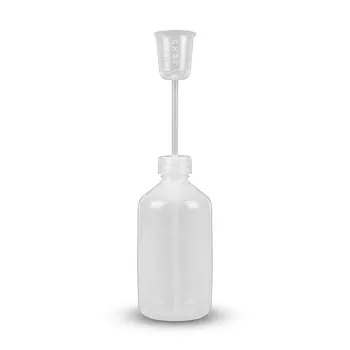
- Corrosion Resistant PFA Bottle Top Dispenser Translucent Squeeze Liquid Extraction System for Ultra Pure Chemical Handling
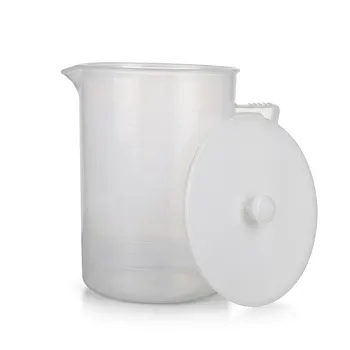
- High Purity PFA Beaker with Handle and Large Capacity Washable Soak Basket Multi Spec Teflon Laboratory Labware
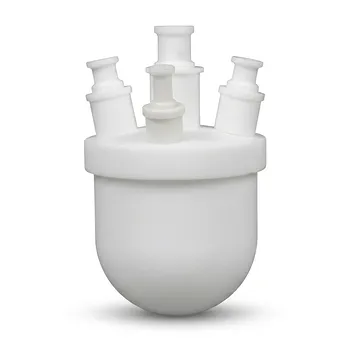
- Custom PTFE Flask 250ml High Purity Fluoropolymer Laboratory Vessel for Chemical Research
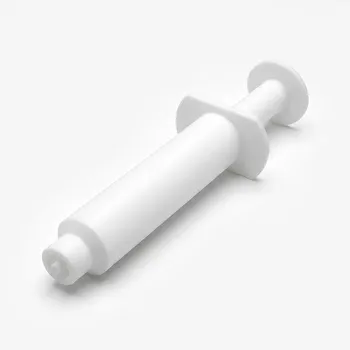
- High Purity Virgin PTFE Syringe 20ml Chemical Resistant Liquid Handling for Syringe Pumps and PFA Tubing Integration
- High Purity Laboratory Grade PTFE Syringe Chemical Resistant Fluoropolymer Injector for Trace Analysis
People Also Ask
- Why use high-purity PFA bottles for Carbon Quantum Dots? Ensure Ink Stability and Prevent Fluorescence Quenching
- Why is the use of high-purity PFA sampling bottles necessary for trace element analysis? Ensure PPT Accuracy
- How do PTFE and PFA liquid handling tools optimize phase separation and intermediate extraction in fluorinated polymer synthesis? Discover key benefits and best practices.
- Why are high-purity PFA fluid transfer components preferred for battery electrolytes? Ensure Purity & Data Accuracy
- What reaction challenges in multi-step fluoropolymer monomer preparation necessitate chemically resistant fluoropolymer fluid handling systems and reaction apparatus?