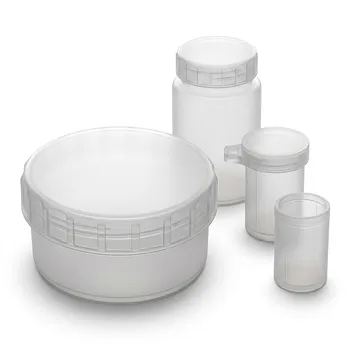
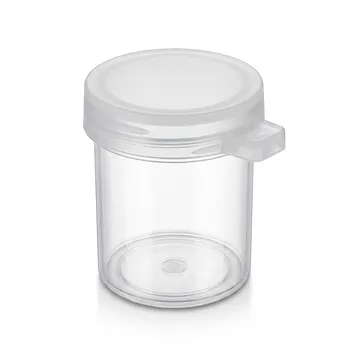
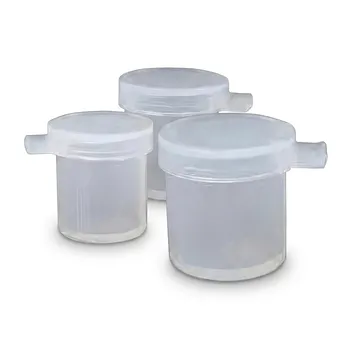
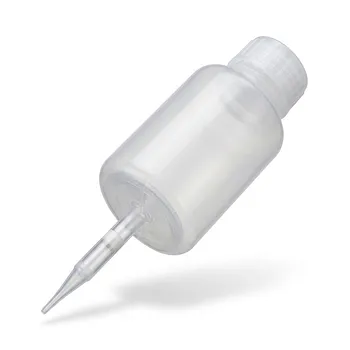
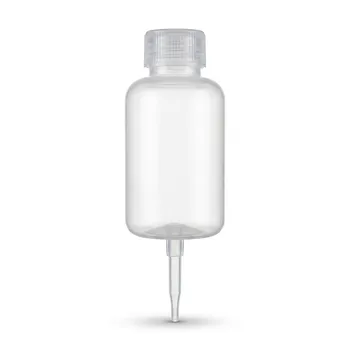
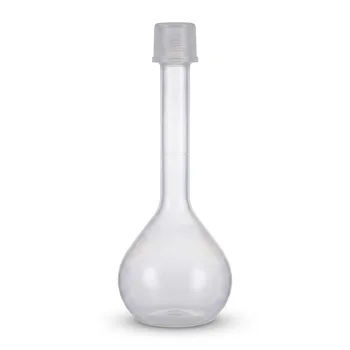
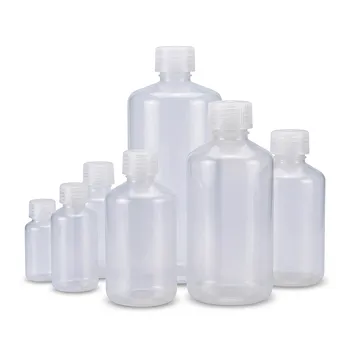
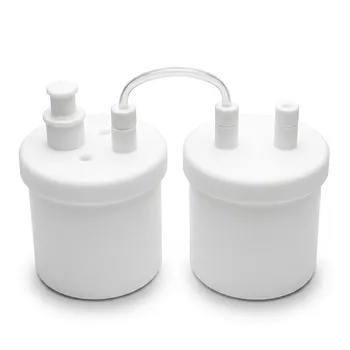
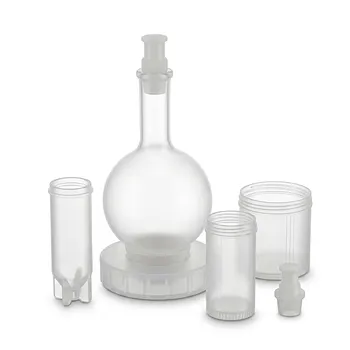
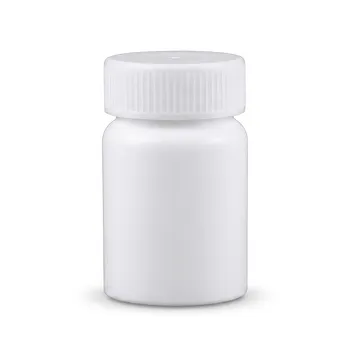
Maintaining ultra-low detection limits in trace analysis requires total control over the sample environment to prevent data corruption. High-purity PFA (perfluoroalkoxy) sampling bottles are necessary because they offer near-zero background interference and extremely low surface adsorption, ensuring that trace elements neither leach from the container into the sample nor stick to the bottle walls. This dual protection is essential for the extreme sensitivity required in fields like semiconductor manufacturing, geochemistry, and environmental science.
High-purity PFA is the industry standard for trace analysis because its chemical inertness and non-stick properties eliminate both sample contamination and analyte loss. In environments where parts-per-trillion (ppt) accuracy is required, the integrity of the container is as critical to the result as the sensitivity of the analytical instrument.
Eliminating Background Interference
Preventing Metal Ion Leaching
High-purity PFA is manufactured to have extremely low metal ion backgrounds, meaning the material itself does not release impurities into the sample. Unlike traditional glass or standard plastics, PFA does not contain additives or catalysts that can leach into sensitive solutions over time. This characteristic is vital for maintaining the "clean" state of a sample from the point of collection to the moment of analysis.
Comparison to Traditional Materials
Traditional glass containers often leach elements like sodium, boron, or silicon, which can obscure the results of trace element detection. Standard plastics may contain stabilizers or processing aids that introduce organic or inorganic contaminants. High-purity PFA replaces these risks with a chemically inert surface that remains stable even when in contact with aggressive reagents.
Safeguarding Sample Integrity
Minimizing Surface Adsorption
A major challenge in trace analysis is the "disappearance" of target elements as they bond to the inner walls of a container. PFA features minimal surface adsorption characteristics, which prevent trace target elements from being absorbed onto the vessel surfaces. This ensures that the concentration of the sample remains consistent and that no valuable analytes are lost during storage or transport.
Ensuring Chemical Inertness
PFA is exceptionally resistant to strong acids and bases, which are frequently used as preservatives or digestion agents in environmental and semiconductor workflows. This corrosion resistance ensures that the container does not react with the sample, even during long-term storage or high-temperature processing. The result is higher reproducibility and more reliable experimental data across sensitive analytical sessions.
Impact on Advanced Analytical Performance
Optimizing ICP-MS Accuracy
Modern instruments like Inductively Coupled Plasma Mass Spectrometry (ICP-MS) are capable of detecting elements at the parts-per-quadrillion level. Using high-purity PFA labware ensures that the "background noise" remains low enough to take full advantage of these instruments' high sensitivity. This allows researchers to achieve lower detection limits that would be impossible to reach with less sophisticated materials.
Preventing Cross-Contamination
The non-stick nature of PFA makes it much easier to clean thoroughly between uses, reducing the risk of sample cross-contamination. Because analytes do not penetrate the surface of the plastic, they can be rinsed away more effectively. This reliability is essential for high-throughput labs where maintaining a sterile, contaminant-free workflow is a top priority.
Understanding the Trade-offs
Cost and Initial Investment
High-purity PFA is significantly more expensive than standard polyethylene or glass alternatives. The manufacturing process for high-purity fluoropolymers is complex, making the initial acquisition cost a barrier for some laboratories. However, this cost is often offset by the reduction in failed experiments and the increased lifespan of the labware.
Mechanical Softness
Compared to glass, PFA is a relatively soft material and can be prone to scratching if handled with abrasive tools. Scratches on the interior surface can create microscopic "trap sites" for contaminants, potentially undermining the non-stick properties of the bottle. Proper handling and specialized cleaning protocols are required to maintain the high-performance standards of PFA over time.
Choosing the Right Labware for Your Goal
How to Apply This to Your Project
Selecting the right container material depends on the sensitivity of your analysis and the specific elements you are measuring.
- If your primary focus is semiconductor or ppt-level analysis: Use high-purity PFA exclusively to ensure the lowest possible background and prevent the loss of ultra-trace analytes.
- If your primary focus is handling concentrated mineral acids: Utilize PFA storage bottles to leverage their superior chemical inertness and prevent leaching from the container walls.
- If your primary focus is high-throughput environmental screening: Implement a rigorous cleaning protocol for your PFA bottles to maximize their non-stick properties and prevent cross-contamination between samples.
By prioritizing high-purity PFA in your workflow, you ensure that your analytical results reflect the true composition of your sample rather than the limitations of your equipment.
Summary Table:
| Feature | Benefit | Impact on Trace Analysis |
|---|---|---|
| Ultra-Low Leaching | Prevents background metal ion contamination | Maintains ultra-low detection limits (ppt/ppq) |
| Minimal Adsorption | Prevents target analytes from bonding to walls | Ensures sample concentration remains accurate |
| Chemical Inertness | Resists aggressive acids, bases, and solvents | Prevents container reaction with sample reagents |
| Non-Stick Surface | Facilitates thorough cleaning and rinsing | Eliminates risk of sample cross-contamination |
Elevate Your Analytical Precision with KINTEK’s High-Performance Fluoropolymers
In fields where parts-per-trillion accuracy is the standard, the integrity of your labware is non-negotiable. KINTEK provides an exhaustive range of laboratory supplies crafted exclusively from premium PTFE and PFA, ensuring your trace analysis remains free from background interference and sample loss.
Our Comprehensive Product Solutions Include:
- Everyday Basics: Beakers, measuring cylinders, crucibles, reagent/wash bottles, and centrifuge or digestion tubes.
- Fluid Transfer & Filtration: High-purity tubing, fittings, valves, separatory funnels, filters, and pipettes.
- Advanced Apparatus: Custom electrochemical cells, battery testing fixtures, hydrothermal synthesis liners, and microwave digestion vessels.
- General Consumables: Stirring bars, O-rings, gaskets, and seal tapes.
Backed by end-to-end custom CNC fabrication, KINTEK is equipped to deliver everything from high-volume standard orders to complex, non-standard machined parts and bespoke laboratory setups.
Ready to secure your results? Contact us today to discuss your high-purity labware requirements and experience the value of our absolute focus on high-performance materials.
References
- Jusheng Bao, You Liu. Hydrothermal Synthesis of Single‐Crystal Europium Tungstate Hydroxide Nanobelts for Enhanced Humidity Sensing. DOI: 10.1002/asia.202401933
This article is also based on technical information from Kintek Knowledge Base .
Related Products
- High Purity Semiconductor Grade PFA Sampling Bottles for Ultrapure Reagent Storage and Trace Analysis Applications
- Semiconductor Grade High Purity PFA Sampling Bottles for Ultra Pure Reagent Storage and Trace Analysis
- PFA Reaction Jar Corrosion Resistant Wide Mouth PTFE Lab Bottle High Purity Chemical Vessel
- High Purity PFA Sample Vials Acid Resistant Trace Analysis Digestion Cups with Lids
- High Purity PFA Sample Dissolution Cups Acid Resistant Chemical Digestion Vessels with Lids Trace Analysis Labware
People Also Ask
- What are the advantages of using PFA sampling bottles? Ensure Sample Integrity in Geochemical Field Research
- Why use high-purity PFA bottles for Carbon Quantum Dots? Ensure Ink Stability and Prevent Fluorescence Quenching
- Why are high-purity PFA reaction bottles superior to glass for boride synthesis? Ensure Ultra-Pure Yield & No Leaching
- What are the technical advantages of using high-purity PFA containers for MSN synthesis? Boost Purity and Yield
- What are the advantages of PFA sampling bottles for photocatalytic analysis? Ensure Trace-Level Accuracy.