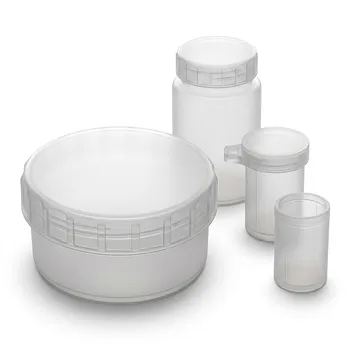
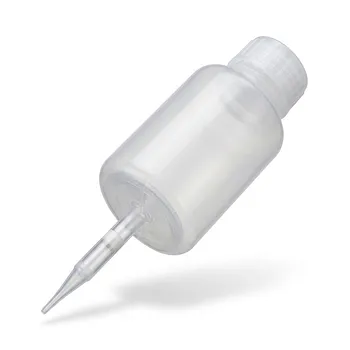
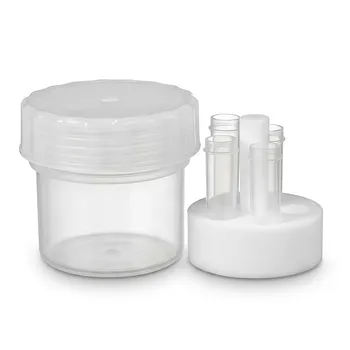
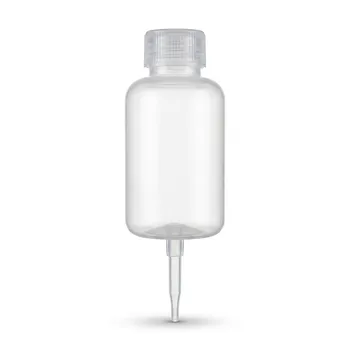
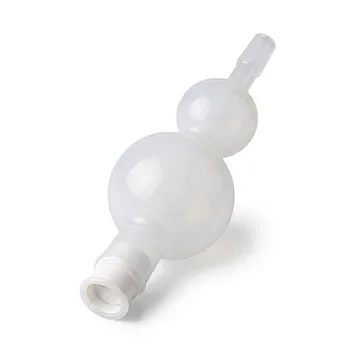
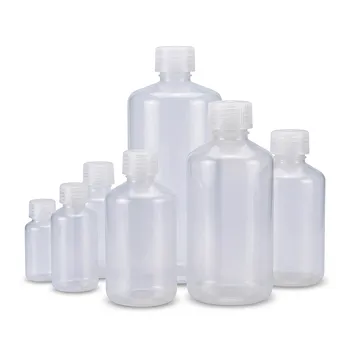
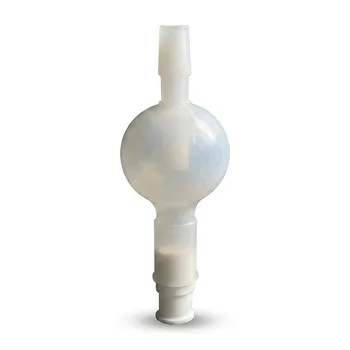
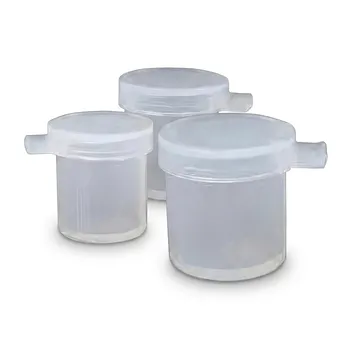
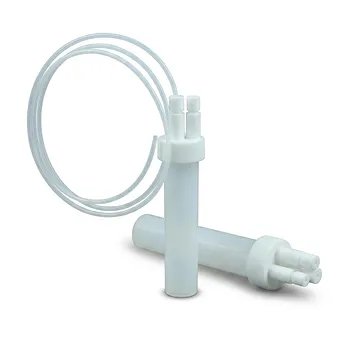
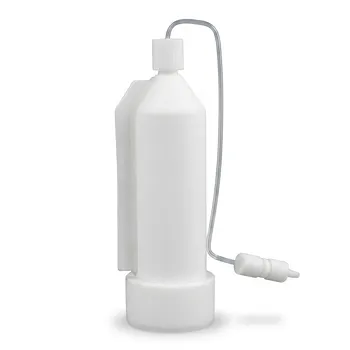
High-purity PFA (Perfluoroalkoxy) provides a chemically stagnant and ultra-clean environment that is physically impossible to achieve with traditional borosilicate glass. It eliminates the risk of trace analyte loss through wall adsorption and prevents background contamination from leached inorganic elements like silicon or sodium. This level of purity is essential for the precise quantification of degradation intermediates and the assessment of photocatalytic efficiency at the parts-per-billion (ppb) or parts-per-trillion (ppt) scale.
High-purity PFA sampling vessels are the gold standard for photocatalytic analysis because they prevent the physical adsorption of trace intermediates and eliminate the leaching of background ions common in glass. This ensures that the analytical data reflects the actual reaction kinetics rather than the chemical influence of the container wall.
Eliminating Chemical Interferences and Leaching
The Risks of Traditional Glass
Standard glass vessels often leach impurities such as silicon, sodium, and boron into the reaction solution. In high-sensitivity photocatalytic studies, these trace elements can act as unintended catalysts or inhibitors, skewing the results of the experiment.
PFA’s Elemental Purity
High-purity PFA is manufactured without organic additives or residual metal ions. This creates an exceptionally low metal ion background, allowing researchers to perform ultra-pure chemical analysis without fear of secondary contamination from the vessel itself.
Chemical Stability with Corrosive Solvents
Unlike glass, PFA can withstand prolonged exposure to aggressive chemicals, including hydrofluoric acid, without degrading. This ensures the integrity of the vessel and the sample when working with complex or corrosive photocatalytic reaction mixtures.
Preventing Analyte Loss and Ensuring Kinetic Accuracy
Minimizing Surface Adsorption
PFA possesses extremely low surface energy and exceptional chemical inertness. This prevents trace degradation products and metal ion catalysts from adsorbing onto the container walls, which is a common failure point in glass vessels.
Maintaining Accurate Concentrations
When analyzing low-concentration intermediates, even minor wall adsorption can lead to significant errors in kinetic calculations. PFA ensures that the original composition and concentration of the sample remain intact from the moment of sampling to the point of detection.
Long-Term Stability for Reference Solutions
For studies requiring long-term storage or volume determination, PFA volumetric flasks provide superior concentration stability. This is critical for maintaining the accuracy of reference standards used to calibrate high-sensitivity detection equipment.
Precision in Catalyst Synthesis and Intermediate Detection
Protecting Sensitive Nanoclusters
Metal nanoclusters, such as Au25 or Ag14, are highly sensitive to their environment during synthesis. PFA vessels provide a clean background that prevents trace metal ions or silicates from interfering with the nucleation and ligand protection processes.
Enhancing Detection Sensitivity
By eliminating background noise from leached substances, PFA allows analytical results to reach the ppb or ppt level. This sensitivity is vital for identifying the complex intermediate products formed during the degradation of organic pollutants.
Consistency Across Batches
The use of PFA labware ensures that the reaction environment is identical across different experimental runs. This reliability is essential for achieving batch-to-batch consistency in catalyst synthesis and efficiency assessments.
Understanding the Trade-offs
Cost and Resource Allocation
High-purity PFA labware is significantly more expensive than standard borosilicate glass. While the investment is necessary for trace-level precision, it may be an over-specification for routine, high-concentration screening where leaching is less impactful.
Visual Clarity and Heat Limits
While PFA is translucent, it does not offer the same optical "water-white" clarity as high-quality glass or quartz. Additionally, while PFA has excellent thermal stability, it cannot match the extreme temperature resistance of specialized quartz vessels used in high-temperature photocatalysis.
Cleaning and Maintenance Requirements
To maintain its high-purity status, PFA requires specific acid-leaching cleaning protocols. Improper handling or the use of abrasive tools can damage the smooth surface, potentially increasing the risk of future contamination.
Selecting the Right Vessel for Your Research
When choosing between PFA and glass for your photocatalytic applications, consider the specific requirements of your analytical targets and detection limits.
- If your primary focus is trace-level intermediate detection (ppb/ppt): Use high-purity PFA to eliminate background interference and prevent analyte loss to the container walls.
- If your primary focus is the synthesis of metal nanocluster catalysts: Prioritize PFA vessels to ensure a clean nucleation environment free from leached silicates or metal ions.
- If your primary focus is routine testing of high-concentration pollutants: Traditional glass may be sufficient, provided you verify that leached sodium or silicon does not interfere with your specific reaction.
- If your primary focus is long-term storage of sensitive reference standards: Utilize PFA reagent bottles to maintain concentration stability and prevent the introduction of impurities over time.
Selecting high-purity PFA is a strategic decision that prioritizes data integrity and analytical precision over initial equipment cost.
Summary Table:
| Feature | High-Purity PFA Labware | Traditional Borosilicate Glass |
|---|---|---|
| Chemical Leaching | Near-zero (No Si, Na, or metal ions) | High (Potential Si, Na, B contamination) |
| Surface Adsorption | Negligible; low surface energy | High; risk of trace analyte loss |
| Chemical Resistance | Excellent (including HF) | Limited (attacked by strong bases/HF) |
| Detection Limit | Ideal for ppb/ppt trace levels | Suitable for high-concentration only |
| Kinetic Accuracy | High; preserves reaction composition | Risk of interference from wall interactions |
| Thermal Limit | Up to 260°C | Superior for very high-temperature use |
Elevate Your Analytical Precision with KINTEK
Don’t let container leaching or surface adsorption compromise your photocatalytic research. KINTEK specializes in high-performance fluoropolymer solutions, offering an exhaustive range of high-purity PFA and PTFE laboratory supplies designed for the most demanding environments.
From everyday basic labware like beakers, measuring cylinders, crucibles, and reagent/wash bottles to advanced sample prep tools, filtration components, and high-purity trace analysis instruments, we provide the ultra-clean environment your research deserves. Whether you need standard centrifuge tubes, separatory funnels, and stirring bars or bespoke custom CNC-machined parts, electrochemical cells, and microwave digestion vessels, KINTEK delivers end-to-end fabrication with an absolute focus on fluoropolymer performance.
Ready to eliminate background noise and ensure absolute kinetic accuracy?
Contact our technical experts today to discuss your custom laboratory requirements.
References
- M Suresh Kumar, Raj Kumar. Environmental risks of textile dyes and photocatalytic materials for sustainable treatment: current status and future directions. DOI: 10.1007/s44274-025-00337-0
This article is also based on technical information from Kintek Knowledge Base .
Related Products
- Semiconductor Grade High Purity PFA Sampling Bottles for Ultra Pure Reagent Storage and Trace Analysis
- High Purity Semiconductor Grade PFA Sampling Bottles for Ultrapure Reagent Storage and Trace Analysis Applications
- PFA Reaction Jar Corrosion Resistant Wide Mouth PTFE Lab Bottle High Purity Chemical Vessel
- High Purity PFA Filtration Bottle with Integrated Sieve Plate and Squeezable Body for Trace Analysis
- Corrosion Resistant PTFE Support with PFA Transparent Reaction Tank and High Purity PFA Sampling Tube for Trace Analysis
People Also Ask
- What are the advantages of using PFA sampling bottles? Ensure Sample Integrity in Geochemical Field Research
- Why is the use of high-purity PFA sampling bottles necessary for trace element analysis? Ensure PPT Accuracy
- Why are high-purity PFA reaction bottles superior to glass for boride synthesis? Ensure Ultra-Pure Yield & No Leaching
- Why use high-purity PFA bottles for Carbon Quantum Dots? Ensure Ink Stability and Prevent Fluorescence Quenching
- What are the technical advantages of using high-purity PFA containers for MSN synthesis? Boost Purity and Yield