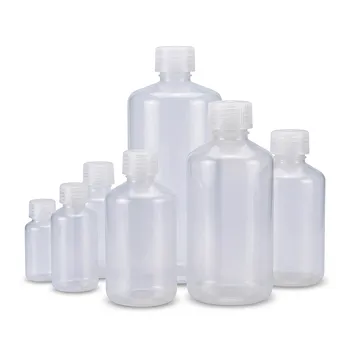
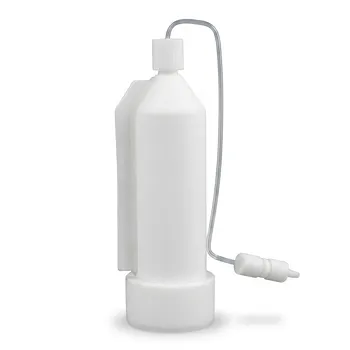
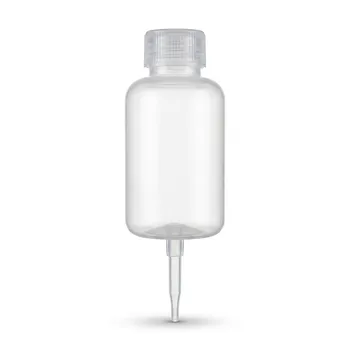
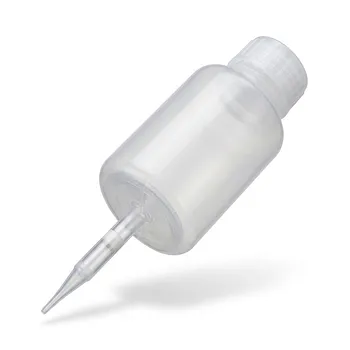
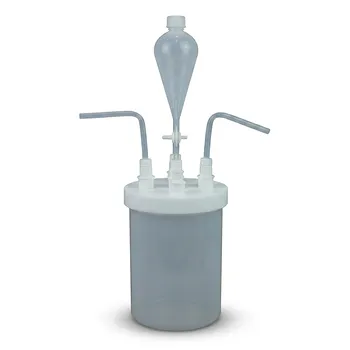
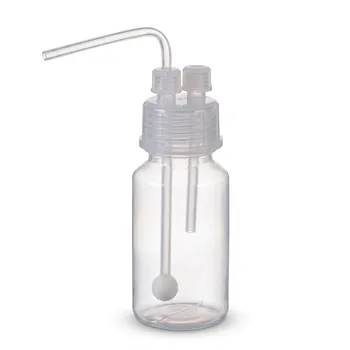
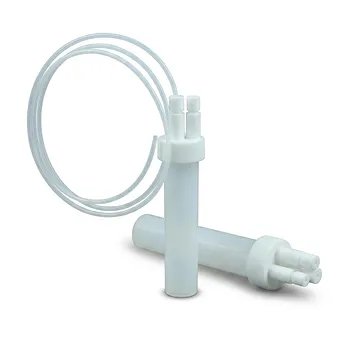
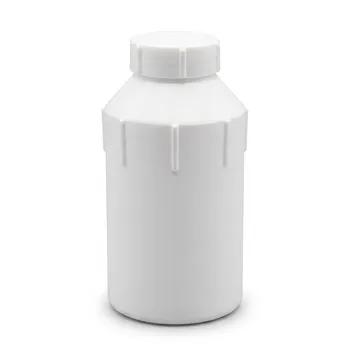
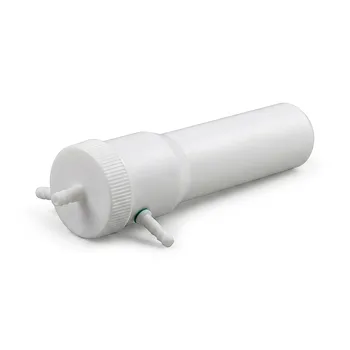
Perfluoroalkoxy alkane (PFA) sampling bottles are the gold standard for high-stakes field research because they combine the physical resilience of plastics with the chemical neutrality of high-quality glass. These containers provide a non-reactive environment that prevents trace metal leaching and analyte adsorption, ensuring that the sample collected in the field remains chemically identical until it reaches the laboratory. Their ability to withstand thermal extremes and rugged transport makes them essential for preserving the integrity of isotopic and ultra-trace data in remote geochemical environments.
PFA sampling bottles solve the critical problem of sample degradation by providing an ultra-pure, chemically inert, and physically durable vessel. For researchers dealing with ultra-trace elements or radionuclides, PFA is not just an upgrade—it is a requirement for data validity.
Ensuring Sample Integrity in Rugged Environments
Superior Physical Resilience and Safety
Field research often involves transport across harsh terrain where traditional glass containers are a liability. PFA is shatterproof and lightweight, significantly reducing the risk of sample loss and injury from broken glass. This durability ensures that valuable, often irreproducible, environmental samples survive the journey from the field to the analytical lab.
Reliability in Thermal Extremes
Environmental research spans the globe, from sub-zero Arctic expeditions to high-temperature geothermal sampling. PFA maintains its structural integrity and chemical stability across this wide temperature spectrum. It does not become brittle in extreme cold, nor does it degrade when exposed to the high heat of volcanic or hydrothermal fluids.
Prevention of External Contamination
The fully fluorinated carbon backbone of PFA creates a non-porous, smooth surface that is naturally non-stick. This characteristic prevents external moisture and atmospheric contaminants from penetrating the bottle. It also ensures that previous samples or cleaning agents are easily removed, minimizing the risk of sample carry-over.
Solving the Contamination Challenge
Elimination of Trace Metal Leaching
Traditional glass containers often leach elements like silicon, boron, and sodium into the sample, which can skew geochemical results. PFA has an exceptionally low leaching rate, even when storing strong acids for extended periods. This makes it the preferred material for storing acid-digested samples or high-purity standard solutions where background interference must be kept to an absolute minimum.
Preventing Analyte Adsorption
One of the most significant risks in trace analysis is the "disappearance" of analytes as they stick to the container walls. PFA's chemical inertness prevents ultra-trace isotopes and metals, such as uranium (U), plutonium (Pu), chromium (Cr), and arsenic (As), from adsorbing onto the bottle surface. This ensures that the measured concentration reflects the true state of the environment sampled.
Preservation of Isotopic Ratios
For researchers focused on radiochemical analysis or baseline environmental data, maintaining the original isotopic composition is vital. PFA provides a stable environment that prevents exogenous contamination from altering isotopic signatures. This stability is critical for high-sensitivity techniques like ICP-MS, where even parts-per-trillion levels of contamination can invalidate a study.
Understanding the Trade-offs
High Initial Cost and Resource Investment
The primary disadvantage of PFA labware is its high cost compared to HDPE or borosilicate glass. Because PFA is a specialty fluoropolymer, it requires a significant budget, which may be a barrier for large-scale projects requiring hundreds of sampling points.
Rigorous Cleaning Requirements
While PFA is easy to clean due to its non-stick surface, the protocols for ultra-trace cleaning are time-consuming and involve multiple acid baths. Failure to follow these strict procedures can negate the purity benefits of the material. Furthermore, while PFA is physically tough, it is softer than glass and can be scratched if handled with abrasive tools, creating sites where contaminants could potentially lodge.
Making the Right Choice for Your Goal
When selecting sampling containers for your research, consider the sensitivity of your analytes and the harshness of your environment.
- If your primary focus is ultra-trace metal or radionuclide analysis: Use PFA bottles to ensure that the extremely low concentrations of elements like U, Pu, Zn, or Fe do not adsorb to the walls or become contaminated by the container material.
- If your primary focus is geothermal or hydrothermal sampling: Utilize PFA’s high thermal stability to collect samples at high temperatures without risking container melting or chemical leaching.
- If your primary focus is long-term storage of acid-digested samples: Rely on PFA’s chemical inertness to maintain the integrity of the acid matrix and prevent the introduction of trace impurities over time.
- If your primary focus is budget-constrained bulk water sampling: Consider high-density polyethylene (HDPE) as a more cost-effective alternative, reserving PFA only for the specific sub-samples destined for trace-level analysis.
By matching the unique properties of PFA to your specific analytical needs, you ensure that your field data is both accurate and defensible.
Summary Table:
| Feature | Field Research Benefit | Technical Highlight |
|---|---|---|
| Chemical Inertness | Prevents analyte loss and contamination | Near-zero leaching of trace metals (U, Pu, Cr, As) |
| Thermal Stability | Reliable in Arctic or geothermal sites | Maintains integrity from sub-zero to high heat |
| Physical Durability | Eliminates risk of sample loss | Shatterproof and lightweight compared to glass |
| Surface Properties | Minimizes sample carry-over | Non-porous, hydrophobic, and non-stick surface |
| Purity Level | Validates isotopic and trace data | Preferred for ICP-MS and radiochemical analysis |
Elevate Your Research with KINTEK’s High-Performance Fluoropolymers
When your data validity depends on parts-per-trillion precision, don't let inferior labware compromise your results. KINTEK specializes in high-performance PTFE and PFA solutions designed to withstand the most demanding geochemical and environmental applications.
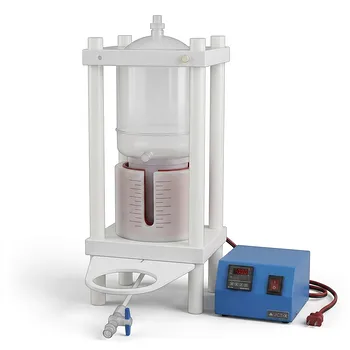
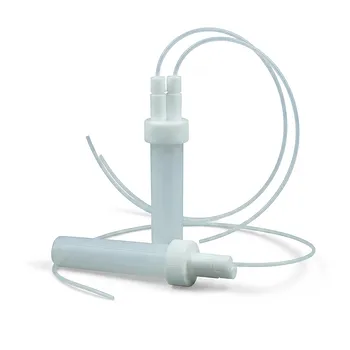
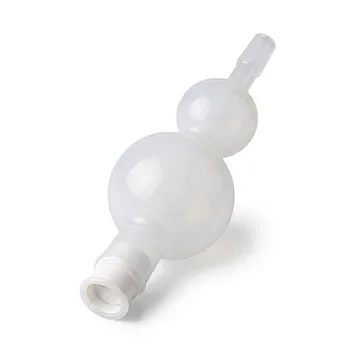
From everyday basic labware like beakers, measuring cylinders, crucibles, and reagent/wash bottles to specialized centrifuge and digestion tubes, our products ensure zero contamination. We provide everything from comprehensive fluid transfer components (tubing, fittings, valves) and sample prep tools (separatory funnels, filters, pipettes) to advanced reaction apparatus like custom electrochemical cells and microwave digestion vessels.
Why choose KINTEK?
- End-to-End Customization: Our expert CNC fabrication delivers bespoke laboratory setups and complex non-standard parts tailored to your specific field needs.
- Unrivaled Purity: Absolute focus on fluoropolymer materials to eliminate trace metal leaching and analyte adsorption.
- Scalable Solutions: We handle everything from high-volume consumable orders to unique, one-off research fixtures.
Secure the integrity of your next expedition. Contact KINTEK today to discuss your custom PFA requirements!
Related Products
- High Purity Semiconductor Grade PFA Sampling Bottles for Ultrapure Reagent Storage and Trace Analysis Applications
- Semiconductor Grade High Purity PFA Sampling Bottles for Ultra Pure Reagent Storage and Trace Analysis
- Semiconductor Electronic Grade PFA Sampling Bottle for Ultrapure Reagent Storage and Trace Analysis
- High Purity PFA Sample Vials Acid Resistant Trace Analysis Digestion Cups with Lids
- PFA Reaction Jar Corrosion Resistant Wide Mouth PTFE Lab Bottle High Purity Chemical Vessel
People Also Ask
- Why is the use of high-purity PFA sampling bottles necessary for trace element analysis? Ensure PPT Accuracy
- Why use high-purity PFA bottles for Carbon Quantum Dots? Ensure Ink Stability and Prevent Fluorescence Quenching
- Why are high-purity PFA reaction bottles superior to glass for boride synthesis? Ensure Ultra-Pure Yield & No Leaching
- What are the technical advantages of using high-purity PFA containers for MSN synthesis? Boost Purity and Yield
- What are the advantages of PFA sampling bottles for photocatalytic analysis? Ensure Trace-Level Accuracy.